Making big power requires a big camshaft, right?

I mean, it makes sense. For years we have been taught that the internal combustion engine is nothing more than a giant air pump. The very basic premise being, the more air you put into the motor, the more power you get out of the motor.

The oversimplified air processing scenario notwithstanding, the foundation is sound. Big power requires big cylinder heads with lots of flow potential, ditto for the intake and, last but not least, a big, nasty cam profile to tie it all together.

While there is certainly some truth to this—just look at a Pro Stock or Pro Mod motor—the bigger is better theme just doesn’t carry over to a typical street/strip turbo LS. In fact, a solid argument can be made that the opposite is true when it comes to boosting a junkyard LS motor, especially one that sees any type of street driving, where high rpm and maximum power take a back seat to boost response.

For most folks (without excessive converter stall speeds, 2 steps or quick-spool valves), how a junkyard turbo LS performs in the first 1,000 rpm of the power band is way more important than how it performs in the last 1,000 rpm. Getting a turbo LS to make big power is the easy part, now let’s look at how to make that power sooner.
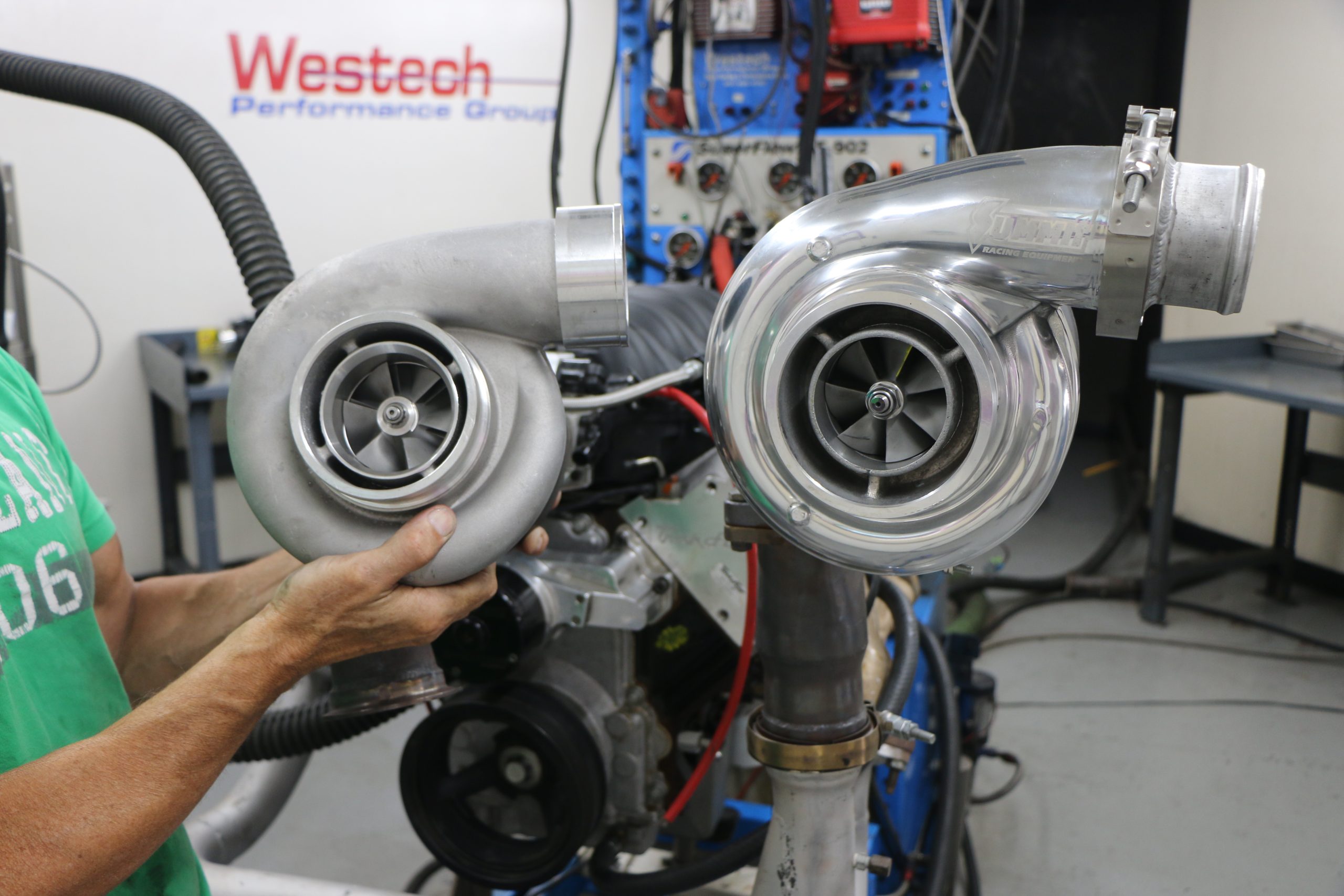
a pair of turbos held before an engine
Choosing the right turbo for your LS is important, but so too is choosing the right cam! (Image/Richard Holdener)

Improving a Turbo’s Response Rate

Truth be told, there are several things you can do to improve the response rate of the turbo, the very first being sizing the turbo correctly.

While it stands to reason that a smaller turbo will spool quicker, the vast majority of turbo LS folks want 1,000 horsepower. We will sidestep the reality that most don’t have a suitable 1,000-hp transmission or the ability to hook that amount of power up, let’s focus on getting the big (1,000 hp) turbo to spool.

If we assume a big turbo on a junkyard 4.8L or 5.3L (the most common—but a 6.0L would also help spool rate), we need to take a look at the camshaft.

Quick side note: A long runner intake (like the truck intake used on this test), is another great way to improve spool rate.

The 1,000 hp goal is what causes most of the problem as people think that lofty power goal requires things like ported heads and intakes and (for this discussion) wild cam timing. The most important thing you can learn here is that the turbo (not the cam) determines how much power a turbo LS makes.

You can literally run any of the hundreds (really, thousands) of different cams with your 1,000 horsepower turbo (like the S475 used in this test), and you would be able to make 1,000 hp. Again, the TURBO decides that, not the cam.

The cam helps decide how early in the rpm range you start to see boost!

Understanding Cam Profiles for Turbocharged Engines

Once this reality sets in, you start to understand the potential benefits of running a cam profile that improves low-speed torque, as this helps boost response (boost response is a function of the low-speed torque output and attending exhaust energy and flow).

More low-speed torque equals more exhaust energy, which in turn spools the turbo. Since the turbo decides the maximum power output (just crank up the boost), why not concentrate on getting it up on boost sooner? This doesn’t even take into account the other benefits of the milder performance cam, like stock converter usage, improved idle quality and drivability and even fuel mileage—though this rarely applies to turbo folks once they sample boost.

Testing the 5.3L LS with a “Low Buck Truck” Cam

Food for thought: LS motors respond very well to even mild cams (the Low Buck Truck tested here added over 60 hp), these gains are multiplied under boost. Unless you are trying to maximize NA power or looking for elevated rpms with your dedicated drag race turbo LS, the combination of a mild cam and boost is hard to beat.

To illustrate one of many examples, we set up a test on a junkyard 5.3L LS engine using a mild cam that offered plenty of low-speed torque, without sacrificing any of the potential of 1,000 hp S475 turbo.

The test motor was a simple one, a junkyard 5.3L equipped with the stock internals (crank, rods and pistons), but treated to extra ring gap. The 5.3L was also sporting both factory 706 heads and the early (non-TrailBlazer SS) truck intake. The mods to the motor included a Low Buck Truck cam (0.552″ lift, 212/22x, and 107 degree LSA) and BTR valve springs.

Though the test was run with this cam, there are many, many cams (Summit Racing, Brian Tooley Racing, Cam Motion, Texas Speed) that can produce similar power curves.

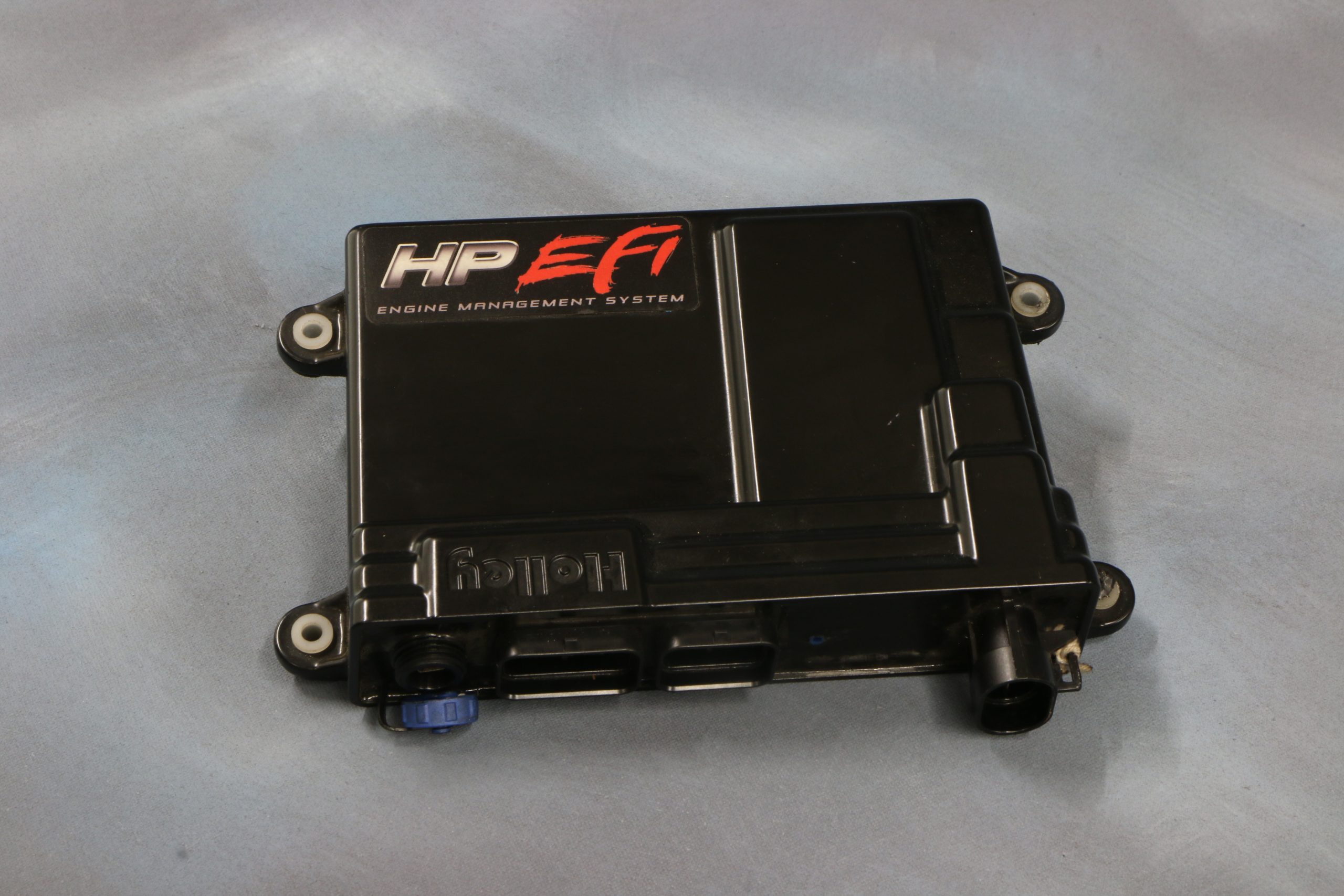
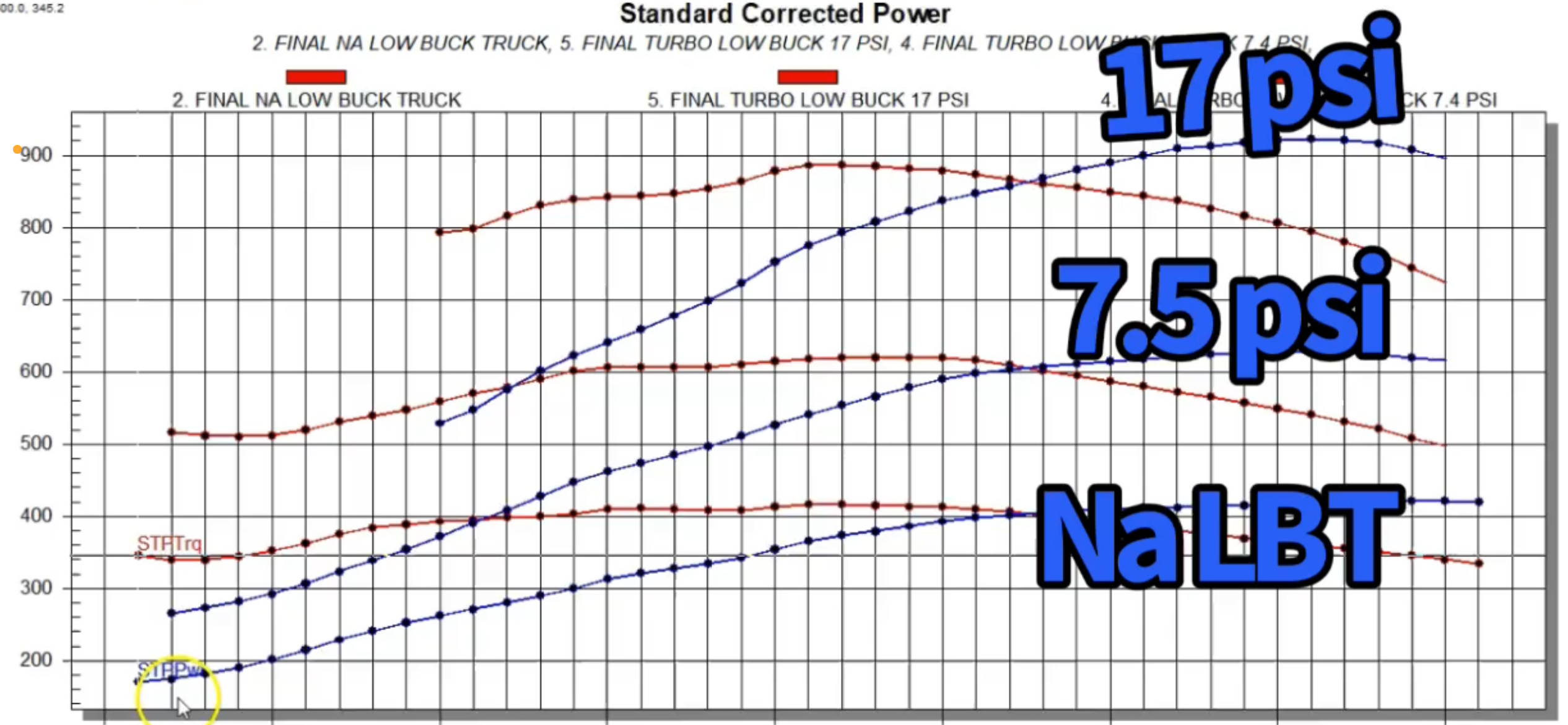
Run with Holley injectors and Holley HP engine management, the NA 5.3L produced 422 hp and 415 lb.-ft. of torque (gaining 60+ hp over the stock cam), but most importantly, the mild cam offered good torque production down low.

After the installation of the turbo system (see photos), the turbo 5.3L produced 628 hp and 619 lb.-ft. of torque at just over 7 psi. To show the mild cam could easily keep up with the turbo, we cranked up the boost to a hair over 17 psi, where the turbo 5.3L produced 923 hp and 886 lb.-ft. of torque.

With a mild cam and the right turbo, you can combine boost response and big power—what a good time to be a gearhead!
LS turbocharger comparison dyno chart
The graph illustrates what happened when we ran a mild cam that offered plenty of low-speed torque production. The combination resulted in not only impressive boost response, but also some serious peak power. Run with the Low Buck Truck cam, the 5.3L produced 422 hp and 415 lb.-ft. (up from 259 hp 383 lb.-ft. with the stock cam). After the installation of a single turbo kit that featured a Summit Racing S475 turbo and ATW intercooler, the power output jumped to 628 hp and 619 lb.-ft. at 7.3 psi. The low-speed (NA) torque gains offered by the cam resulted in impressive boost response (full boost at the start rpm). We then cranked up the boost to over 17 psi,, where the turbo 5.3L produced 923 hp and 886 lb.-ft. of torque. With more boost, the S475 might well top the 1,000-hp mark. What could be better than a super responsive, 1,000-hp 5.3L? (Dyno Chart/Richard Holdener)
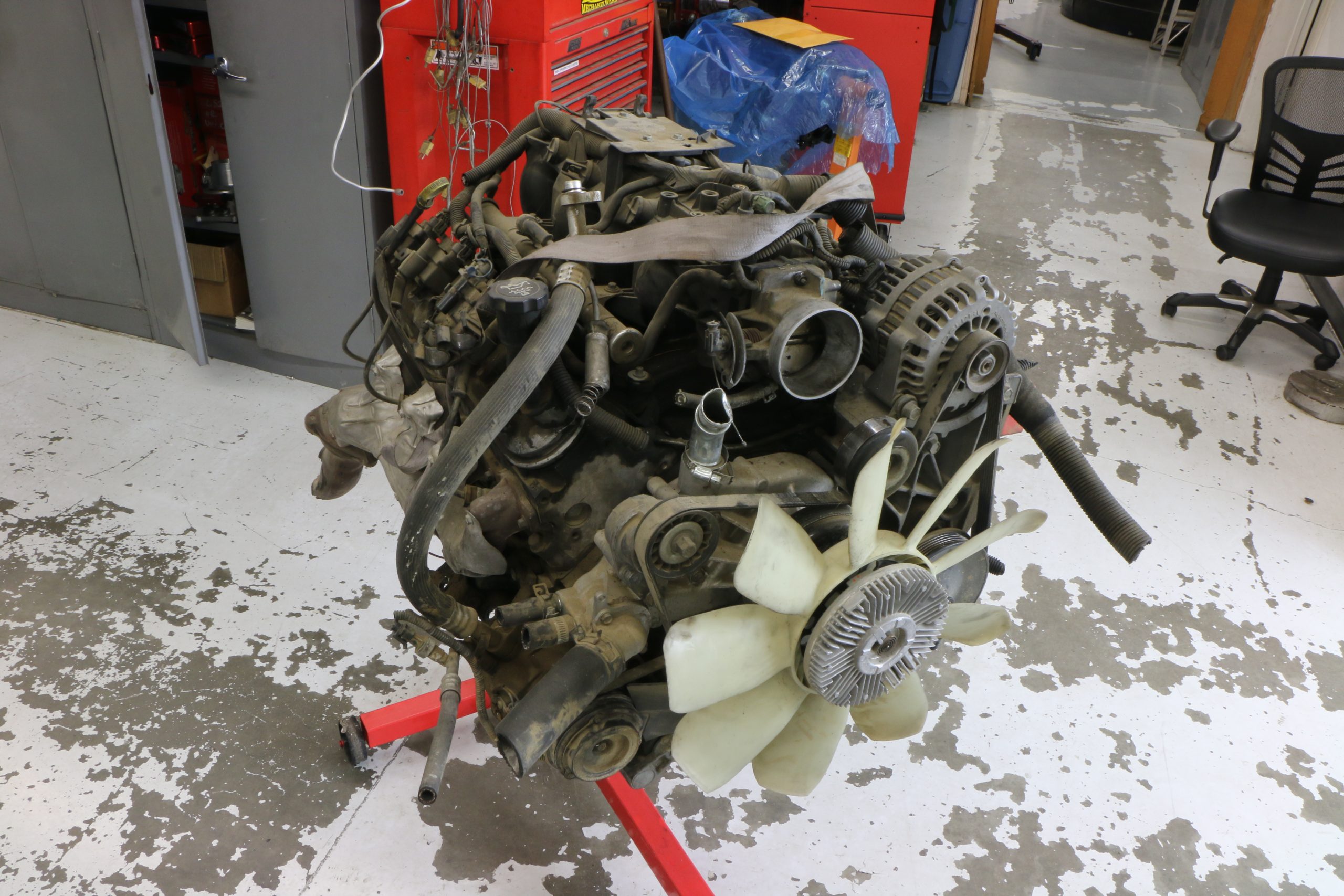
an old 5.3L LS engine on a stand
Let’s start this discussion with your typical junkyard LS motor. In our case, we selected a 5.3L, but a 4.8L or 6.0L LS works just as well. (Image/Richard Holdener)
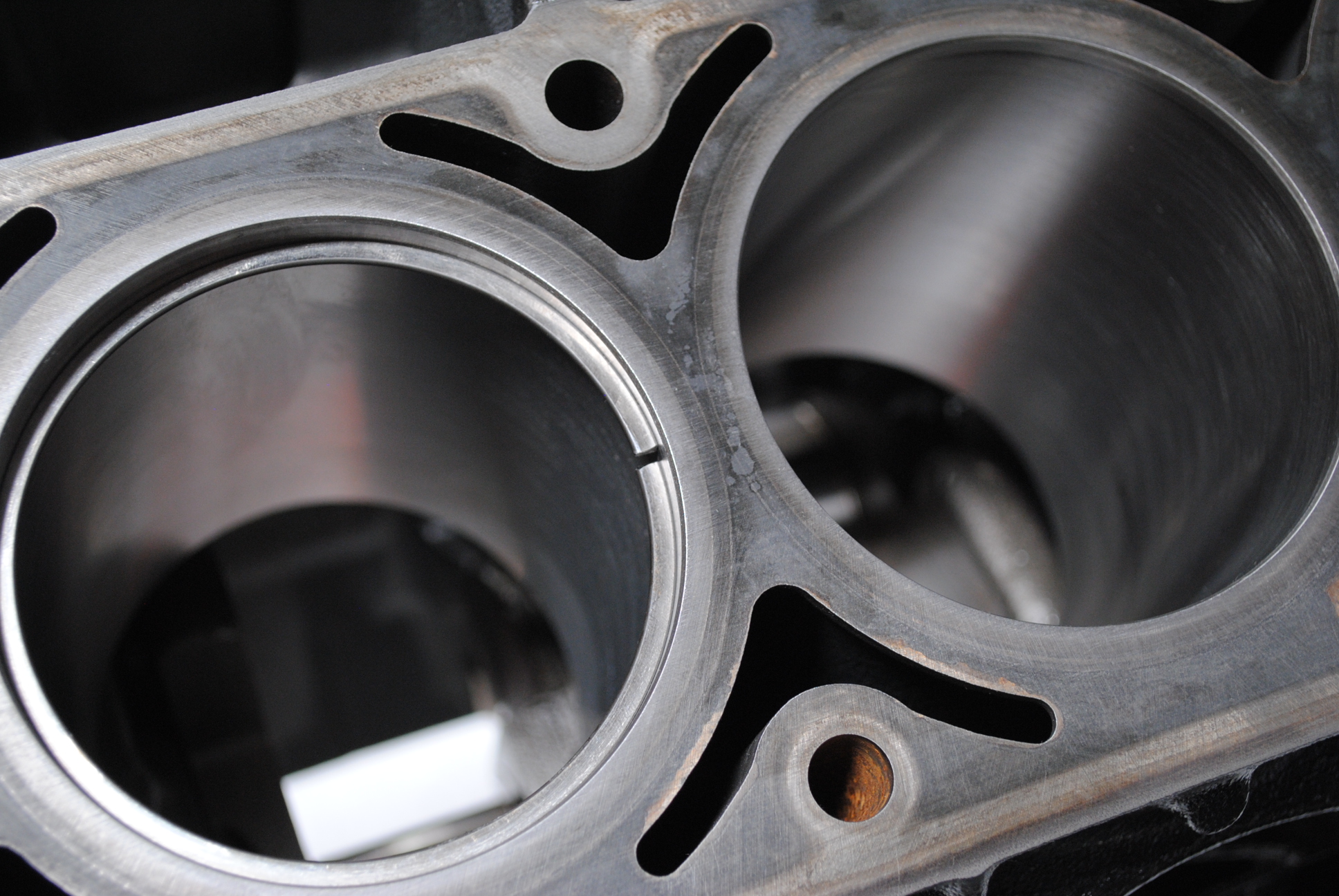
close up of piston ring gap in cylinder bore
If retaining the stock bottom end components (crank, rods and pistons), at least make sure to increase the ring gap out to 0.028″ (top and 2nd ring). Important tip: LS bores do not wear much over time, so ring gap does not increase with mileage like the typical SBC. (Image/Richard Holdener)
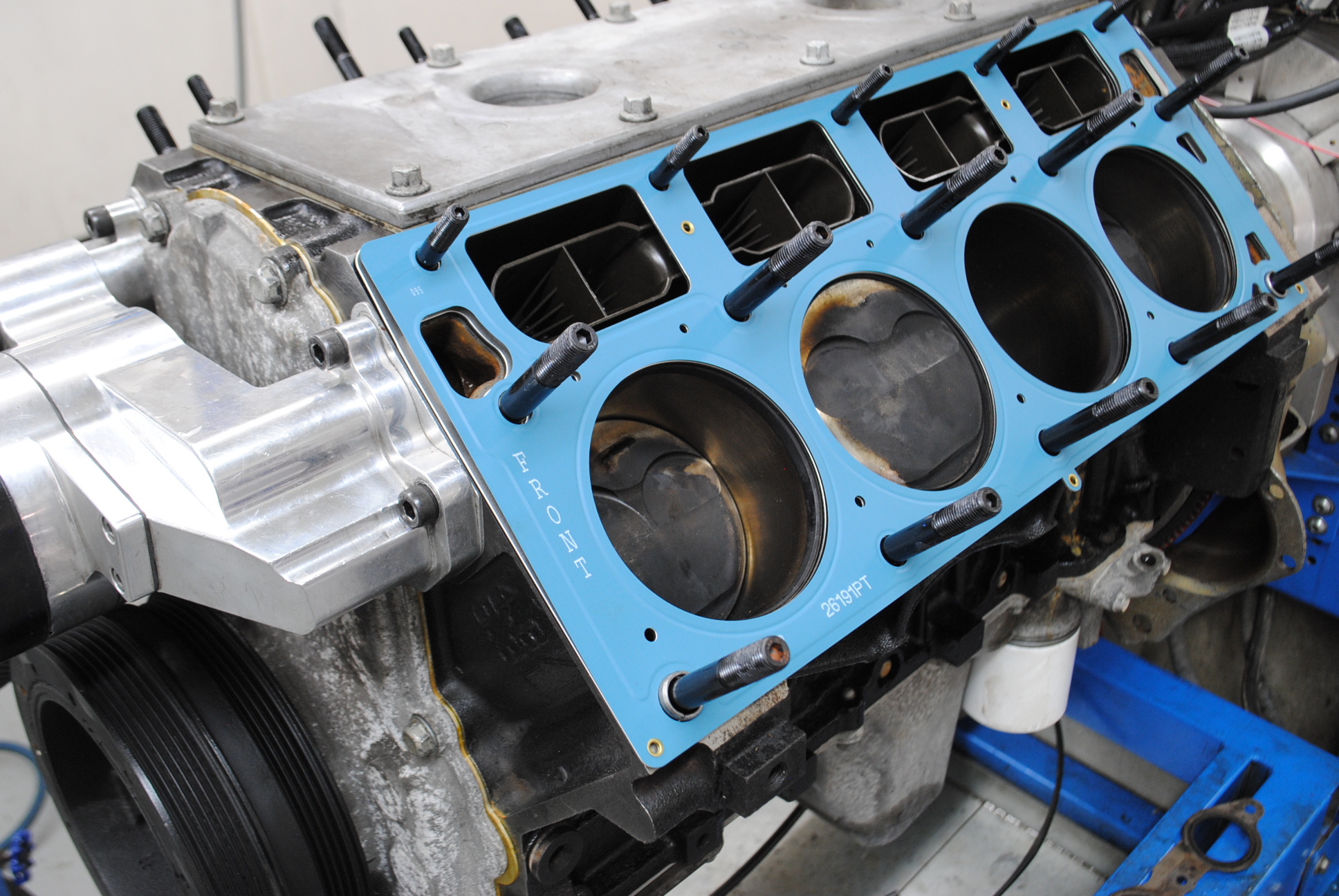
head gasket placed on an engine block
If higher boost and power is in the cards, Summit Racing offers Pro LS forged internals to upgrade your boosted LS. (Image/Richard Holdener)
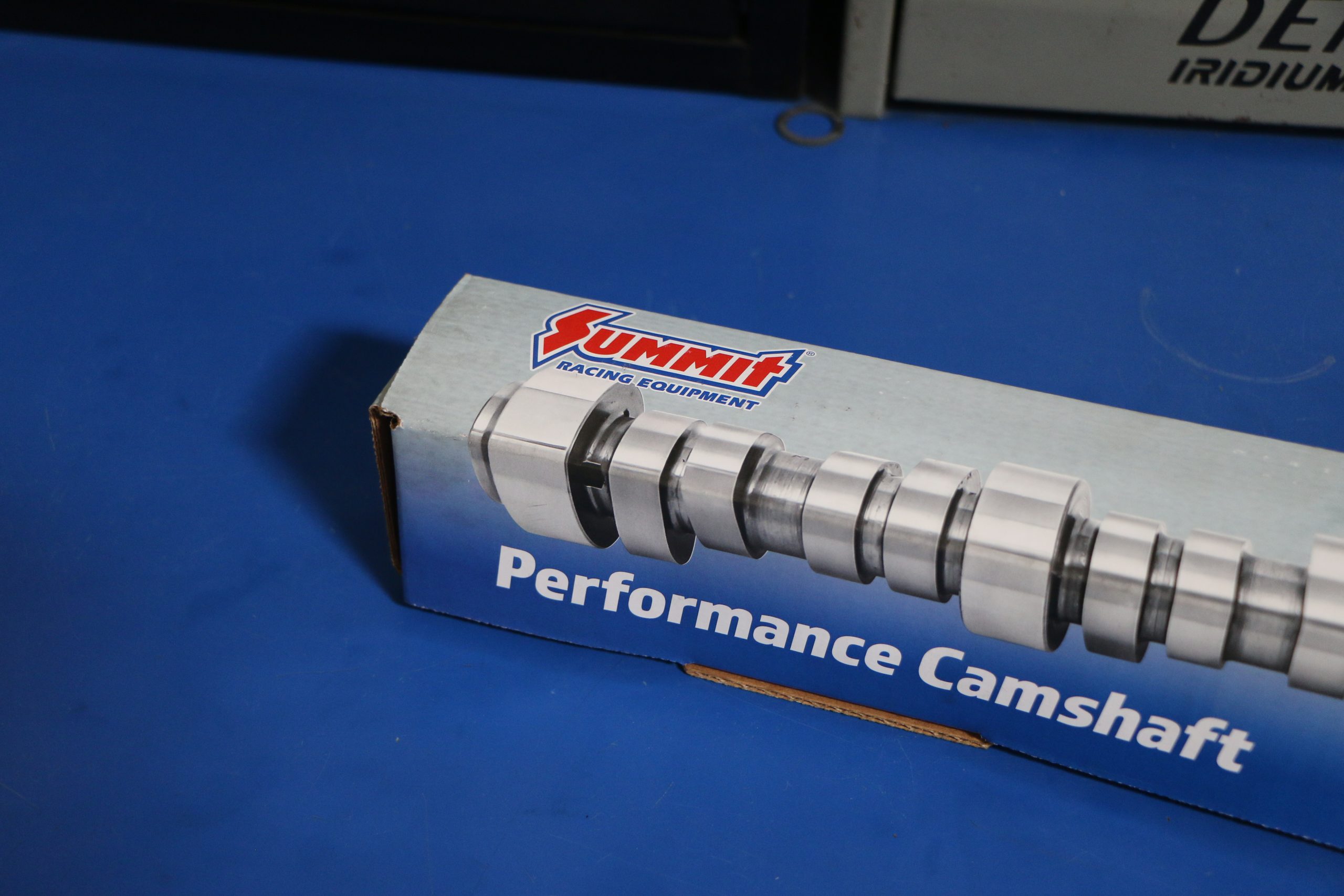
summit racing camshaft box on table
One of the keys to a successful street/strip turbo LS is the camshaft. You don’t need wild cam timing to make big power with a turbo. Summit Racing offers a variety of cams to suit your needs, but the milder “Truck” cams (SUM-8712, SUM-8718 & SUM-8719) all offer improved turbo response compared to bigger Stage 2 or 3 turbo cams. (Image/Richard Holdener)
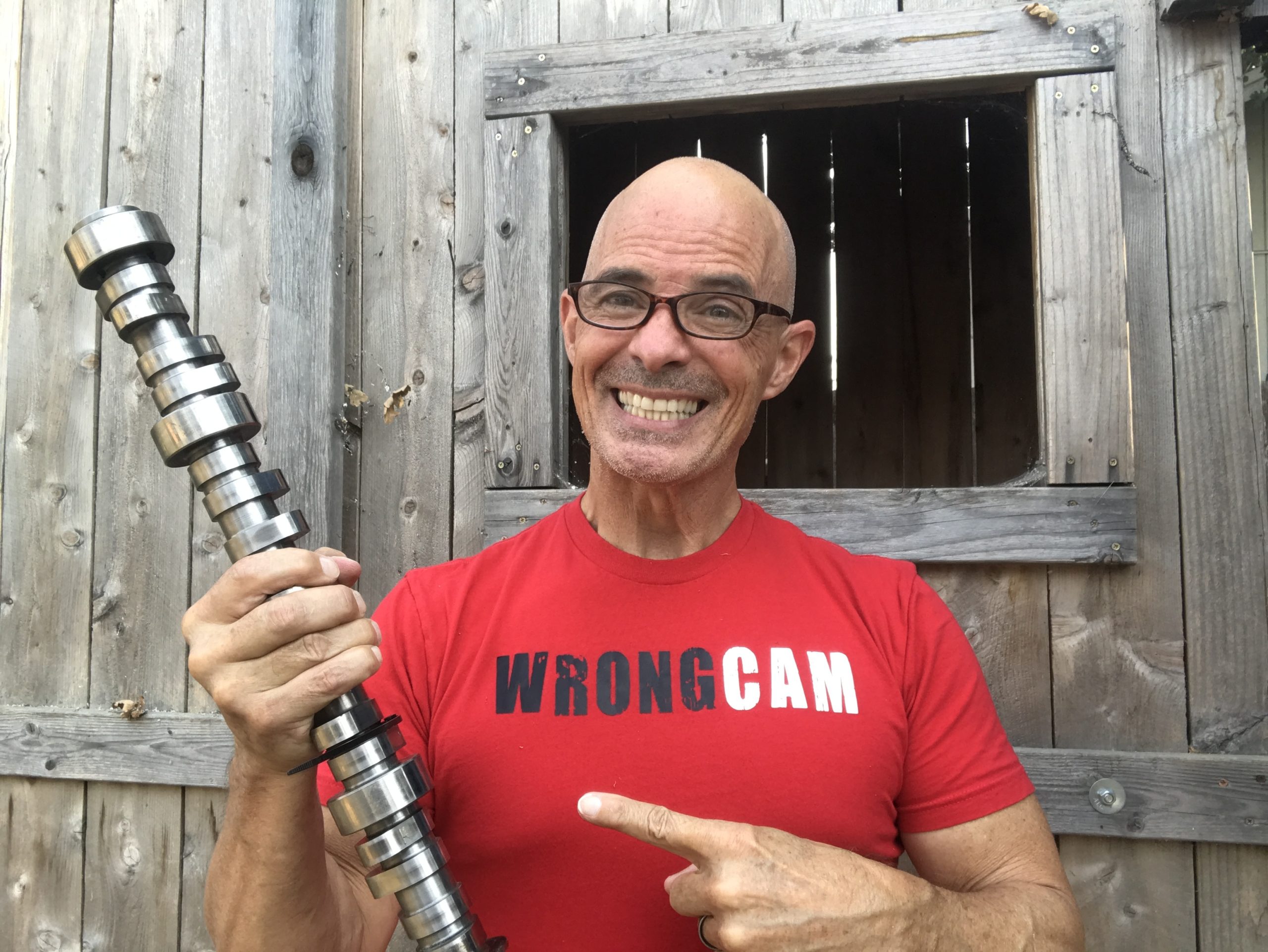
man holding a camshaft
In the 5.3L, we ran one of the Low Buck Truck cams from RichardHoldenerPerformance.com, but similar spec cams from Summit Racing, BTR, Cam Motion or Texas Speed could easily max out the S475 turbo we ran. (Image/Richard Holdener)
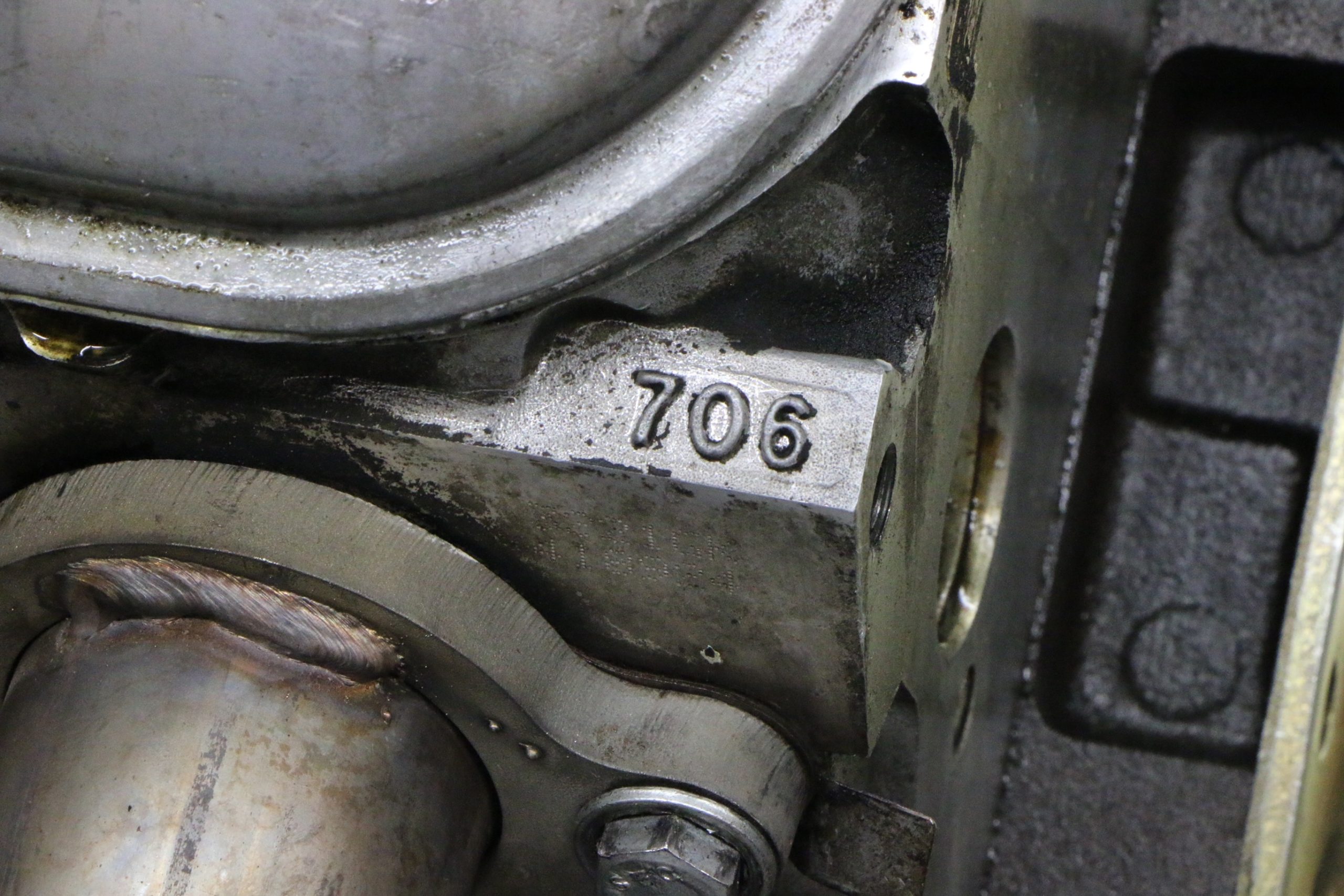
706 casting mark on an ls engine cylinder head
For this test, the 5.3L was equipped with a set of 706 heads. The 799, 241, or even 317 heads can all be used successfully and just require different boost levels to achieve similar power outputs. There is no need for ported stock or aftermarket heads at this power level. (Image/Richard Holdener)
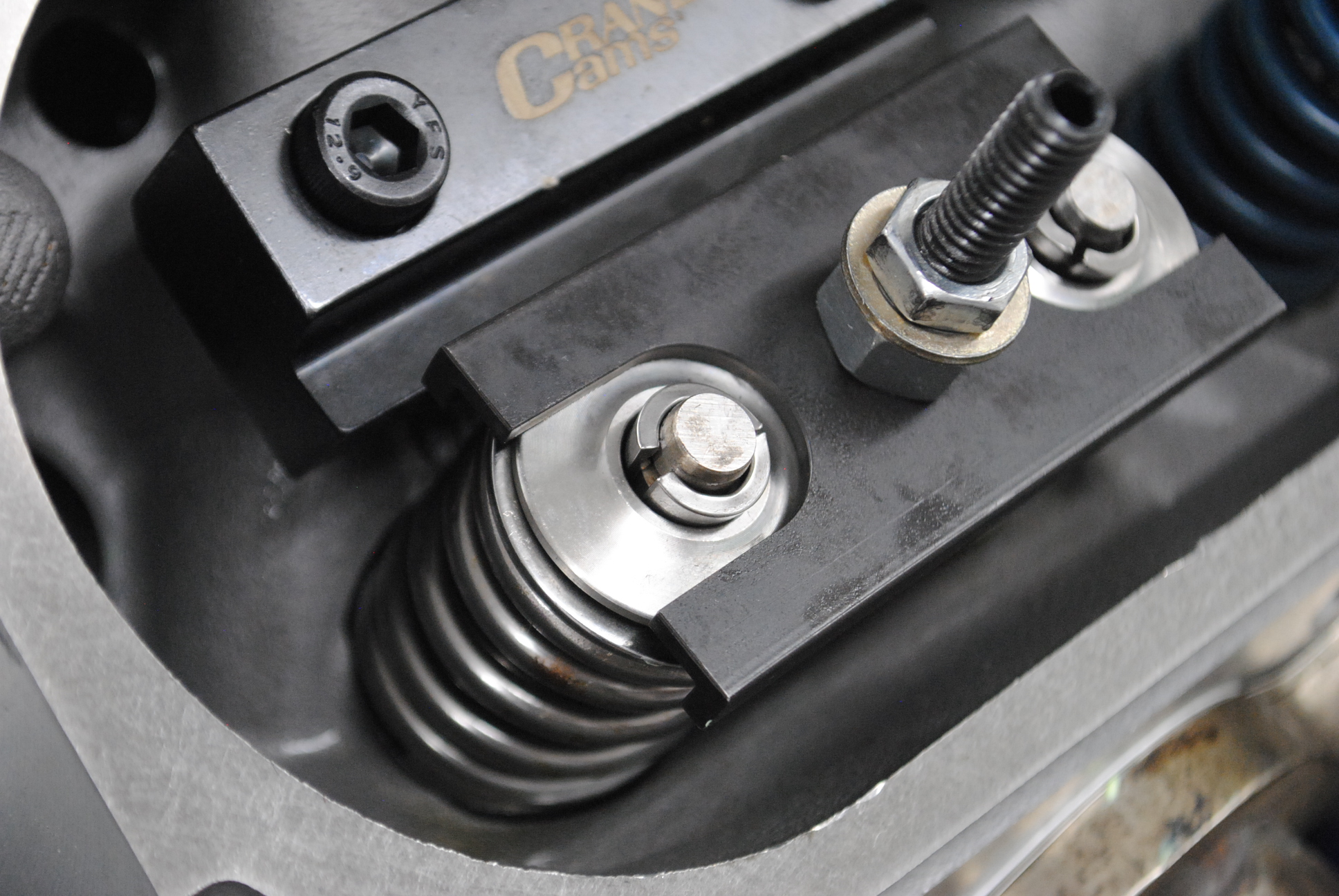
valve spring installer tool
The 706 heads were run with a dual valve spring package from Brian Tooley Racing, though the Low Buck Truck (or any similar 0.550″ lift) cam can get by with factory LS3 or aftermarket beehive springs. (Image/Richard Holdener)
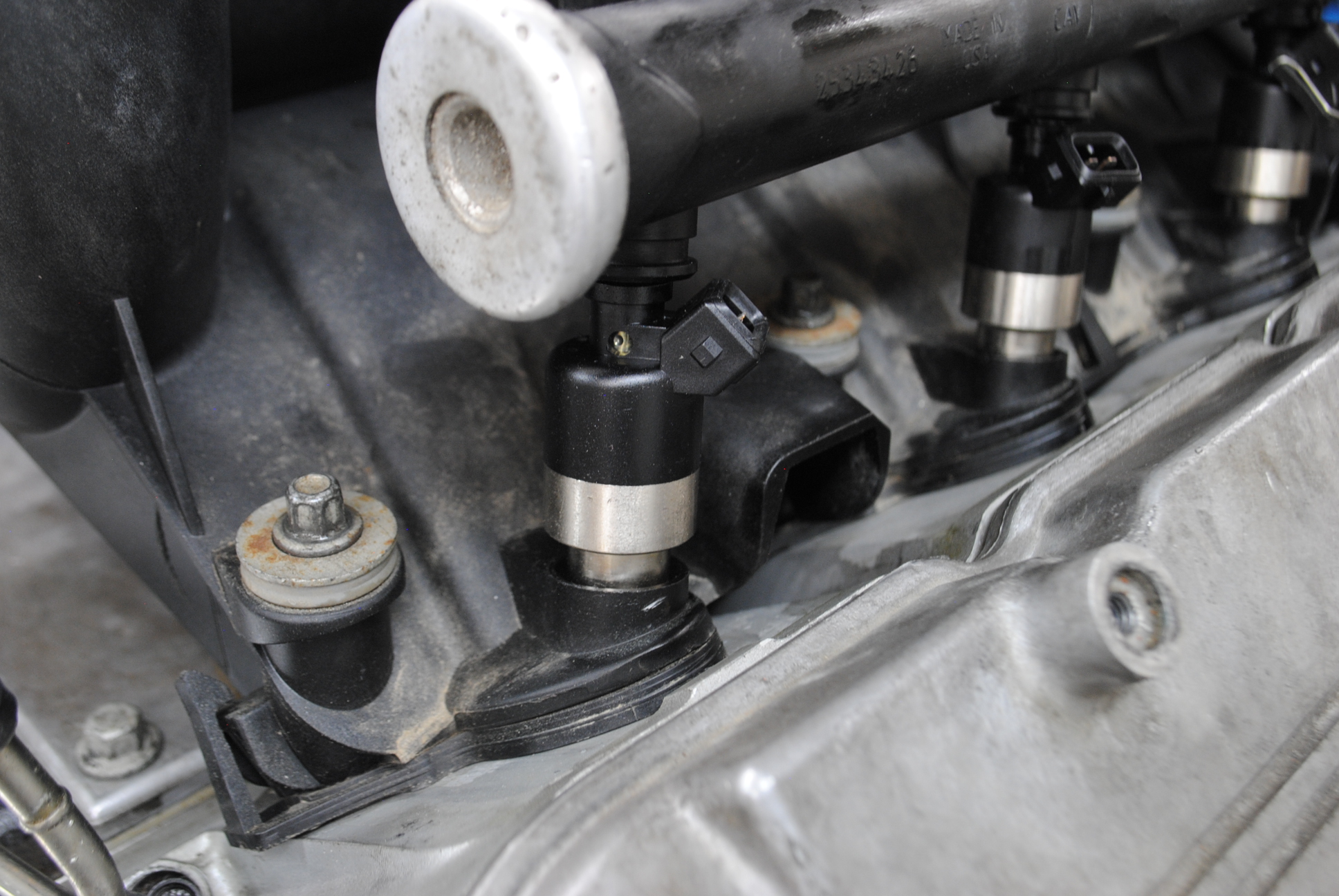
fuel injectors in an ls engine
The increased power potential of the turbo combination required additional fuel flow. This test motor was equipped with a set of 120 pound Holley fuel injectors. The injectors were more than adequate for the E85 fuel used for the turbo 5.3L. (Image/Richard Holdener)
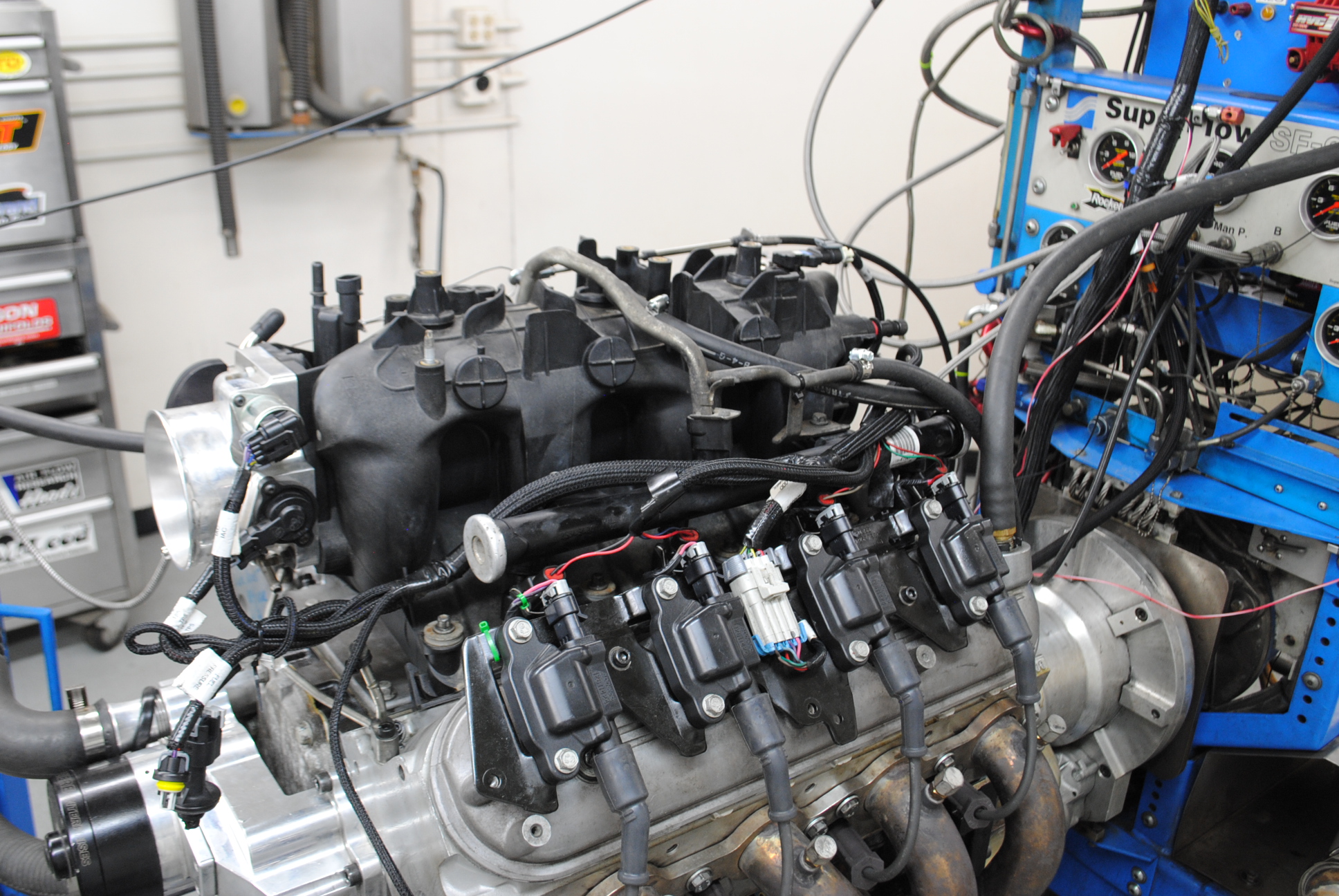
top of an ls engine on a dyno pull
We even utilized the factory (junkyard) truck intake. Just as the stock heads were more than adequate, the stock (early) truck intake will easily support over 1,000 hp under boost. (Image/Richard Holdener)
holley HP Engine ECU module
The NA and turbo combos were dialed in using this Holley HP Management system. (Image/Richard Holdener)
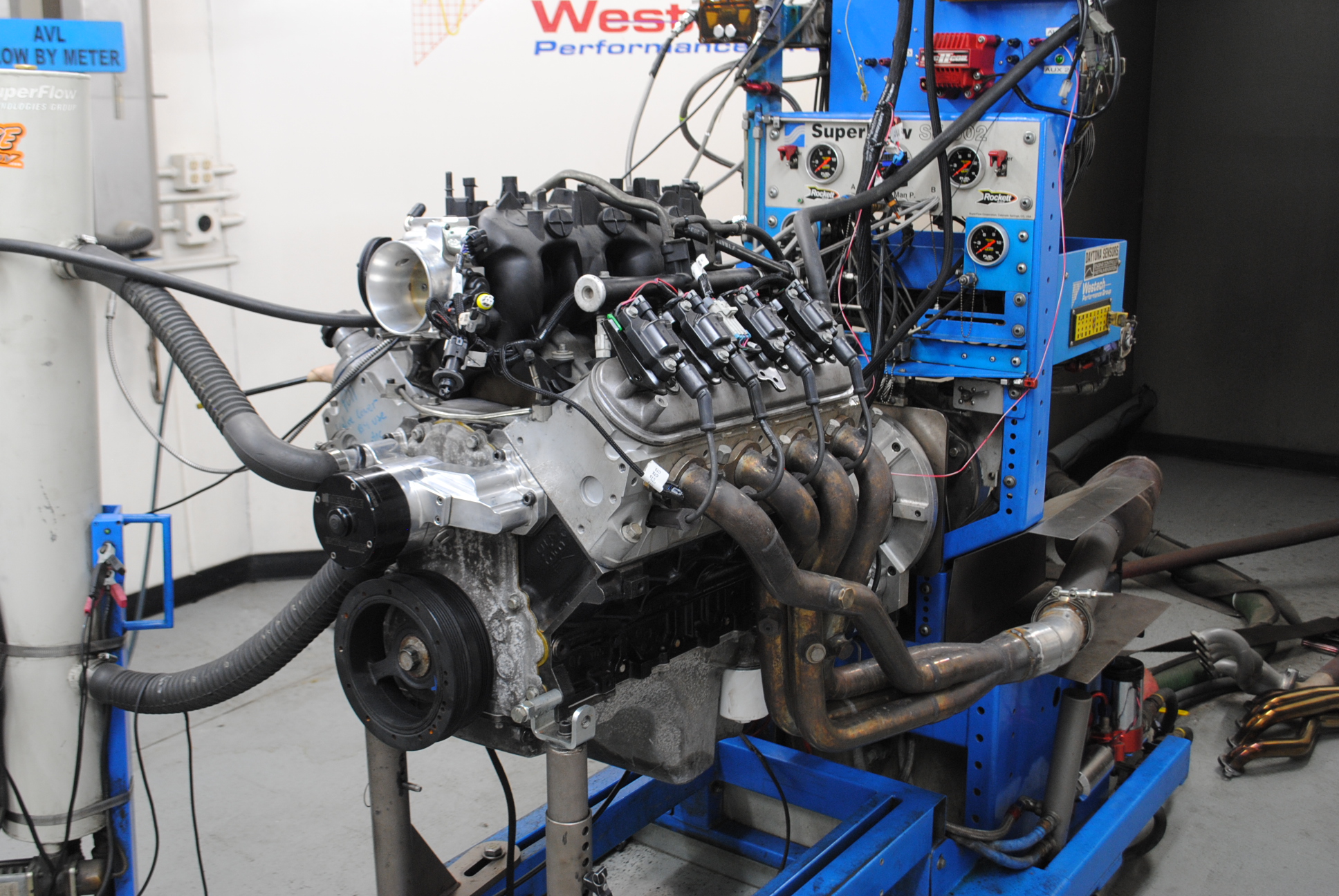
ls engine on a dyno test run
Run with the Low Buck Truck cam, the 5.3L produced 422 hp and 415 lb.-ft. of torque. The cam offered a good combination of low-speed torque and plenty of peak power. (Image/Richard Holdener)
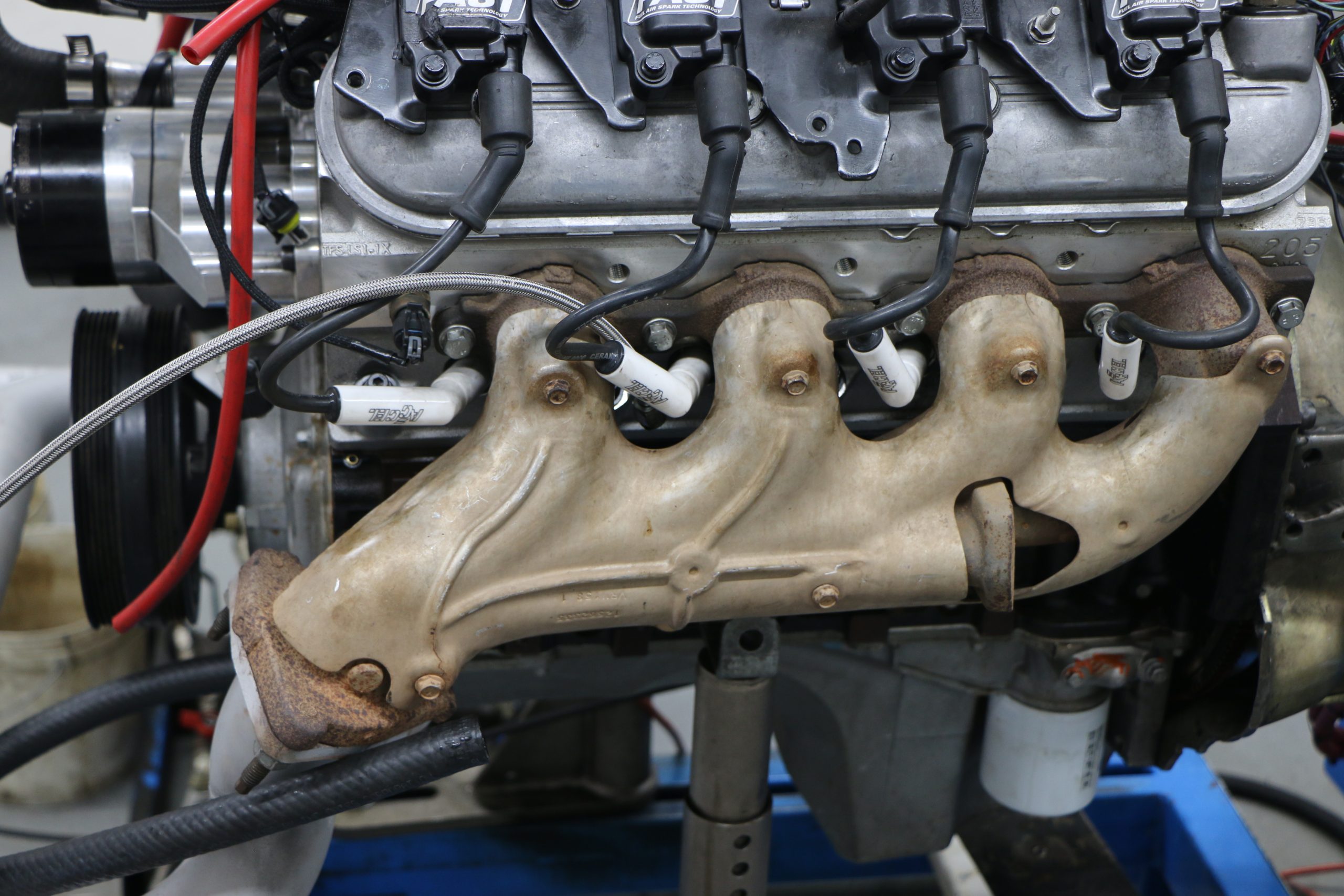
ls engine exhaust manifold
The turbo kit consisted of a pair of stock truck manifolds reversed to feed a dedicated Y-pipe. (Image/Richard Holdener)
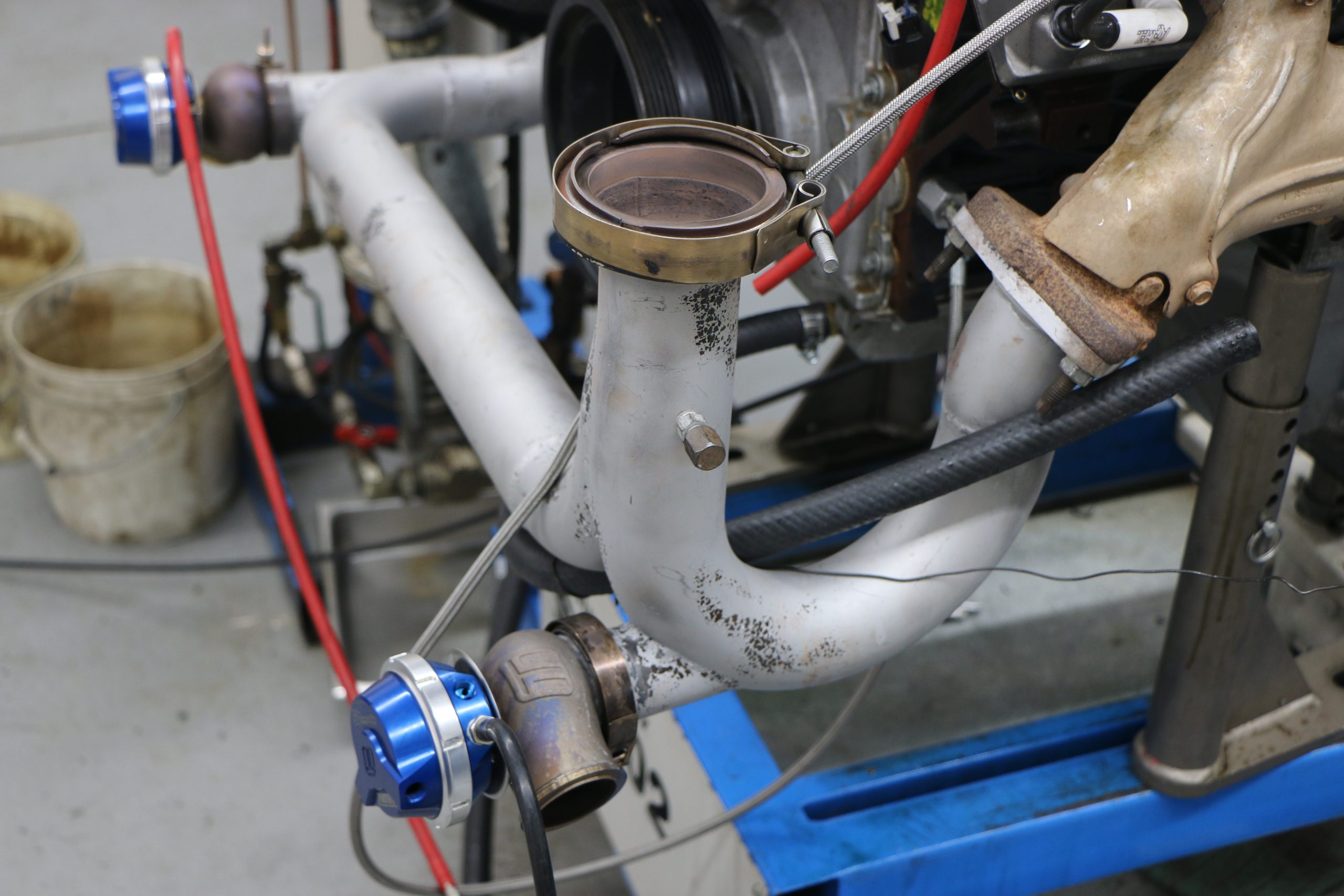
ls engine turbo pipe on manifold
The custom Y-pipe connected the two truck manifolds and merged the exhaust into a single 3 inch V-band exit to feed the turbo. (Image/Richard Holdener)
summit racing turbocharger on an LS Engine
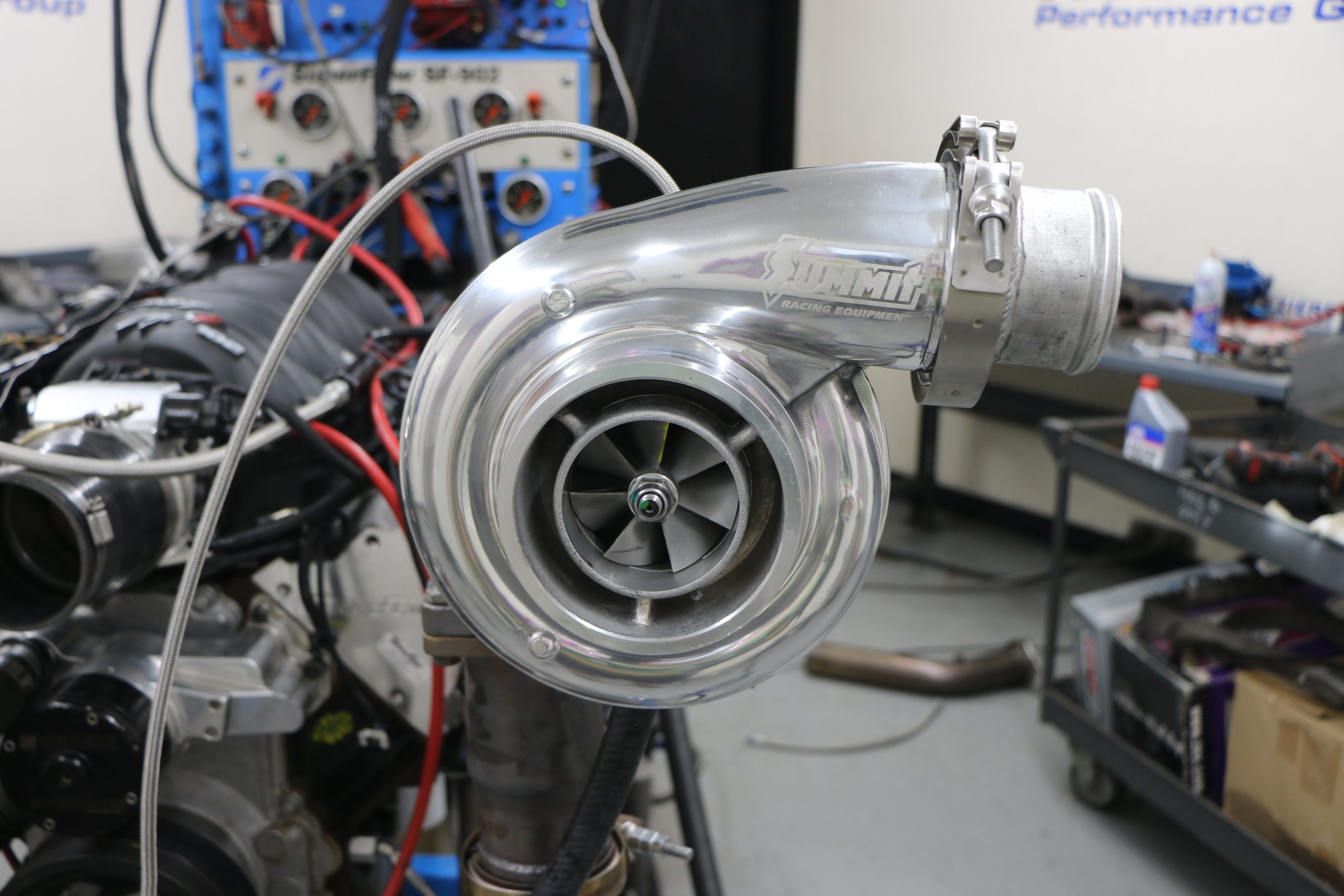
For this test, we chose an S475 turbo from Summit Racing to feed the cammed 5.3L. Boost response was important to the larger T6 hot side S475. (Image/Richard Holdener)
turbosmart wastegate installed
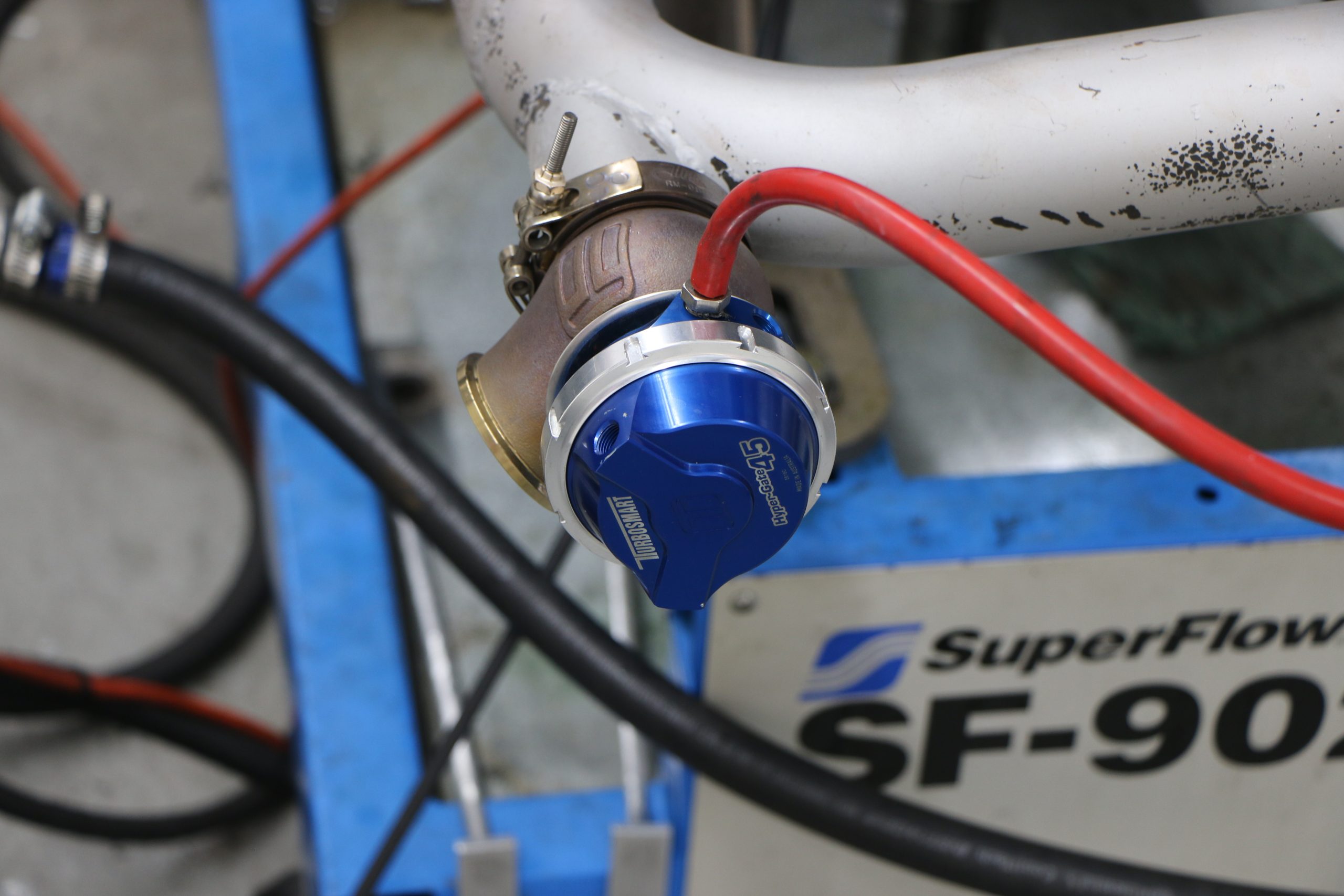
Boost was controlled by a pair of Turbosmart Hypergates. The gates were initially equipped with 7 psi springs. (Image/Richard Holdener)
water-to-air intercooler on an engine dyno
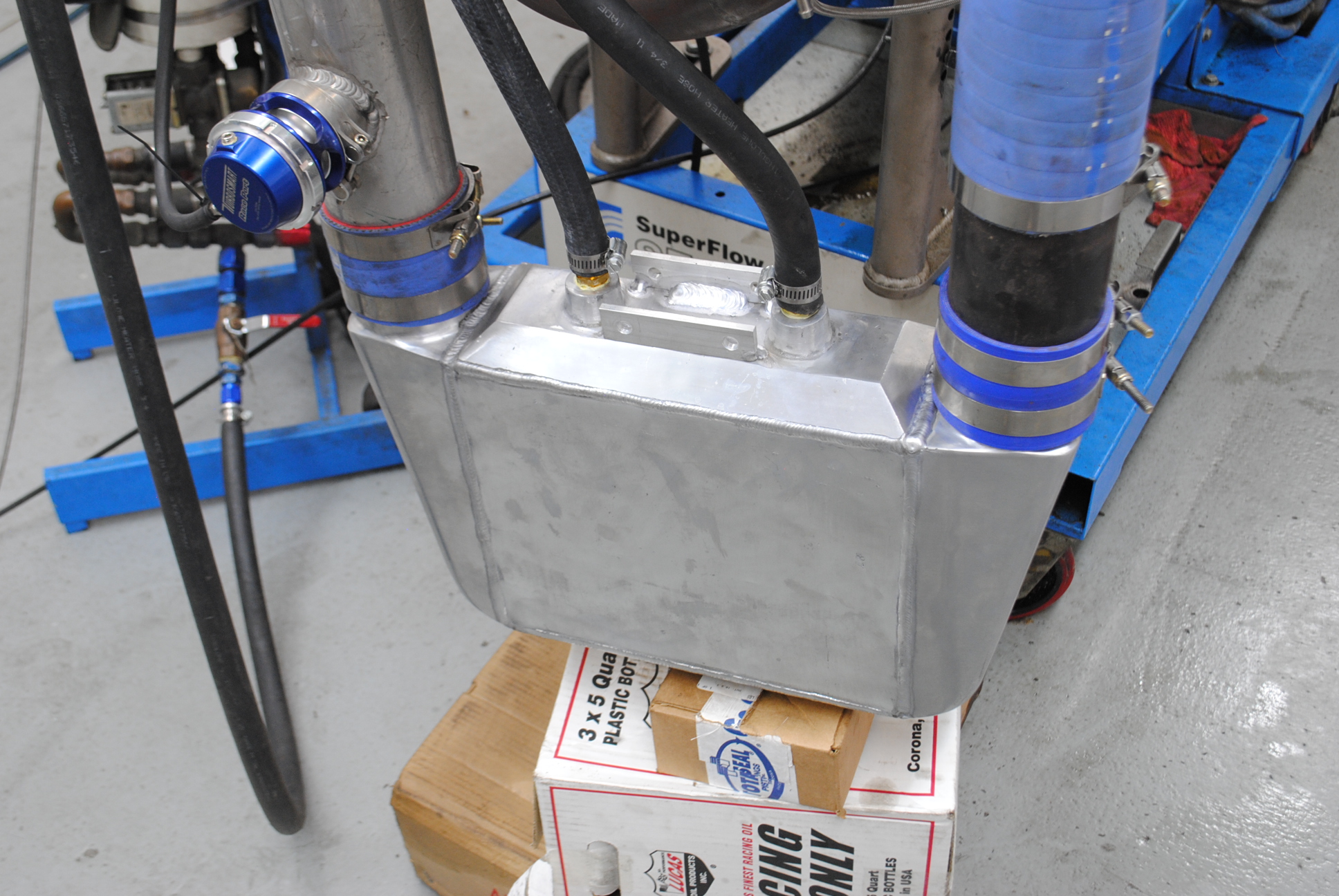
To ensure a cool charge at elevated boost levels, we employed an air-to-water intercooler. The cooler was run with ambient dyno water. (Image/Richard Holdener)
turbocharged LS engine on a dyno run
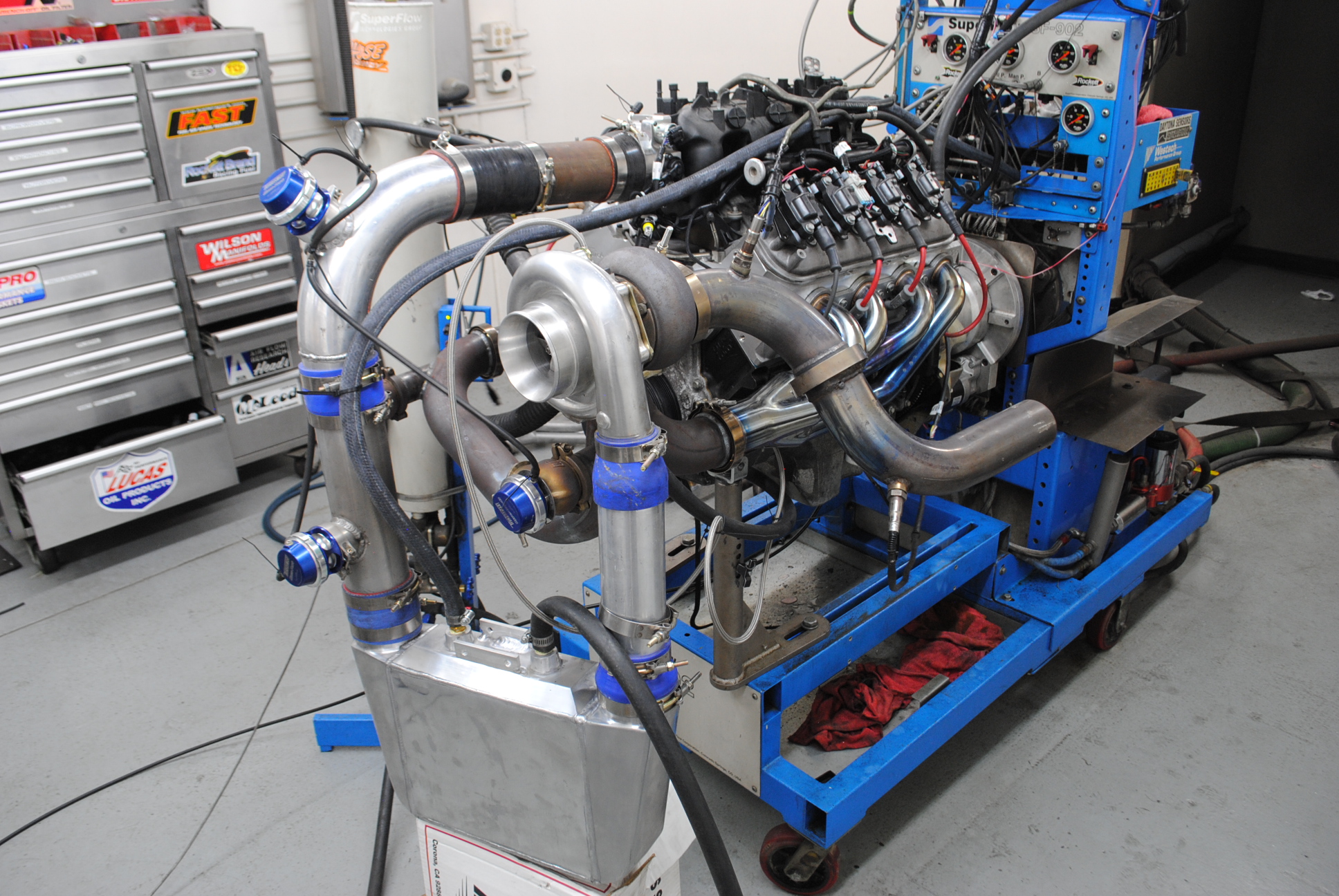
Run with the S475 turbo at just over 7 psi, the turbo 5.3L produced 628 hp and 619 lb.-ft. of torque, while offering full boost on the roll in. (Image/Richard Holdener)
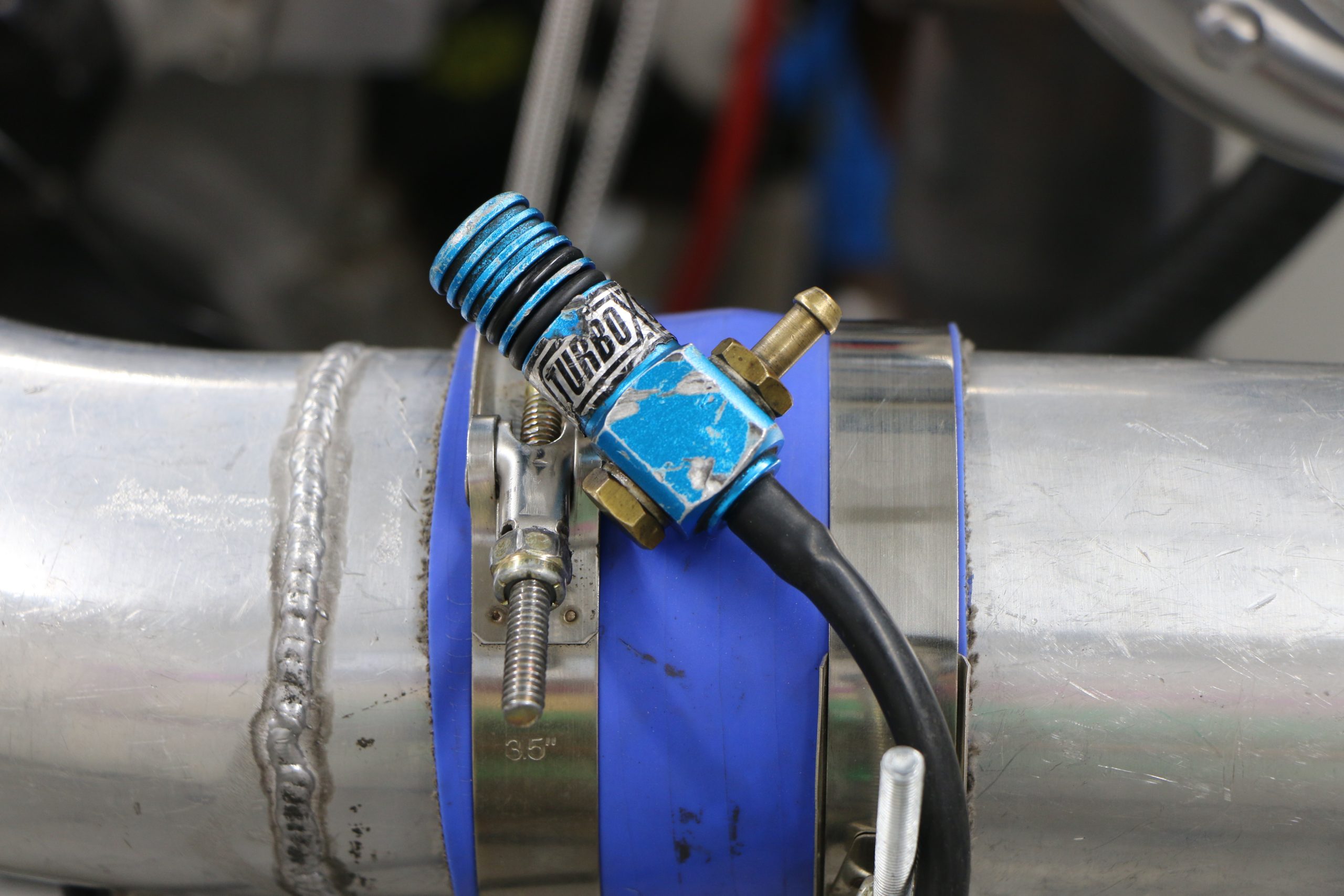
turbo plumbing fitting with nipple
While boost response is important, turbo guys also want to be able to make big power. To illustrate that the turbo decides the ultimate power output, we turned up the S475 Summit Racing turbo to over 17 psi, where the turbo 5.3L exceeded 900 hp, with a peak of 923 hp. We suspect the S475 is capable of supporting 1,000 hp and you can easily get there with a mild, responsive cam profile. (Image/Richard Holdener)
Share this Article

Richard Holdener is a technical editor with over 25 years of hands-on experience in the automotive industry. He's authored several books on performance engine building and written numerous articles for publications like Hot Rod, Car Craft, Super Chevy, Power & Performance, GM High Tech, and many others.