
How much LS power is considered a lot these days?
Forget the four-digit turbo motors for a minute, and let’s stick with naturally aspirated, all-motor combos.
If we narrow things down even further, what is considered a serious high-performance 5.3L these days?
Rated (flywheel) by the factory, these 5.3L LS motors range from high 200 to low 300 horsepower ratings depending on the exact designation. For our discussion, we need to further convert this into a dyno tested hp number, since the factory rated number assumes full air intake assembly, conservative factory tune, full accessories, near 190-degree water temp and full exhaust (including cats and cat back).
Run on the engine dyno, we do not usually include an air intake or full exhaust with cats (headers only with extensions), nor do we usually run accessories or the conservative factory tune. We also tend to run the motor colder to allow us to dial in the timing that will produce maximum power on pump gas. For these reasons, the typical (tested) power outputs of even the mild LM7 version 5.3L are closer to 350 hp.
Same motor, same components—just a different test configuration.
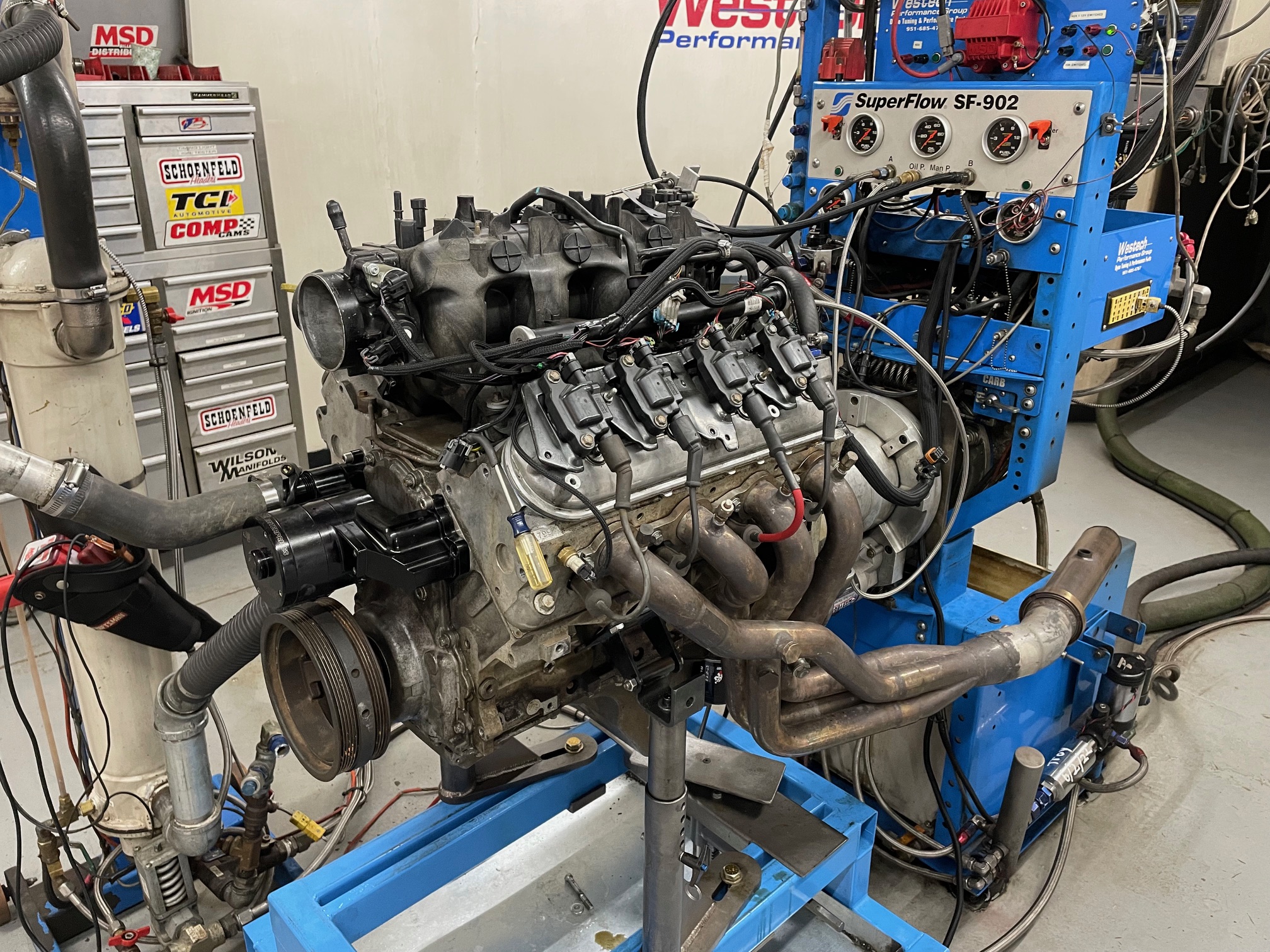
Now that we all understand the difference between rated and tested horsepower, let’s jump right in and starting making some mods to the 5.3L. Though it came from a local wrecking yard, this test motor was a very desirable 5.3 L33 LS engine.
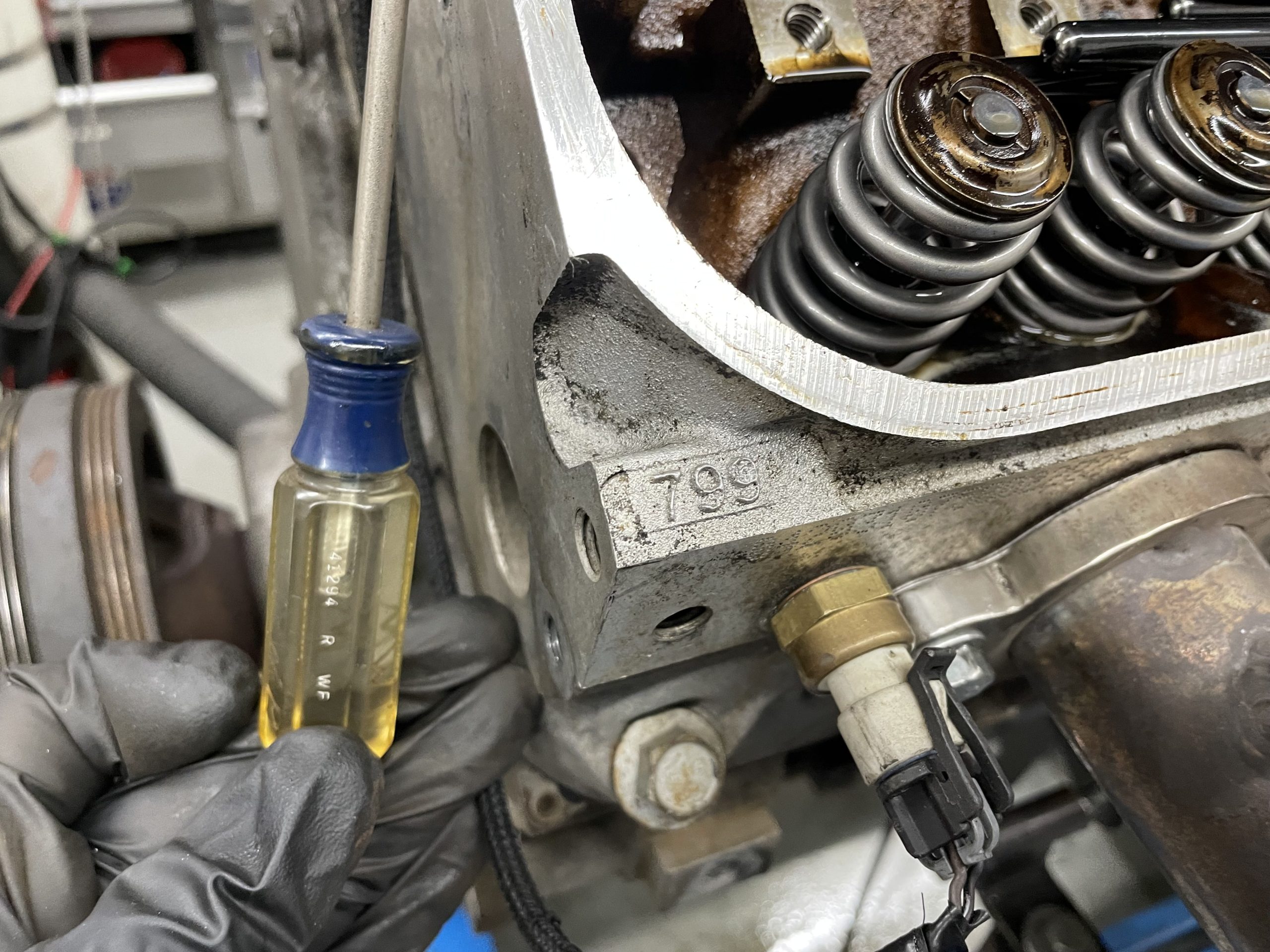
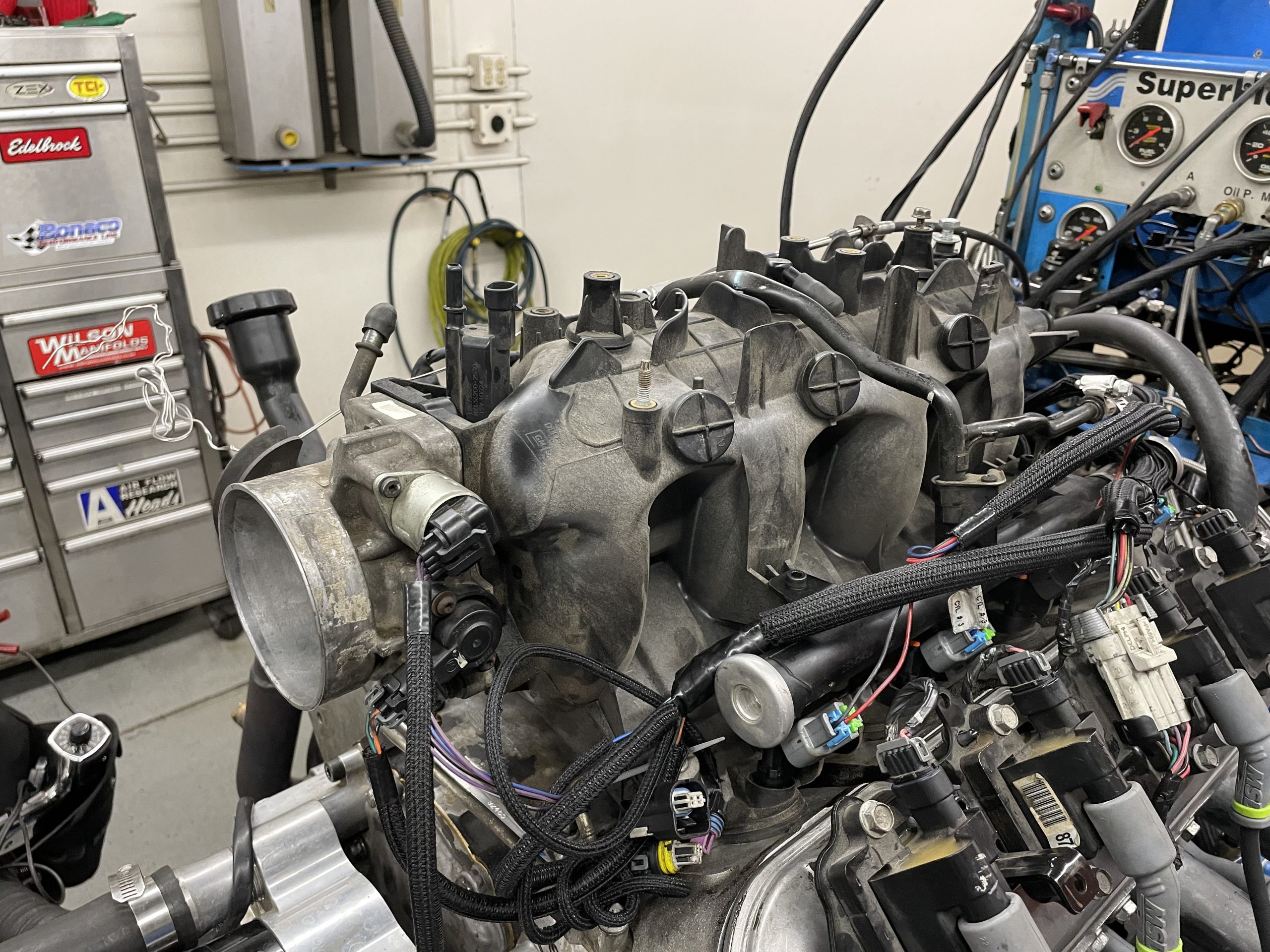
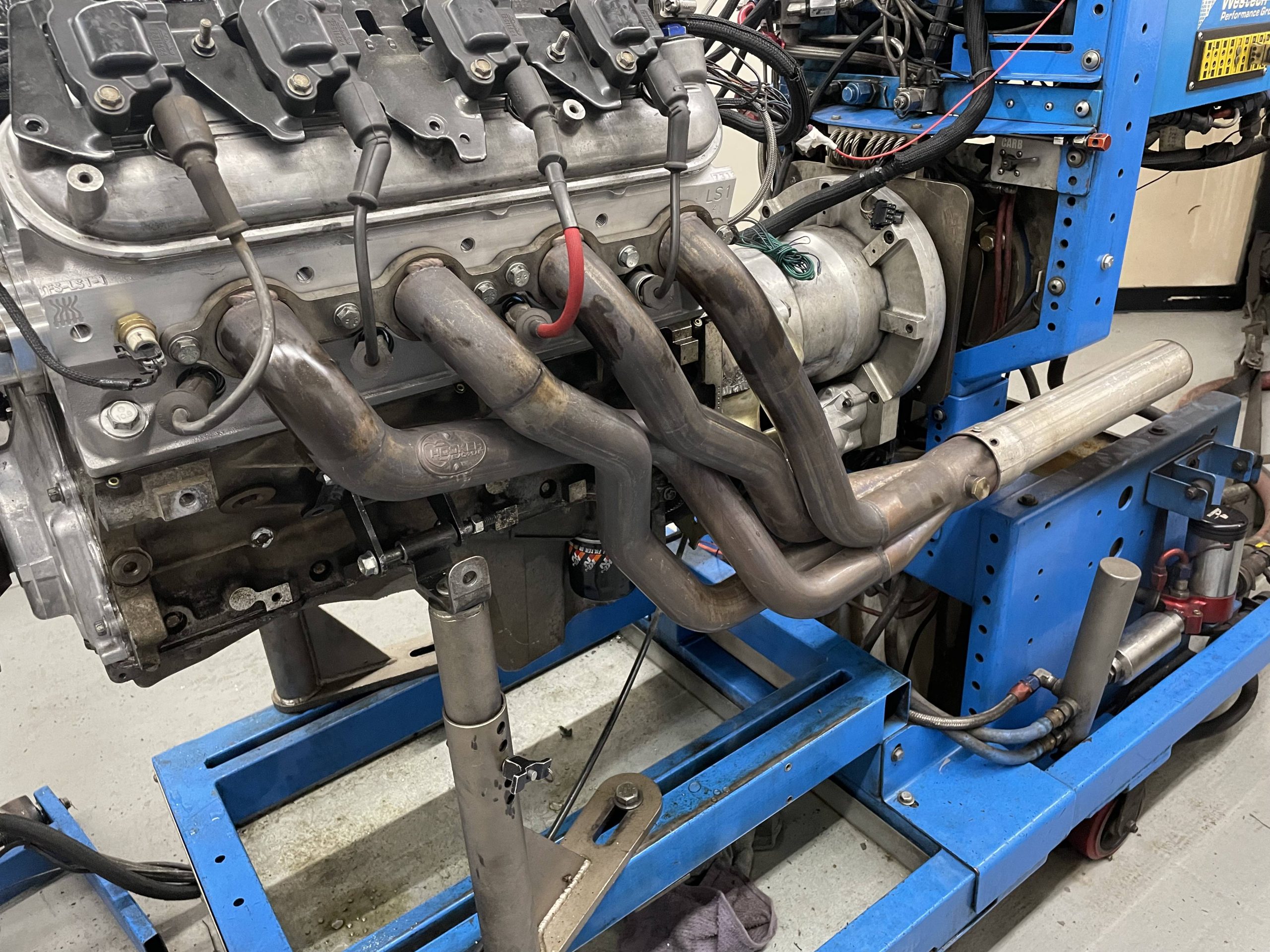
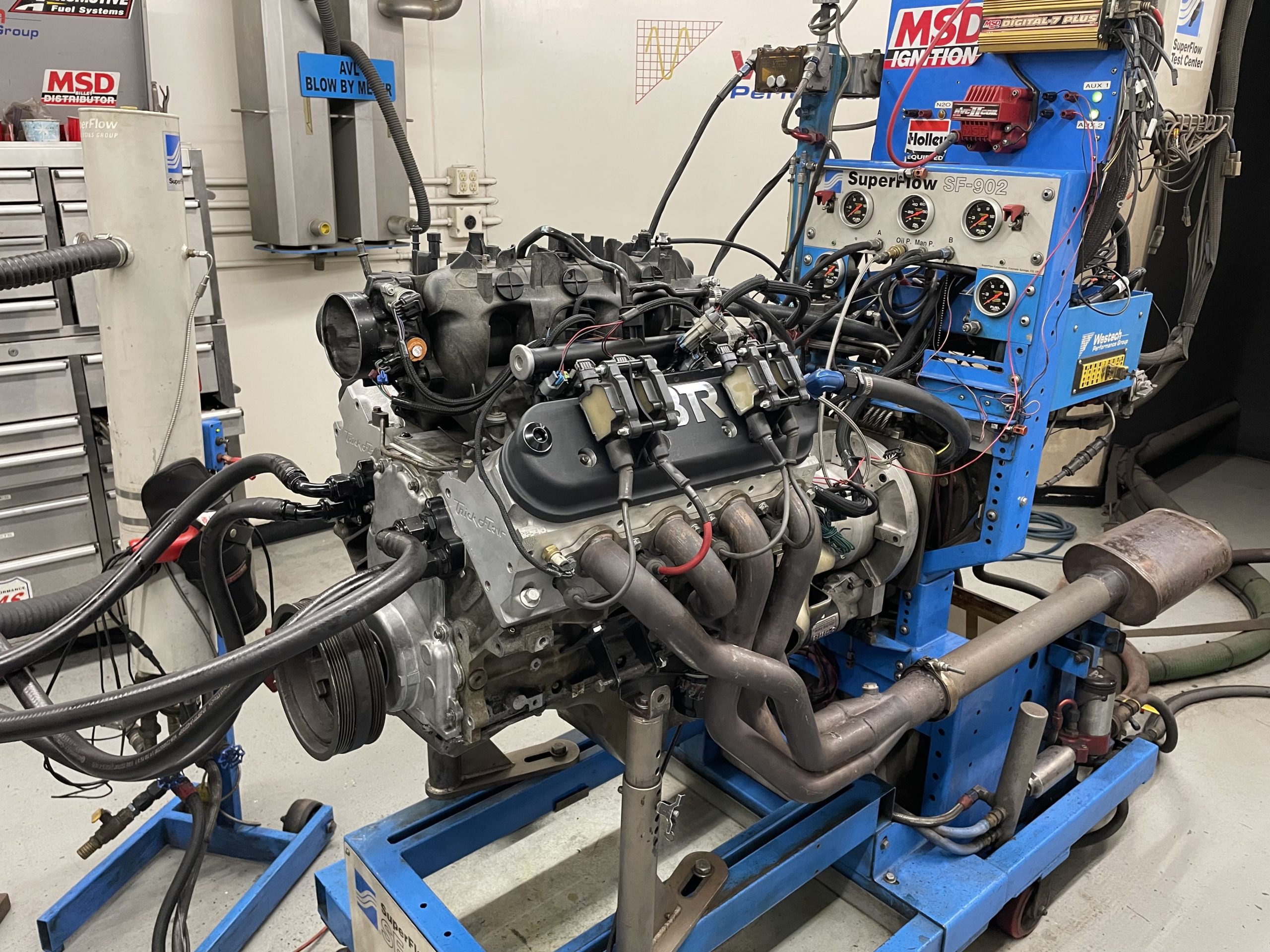
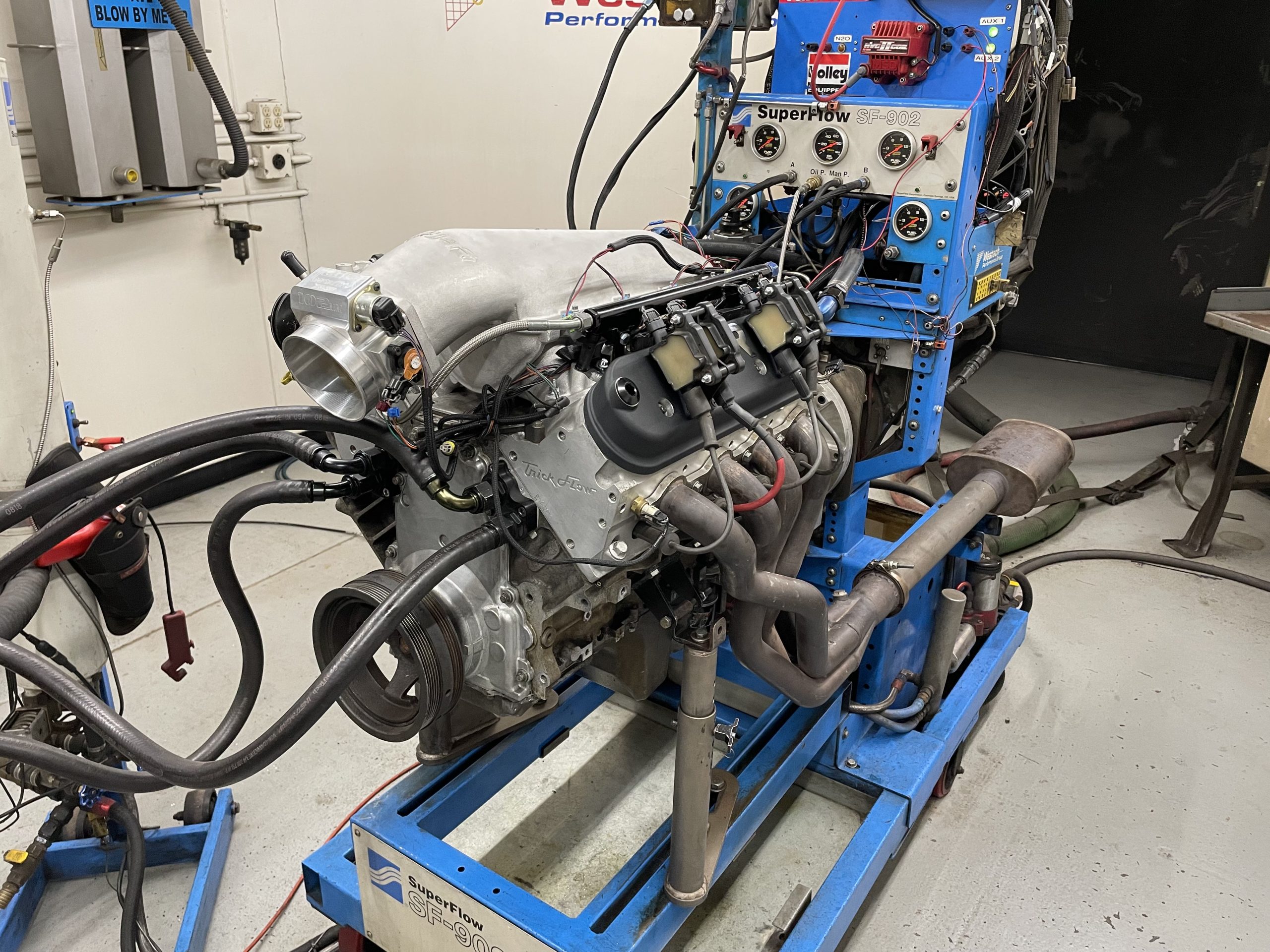
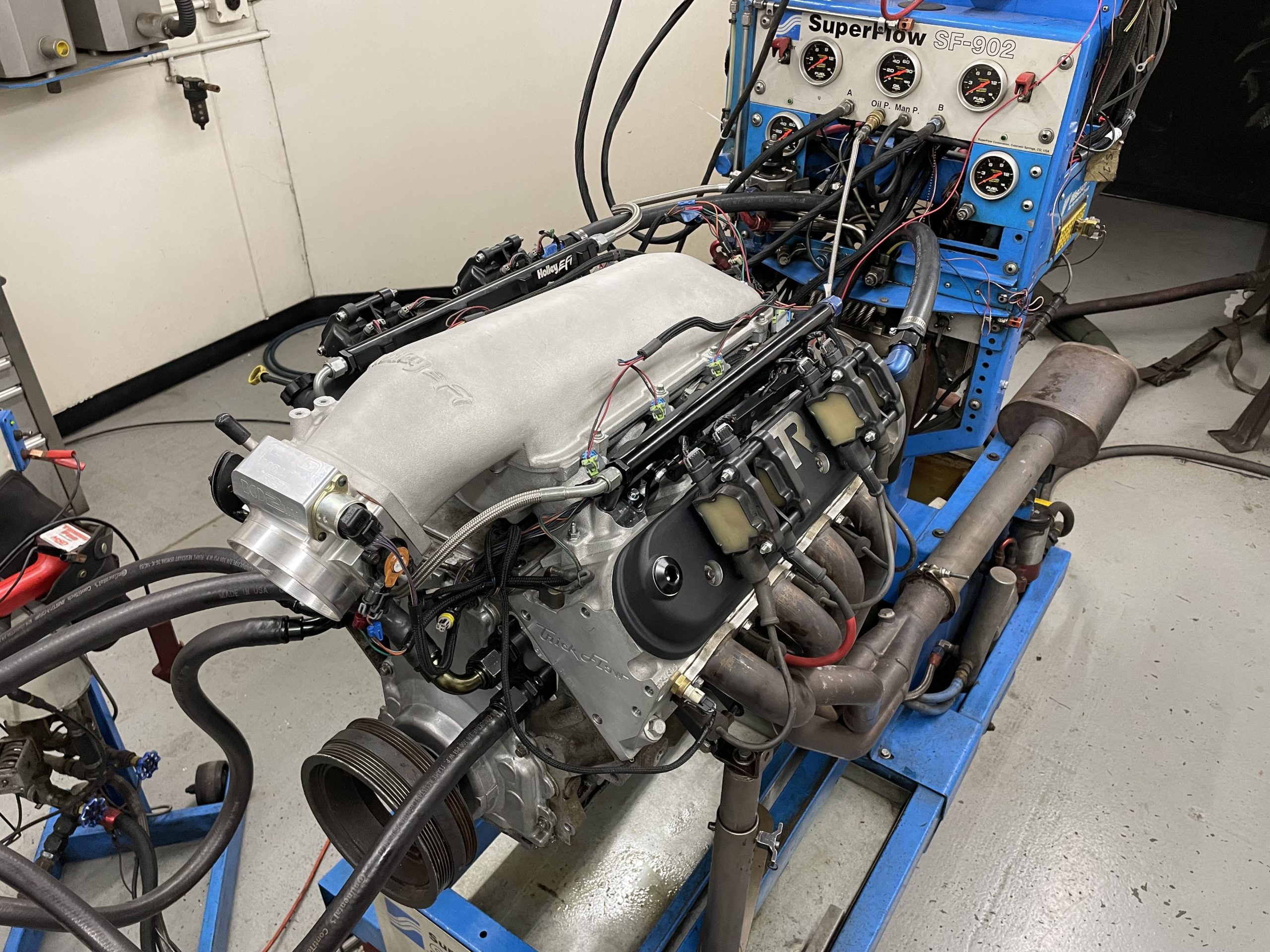
The L33 designation brought an aluminum block to match the aluminum LS heads. The all-aluminum L33 combined flat-top pistons with a slightly better cam (compared to the LM7) and 799 heads topped with the early (non TBSS) truck manifold. The 5.3L was plucked from the yard and immediately installed on the dyno with five fresh quarts of 5W-30 oil, 1-7/8 inch, long-tube headers with collector extensions, and a Meziere electric water pump (our typical dyno set up).
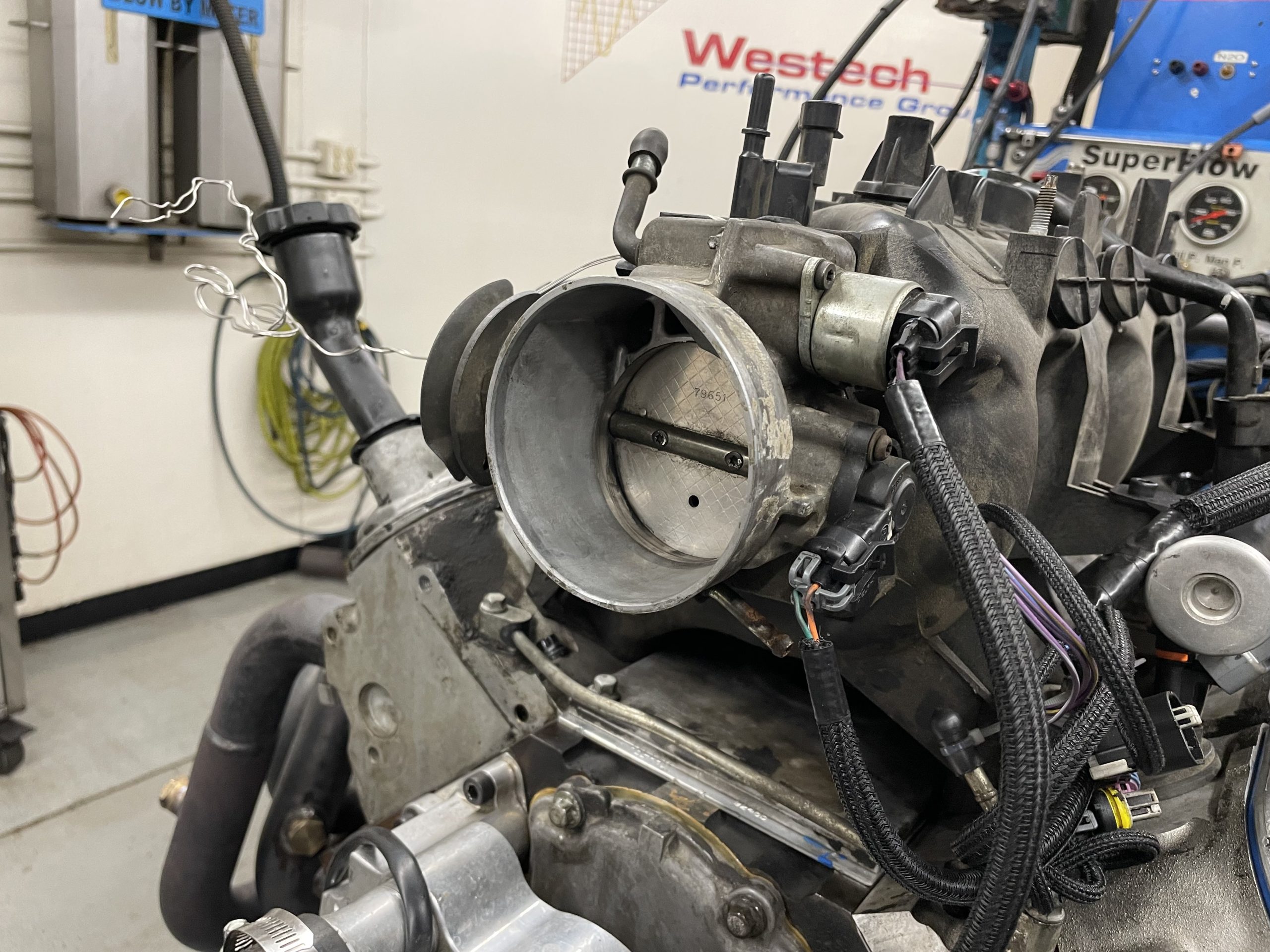
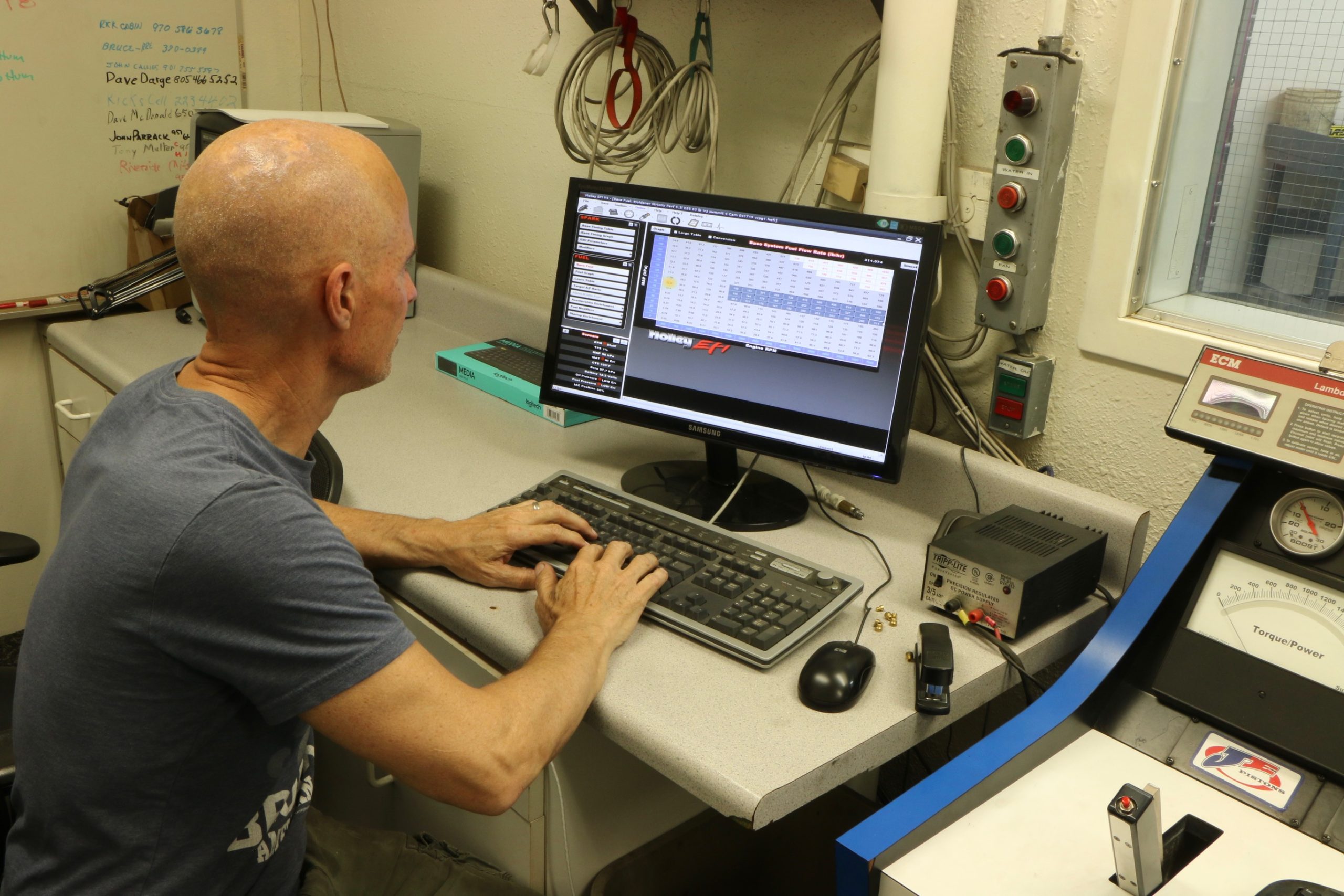
After adding a Holley HP engine management system and 1000cc injectors (stock injectors would be fine for this baseline run), we ran the motor in stock trim with a manual (stock) truck throttle body. The larger injectors were added to prep the L33 for later boost.
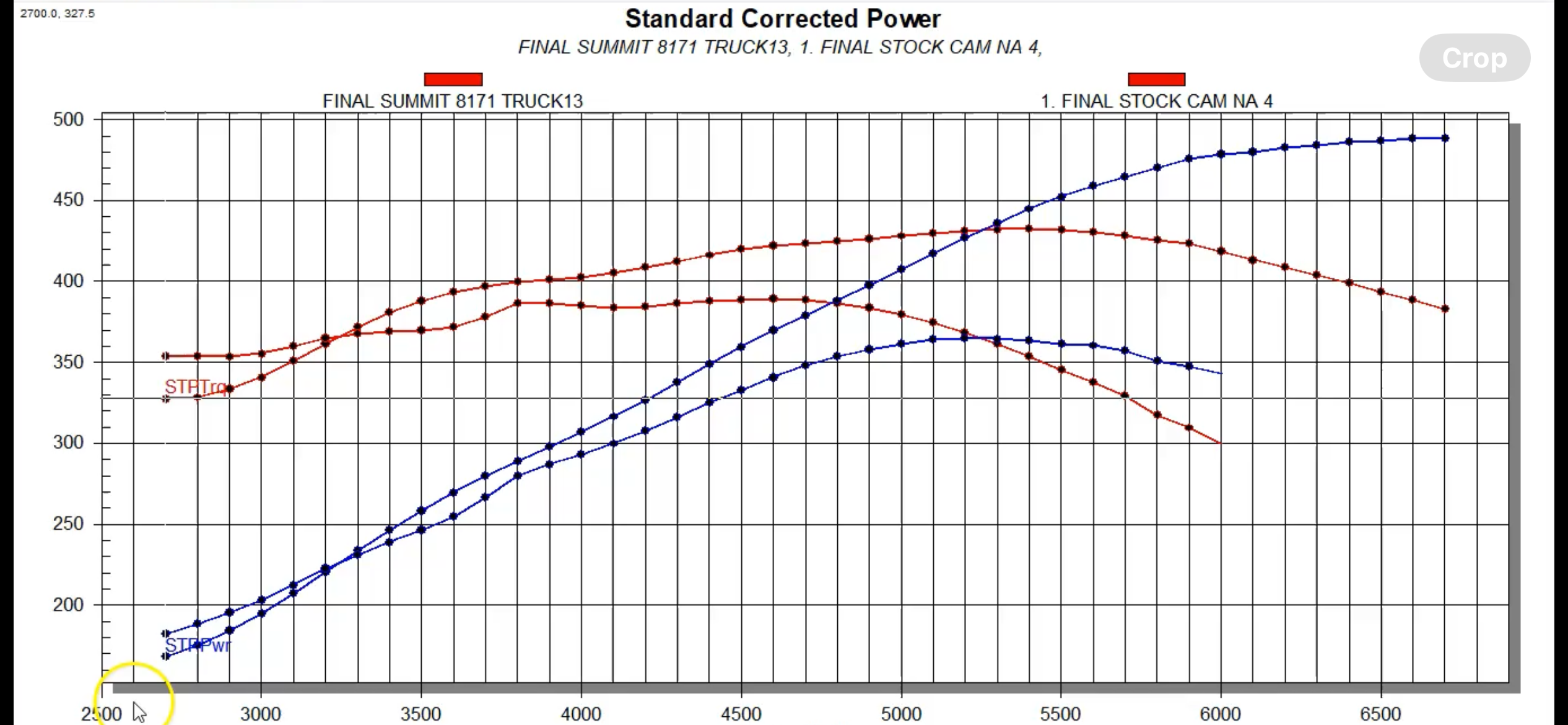
Once we dialed in the tune (30 degrees of total timing at the hp peak and 12.8:1 A/F), the high-mileage L33 produced peak numbers of 365 hp at 5,300 rpm and 389 lb.-ft. of torque at 4,600 rpm—now, it was time for some mods.
Airflow is the key to making more power, so we attacked the first two power producers on the “Big Three” (meaning heads, cam & intake—namely the heads and cam).
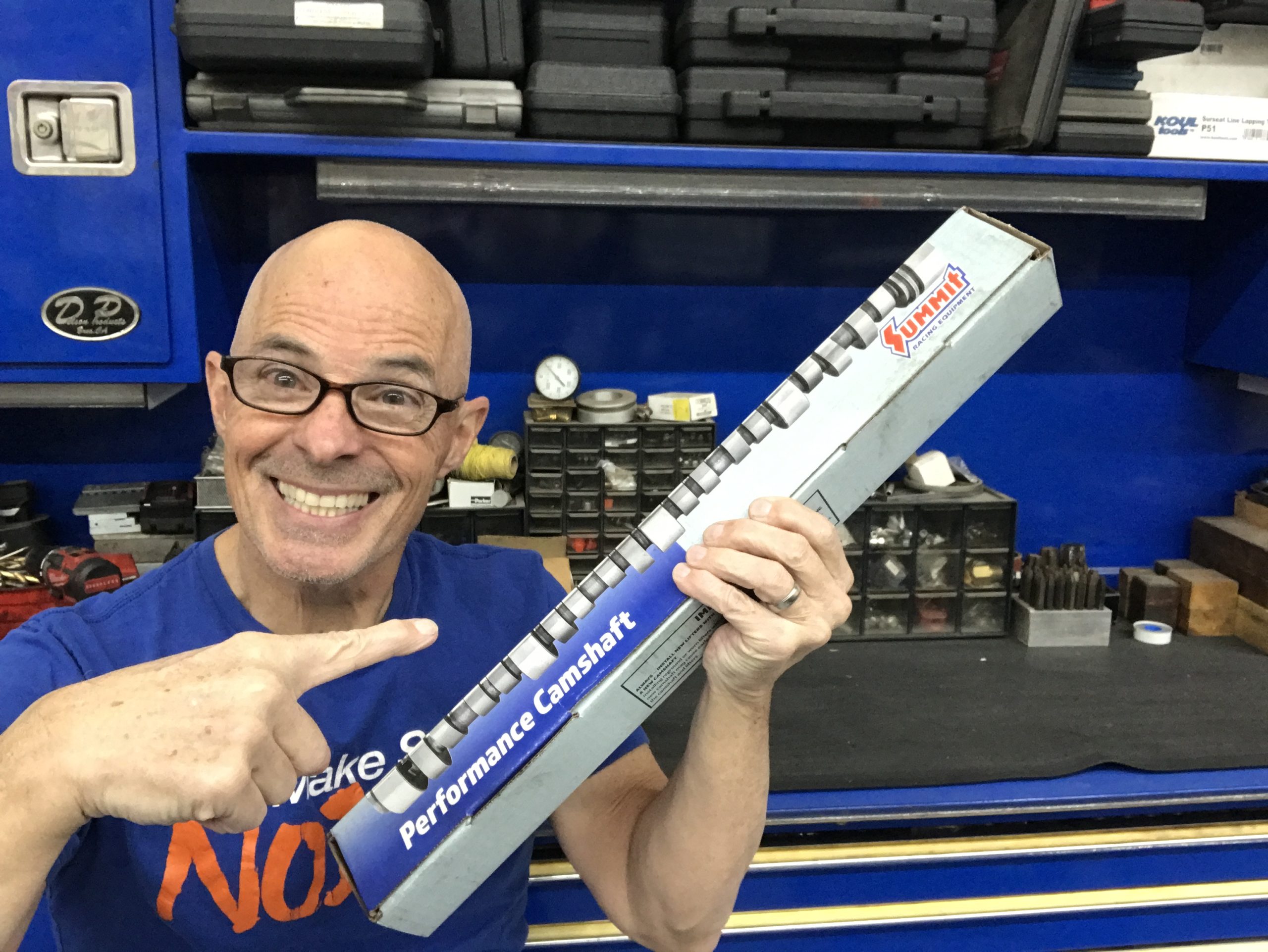
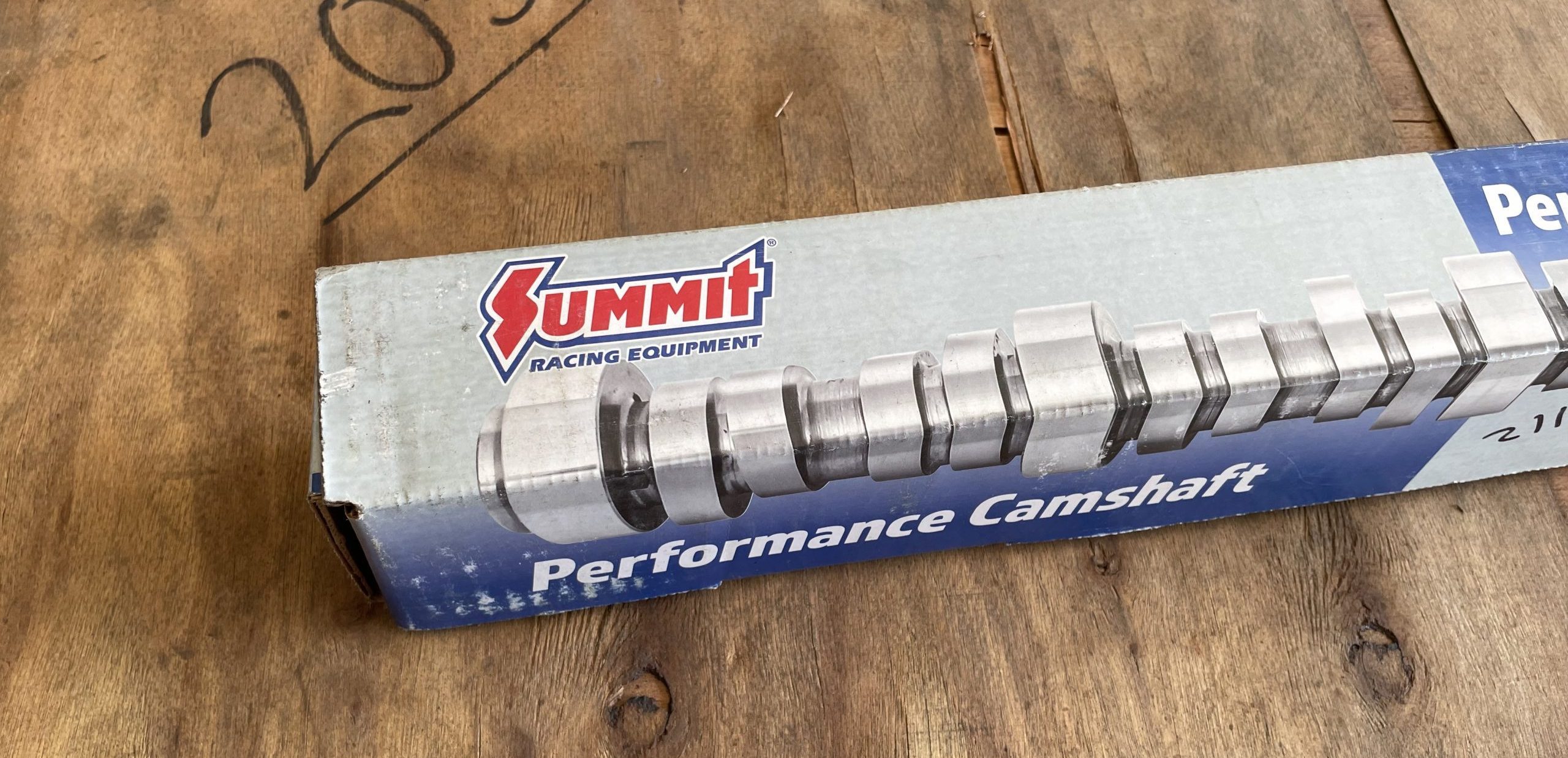
For the cam, we chose a healthy Pro LS grind from Summit Racing. The SUM-8711R1 cam offered a 0.625/0.605 lift split, a 234/248 degree duration split, and a 114 degree LSA. The duration specs of the big Summit Racing cam put it right near the limit of the available piston-to-valve clearance.
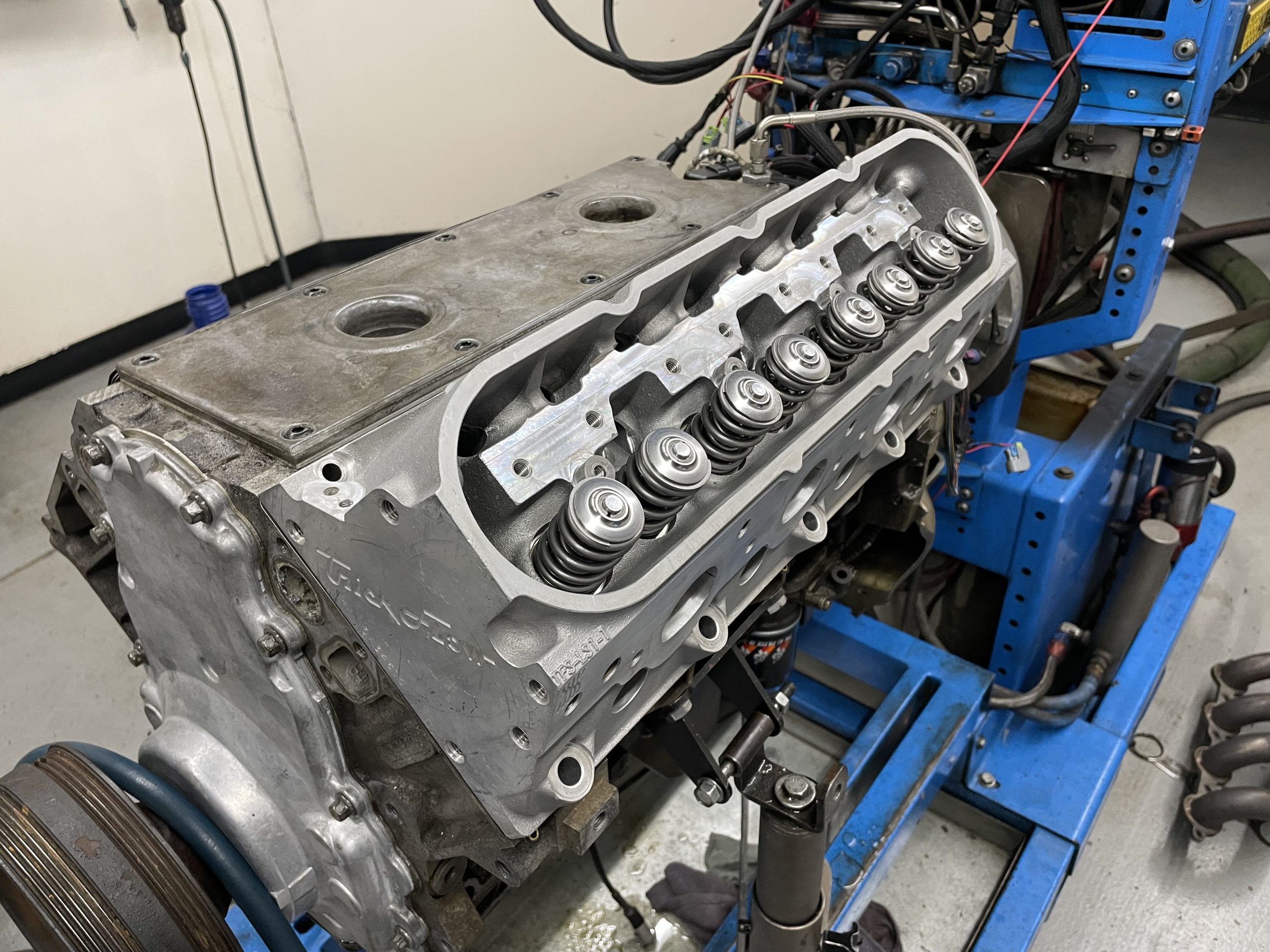
This was pushed even further by milling the Trick Flow GenX 220 Fast-As-Cast Cylinder Heads another 0.030 inches. In addition to milling the GenX 220 as-cast heads, the guys at Brian Tooley Racing treated the heads to full porting. The as-cast TFS 220 heads have always been excellent performers, but in ported form, they flow near 330 cfm!
To put those peak flow numbers into perspective, that was enough to support WAY more power than this L33 5.3L would ever produce. The heads were also treated to a BTR (0.650 lift) Ultimate RPM valve spring upgrade. The heads required slightly longer pushrods than stock and the combo was topped off (for now) with the stock truck intake and throttle body.
Comments on our choice of intake may now commence!
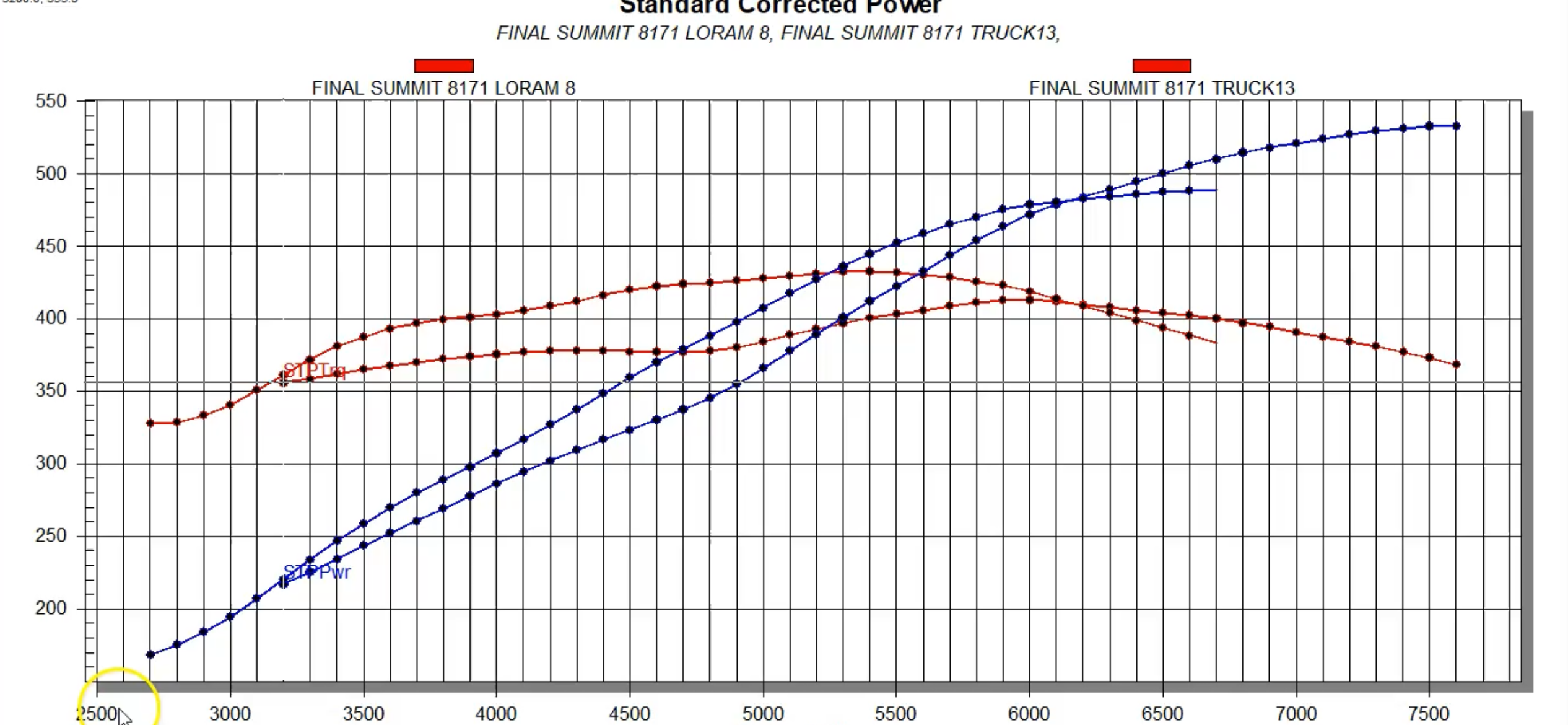
Run on the dyno with the TFS heads and Summit Racing Pro LS cam, the power output of the 5.3L jumped from 365 hp and 389 lb.-ft. of torque to 489 hp (at 6,700 rpm) and 433 lb.-ft. of torque (at 5,400 rpm). The heads and cam were worth an extra 124 hp and 44 lb.-ft. of torque, but the truck intake and throttle body were now holding back the combo.
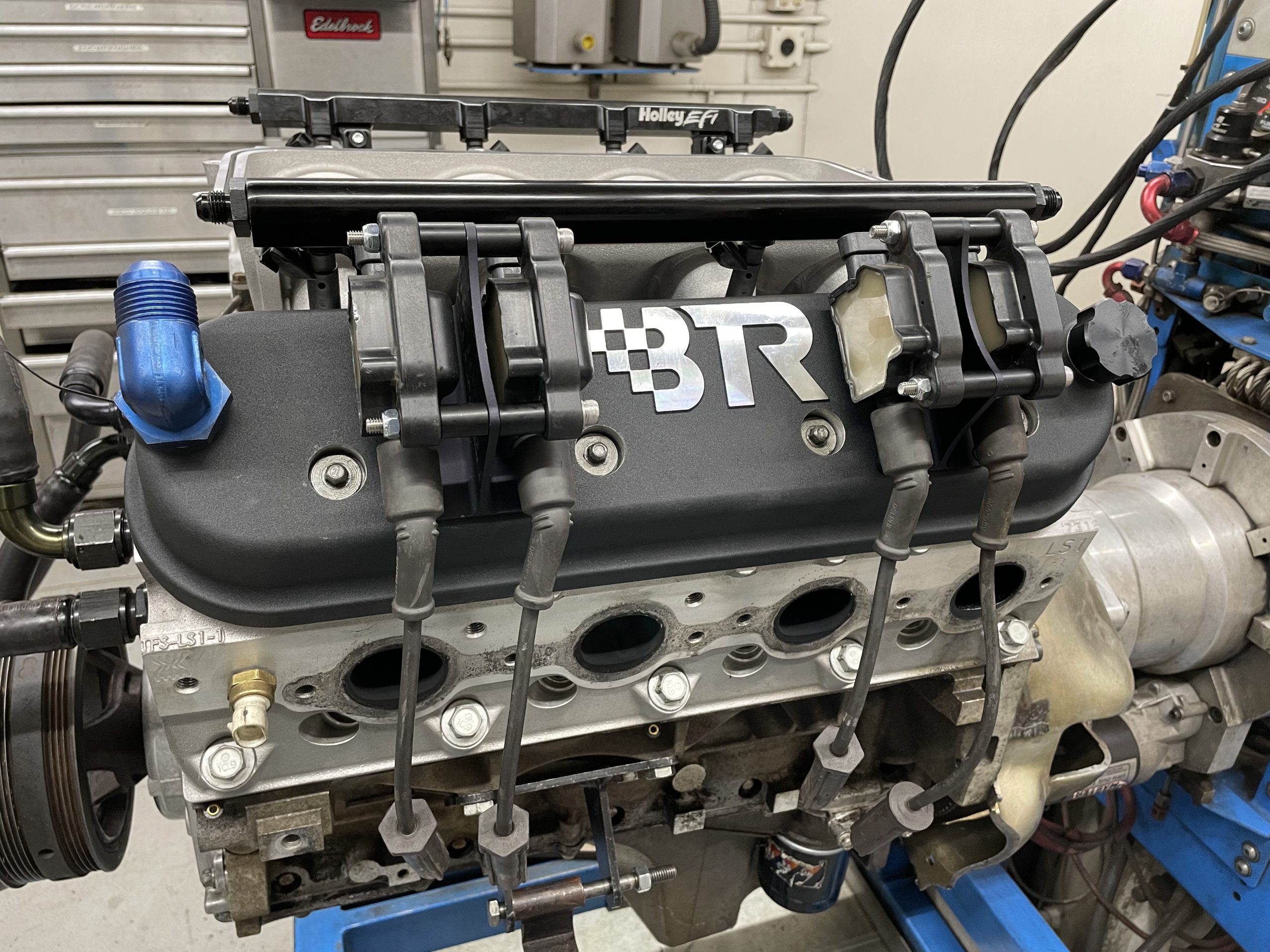
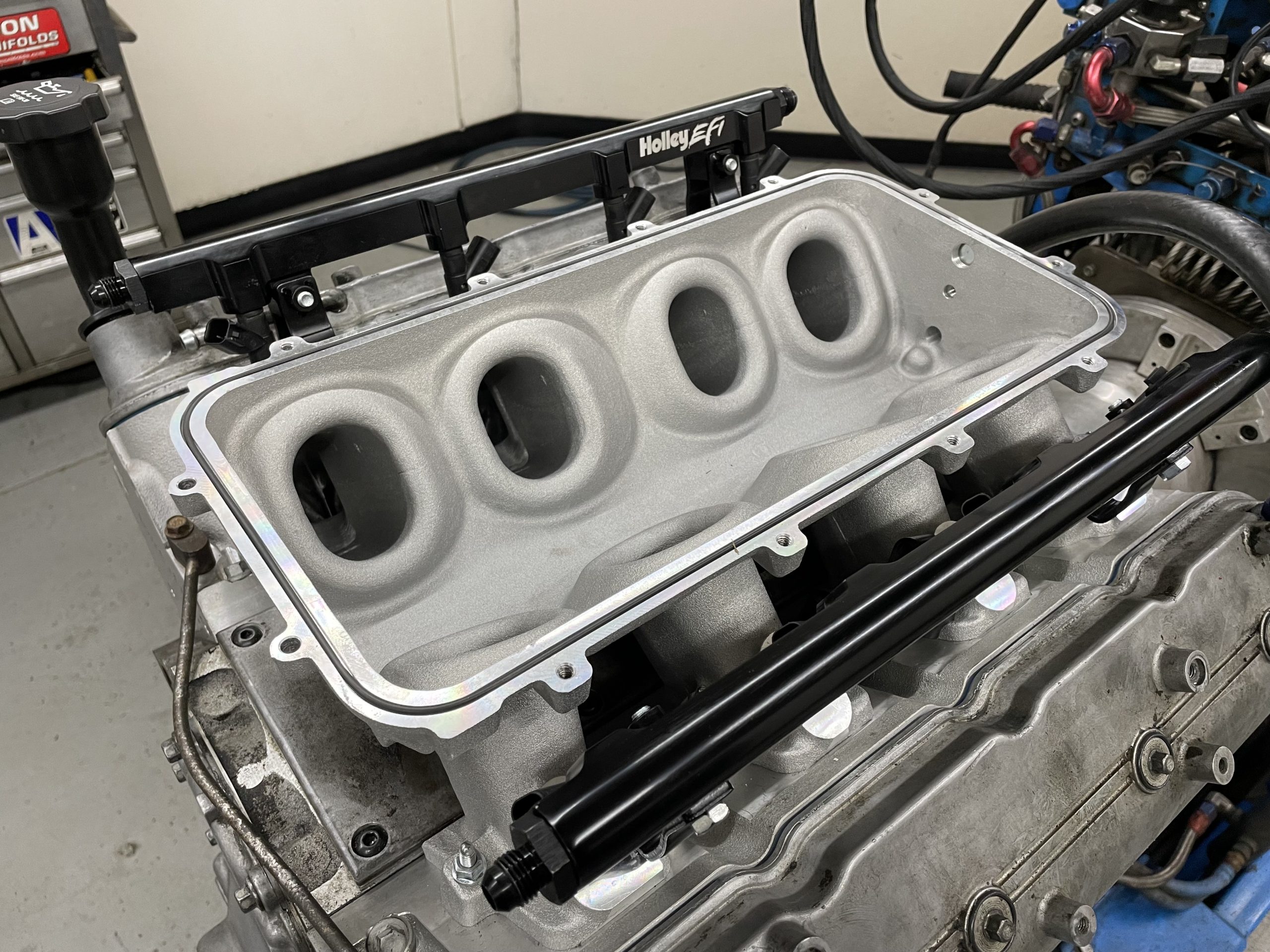
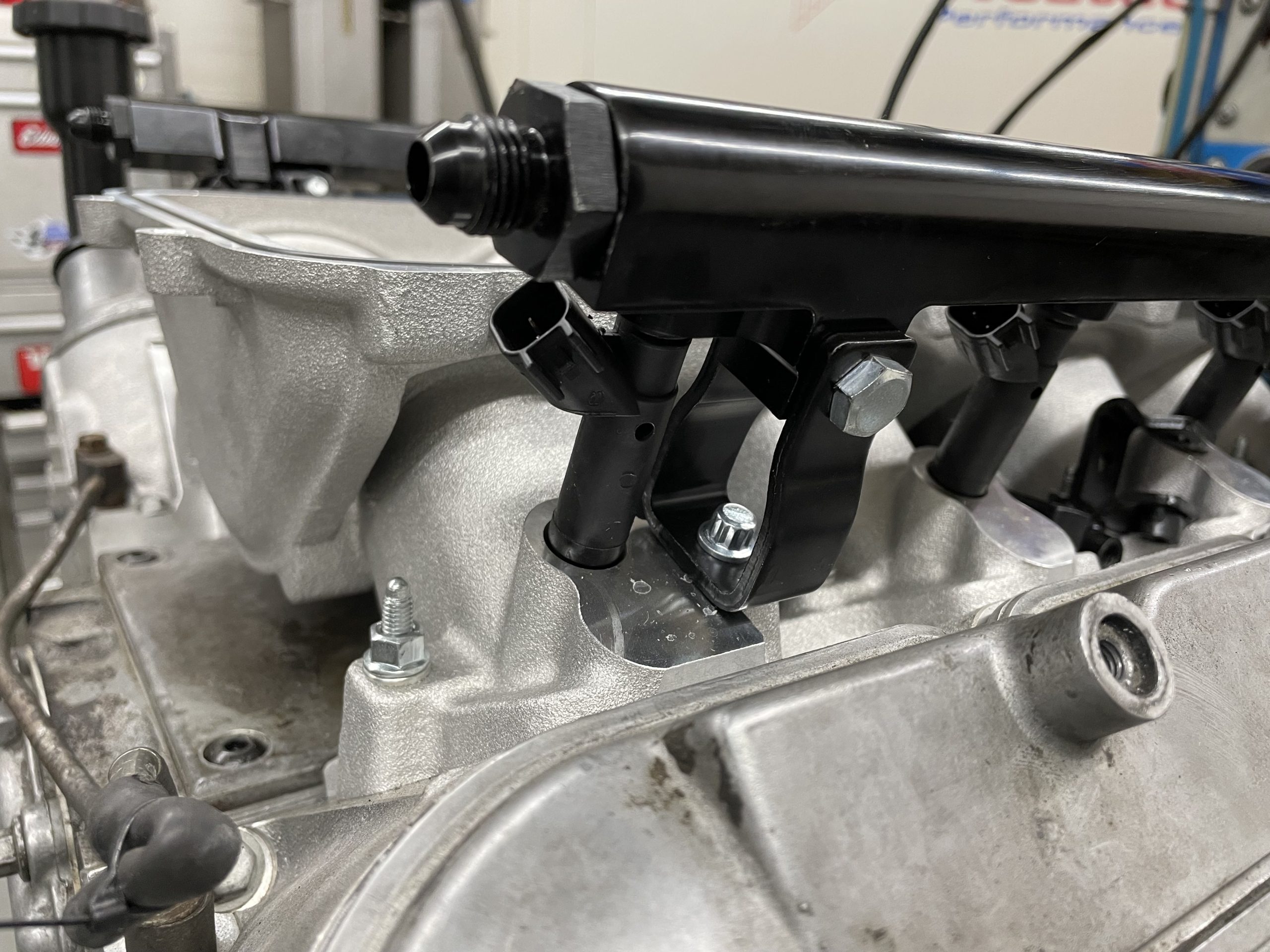
There are dozens of different intakes available for the cathedral-port LS market, but for this test we chose a short-runner intake designed specifically for high-rpm use. As evident by the results, the Holley Low Ram intake manifold is not the ideal choice to replace a stock truck intake on a mild application. The short runner-design hurts torque production, but it does like to rev and, fits under the hood of many applications where the truck intake just won’t work (it also looks better).
Know the desired rpm range of your combo and chose your intake accordingly.
The Low Ram did just what we wanted for this test and increased peak power production to a lofty 533 hp at 7,500 rpm (800 rpm higher than the truck intake). True to its high-rpm design. peak torque dropped to 413 lb.-ft. and power production was up only beyond 6,200 rpm. The 533 hp 5.3L L33 put us right at 100 hp per liter, and boy howdy did this thing sound glorious at 7,500 rpm run after run.


I have a 2015 Silverado 1500 with a 5.3. The truck has 133,000 miles on it. Is it feasible to do a cam, head, and intake swap with this amount of miles. I currently use a Range device to turn off the DOD. I don’t wanna do anything crazy but I still want it streetable,
Thank you for your help.
I always love your LS and SBF informational/physic-up to spend hours building unnecessary overly power engines videos. AS usual this was entertaining. However, I prefer grabbing a gen 3 LM7 gapping the rings for boost, dropping an Elgin stage 2 cam and spring upgrade, ls chain with damper conversion kit, steam kit, head studs, 7 layer mls head gasket, CARB convert with a dual plane E-brock style intake Manifold and a top notch Pro-Systems blowthru carb an MSD8014 LS controller and my secret weapon a MSD Master Boost-Timing controller. A cheap GT45 turbo and spend some $$ on a good wastegate or watch it al go by by. Don’t even need intercooling. The carb does it for you. Be sure to invest in a AIR/FUEL gauge for safety and tuning. under $4k(parts) and an safe, easy 800hp and 790tq. Do a video of this please!