
Although it may seem like a pretty straightforward mechanism, a modern clutch system requires a lot of know-how to design and perfect.
And know-how is exactly what the folks at RAM Clutches have to offer.
Specifically RAM’s co-owner Mike Norcia. We’ve talked about Mike and his amazing 1967 Camaro before, and we were happy to invite him on The OnAllCylinders Podcast to share his incredible knowledge of clutch system design and setup.
As part of the second generation of the family-owned RAM Clutches, Mike grew up in his father’s shop—so it’s no exaggeration to say he’s been working on clutches since he was a kid.
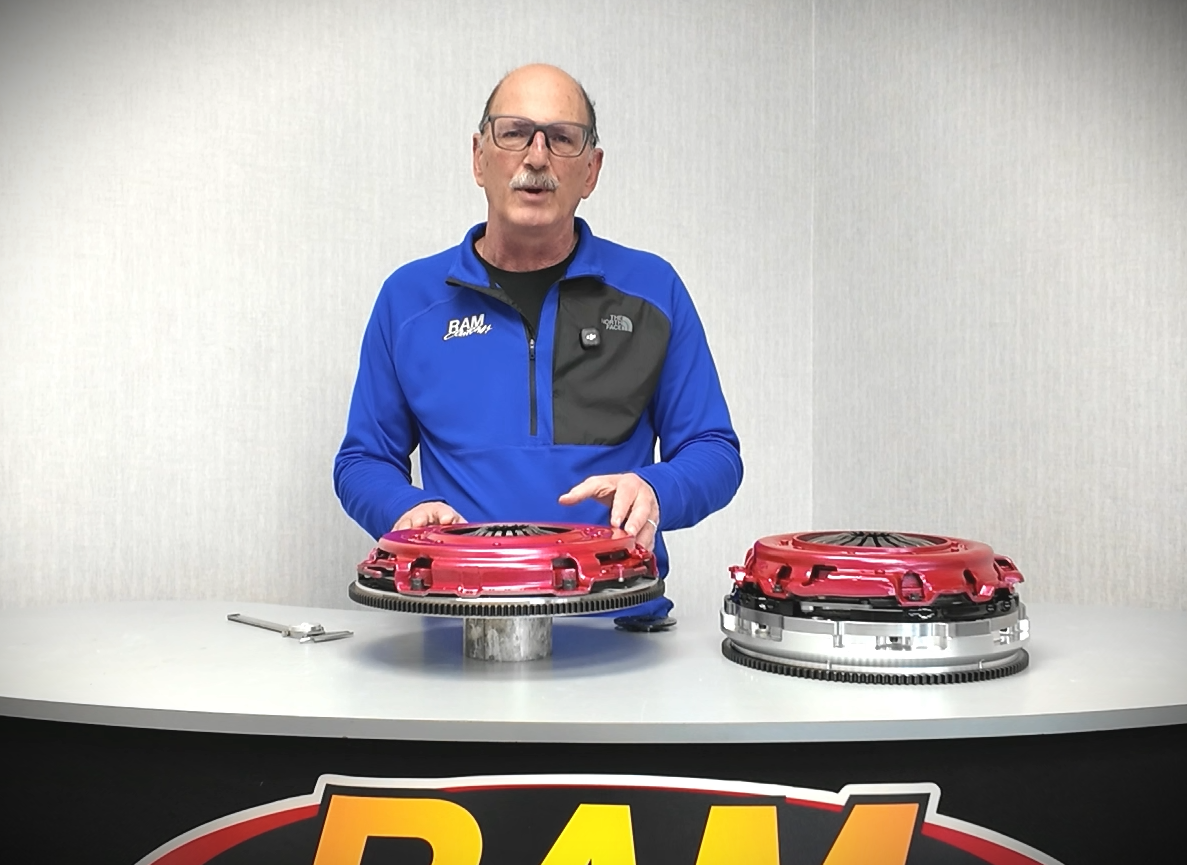
RAM’s Director of Business Development, Matt Giangrande, has an equally impressive resume.
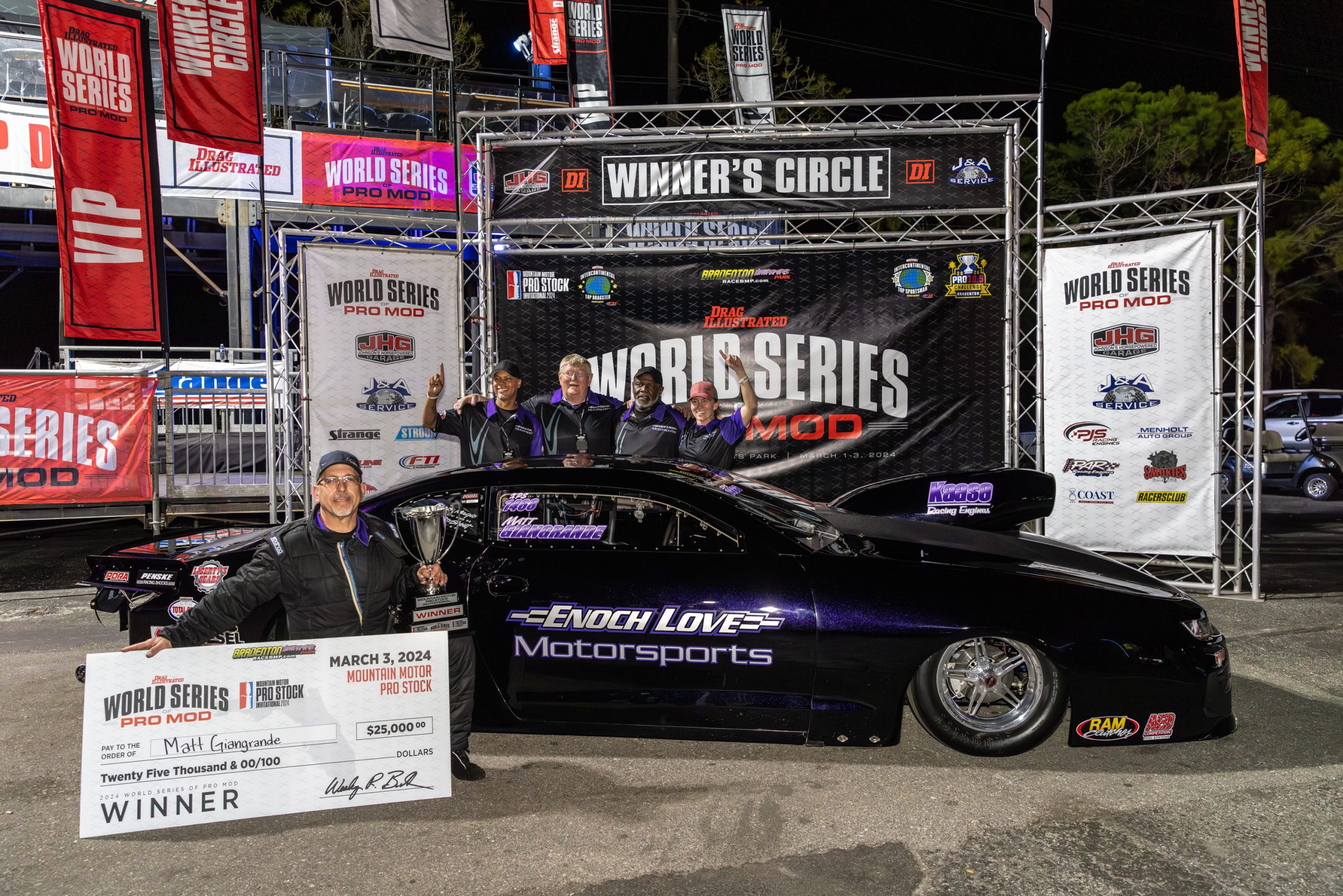
In addition to being an expert on the topic, Matt campaigns a Mountain Motor Pro Stock car in his free time—and has picked up plenty of event wins along the way.
Suffice it to say, these two guys know an awful lot about well-designed clutch kits.
You can listen to the whole OnAllCylinders Podcast interview in the embedded player here, and we’ll also include some snippets from our conversation below as well.
***
Talking Clutch Tech with the Experts from Ram Clutches
***
Explain the Pros & Cons of Single vs. Twin Disc Clutches.
“You get into a certain gray area in the power level of the car or how the car is being used, when you have to make a decision between, am I going to use a very aggressive single disc clutch to be able to hold the power, or can I use a dual disc?
“A dual disc actually does exactly what you would think—two discs, you’re nearly doubling what the capacity of the clutch is. So consequently, if you have a, say, 500 to 600 horsepower car, where you once might have had to run a single disc that’s kind of aggressive on the engagement, you can now run a dual disc and use, say, an organic friction material, get a very smooth engagement, and yet still be able to hold that power.
“So the drivability can be a whole lot better with a dual disc, even if you may not even be quite to that power level where you need it.”
So Clutch Design & Drivability is a Bit of a Tradeoff?
“Yeah, and it’s not just the pedal effort necessarily. It could also be the aggressiveness of the friction disc that’s used, because usually when we’re going to increase the capacity of a single disc unit, you’re going to use some combination of static pressure, which is going to affect that pedal feel and friction material.
“When you use a higher coefficient of friction material like a metallic or something like that, it’s going to be a little more aggressive when engaging.”
OK, Discuss Clutch Friction Materials for a Moment.
“Most of your basic clutches you see in factory cars are going to have some sort of an organic friction material. Organic material has a little lower coefficient of friction, meaning its ability to stand up to heat is not quite as good. So it doesn’t provide quite as much—I would say not really engagement or aggressiveness—but it’s going to be a softer feel.
“So if a guy was, say, restoring a muscle car or just doing a very basic build on a car, you’re probably going to stay with something that’s more like an organic friction material because it’s going to give you a lot better drivability.
“But as those power levels build or the use of the vehicle starts to change to where it’s not just a street car, these are all things that we call load factors—vehicle weight, tire size, rear end gearing.
“Load factors are what we use to really prescribe a certain clutch for a certain application. So as those uses and power levels grow, you start to get more into something like a power grip disc, where we’re using a dual-sided facing material, we use organic on the flywheel side and a metallic on the pressure plate side.”
What are Some Mistakes You See When Selecting a Clutch?
“One of the biggest things, is the expectations of what the customer really wants it to do. It is probably a tendency to think, ‘If more is good, then more than that must be better. So, if I jump up to the best one, I know I’m going to have something that’s going to hold.’
“But it may not meet those drivability expectations. That’s probably one of the biggest things that we run across. And it’s really kind of hard sometimes to get people to tell you.
“Something that is very important is the planning and preparation of the job. So while it might again seem very trivial and very basic, there are a lot of things that should be thought about up front.”
Comment a Bit on Hydraulic Clutches.
“Pretty much when you get to about 1996, 1997, that’s really where most of the manufacturers started going to hydraulics and in particular, what we call internal hydraulics. And that’s a hydraulic bearing that’s going to usually mount on the front of the transmission, that’s actuated by a master cylinder.
“But there’s a lot of nuances and technical things involved with hydraulics that you really need pay attention to. A hydraulic bearing is a great way to set a clutch system up, but it’s a little bit more work.
“Not more work in physical sense, it’s mental work because the preparation is really a lot of measuring. It’s measuring to get the bearing set up at the proper height in the car, so that the bearing is going to disengage the clutch properly—but it’s also measuring to ensure that you’re leaving enough room for the clutch to wear over time.
“It’s really a matter of taking your time, measure once, measure twice, measure the third time—and that saves that transmission from having to come in and out three or four times.”
Is There Anything That’s Commonly Overlooked When Upgrading a Clutch?
“The call starts out like this, ‘I have a 1969 Camaro, it’s 500 horsepower. What clutch do I need?’
“There are so many other factors involved in making that decision. And they’re what we refer to as the load factor. What’s the vehicle weight? How much tire is on it? How is the car geared? Most importantly, how is that car going to be used?
“And getting an honest answer there is really the key to picking the right clutch. There are certainly some downstream effects that could occur: You may end up upgrading a drive shaft, you may end up changing rear gearing. Things like that can occur to help optimize the combination.
“But mainly, it’s not thinking of the clutch as a Band-Aid that’s going to cover everything, because there are going to be other items down the road that you’re going to have to deal with.”
What Factors Impact the Lifespan of a Clutch?
“The number one factor in how long that clutch is going to last is the guy that’s putting his left foot on the pedal. That’s going to be the biggest thing.
“Are they slipping the clutch to get a lot to get the car moving? You know, using it a lot, the racetrack, things like that are going to have a huge effect on what the life might be. But the driver is the biggest factor.
“Now, of course, if you don’t have the car clutched properly, if you select something that’s not adequate for whatever your power level is or what your use is, that’s also going to drastically affect how long or how short the life of the clutch is.”
What Other Components of a Clutch Should You Think About?
“Let’s talk about flywheels a little bit, because that’s something that often gets overlooked.
“The flywheel is really important. I mean, that’s one-third of the clutch system. And it’s super important that the flywheel is going have good structural integrity. So you’re going to want a billet steel or possibly a billet aluminum flywheel, depending on the application.
“But the real important things about the flywheel are, number one, a good surface ground finish. This is something that every flywheel you get from us is going going to have.
“The balance is also very, very important in the flywheel. Every flywheel we build, that’s the very last thing that’s done. It goes on the balancer. It’s going to balance to a very tight specification, whether it’s an internal balance motor or if it’s a factory external balance, like some of the Ford or Chevy applications.
“And one last thing about the flywheel selection is a common mistake, we get customers asking for a light aluminum type of flywheel. Once again, in most cases, especially for the street, that’s not going to be the best choice. It isn’t uncommon for somebody to get an aluminum flywheel and have buyer’s remorse.
“So if somebody’s on the fence about what flywheel to select, and it’s going to be driven on the street in any capacity, don’t ever hesitate to go with the heavier flywheel. You will not be sorry.”
***
Got clutch questions? Both Mike and Matt strongly(!) encourage you to contact them via the form on RAMClutches.com
***
You can catch the full interview in The OnAllCylinders Podcast section, where you’ll also find dozens of other episodes featuring famous celebrities, friendly gearheads, industry veterans, and really (REALLY) smart technical experts.


Comments