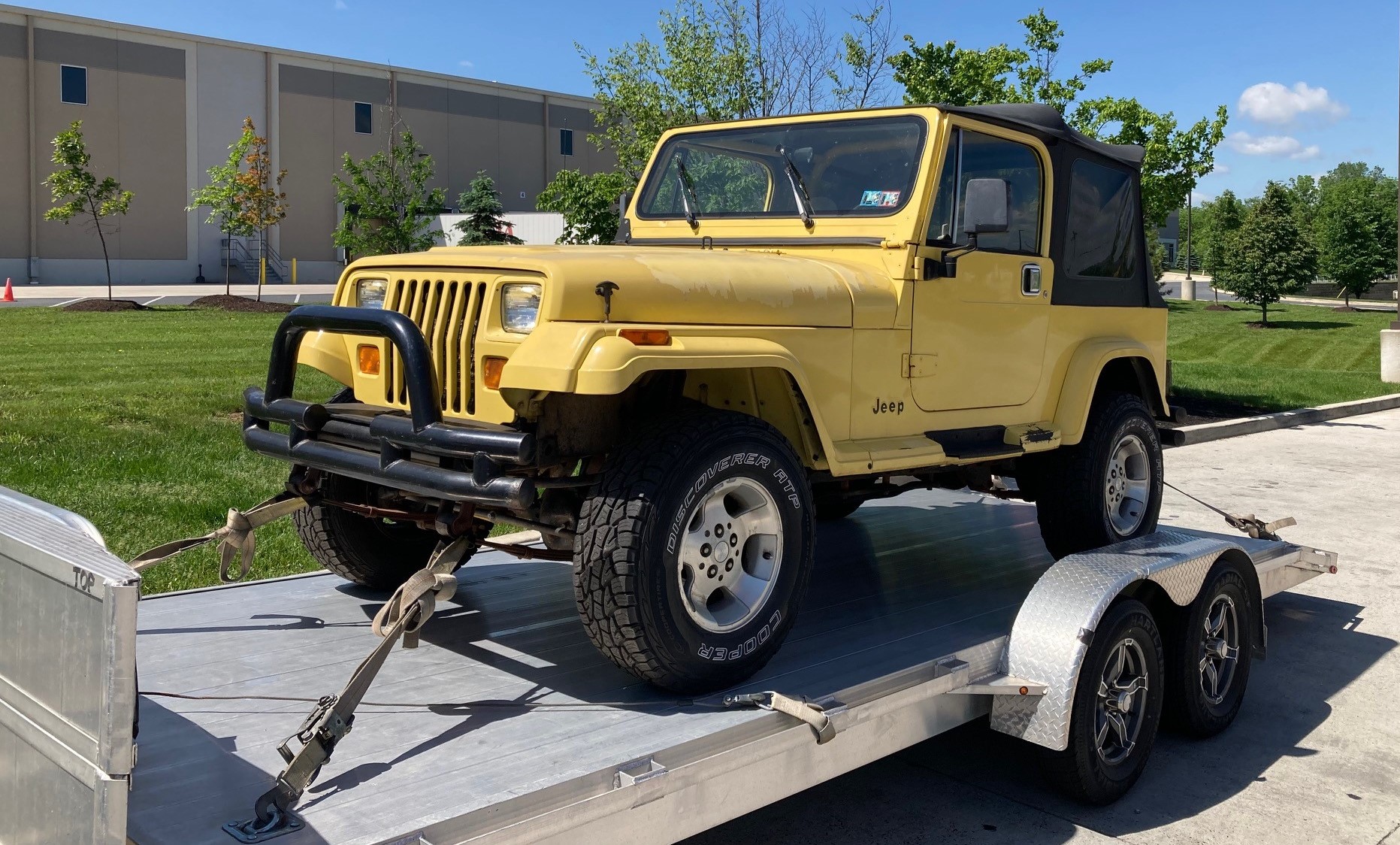
Occupying the space between the iconic Jeep CJ and the beloved TJ is the first Jeep Wrangler: the YJ.
It was developed by AMC—but not the cool AMC that built the AMX, or even the AMC that sold the Gremlin (hey, it was available with a 304 and a four-speed). No, this was early 1980s AMC, circling the drain and in a partnership with Renault. (You know, the company that blessed us with the Alliance and Fuego.)
That alone makes it easy to be skeptical of the YJ.
But no matter how you feel about it, your wallet might have a different opinion. As we’re sure you’ve noticed, clean CJs and newer Wranglers command top dollar. If you want to hit the trail or enjoy some open-air cruising without breaking the bank, maybe it’s time to give this oddball a look.
The Wrangler YJ at a Glance
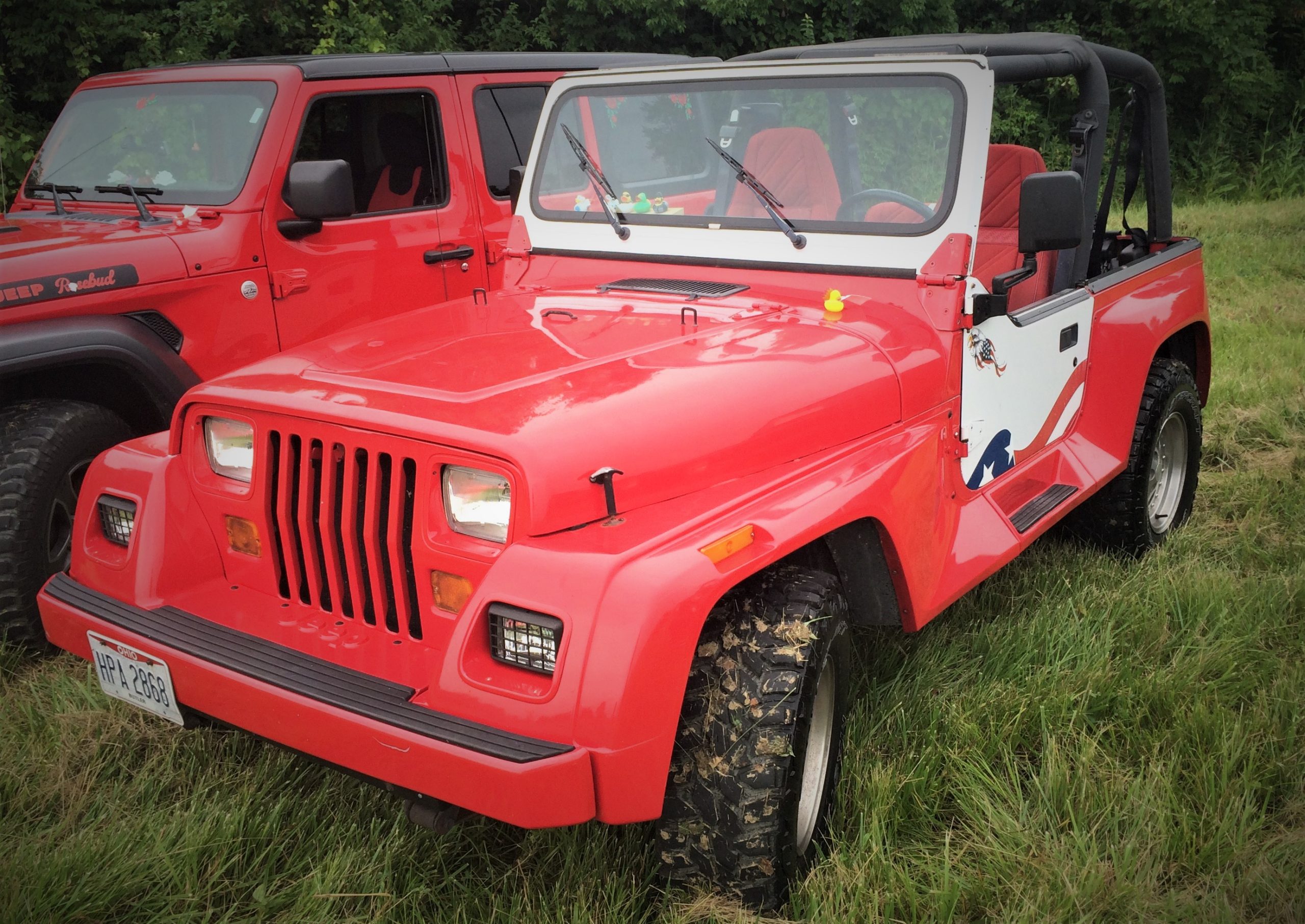
When the Wrangler YJ came to market in 1986 as a 1987 model, it was initially an AMC product, but that quickly changed when the company was purchased by Chrysler a year later.
While the YJ is obviously differentiated from the CJ—and every other Wrangler—by its controversial rectangular headlights, the changes are more than skin deep. It was designed to be safer than its CJ predecessors, with better on-road handling, comfort, and daily drivability.
While old school Jeepers might scoff at these goals, the sales of the YJ—nearly 700,000 were built by the end of the model run in 1995—and the success of the Wrangler nameplate over the next several decades proves the team at Jeep was on the right track.
Though the YJ was the first step toward a more civilized off-roader, it shares much more with its CJ brethren than the duck-toting Wrangler JKs and JLs you see everywhere. Here are some YJ highlights, along with key differences from the venerable CJ.
Engines & Transmissions
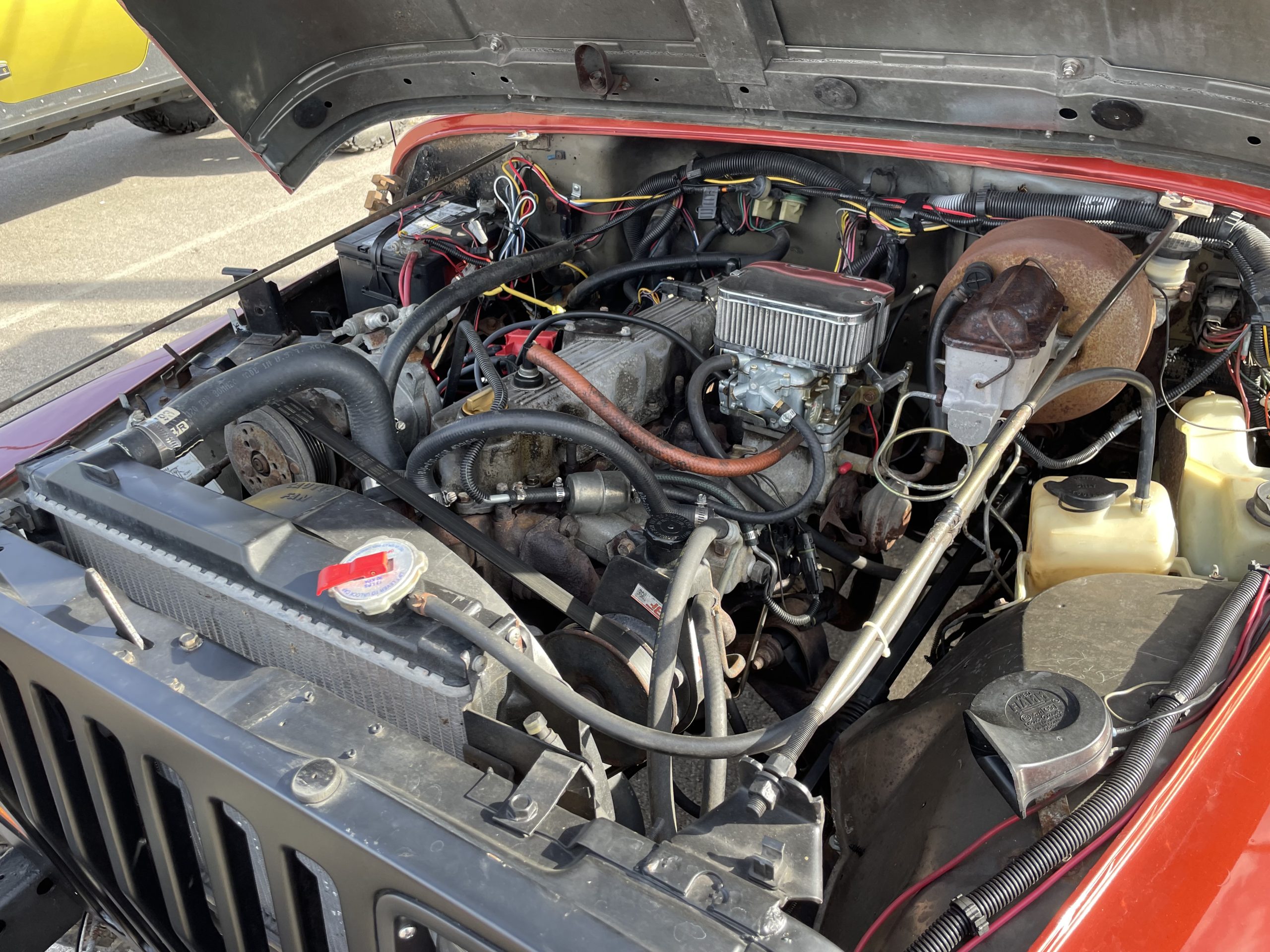
Wrangler YJs were initially offered with either a 2.5L four cylinder or 4.2L inline six, both AMC-designed engines with well-earned reputations for durability.
The four cylinder debuted with throttle body EFI and produced 121 hp at 5,000 rpm and 135 lbs.-ft. of torque at 3,500 rpm. The six, a smog-era leftover, was saddled with a computer-controlled Carter carburetor and actually produced less power than the inline four: a paltry 112 hp at 3,200 rpm, though torque was a semi-respectable 212 lbs.-ft. at a tractor-like 2,000 rpm.
While neither of these engines will win many (any?) drag races, they do better than you’d think. Remember, YJs only weigh about 3,000 to 3,300 lbs.—practically featherweight compared to many modern vehicles. Both of these engines are fine for off-roading, lower speeds, and around-town use, especially with appropriate axle ratios.
In other words, don’t try to run 35 inch tires with 3.07 gears on an otherwise stock YJ.
Four cylinder YJs were paired with the solid Aisin AX-5 five-speed manual throughout the production run, and could be optioned with Chrysler’s A904 three-speed automatic in 1994 and ’95.
Six cylinder Wranglers got the unloved and failure-prone Peugeot BA10/5 five-speed from 1987 until early ’89. This was a remnant of AMC’s partnership with Renault, and was far too light-duty for the Jeep application. The situation was rectified midyear in 1989, when the excellent Aisin AX-15 was substituted. At this point, decades later, there aren’t many YJs still running around with Peugeot transmissions—most have been swapped, or the Jeeps are off the road altogether. Six cylinder YJs could also be had with the A999 three-speed automatic. These transmissions were used in V8 applications for other vehicles, and are plenty strong for the Jeep.
Finally, with the exception of very early production models, all YJs were equipped with the NP231 transfer case. These chain-driven units have a 2.72:1 ratio low-range and a reputation for durability.
In 1991, the 2.5L was upgraded with port fuel injection and a useful bump to 130 hp, but the real news was an updated inline six.
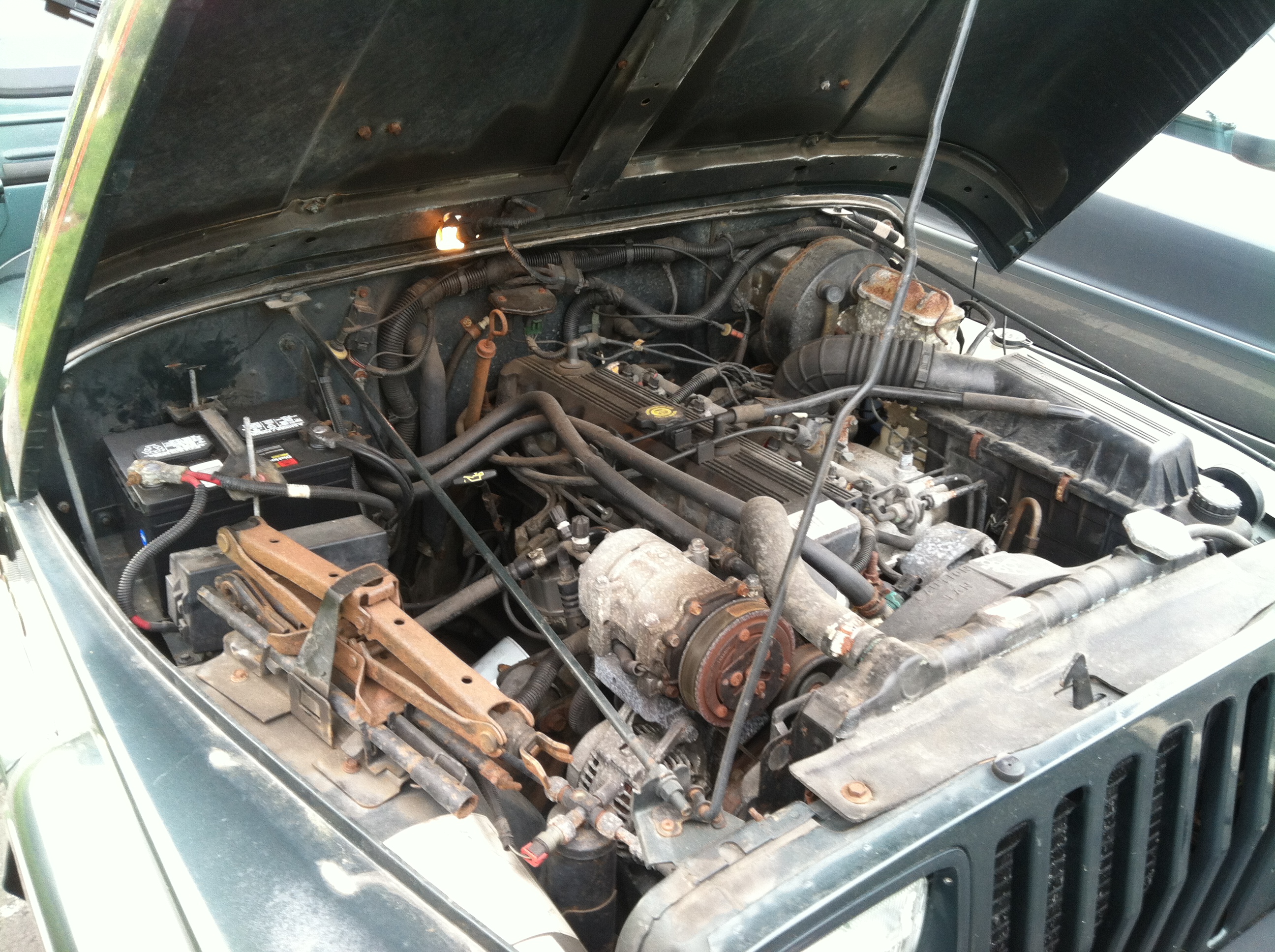
Based on the outgoing 4.2L, the now-legendary 4.0L featured a larger bore, shorter stroke, better-flowing cylinder head, and port injection, among many other changes. It cranked out 190 hp at 4,750 rpm and 220 lbs.-ft. of torque at 4,000 rpm, and the combination of power and durability has made it one of the greatest engines ever put under the hood of an SUV.
If you’re looking for a YJ (or TJ) Wrangler, the 4.0L six is inarguably the best engine choice.
Chassis & Axles
Probably the most important changes differentiating the YJ from its CJ predecessor involve the chassis. The CJ had developed a reputation for poor handling and a propensity to roll over, with AMC paying millions in accident-related court settlements. A 1980 “60 Minutes” segment on the CJ-5’s tendency to roll only made matters worse.
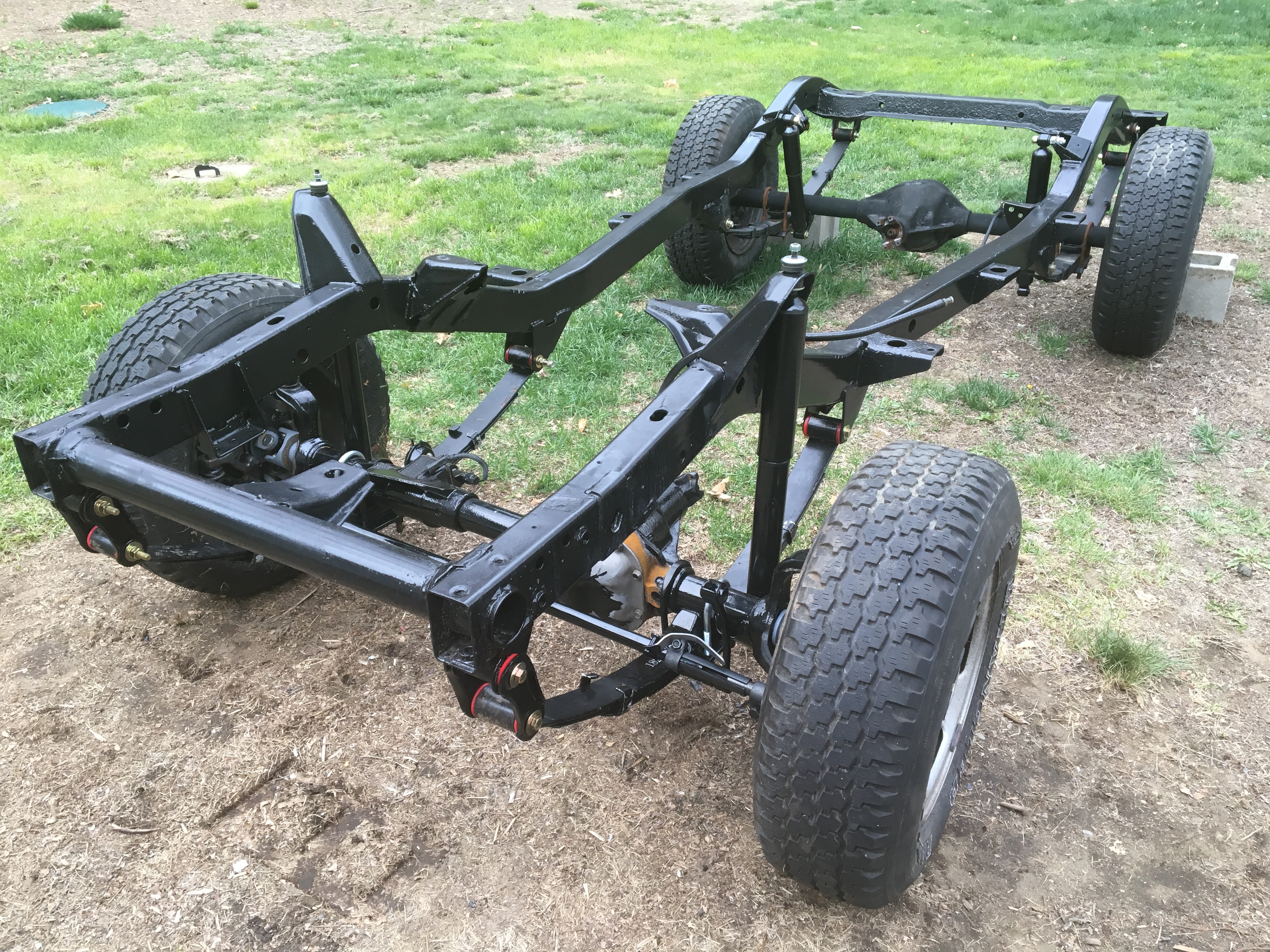
To address this, the YJ got a wider, stronger, fully boxed frame, 2.50 inch wide leaf springs front and rear (CJ-7 rear springs were two inches wide), wider-track axles, and reduced ride height. Also, all YJs got front sway bars, front and rear track bars (Panhard bars), and even optional anti-lock brakes in 1993.
While most of these changes are improvements, the addition of track bars was questionable. They definitely help locate the axles laterally and may improve stability at speed, but they also negatively impact suspension travel, articulation, and ride quality. Many owners choose to remove them altogether, or remove the rear and replace the front with a telescoping track bar, available from JKS Manufacturing.
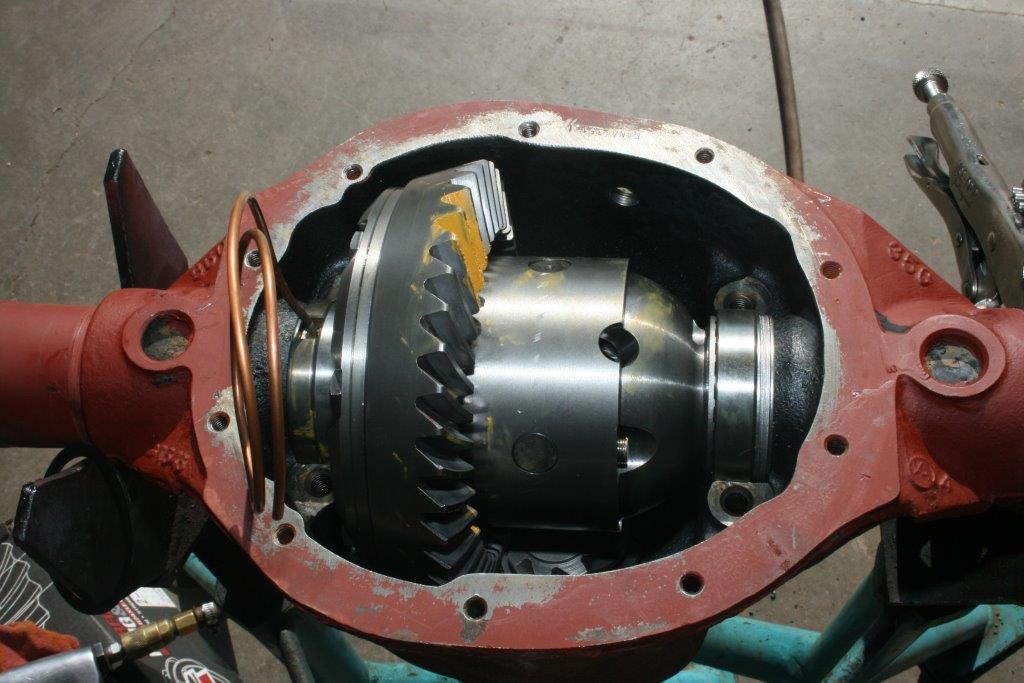
Nearly all Wrangler YJs were equipped with Dana 30 front and Dana 35 rear axles. They’re sufficient for moderate off-roading, stock engines, and reasonable tire sizes. Like most axles, they can be beefed up with stronger shafts and better differentials.
The Dana 30 front axle is equipped with a two-piece right-side axle shaft as part of the Central Axle Disconnect (CAD). This vacuum-actuated system uses a sliding collar to lock the axle halves together when four-wheel drive is engaged, and disconnect them when in two-wheel drive. The purpose is to improve fuel efficiency, but it also creates a weaker front axle and a possible failure point in the actuating mechanism. Options include manual actuators or a one-piece right-side axle shaft.
The Dana 35 rear is often considered the weaker link of the two axles, and many enthusiasts don’t feel they’re worth upgrading—the Ford 8.8 inch rear end from the Explorer is a common swap. It’s nearly the same width as the factory Jeep axle, shares its 5 x 4.5 lug pattern, features disc brakes, and if you choose the right one, you get a 4.10:1 ratio ring and pinion and a limited-slip differential.
But if you want to stick with the Dana 35, stronger axle shafts, rear disc conversions, and several differential options are available.
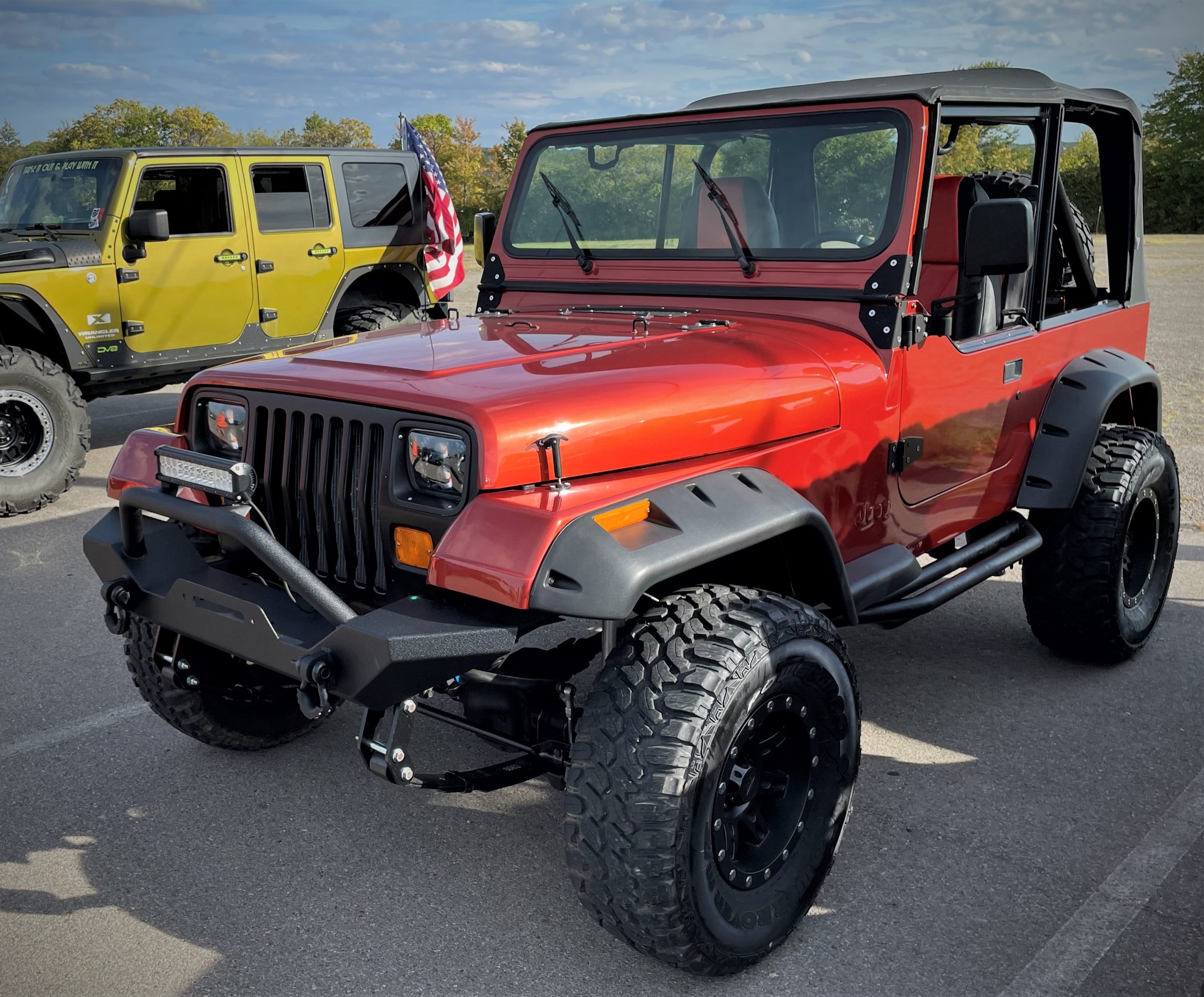
YJ Wranglers were available with several different axle ratios. Four cylinder, five-speed rigs were equipped with 4.10 gears, making the axles a popular swap into other YJs. Four-cylinder, automatic models had 3.73:1 ratio axles, and six-cylinder YJs could have 3.07:1, 3.54:1, or 3.73:1 ratio gearsets. With the wide-ratio AX-15 transmission’s tall, 0.79:1 ratio fifth gear, 4.10 axles combine well with the popular 31×10.50R15 tire size.
Stock tire sizes maxed out at 30×9.50R15 on the Renegade model, and that’s about the largest tire you can run on stock suspension without rubbing. A two inch lift makes room for 31×10.50R15 tires, and a four inch lift is required for 33×12.50R15s.
Obviously, larger tire sizes are possible with larger lifts, body lifts, and cut fenders, but we’re sticking with the basics here.
Body & Interior
Though the YJ has controversial headlights and a kinked, rear-angled grill, once you get past the front clip, the tub is nearly identical to the CJ-7. The sideways-opening tailgate, with its integrated spare tire mount, is the main difference.
The windshield is wider, which necessitated the odd wiper setup with wiper arms that are always parked in your field of view.
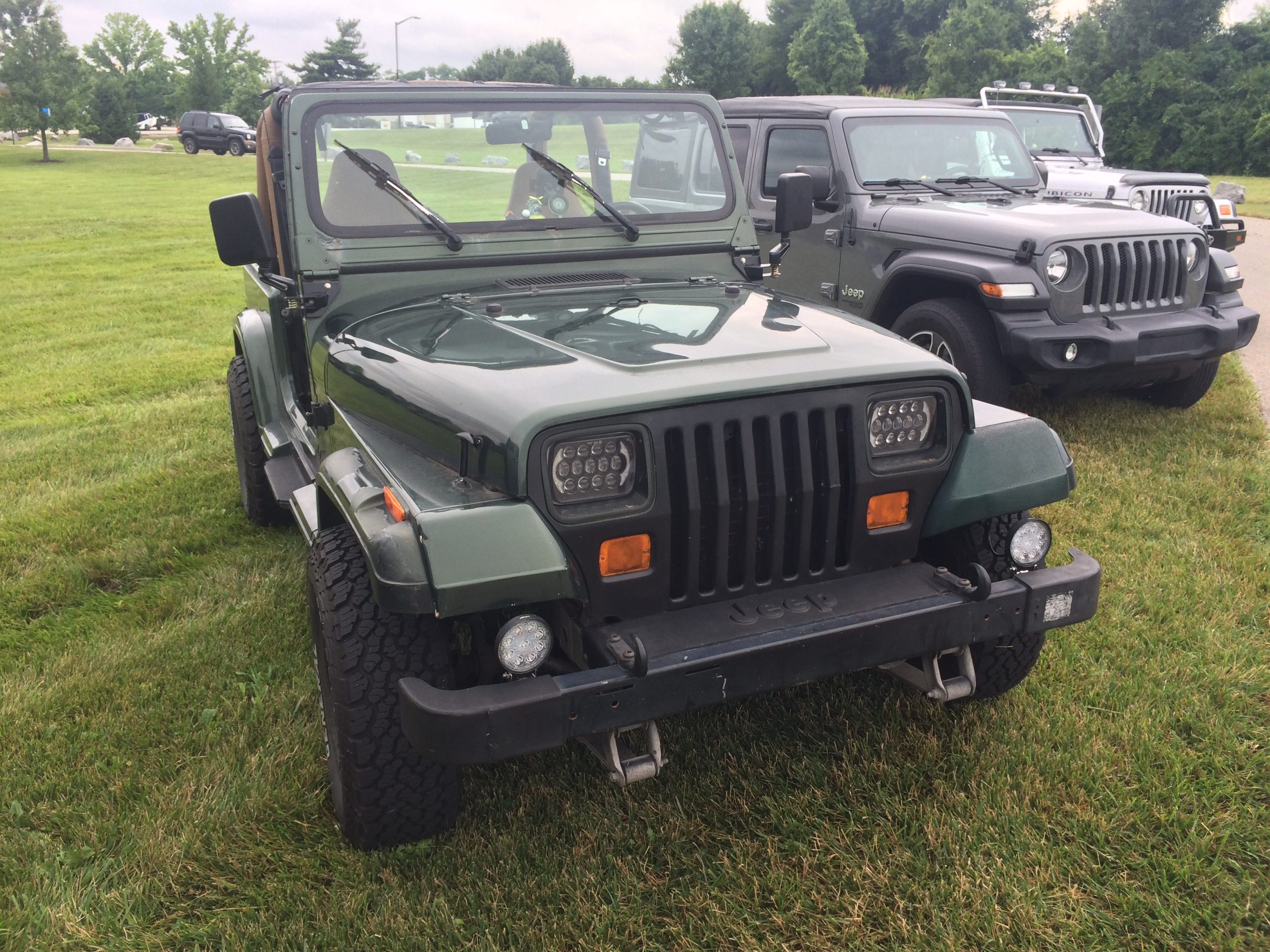
Half and full doors were available, as well as soft and hard tops. Soft top and window replacements are plentiful, with great options and a variety of styles from several manufacturers.
Inside, the YJ got a new, padded dash with a full complement of horizontally arranged gauges. This was considered a step backward from the iconic CJ dash, and that’s fair, even if the newer gauge arrangement is functionally better. (At least the YJ doesn’t have a cardboard glove box that turns into mush if it gets wet!)
The heater setup is particularly archaic, sporting a complete lack of dash vents; YJ owners get by with floor and defrost vents only. Air conditioning was optional, though the under-dash unit feels very much like an afterthought.
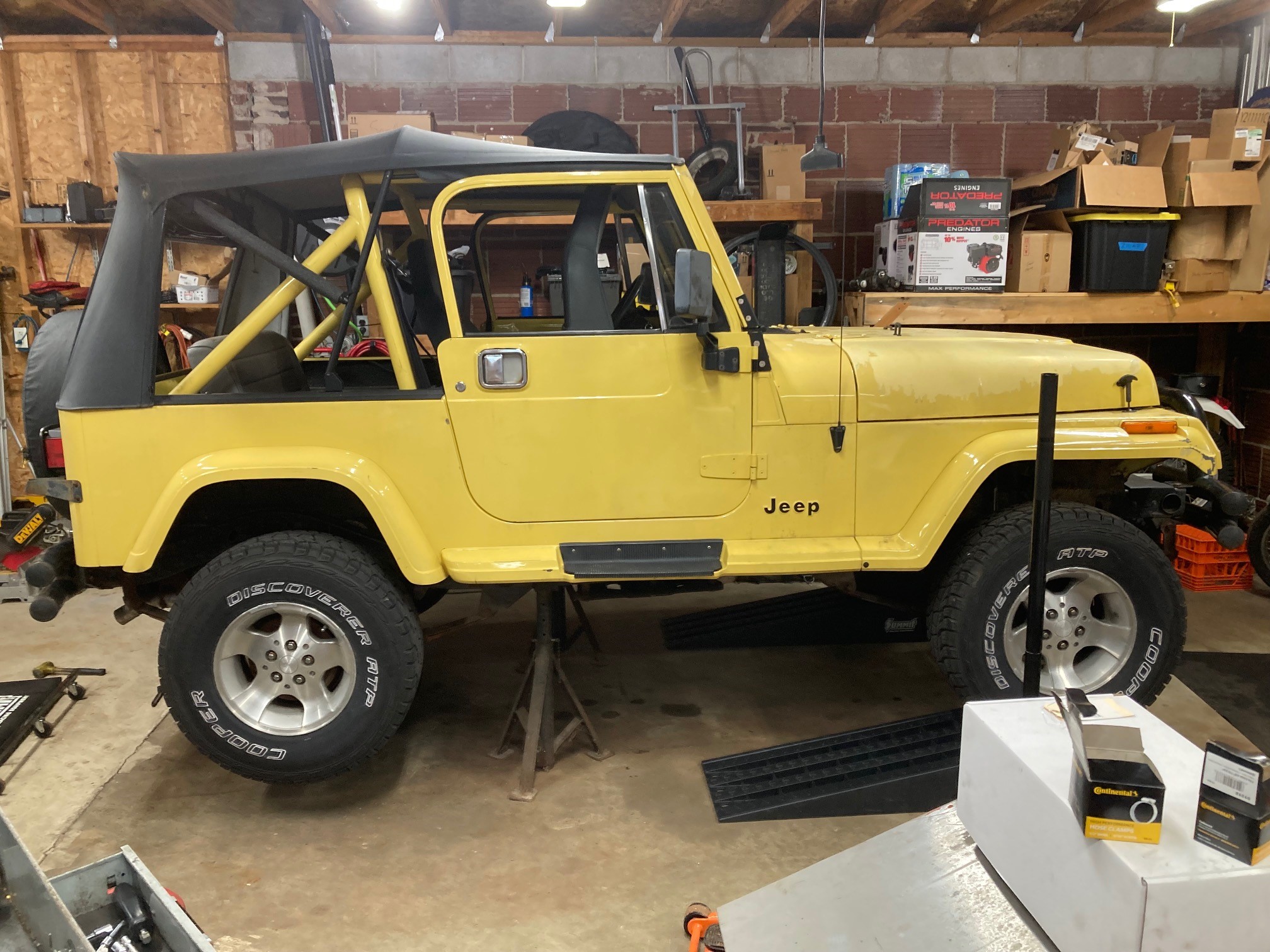
The roll bar got additional sections that connect the main hoop to the windshield frame, and two different roll bar styles were produced.
1987-91 YJs have what is called the “sport” roll bar, with diagonal rear bars and no provision for rear seat shoulder harnesses. 1992-95 models got the so-called “family” roll bar, with curved rear bars that provide more rear seat passenger protection and rear shoulder harnesses.
While the sport bar looks…sportier, one major disadvantage (apart from safety) is that it doesn’t accommodate longer bikini tops that shade the rear seat.
What Wrangler YJ Should You Buy?
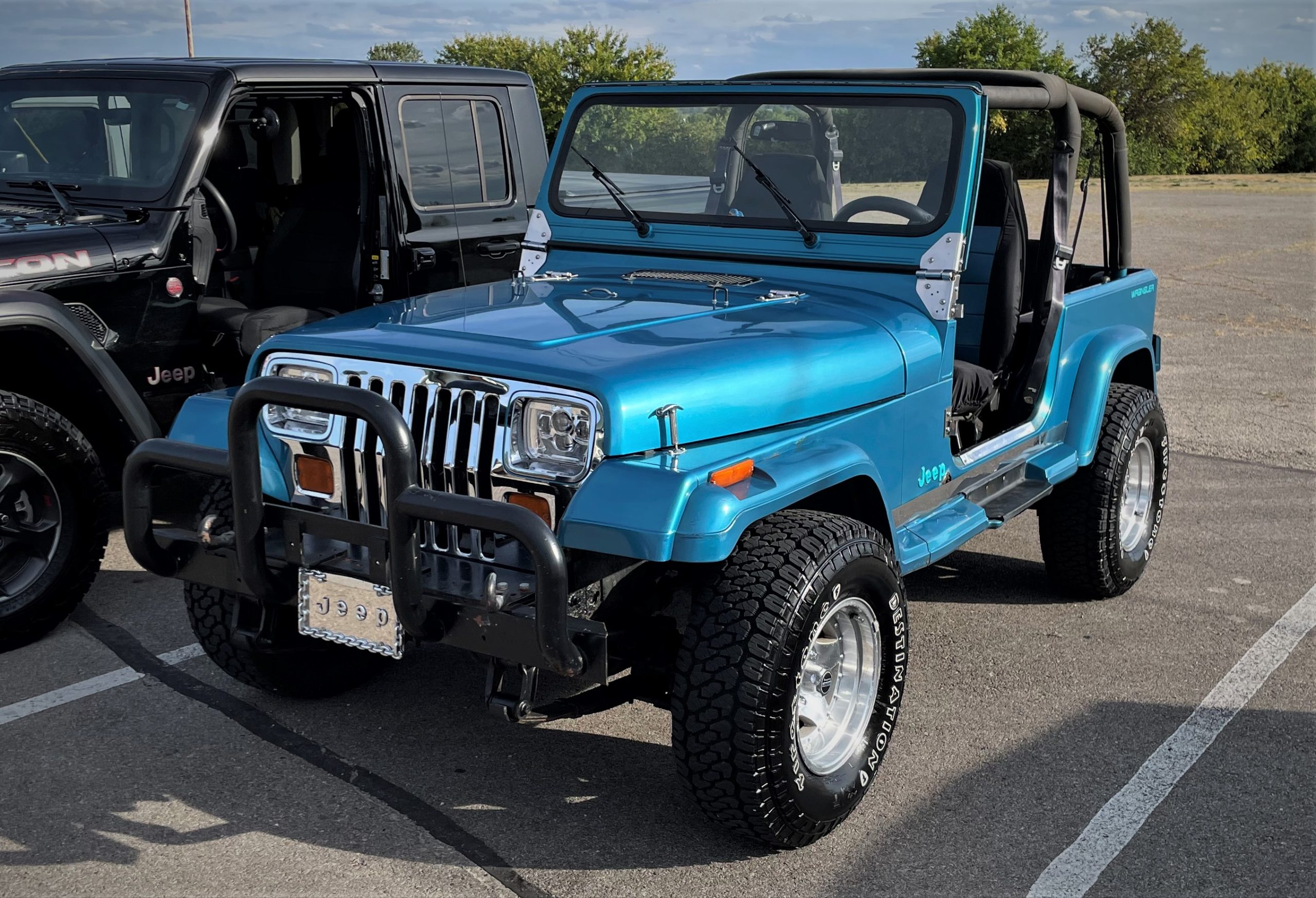
This may sound overly simple, but buy the nicest, newest example you can afford. As is the case with any older Jeep, rust is a huge concern. Go over any prospective purchase with a fine-tooth comb. Rust is repairable—you can get any body parts you need or even buy a brand-new frame—but repair is expensive and no fun.
A 1991-95 model with the 4.0L engine and five-speed manual transmission is ideal.
Closer to stock is preferable, and carefully consider the desirability of any modifications made, along with the quality of the modifications. Do you really want a six inch lift and 35 inch tires if you’re just going to cruise around on the road? Did the previous owner mount 33 inch tires, but is still running 3.07:1 axles? What’s the condition of the ball joints and steering components?
The same rules that apply to any used car purchase apply to a YJ, with the added consideration that this is a 30-plus-year-old off-roader.


Comments