
Most gearheads are at least somewhat familiar with the name Vespa.
From “Roman Holiday” to “Quadrophinia” the Italian brand is pretty much synonymous with fun and fashionable scooters.
…But did you know that there was also a car that carried the Vespa name?
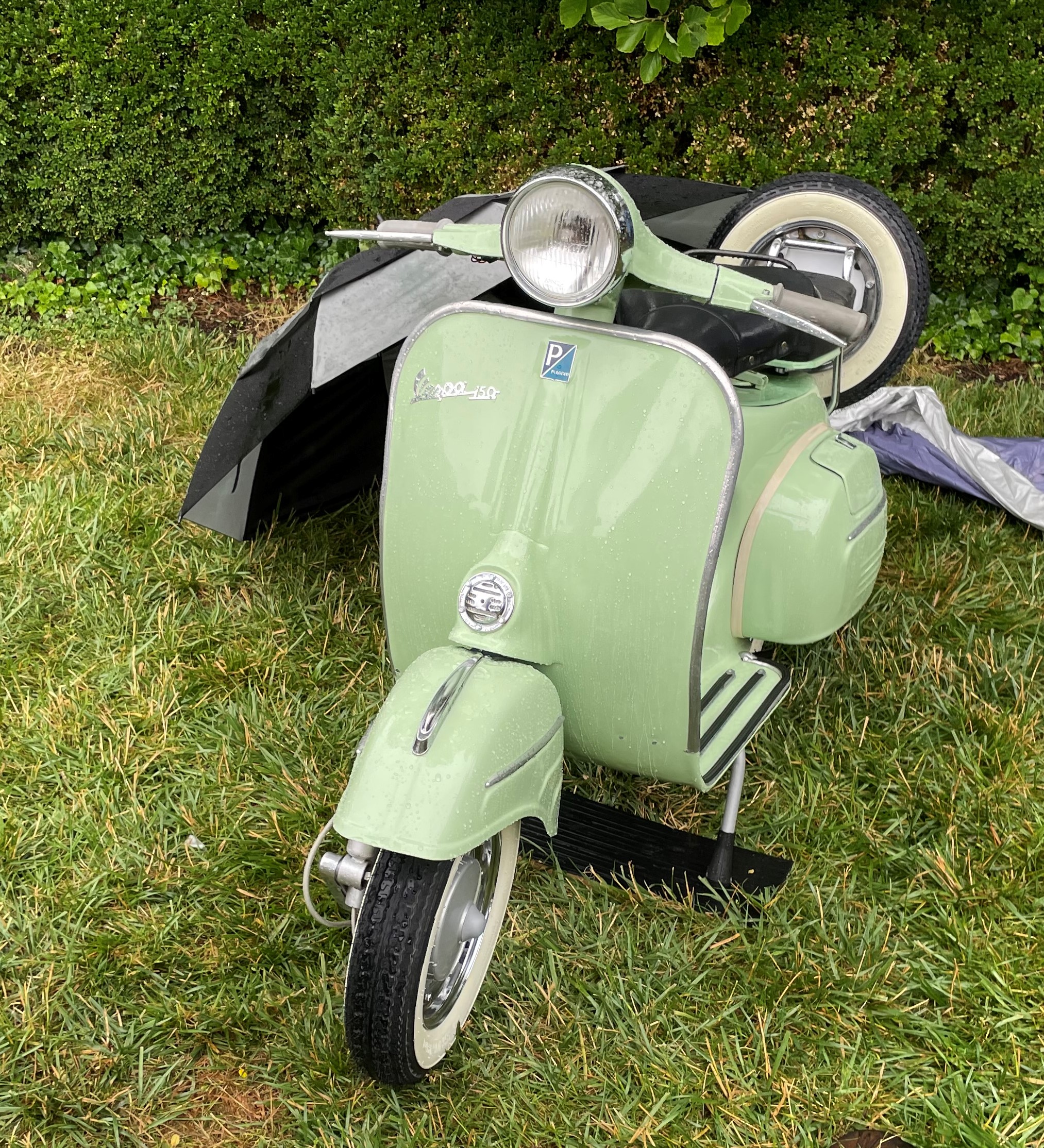
It all started in the 1950s, when the company that made Vespa scooters, Piaggio, attempted to grow its market into four-wheel automobiles—specifically the microcar segment that expanded in popularity in the aftermath of World War II. The goal was to offer a budget-friendly two-seater that could easily navigate the tight streets of Europe, while sipping scarce amounts of petrol.
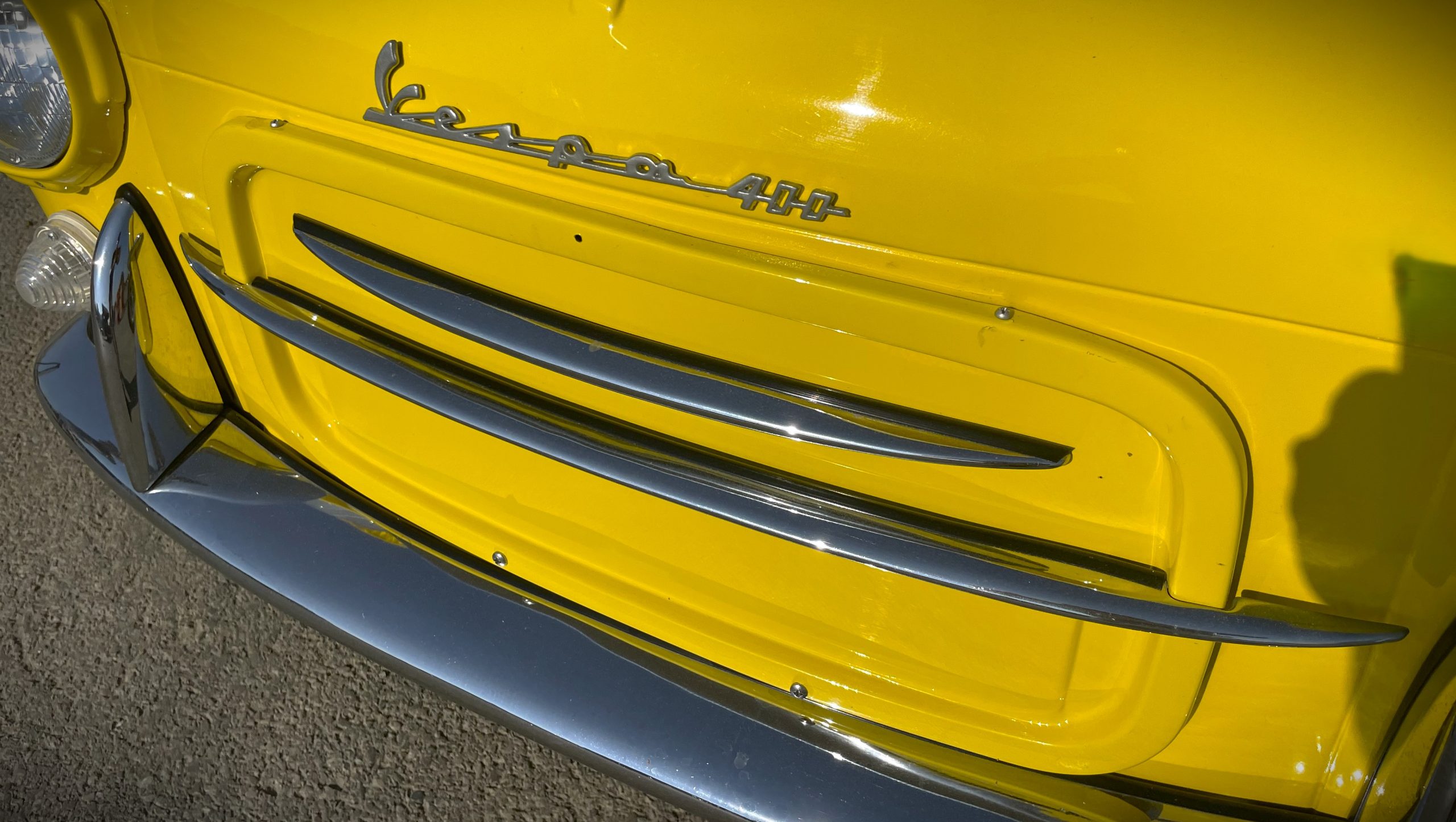
The result was the Vespa 400.
Yet, for a myriad of reasons—largely rumored to appease fellow Italian automaker, Fiat—Piaggio outsourced production of the 400 to the ACMA (Ateliers de Construction de Motocycles et Accessoires) located near Dijon, France.
That also meant that most of the 400s that left the factory stayed in France for the French market.
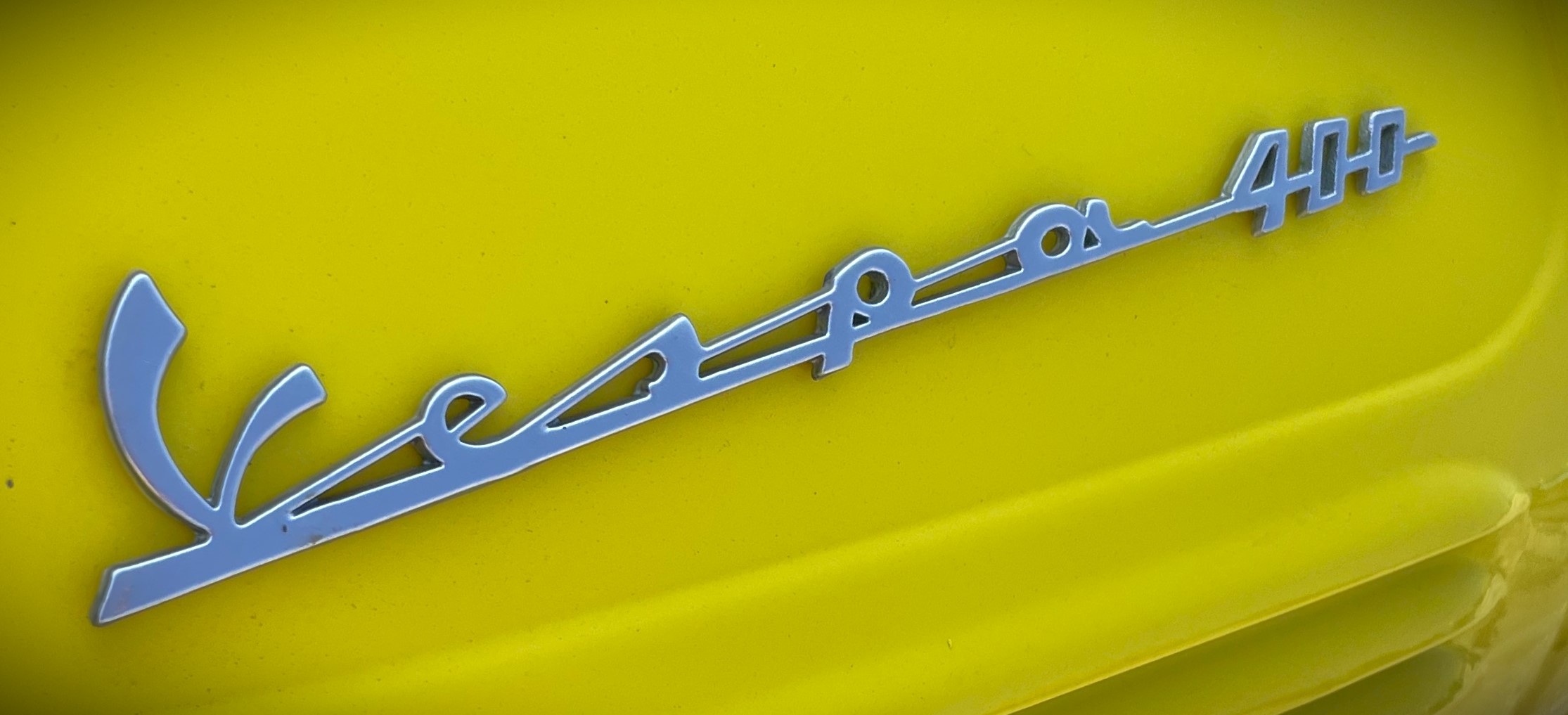
Only offered from 1957-61, the Vespa 400 was a reasonable sales success and around 35,000 units were built over its short production run. Powered by a two-stroke 400cc engine, the tiny coupe accomplished its goal of being cheaper than the trusty Citroen 2CV and had even stingier fuel economy.
Sadly, their position as almost disposable microcars meant that few 400s survived into the 21st century.
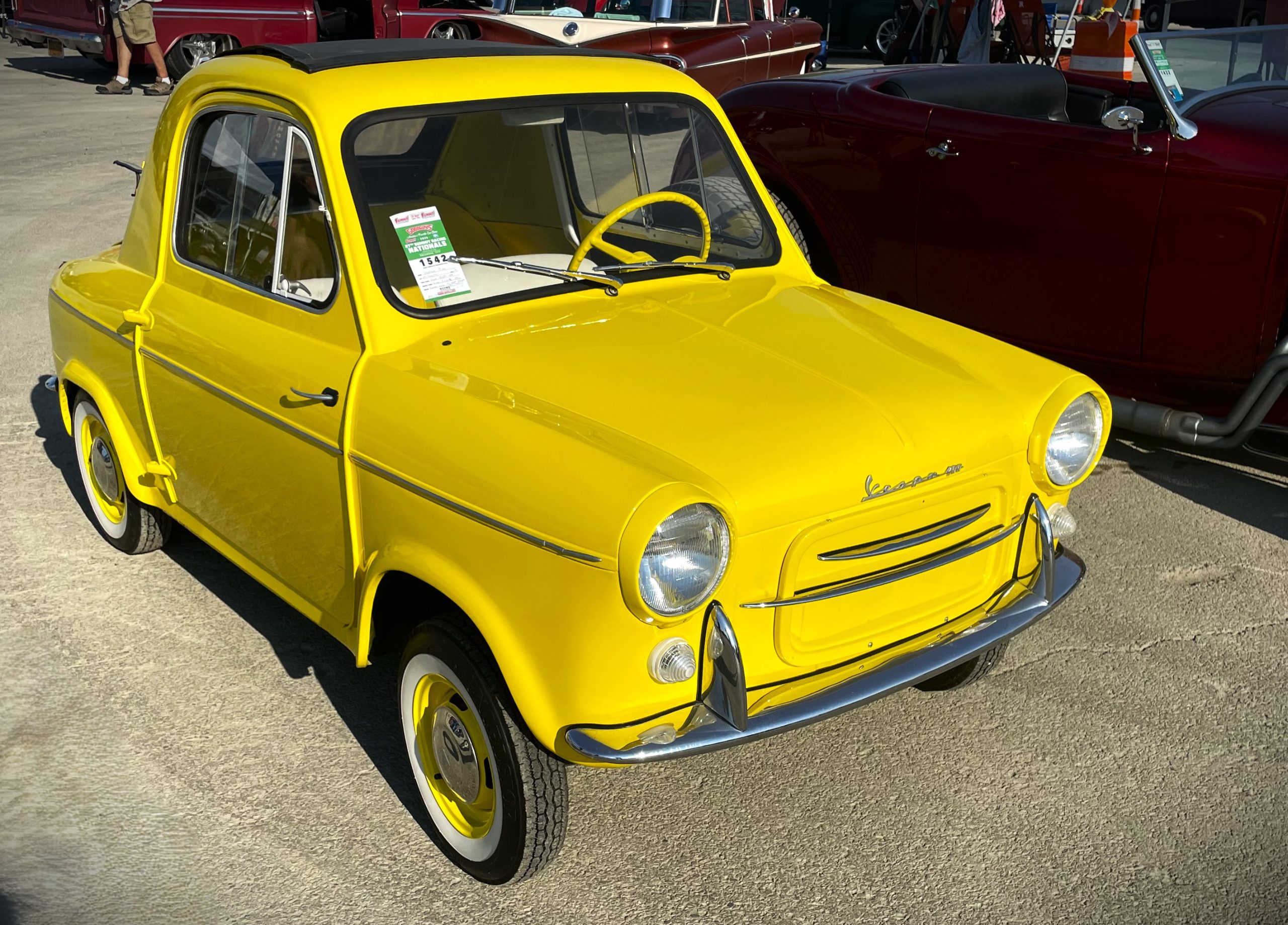
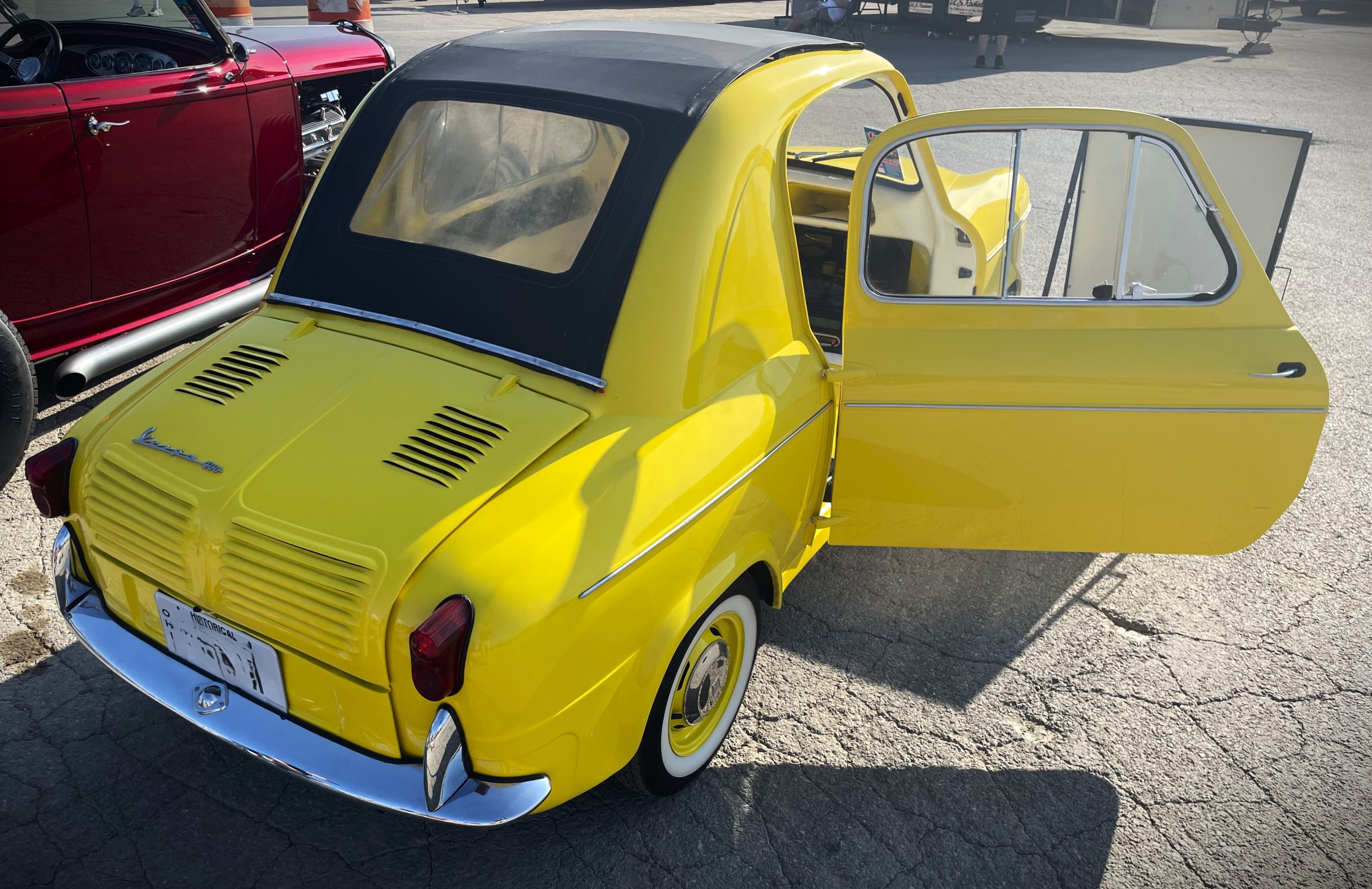
…Which explains why we dang-near fell over when we spotted this stunningly clean example at the 2025 Goodguys Summit Racing Nationals in Columbus, Ohio.

“It was my dad’s. He was an auctioneer,” Steven Peer tells us. “He built a six car garage, and this was one of the first things he put in it.”
He continues by explaining that his dad drove this Vespa 400 regularly and spent ample time tinkering with it.
Sadly, his father passed away several years ago and the Vespa moved into Steven’s garage—where it attracted the attention of a friend. “A buddy of mine kept bugging me to buy it,” Steven laughs, “I ended up selling it to him and he had it restored.”
He tells us that the 400 was originally white and, though it was a solid rust-free car to begin with, the ensuing restoration made it pristine.
In fact, after seeing the freshly-restored car, memories of his father eventually encouraged Steven to purchase the car back from his friend.
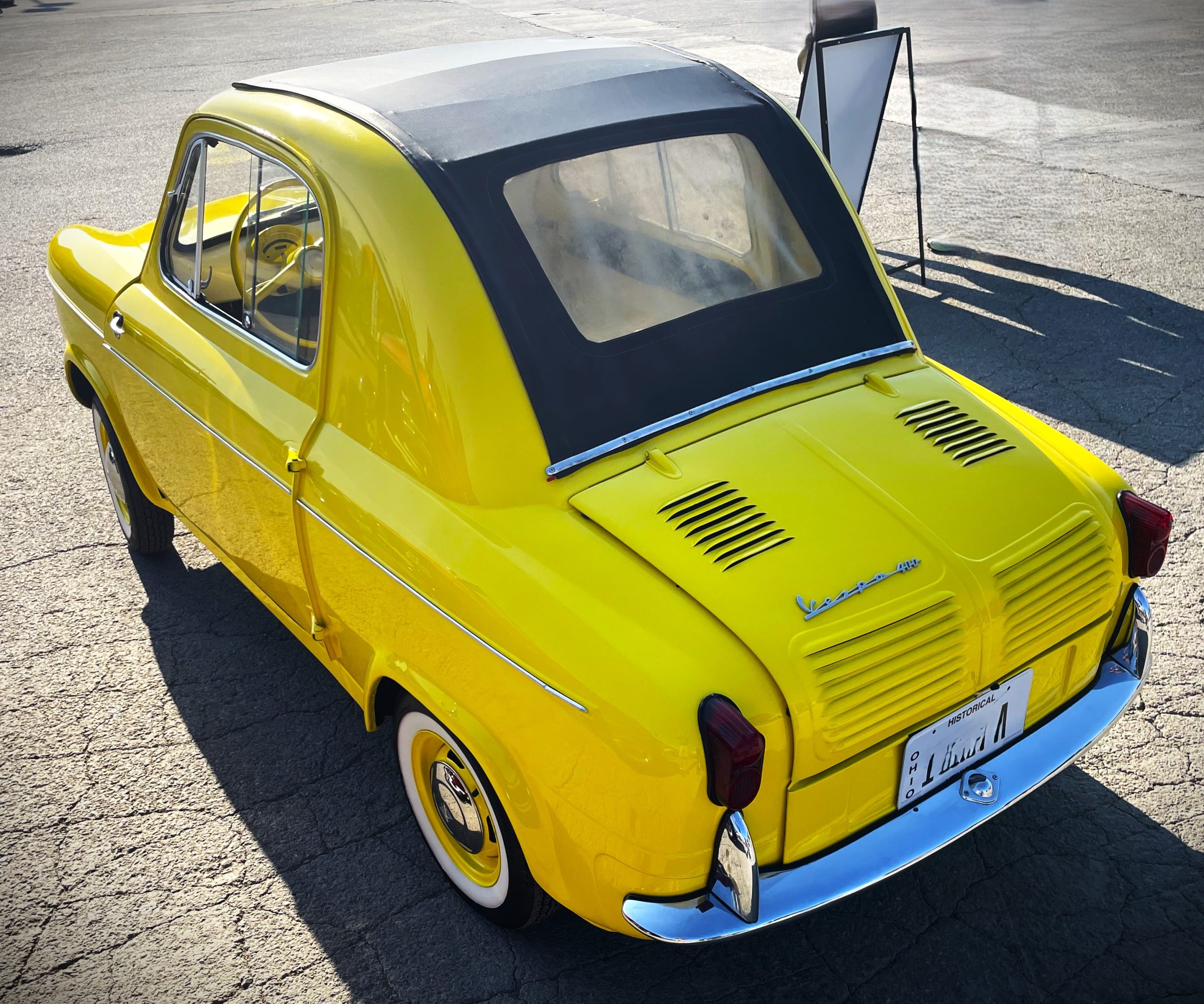
Now returned to Steven’s care, the four-wheel Vespa is usually seen driving around the roads of his hometown of Worthington, Ohio.
“It takes a long time to warm up, but it runs well,” he chuckles. “Top speed’s about 50 miles per hour.”
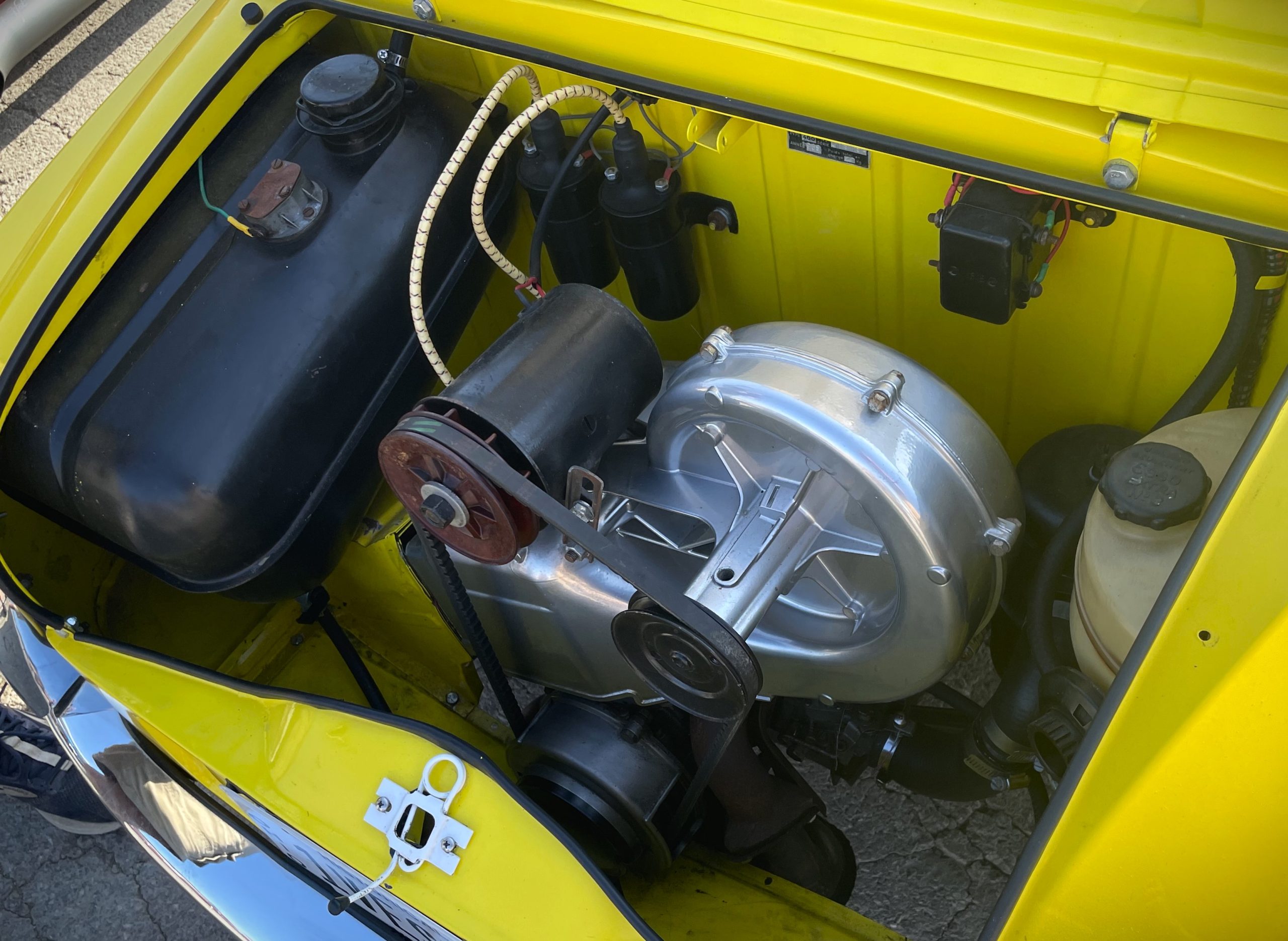
And that speed comes via its aforementioned 14 horsepower 400cc engine, mated to a three-speed manual transmission.
“Two stroke, two cylinder, 50-to-one ratio” Steven explains as he gestures to a separate oil reservoir in the engine bay. “This is where you put your oil and you dial it in to the ratio you want. It self-mixes.”
With only around 1,500 of these Vespa 400s ever imported into the United States, we asked Steven if he had ever seen another one of these around—and he begins to laugh.
“I have two more,” Steven snorts.
“But they’re rough, they need to be restored—I’ve never seen another one on the street, though.”
Our conversation pivoted to the Vespa 400 enthusiast community.
“There are forums for these, most of them are based in Italy,” he explains. “There are a few local people that can help me answer questions, but they don’t necessarily work on them anymore.”
In regard to restoration parts, Steven describes how a few intrepid owners are reproducing small parts in limited-run batches, for some of the more unobtanium pieces.
“But the easiest way, if you’re looking for something,” he says, “is to pop on a forum to see if anyone has a spare you can have.”

Steven explains that, thanks to the connection with his late father, he’s never getting rid of this plucky little French-Italian coupe.
Better still, he’s going to continue taking it to shows, so other folks can learn about its fascinating history and lineage.
…And that’s exactly why we all love the classic car hobby.
***
If you’re into interesting microcars, you may enjoy this article too: This 1951 Crosley Reminds Us That Having Fun is the Most Important Part of Owning a Classic


Comments