
It should come as no surprise to anyone reading this that air cleaner size is important. The basic rule is, bigger is better. That’s why so many of the high performance air cleaner assemblies found at SummitRacing.com have filter elements measuring 14 inches in diameter and three inches (or so) in overall height. And many of those are of the dropped base configuration (allowing for more filter area under the hood). For all intents and purposes, they’re the “standard” for carbureted cars and most throttle body EFI applications.
Easy enough, but there’s a hitch.
Testing Different Air Cleaner Bases
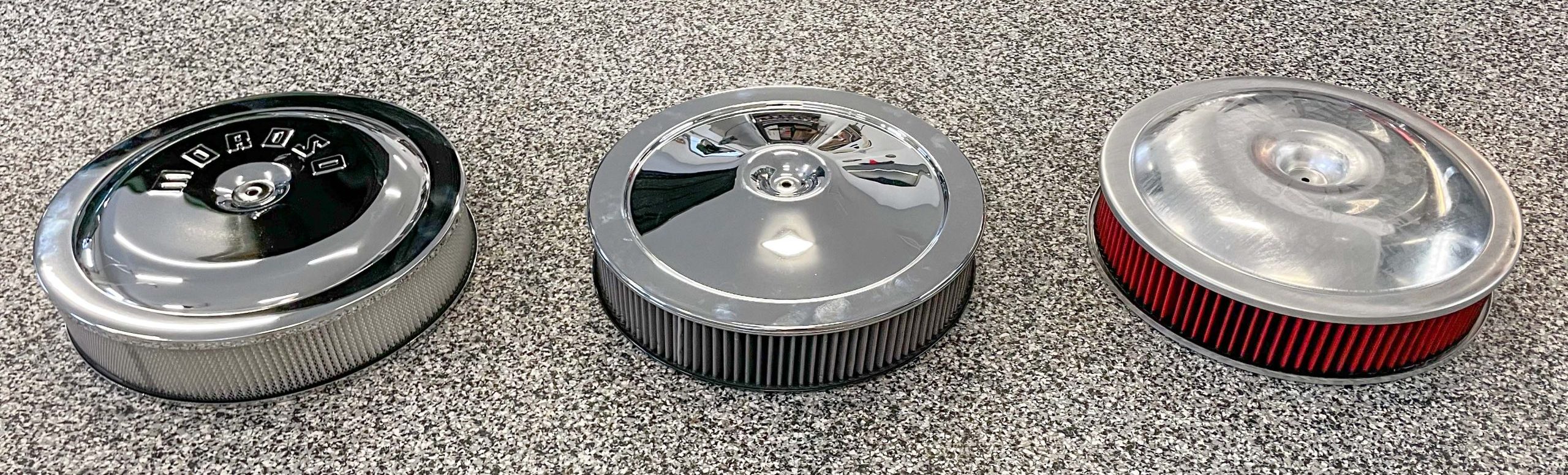
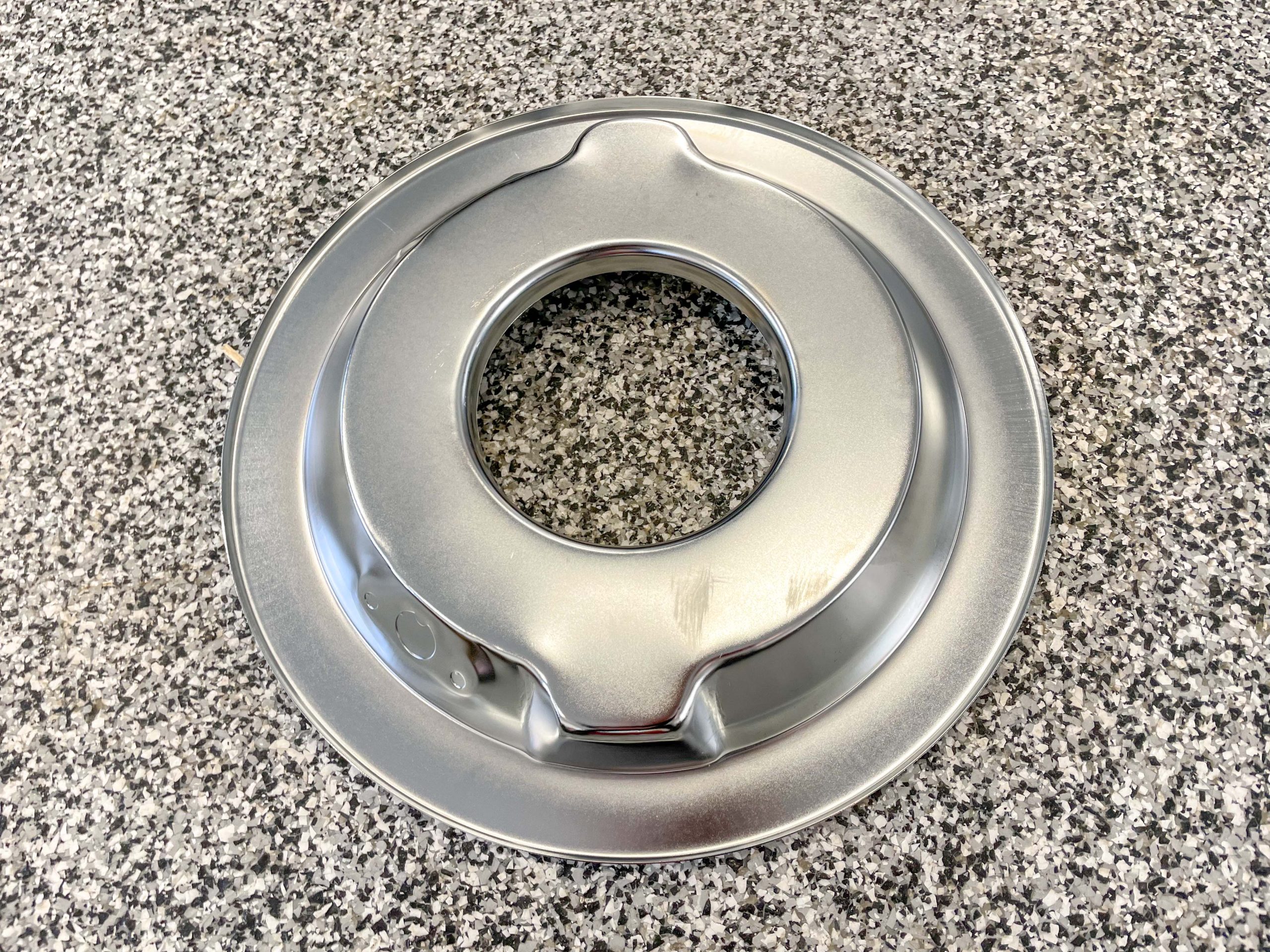
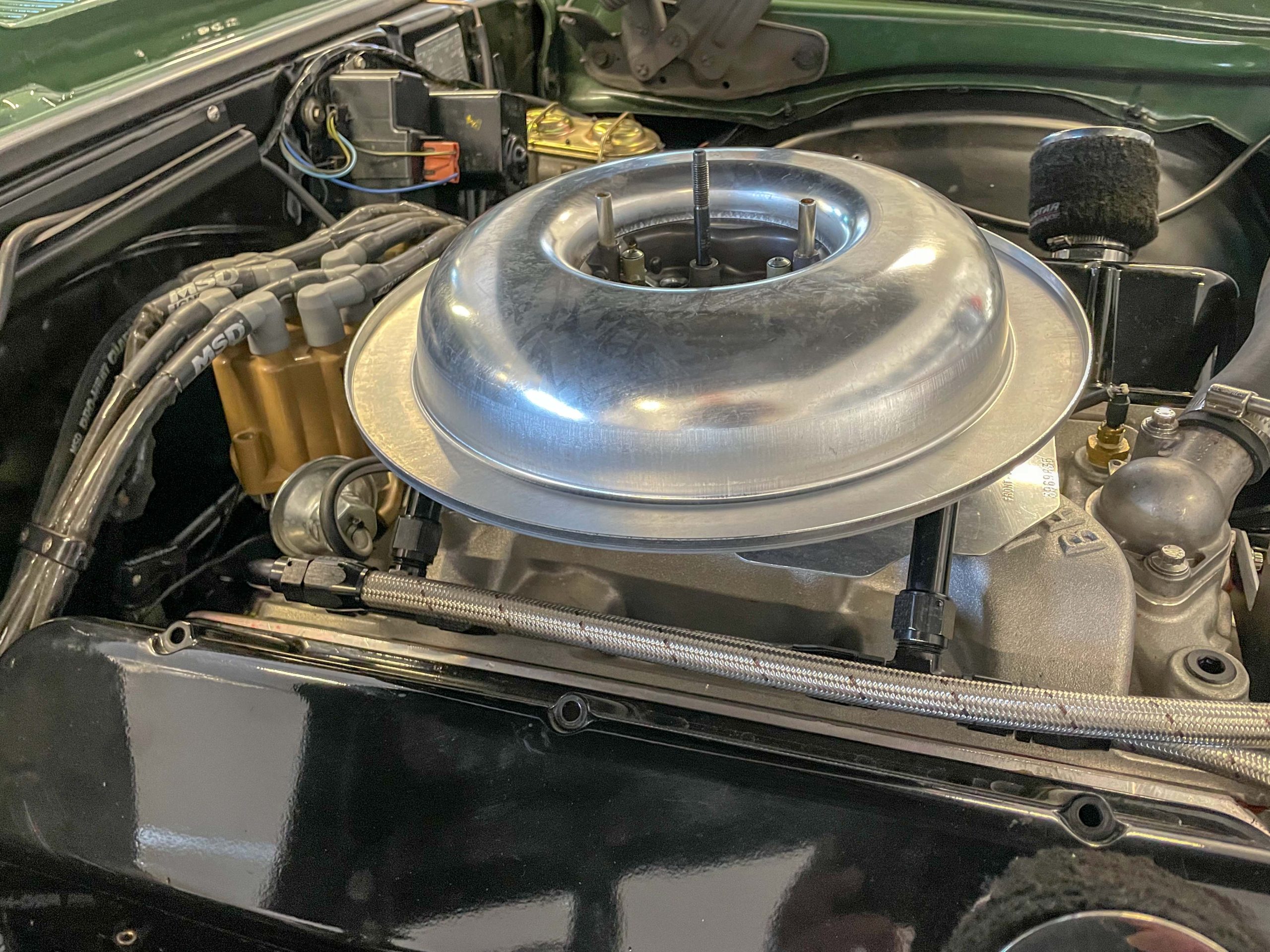
There are differences (sometimes significant) when it comes to those “standard” 14 inch air cleaner setups. Given logistics, it wasn’t possible for me to compare each and every air cleaner, but I picked three 14 inch examples from the Summit Racing website and used them for the basis of this article. All three are drop base configurations. All three were fitted with 14 x 3 inch air filter elements. All three turned out very different in terms of fit. Air cleaners in the mix are:
- Moroso Low Profile Racing Air Cleaner (MOR-65910)
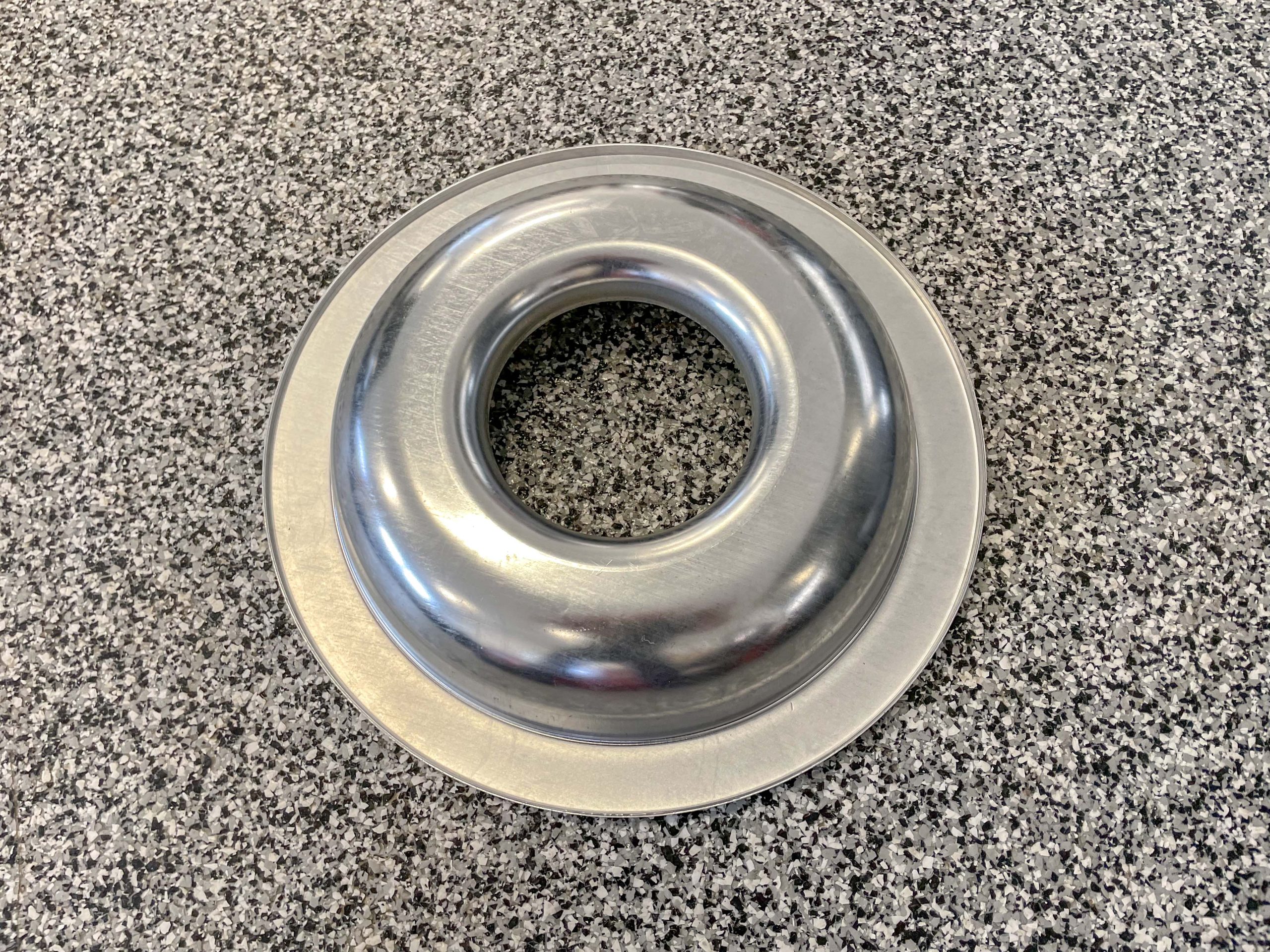
- B&B Performance High Flo Air Cleaner (STF-72200) with a Summit Racing Filter Element
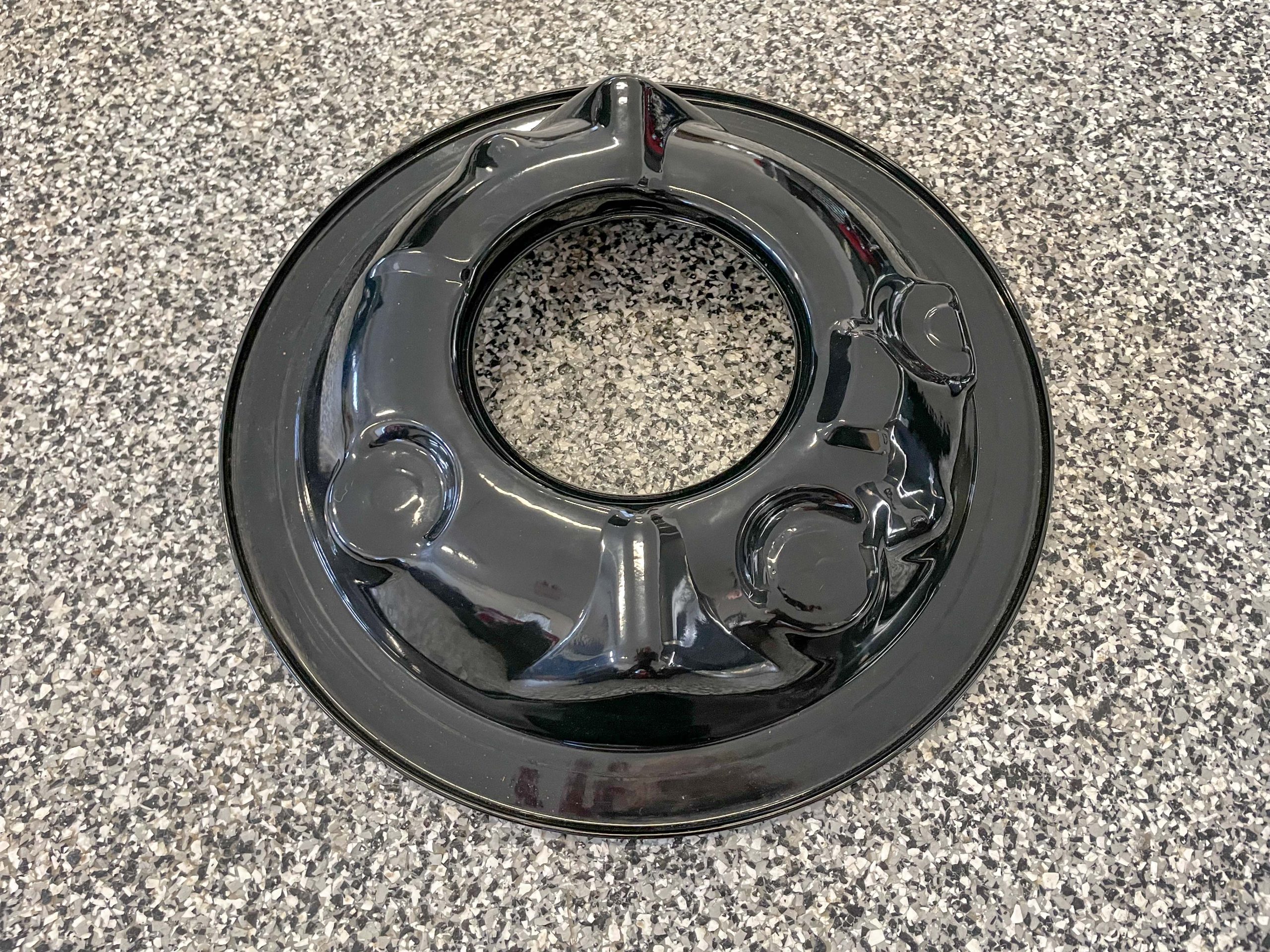
- OER Open Element Assembly (OER-6423907) with a K&N Filter Element
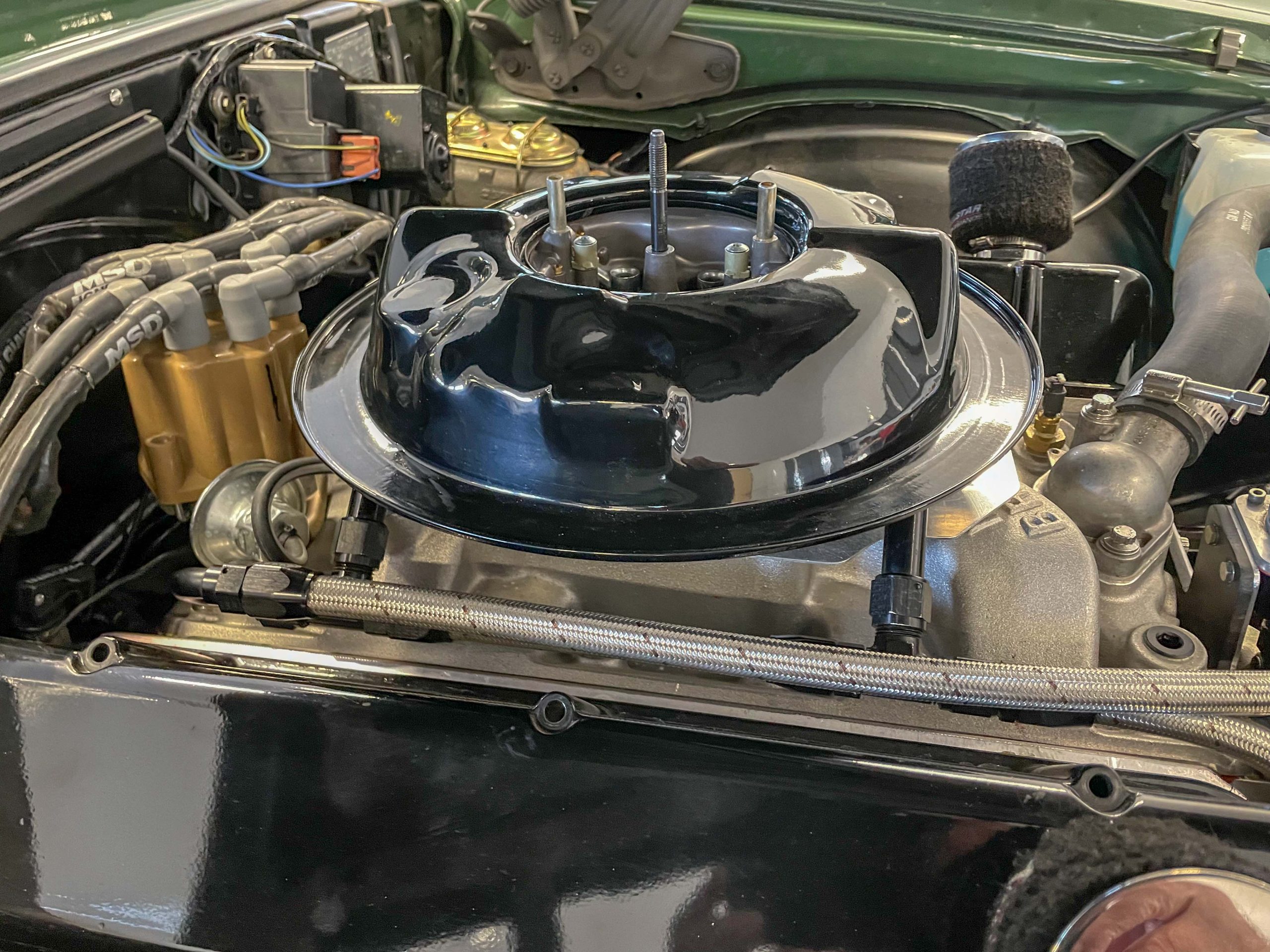
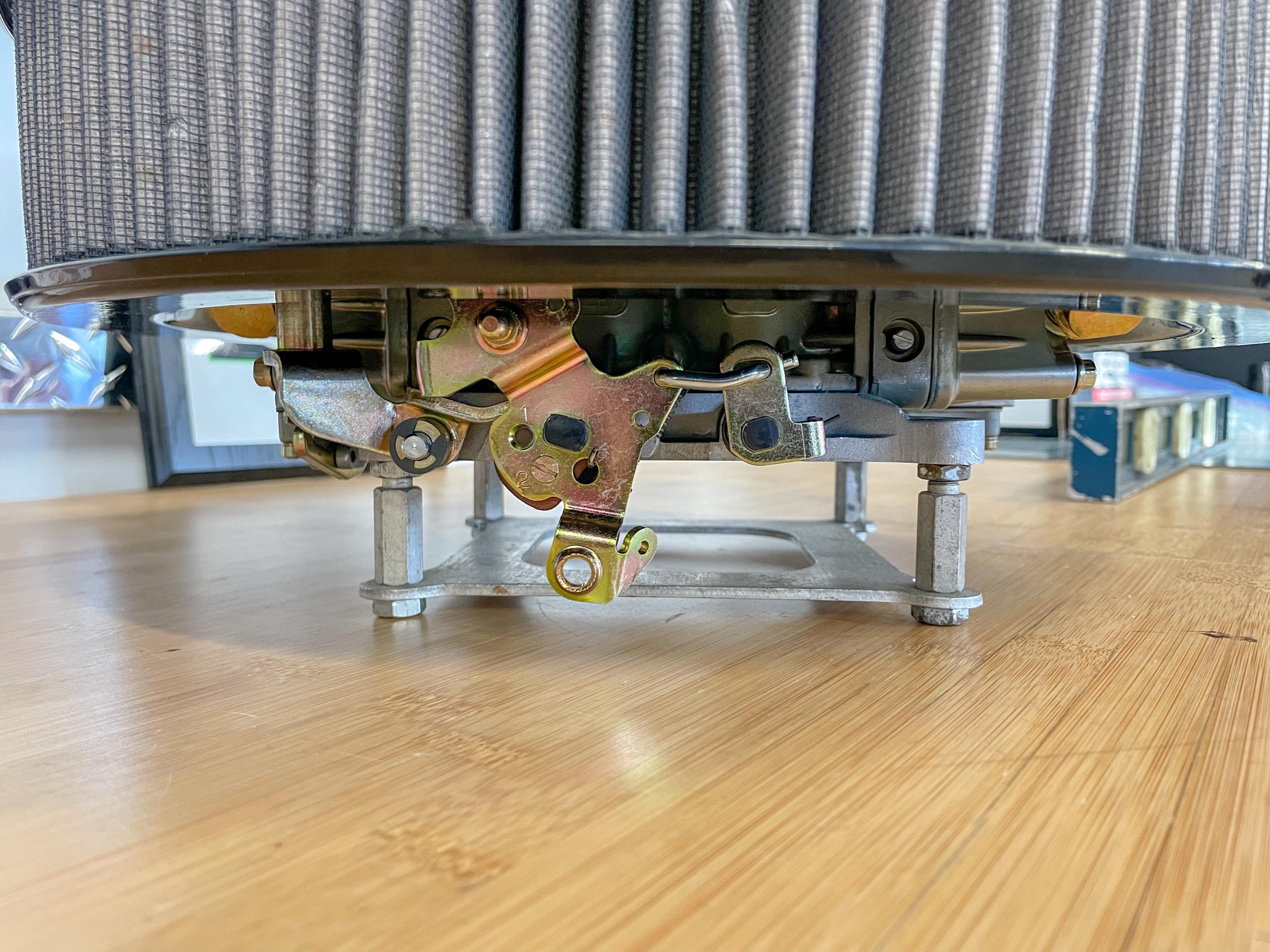
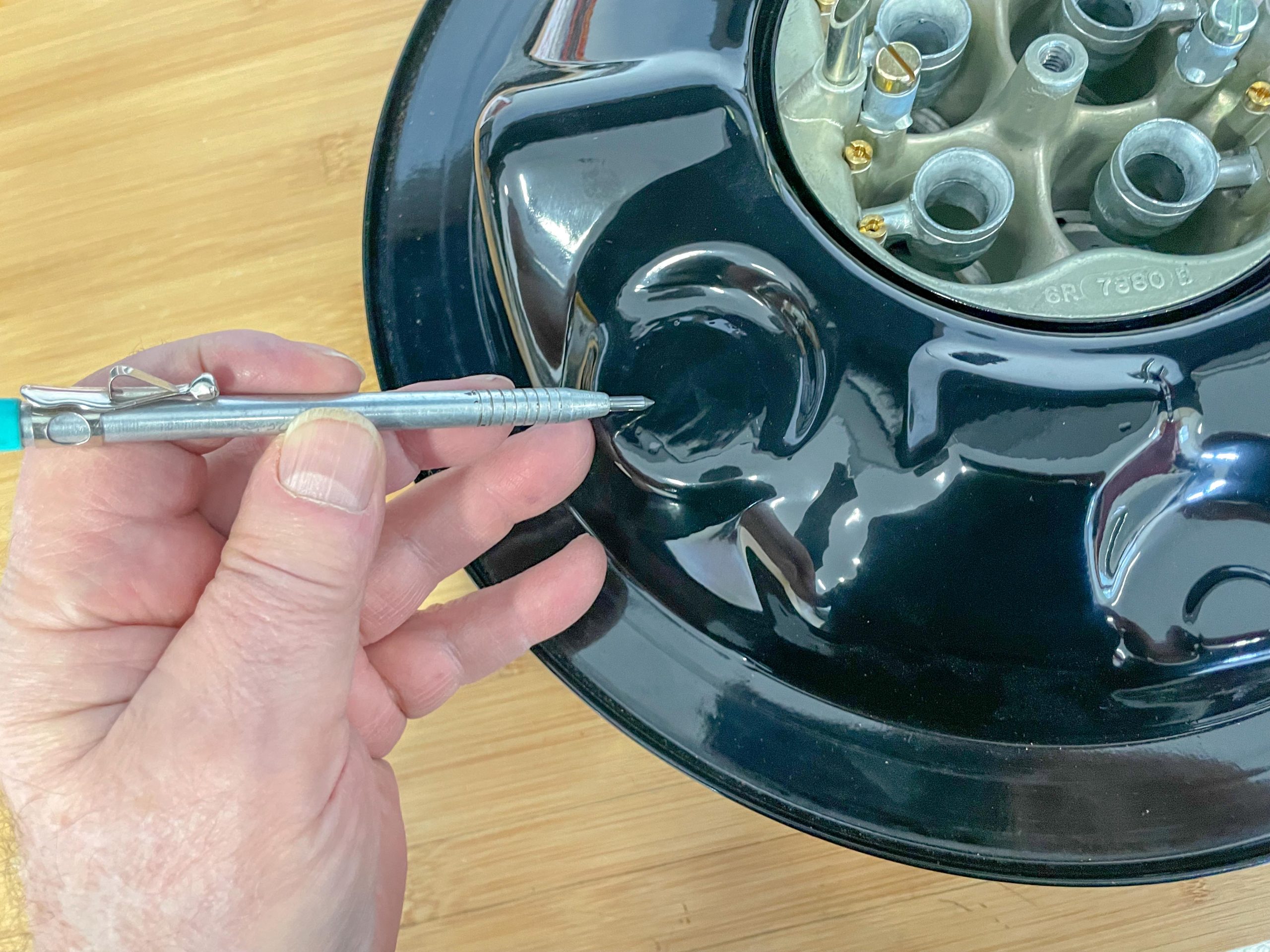
The OER setup is a reproduction Chevy open element air cleaner. In my case, the base was lightly modified (it’s the assembly shown in the photo at the top).
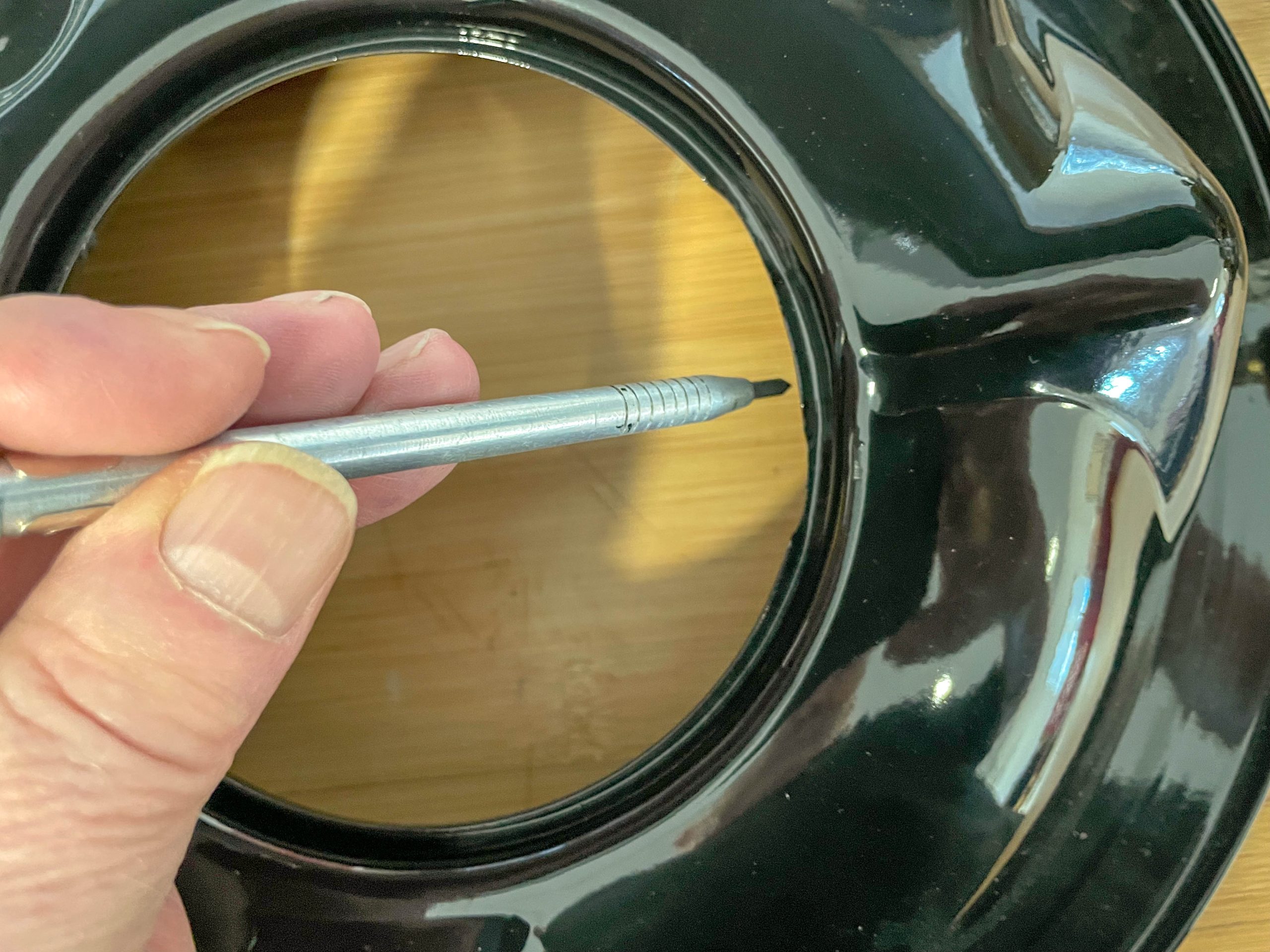
In stock form, there’s a small steel breather tube fitted to the bottom of the air cleaner. I pressed it out and TIG welded a plug in the hole. The reason for this is, the breather tube fouls the secondary accelerator pump linkage. I simply use a conventional valve cover breather in place of the factory breather tube. In addition, the stock carb mount flange has a pair of small tangs on the front edge. These don’t work with some Holley carbs. I simply ground them off with a die grinder. Once done, I had the base powdercoated gloss black.
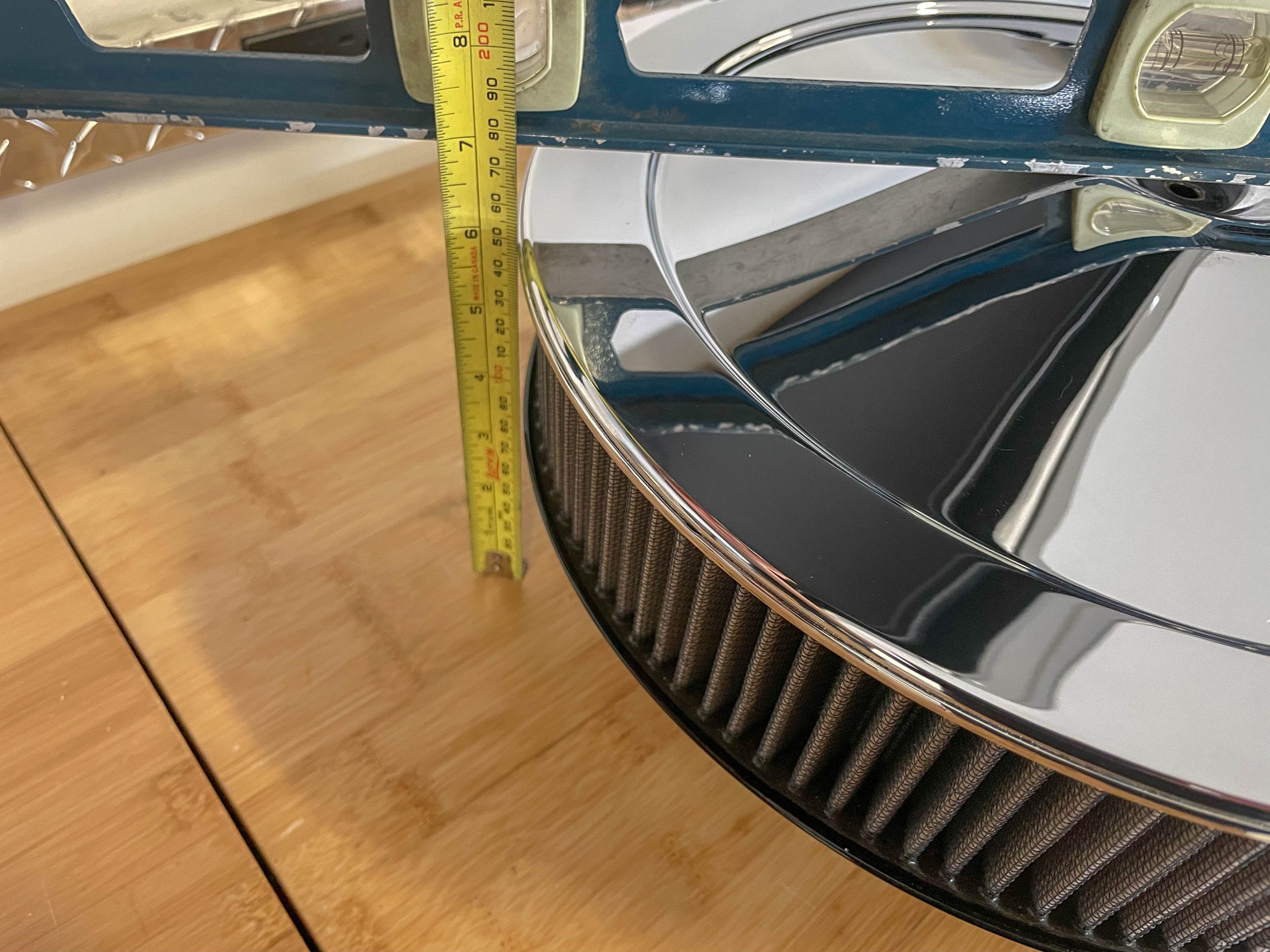
Out of the box(es), I measured the filter assembly base drops (from the carb inlet flange mount to the base of the air cleaner):
- Moroso 65910 – 1.00 inch
- B&B 72200 – 1.375 inches
- OER 6423907 – 2.00 inches
Next I checked the air cleaner height from the very top of the lid down to the carburetor baseplate (using a Holley double pumper as the basis). Essentially, this is the dimension from the intake manifold to the air cleaner top. Here are the dimensions:
- Moroso 65910 – 6.00 inches
- B&B 72200 – 6.00 inches
- OER 6423907 – 5.16 inches
Clearly, the OER Chevy reproduction provides the biggest drop. The B&B air cleaner also has the highest “bulge” in the lid. Because of this, I decided to mix and match the B&B base with lids from the Moroso and Chevy (OER) air cleaners. Here are numbers from the top of the lid down to the carburetor baseplate (again using a Holley 0-4781 850 double pumper as the basis).
- B&B base with Moroso lid – 5.50 inches
- B&B base with Chevy (OER) lid – 5.75 inches
Fair enough, but given the shape of the B&B air cleaner I believe if you use a lower lid on it, there’s a good chance you’ll restrict air flow to the carburetor. On the other hand, with the B&B base, it is possible to shorten the base mount flange (perhaps a quarter to half an inch) which in turn will drop the base down further over the carburetor.
More Air Cleaner Considerations
There are other items to watch for too when considering a drop base air cleaner. Obviously, hood clearance is one (and as you can see from above, there are all sorts of different drops). The bigger the drop, the more opportunity you have to increase filter size. Keep in mind that the larger the filter the better. That’s why three inch element heights are the most popular. And if you can get more height than that by using a taller element without fouling the hood, good on you.
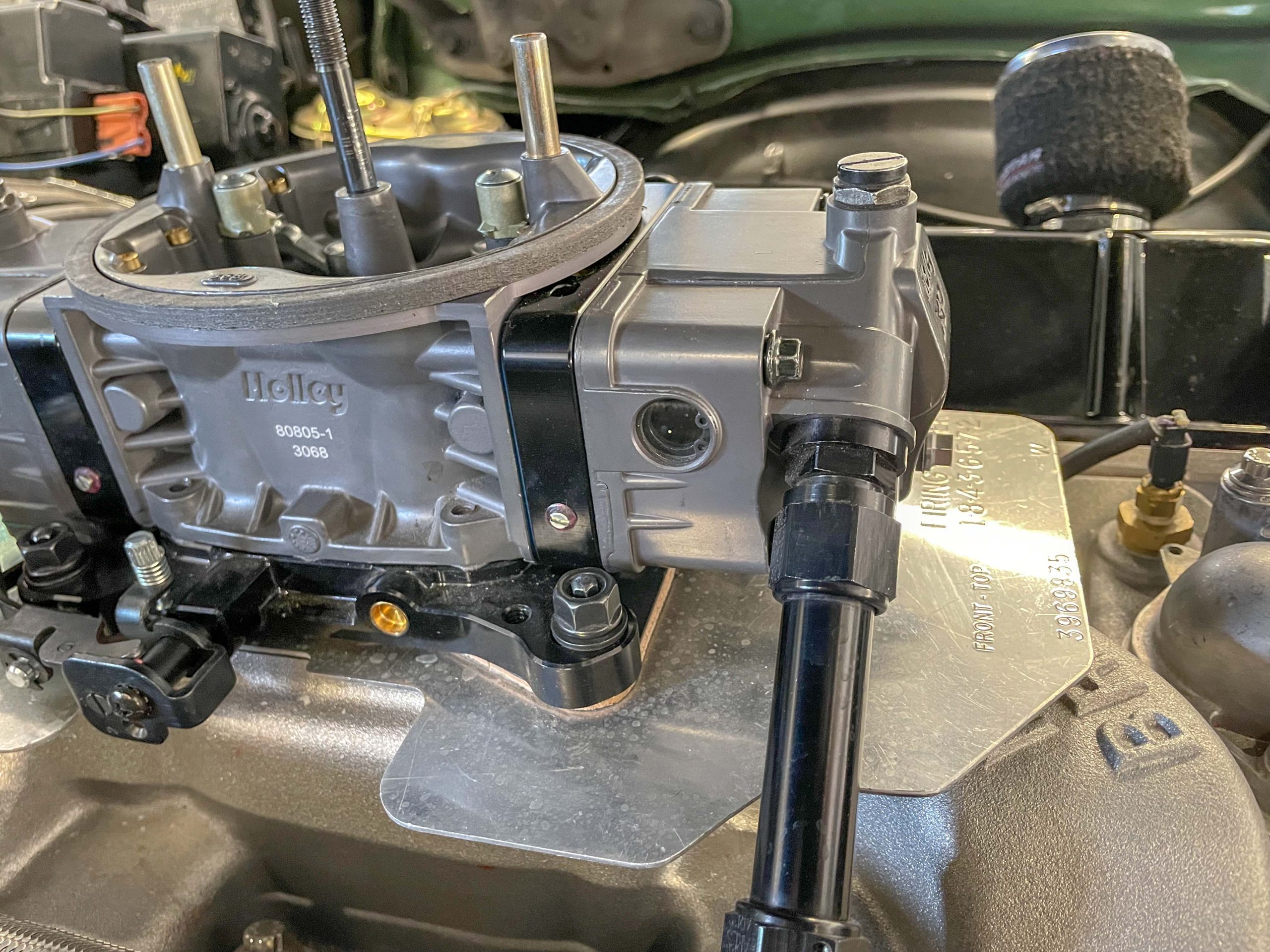
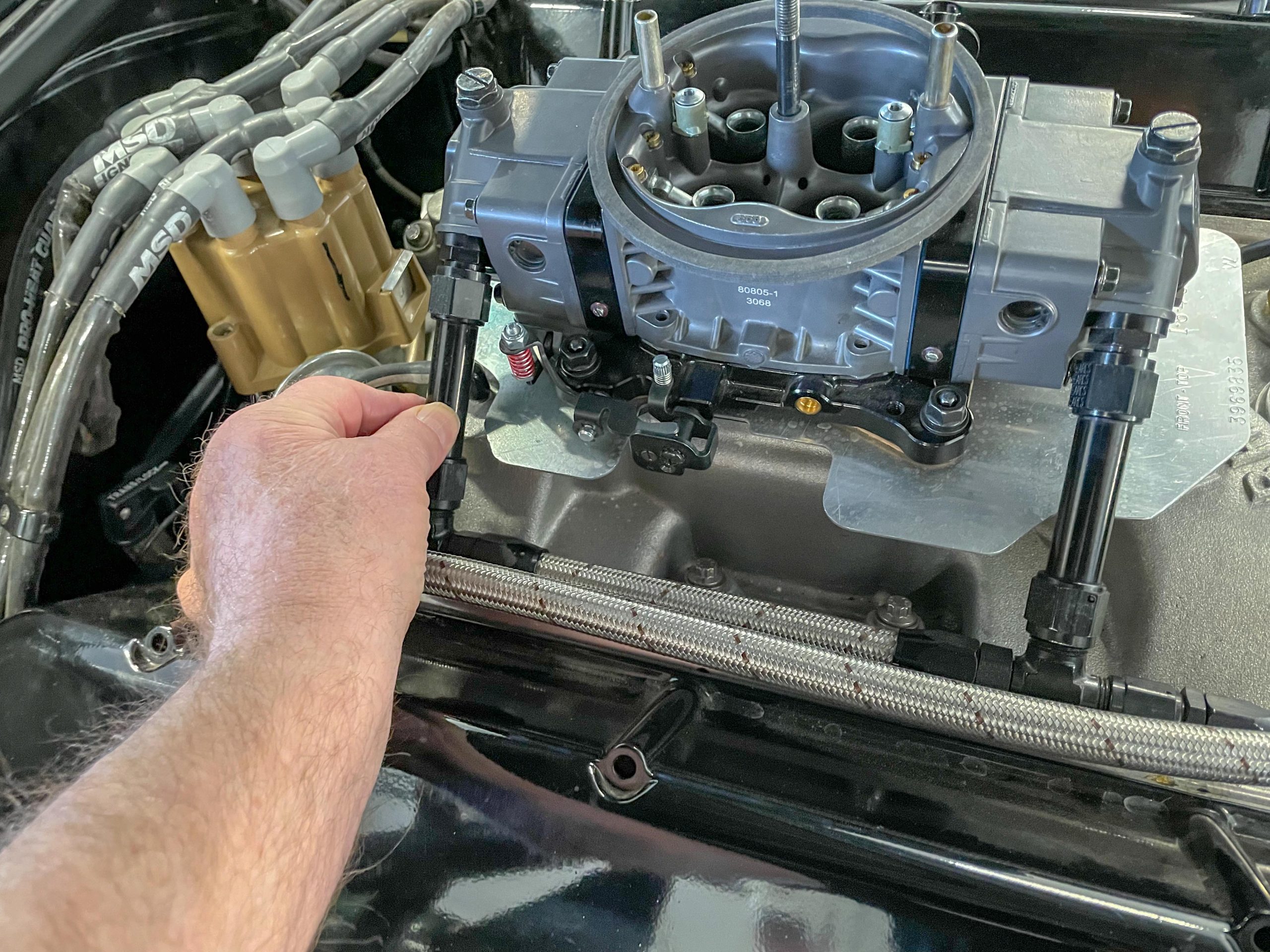
Fuel bowl clearance is another issue. It’s not so much the bowl you have to worry about, it’s the fuel line. I have bulky -8 AN inlets on my carburetor and as a result line clearance is critical, but here, all three air cleaners fit. Keep in mind if you decide to shorten the base mount flange on the B&B air clearer, you should carefully check bowl and fuel line clearances.
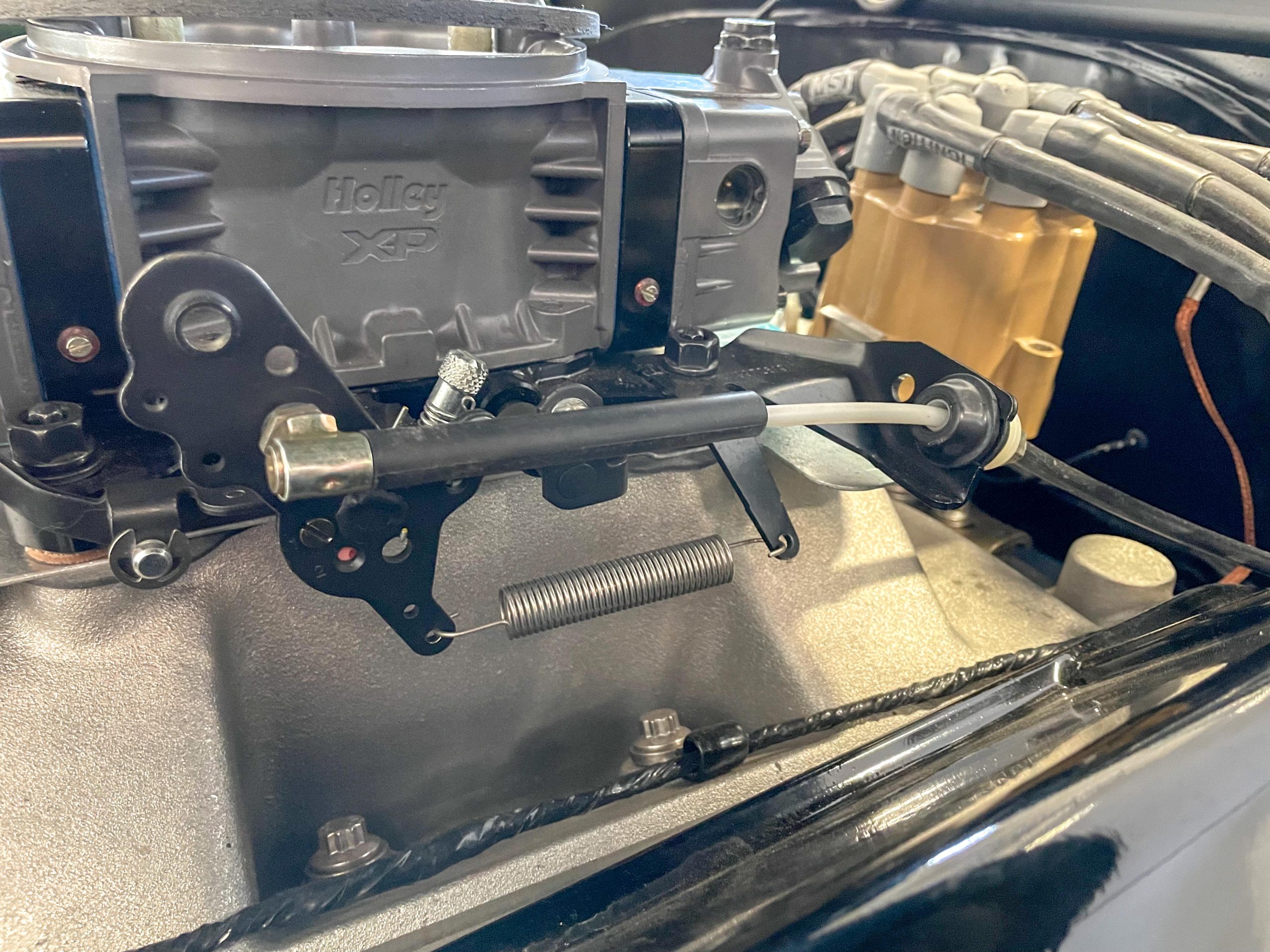
On the opposite side, the throttle linkage is also a concern. Most race style carbs have pared down linkage systems, but if the carb has a large throttle linkage lever, a choke assembly, and other hardware, watch for clearance issues.
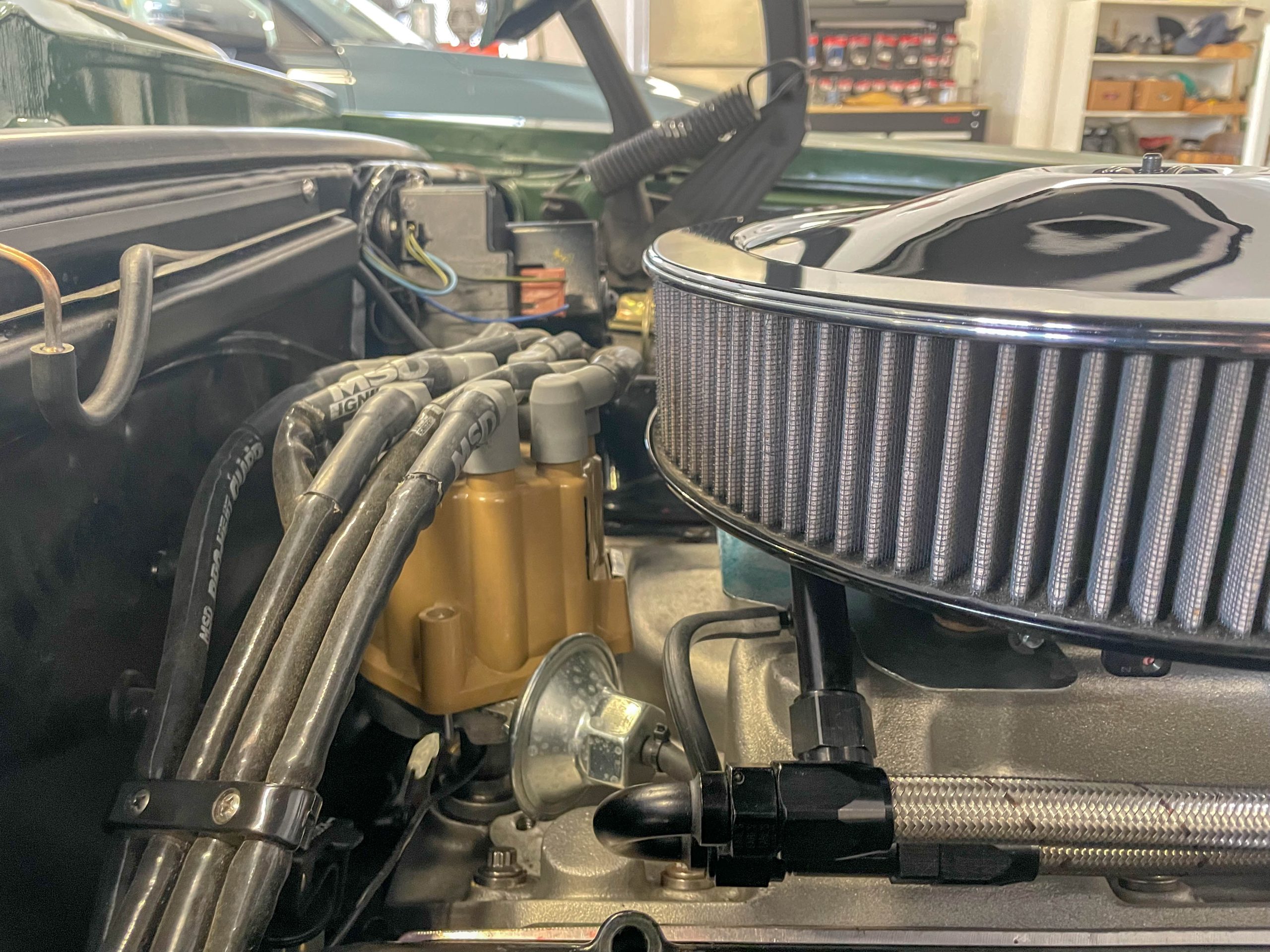
The air cleaner also has to clear the distributor as well as the plug wires coming out of the distributor (particularly important with vintage Chevys and other applications with rear distributors). A large cap distributor or distributor with a cap adapter can position the wires perilously close to the air cleaner. And yes, there are air cleaner assemblies available from Summit Racing with offset bases, but consider fuel bowl clearance with these assemblies. They move the filter element toward the radiator and may not clear the rear bowls on a Holley carburetor, particularly with a large drop.
As you can see, there are all sorts of considerations when selecting a drop base cleaner. Keep in mind the goal is to get as much air filter area as possible and still fit the engine and the car. We’ll look at some different filter combinations in an upcoming issue. For a closer look at the drop base air cleaners, check out the photos.








Nice write up. I searched everywhere and made many purchases and returns looking for the right drop base. I ended up doing the same as you did to a standard chevy drop base. My main issue was getting a good fit around a Quadrajet replacement Holley. Had to do some massaging to bump out some of the reliefs on it as well.
Great! This is the kind of information I would have expected to get from the manufacturers or places like Summit, but sometimes they don’t even come up with the amount of drop. Also the particular section is important, both for clearance and air flow. I am in the process of fitting a larger air cleaner than the standard 2″ on the 400 HP 347 in my 1966 Mustang, and it is a tight fit. I ended up cutting templates and rotated them around the center bolt in order to establish what will work best. Now all I need to know is how that compares to the various aftermarket air cleaners, but this may be the most difficult task.
Hey Matthias, glad we could help. And don’t hesitate to reach out to our Summit Racing tech team if you need more help with your air cleaner fitment.
First, thank you. This article was incredibly helpful and very well done. I have a ’65 vette that has a street dominator intake and holley 4778. The hood had been cut up and an L88 scoop glassed onto the original hood to clear the air cleaner. The explanations and pictures were a huge help as throttle linkage and fuel supply lines certainly come into play. I had been looking at different(lower) intake heights but the OEM intake is a much better solution.