
“Jaguar’s E-Type is the most beautiful car in the world.”
—Enzo Ferrari
***
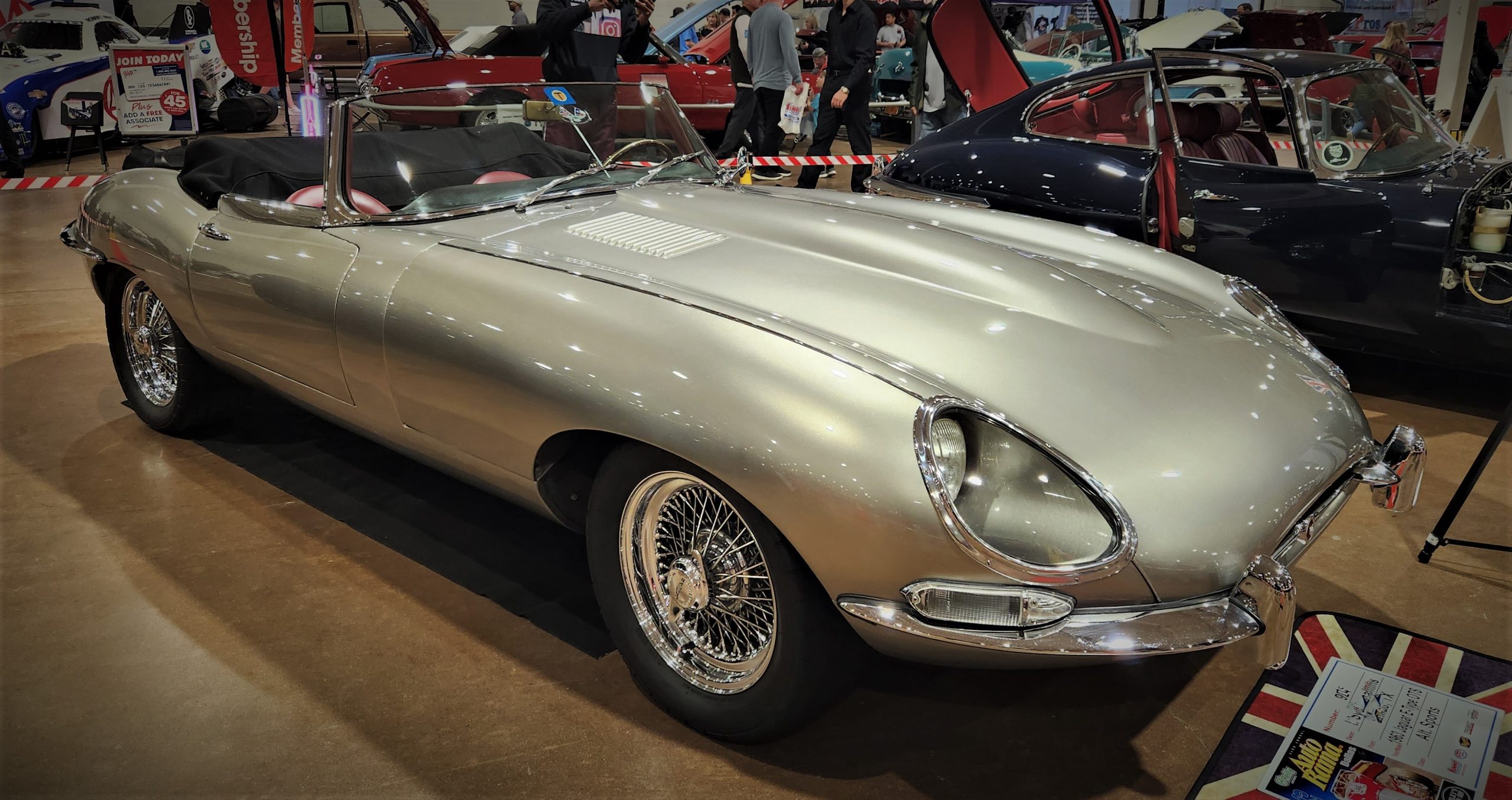
Officially launched in the spring of 1961, it didn’t take long for the Jaguar E-Type to gain iconic status. It was an instant hit in showrooms across the globe and, over a 14-year production run, more than 72,000 E-Types left the Jaguar factory in Coventry, England.
Never heard of an E-Type? That’s probably because, here in the United States, the car was officially sold under the name Jaguar XKE.
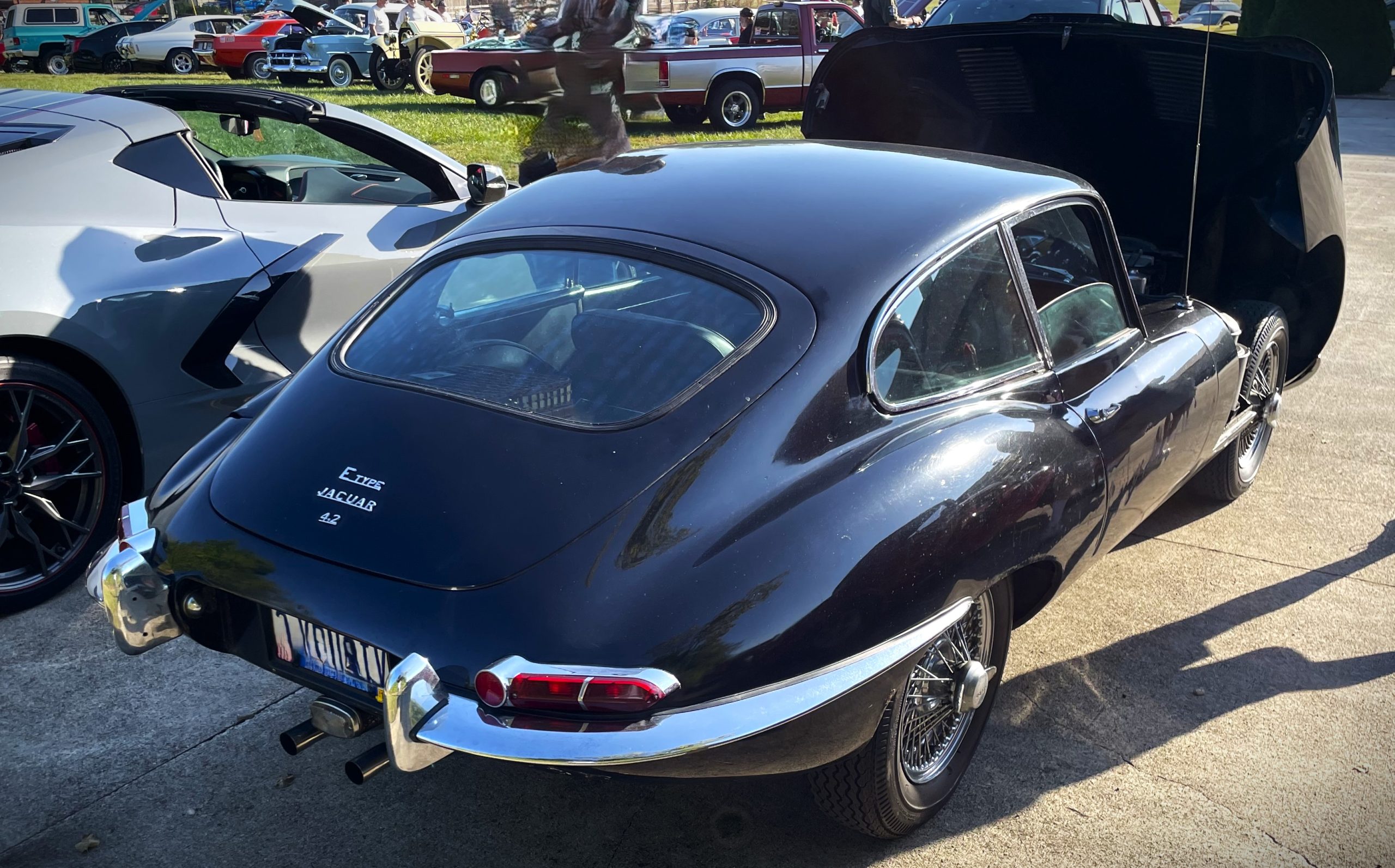
The E-Type was born out of Jaguar’s racing efforts, specifically the equally-gorgeous XKSS—a car that was essentially a street-legal version of the D-Type Le Mans racer.
Despite its race-derived origins, the E-Type was designed first and foremost as a road car. That didn’t stop folks from racing them though, and the E-Type took home a class win at the 12 Hours of Sebring, along with victories at other notable tracks like Goodwood and Silverstone. Legendary racers Bruce McLaren, Jackie Stewart, and Graham Hill have all spent time behind the wheel of an E-Type.
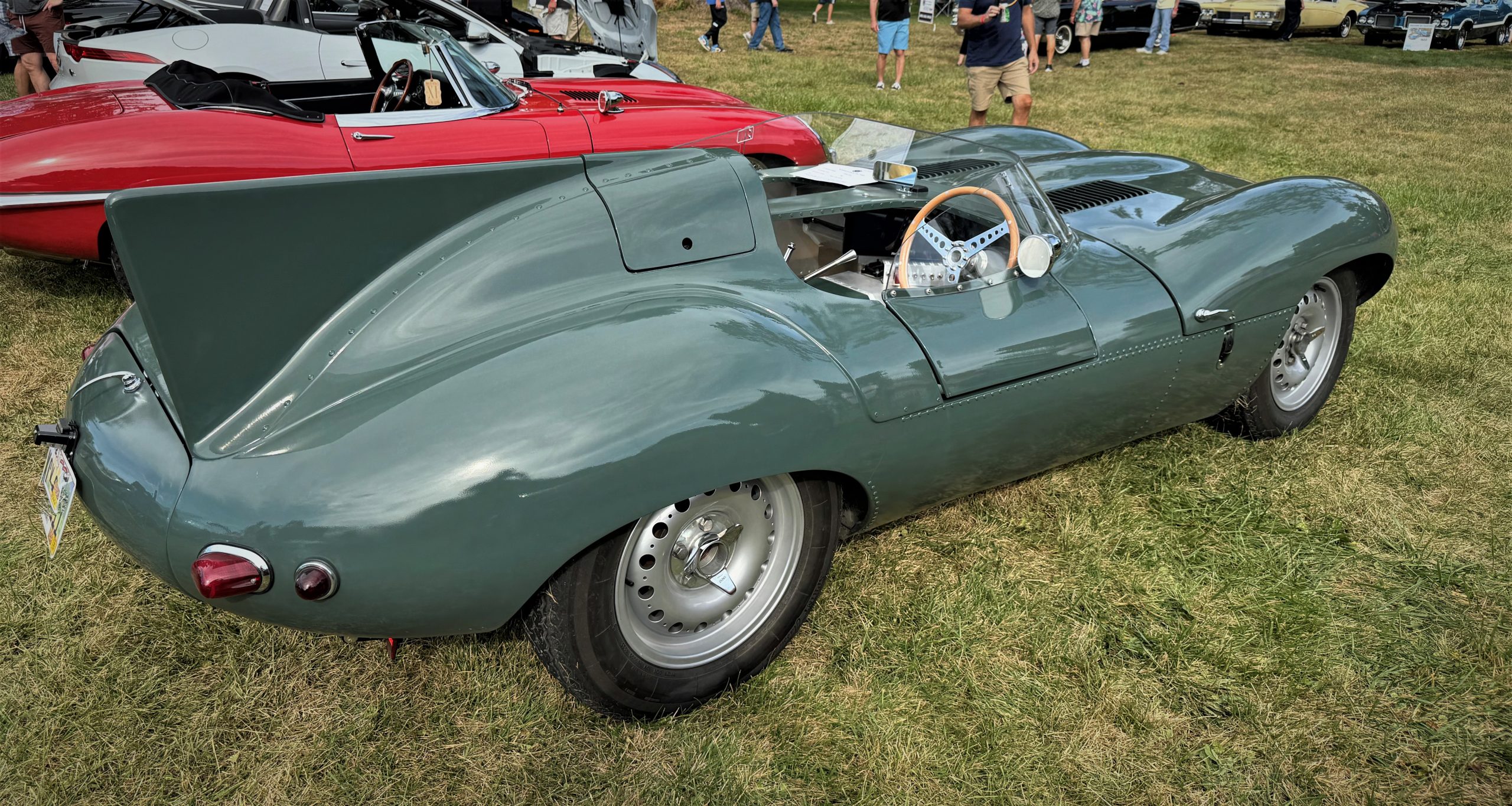
Jaguar E-Type Engine & Body Evolution
Originally available in coupe and convertible forms, in 1966 the E-Type added a 2+2 to the mix. The 2+2 gave the coupe a (somewhat) functional back seat, while stretching the wheelbase about 10 inches.

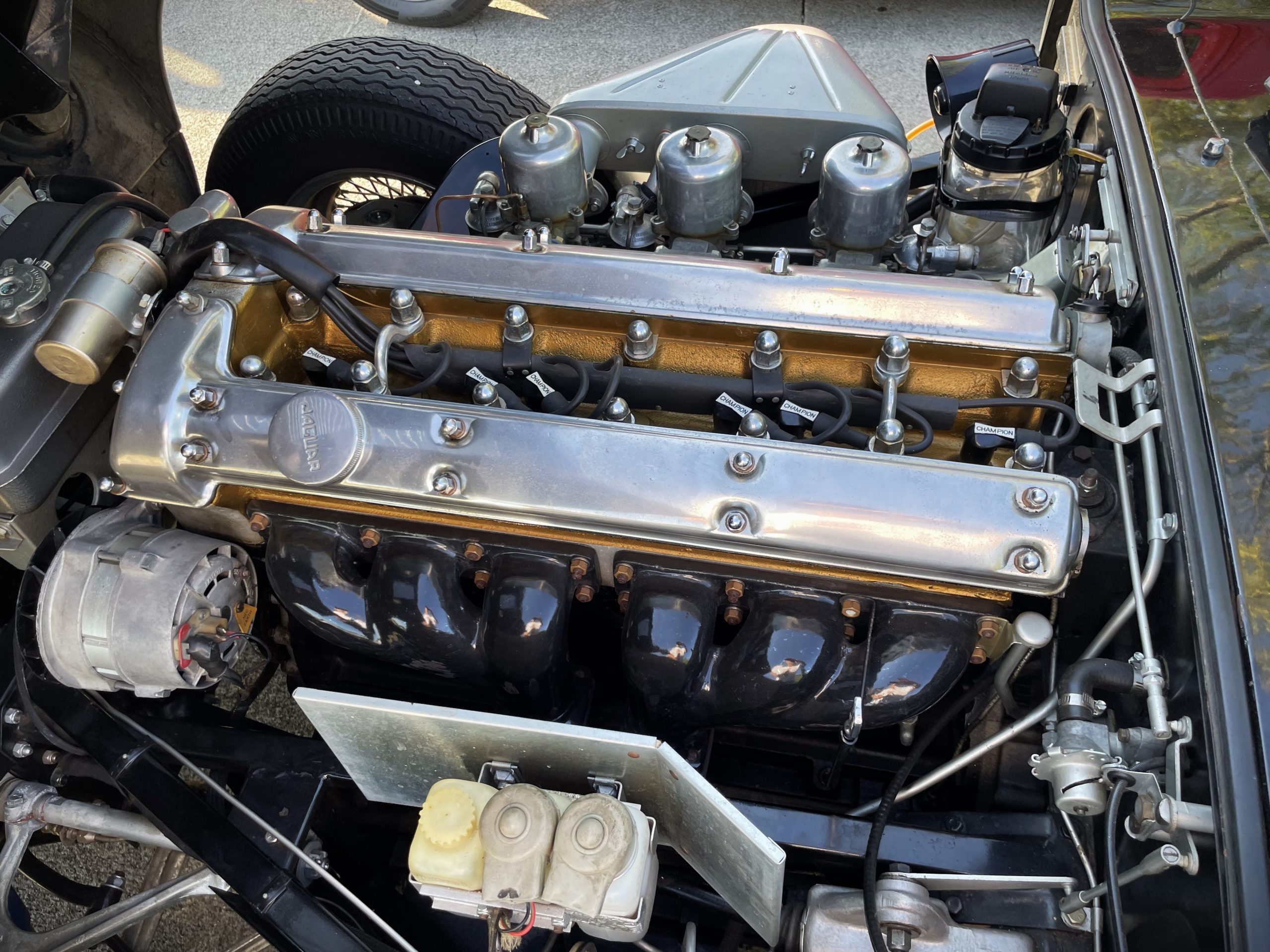
The E-Type launched with a 3.8L inline six good for 265 horsepower and 240 lb.-ft. of torque. (For perspective, a base 1961 Corvette made about 245 hp.) That 3.8L got punched out to 4.2L a few years later—horsepower remained the same, but torque increased to 283 ft.-lb.
The larger engine helped the E-Type top out around 150 mph and hustle through a quarter-mile in under 15 seconds, which was plenty fast for the era.
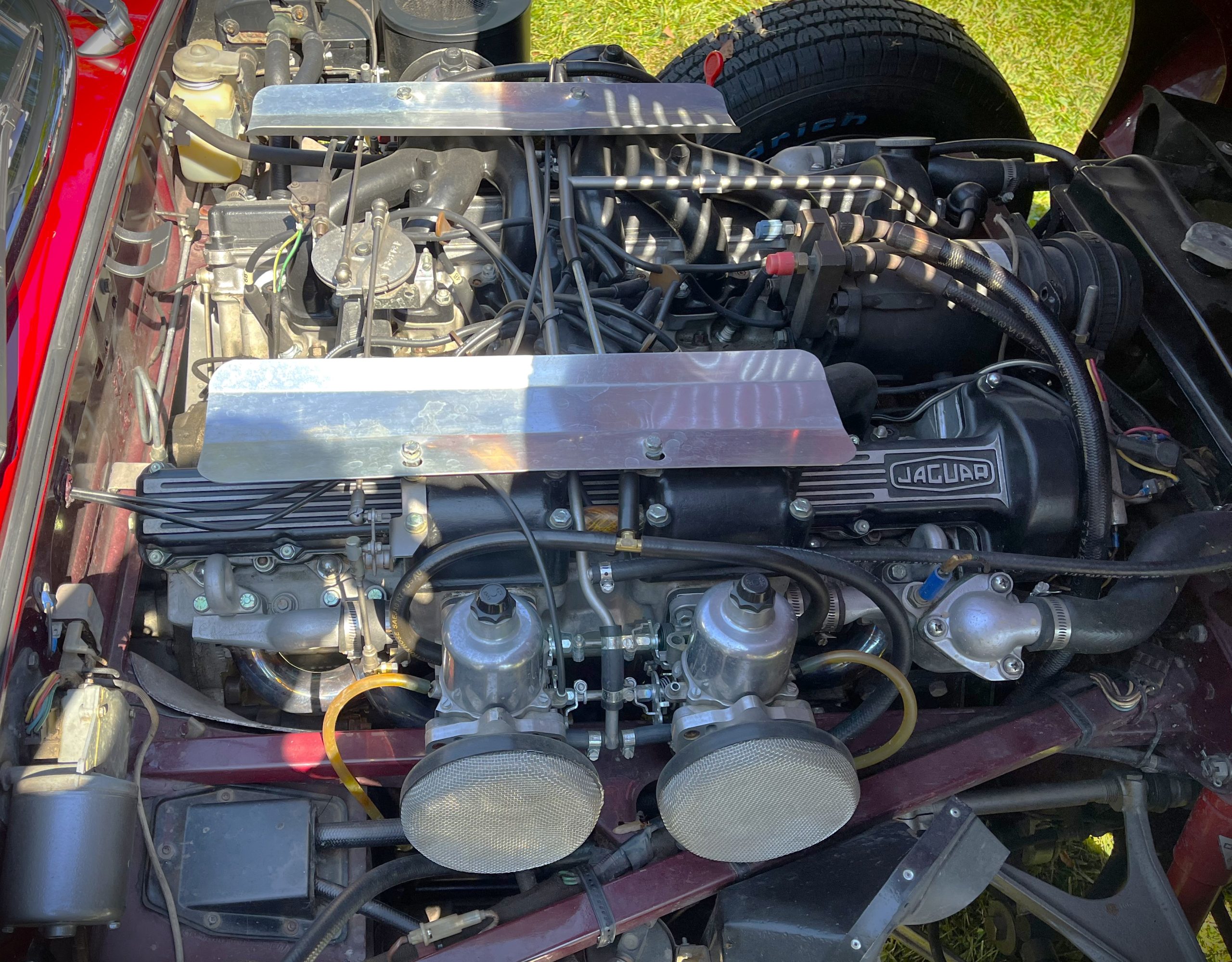
Then, in 1971, the E-Type received a new all-aluminum Jaguar 5.3L V12 engine, making 272 horsepower and 304 lb.-ft. of torque.
That same year, the standard hardtop coupe was dropped from the mix, leaving only the convertible and longer 2+2 body styles.
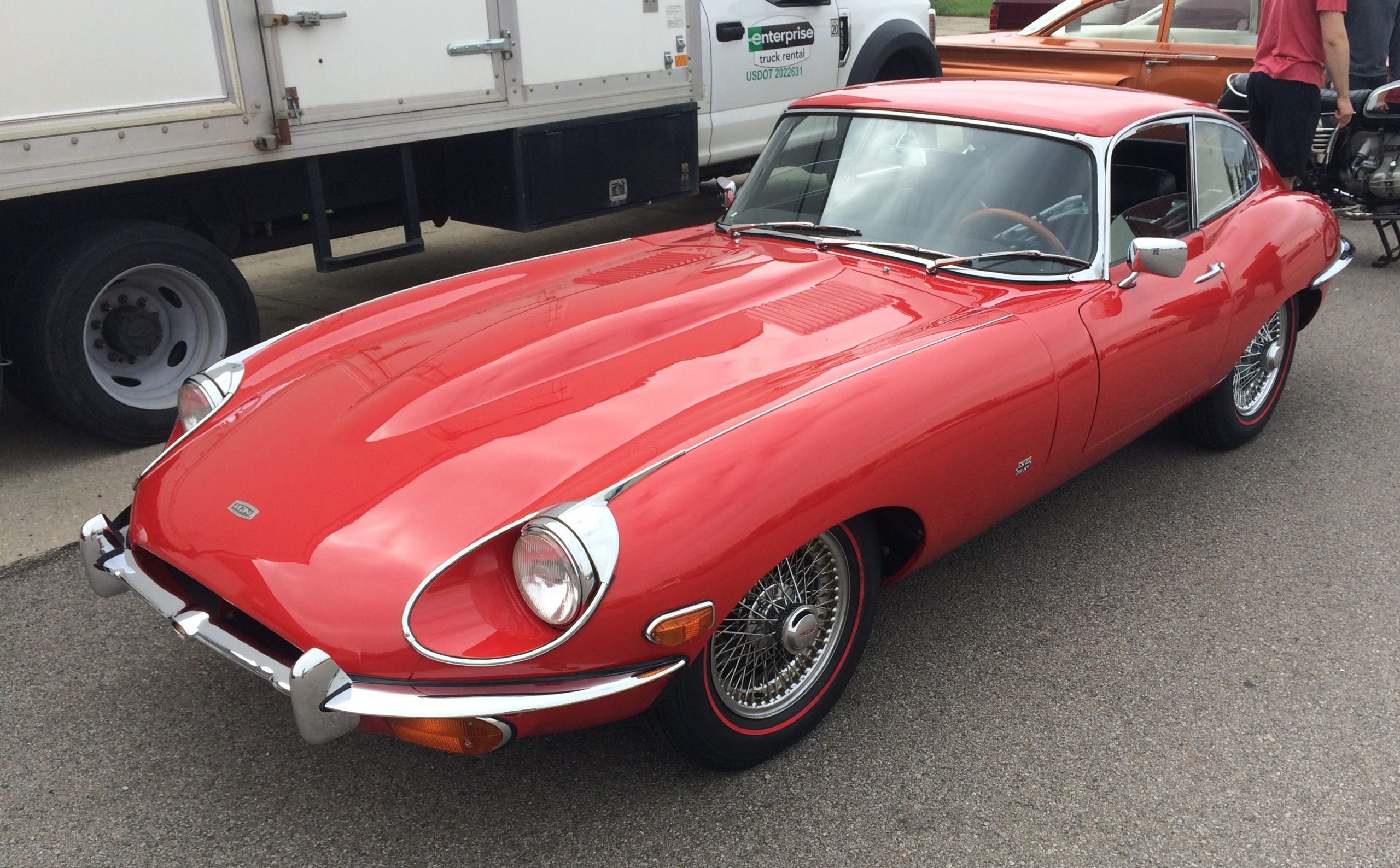
Like many vehicles during the 1960s and 70s, the E-type evolved to meet changing government guidelines, specifically in the United States where, among other tweaks, it gradually ditched the glass-covered headlight bezels, added fender-mounted turn signals, and revised its bumpers.
The Jaguar E-Type Legacy
Still to this day, many folks picture an E-Type when they think of the Jaguar marque. It’s appeared in countless movies and TV shows, and was a familiar sight at racetracks all over the world.
But beyond that, the car became engrained in the fabric of British culture and was closely associated with the Mod movement that took over much of Europe in the 1960s. It appeared alongside notable English celebrities like George Harrison, Elton John, and Chief Inspector Clouseau. Even across the pond, they were seen piloted by Steve McQueen, Frank Sinatra, and Roy Orbison.
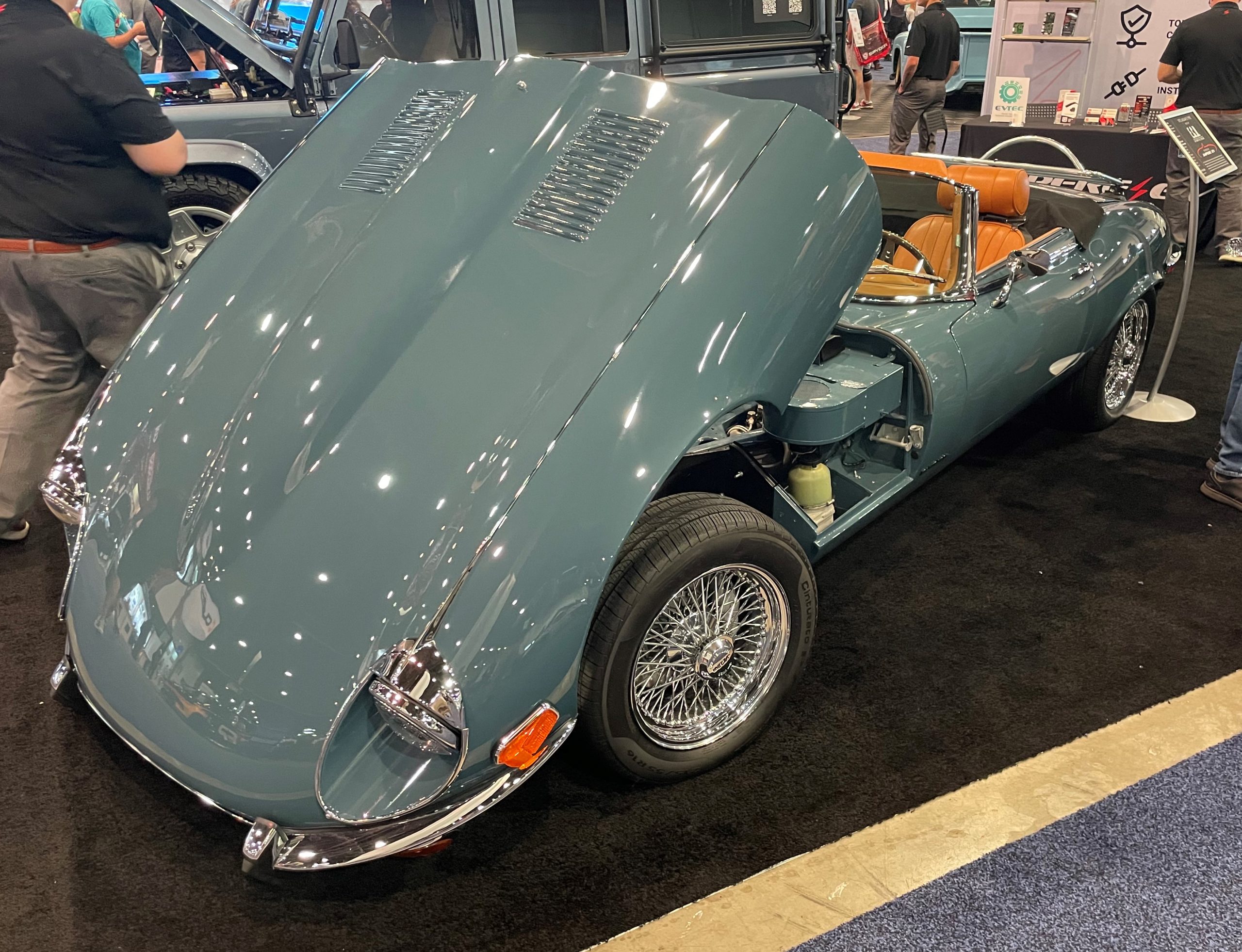
Equal parts luxury grand tourer and elbow-dragging coupe, the Jaguar E-Type pushed the British sportscar into the modern era. And as important as the E-Type was to the British auto industry, it was even more vital to Jaguar itself as the coupe evolved into the marque’s halo car.
In fact, decades later, the manufacturer released continuation models of the original Lightweight E-Type Racers. More recently, it teased an all-electric E-Type Zero concept. And finally, in concert with its 60th birthday, Jaguar has reproduced a limited number of 60 E-Type Reborn models.
So here here! Lift a slightly-below-room-temperature pint in honor of one of the most iconic sporting cars the world has ever known!


[…] the family-friendly Vette reminds us a lot of the Jaguar E-Type. It too began life as a two-seater, adding the rear seats in an elongated 2+2 model a few years […]
[…] he did with the aforementioned GTO and Vega, DeLorean looked to Europe. He noted that cars like the Jaguar E-Type were powered by engines running overhead camshafts. This OHC design not only reduced the number of […]
Poppl
Please tell me where I can find that chrome ring surround that circles the r headlamp on the body. 1970 xke jag 4.2 2+2 also turn signal indicator switch with horn button can be used