
I was just reading your article about the 283 small block Chevy. I have one in my 1966 Chevy C-10 pickup truck and I wanted to upgrade the stock camshaft. The motor already has an Edelbrock 2701 Performer Intake manifold with a 600 CFM 1406 Edelbrock electric choke carburetor.
What would be a good hydraulic cam that would fit with that combination set? I want something that would give it a little more horsepower with a smooth idle, a little lump and efficient torque.
R.B.
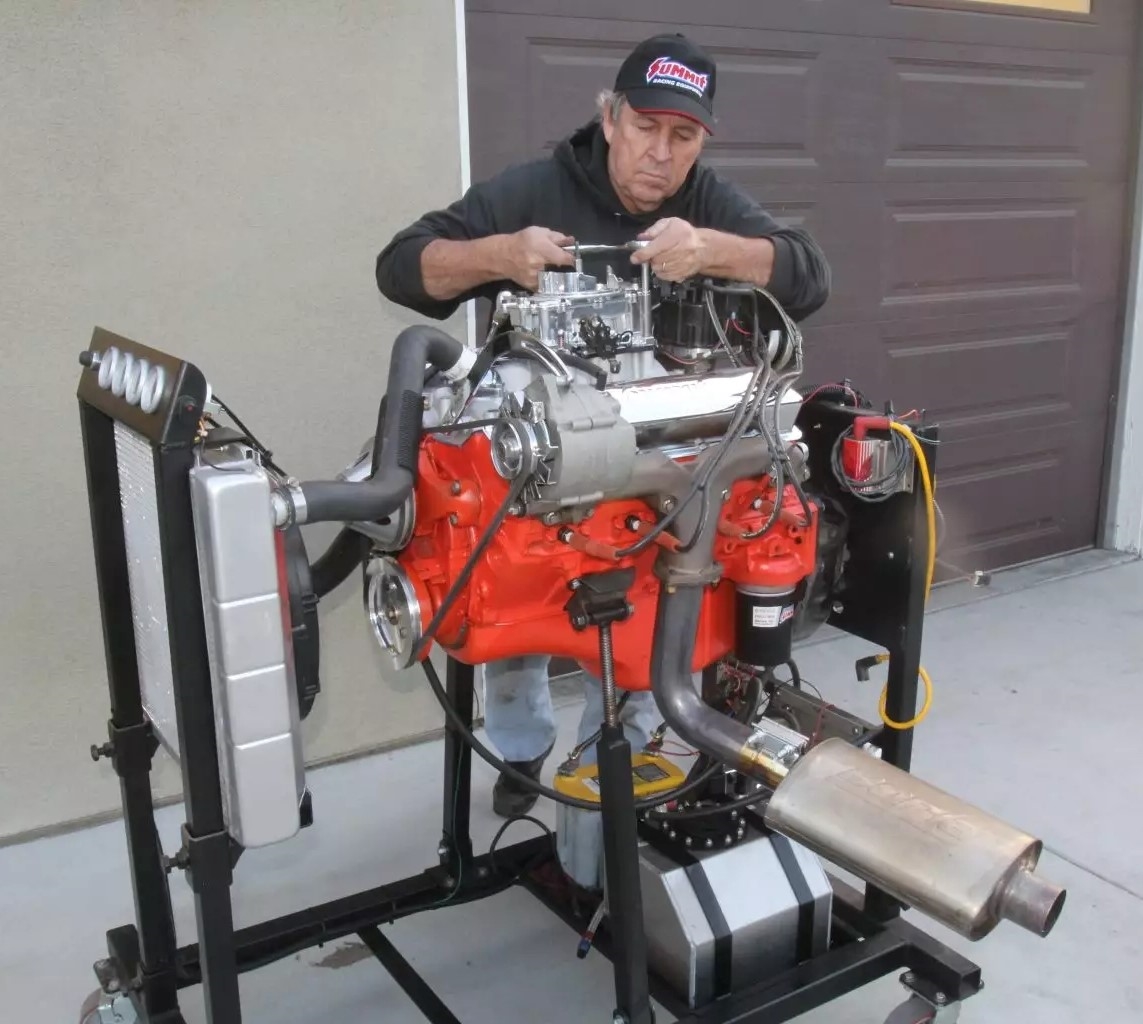
I’ve built a number of 283s, and the thing to remember is this engine is just plain little. With a 3.875-inch bore and a 3.00-inch stroke, it won’t make a lot of torque, which is what you feel when stabbing the throttle. This is important because it’s very easy to over-cam a small displacement engine.
We will assume you’re talking about using a flat tappet hydraulic camshaft. There’s a lot of talk in the industry about failing flat tappet cams and lots of unsubstantiated claims about cam companies using cheap material. I’m not one to subscribe to the idea that it is cheap material or poor machining. It all has to do with performing all the break-in procedures correctly—and that means ALL the procedures. Overlook one point, like using too high a valve spring pressure, and the cam will likely fail.
We won’t go into the details on how to break in a flat tappet camshaft. That material is covered in these other OnAllCylinders articles. I would encourage you to read them and follow the procedures:
Ask Away! with Jeff Smith: Preventing Premature Flat Tappet Camshaft Failure
Eccentric Ways: The Best Way to Break-In a Flat Tappet Camshaft
Video: Top 10 Reasons for Camshaft and Lifter Failure
Ultimately it is the responsibility of the installer to do the job correctly. My belief is that most installers do not know all the procedures and proper techniques. That’s why their cam fails.
Now I will get off my soap box and address your question. Because the engine is limited in displacement, I think a shorter duration cam of between 212 and 218 degrees at 0.050-inch would be a good choice. That covers your requirement of decent power and the fact that the 283 is in a C10 pickup. In a larger vehicle like the pickup, you will need as much torque as possible to move it along.
A longer duration cam, like around 230 degrees at 0.050-inch, will make more peak power but will tend to reduce torque in the usable, everyday driving RPM range. Choosing duration between 212 and 218 degrees will help boost lower end torque.
There are probably a half-dozen camshaft companies that offer a flat tappet hydraulic camshaft in this duration range. Personally, I’ve always had really good luck with dual pattern camshafts. These cams call for slightly longer duration on the exhaust side to help with top end power. If peak power isn’t all that important, then a single pattern cam with the same duration on the intake and exhaust will work just fine.
Generally, with the same lobe separation angle (110 degrees, for example) there is less overlap with a single pattern camshaft than with a dual pattern cam. The reduced overlap will create a smoother idle with the same intake duration numbers and lobe separation angle.
I’ve chosen a couple of camshafts as examples but if you find one from a different cam grinder, that’s okay too. The first is a Comp Xtreme Energy cam. The second choice is a Summit Racing™ SBC Cam. The specs are listed below. The intake duration at 0.050-inch for both cams is within two degrees. The lift figures are also similar. The biggest difference is the Xtreme Energy cam is a dual pattern while the Summit Racing cam is a single pattern.
One thing that many people are not aware of is something called hydraulic intensity. This is a term created by the late Harvey Crane, the founder of Crane Cams. He coined this term to describe how quickly the lobe accelerates the lifter between the advertised point of measurement (often either 0.004- or 0.006-inch from the base circle) to the 0.050-inch tappet lift number. This is measured in crank degrees.
You can do the math to determine hydraulic intensity by subtracting the duration at 0.050-inch from the advertised duration. For the Summit Racing cam, the hydraulic intensity is 66 degrees (280 – 214 = 66). The Xtreme Energy cam is quite a bit shorter at 44 degrees. This assumes that both advertised durations are measured at the same point.
The common perception is that the quicker you can accelerate the valve off its seat, the more potential there is to make more power by filling the cylinder with more air and fuel. It would appear that the COMP cam is a little better at pushing the valve open even though if offers two degrees less overall duration at 0.050-inch tappet lift.
Of course, this is just one evaluation and there are many others that will also have an effect on overall performance. Cost is another consideration and the Summit Racing cam is significantly less expensive.
Overall, I think a camshaft with numbers similar to the COMP and Summit Racing cams would be a good choice for your 283. One thing to keep in mind is that with a more aggressive cam, you will probably want to increase the valve spring pressure after the cam is broken in. I would suggest using the stock springs in the engine for break-in as they often offer less than 100 pounds of load on the seat. This will make it easier on the cam and lifters during break-in. I would also highly recommend a quality SAE 30 break-in oil.
COMP Cams Xtreme Energy Camshaft CCA–12-234-2
• Advertised Duration: 256°/268°
• Duration @ .050″: 212°/218°
• Lift with Factory Ratio Rocker Arm: 0.447″/0.454″
• Lobe Separation Angle: 110°
Summit Racing™ SBC Camshaft SUM-1069
• Advertised Duration: 280°/280°
• Duration @ .050″: 214°/214°
• Lift with Factory Ratio Rocker Arm: 0.443″/0.443″
• Lobe Separation Angle: 110°


Comments