“A rose by any other name would smell as sweet.”
– Juliet, from William Shakespeare’s “Romeo & Juliet” Act II, Scene II
For fictional tragic characters and classic car buffs alike, names are a curious endeavor—as an example, consider the name Daytona (pronounced “Daaaay-Tone-Uh!“).
It can refer to a few different things, depending on where you land on the gearhead spectrum. That’s because, given its provenance as home to one of the premiere race tracks in the United States, Daytona, Florida has inspired the name of a handful of really, really cool rides.
So with the help of a Lot Shots Feature, let’s dive into some automotive history.
***
Story Summary Overview:
- In an automotive context, Daytona refers to the famous race track in Florida
- The name has been applied to several vehicles over the years
- It’s been used by Studebaker, Dodge, Ferrari, Shelby & Triumph
- Get a close look at a Factory 5 Daytona replica spotted in the Summit Racing parking lot
***
A Tale of 1 City…and 3 Cars…and a Motorcycle
From Shakespeare, our Survey of English Lit takes a decidedly Dickensian turn here, because when talking about the vehicles that share the name Daytona, “It was the best of times, it was the best-er of times.”
It cannot be understated that the track at Daytona holds a special place in motorsports. From NASCAR to endurance racing, a jaw-droppingly diverse mix of events call Daytona home, so it’s no surprise that a handful of automakers have borrowed the name to denote their top-tier performance vehicles.
And this particular Daytona story starts—obviously—in South Bend, Indiana.
Studebaker Lark Daytona
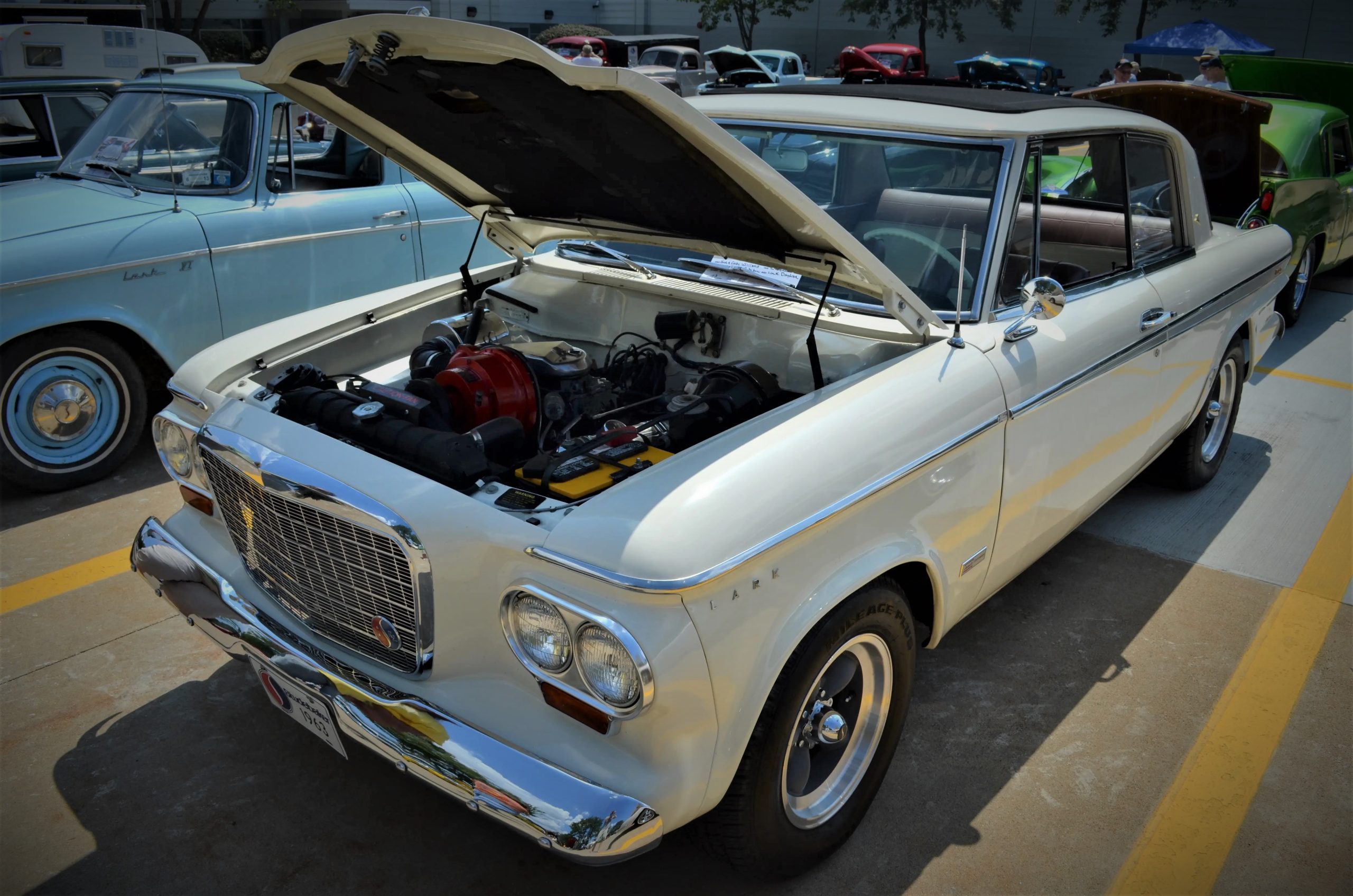
Studebaker first used the name Daytona on its Lark passenger car in the early 1960s. The Lark Daytona was the performance/sport variant that, depending on the year, could get you a version of Stude’s famed R-series supercharged V8s.
Studebaker soon expanded the use of the Daytona name, and it was applied to a smile-inducing range of wagons, coupes, sedans, and convertibles. Eventually, Studebaker stopped using the name Lark altogether, and “Daytona” became its own nameplate.
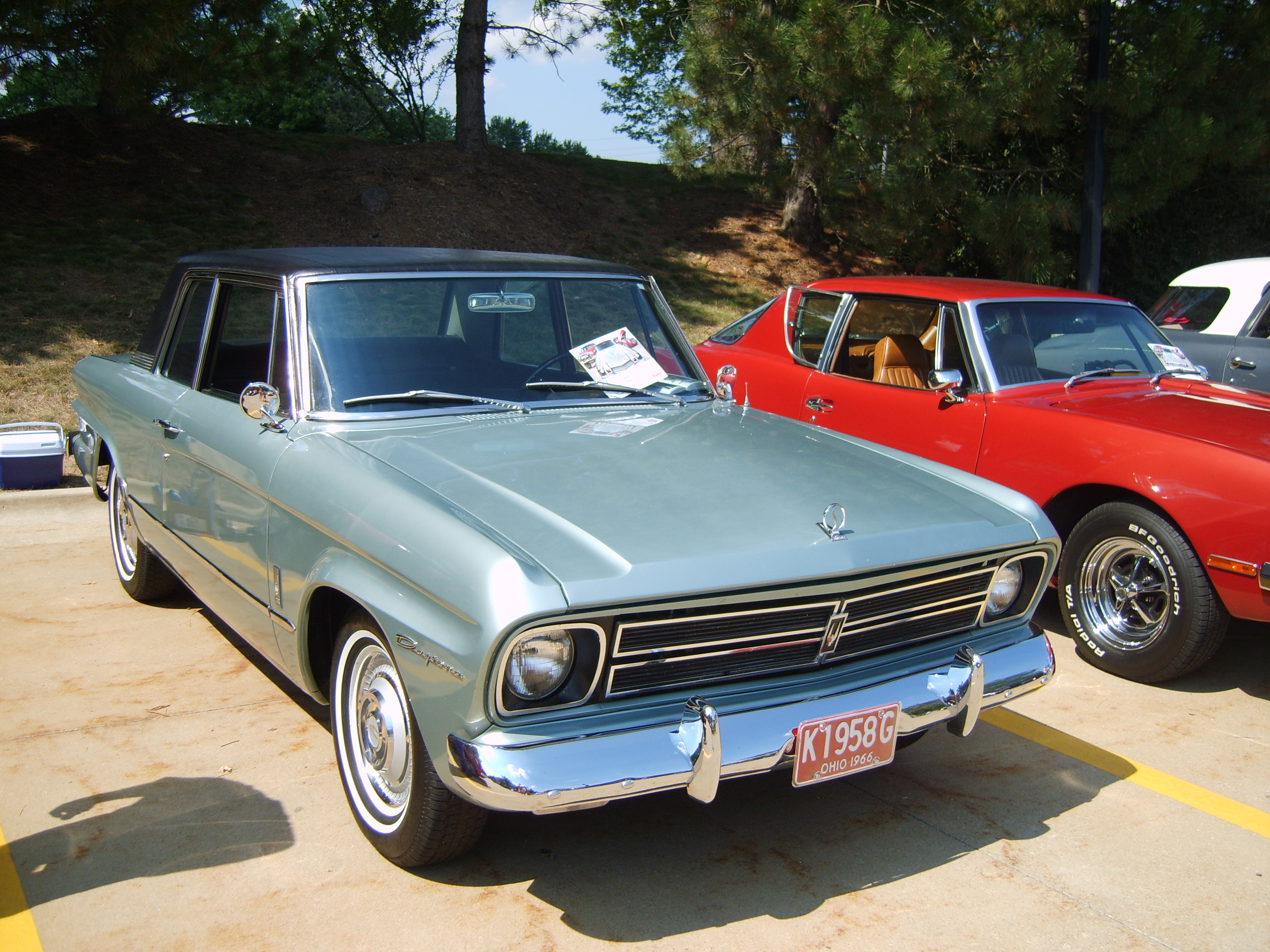
Sadly, by the mid 1960s, Studebaker’s days were already numbered, which meant that the last Daytona roared out of South Bend in 1966.
You can learn some more about Studebaker’s use of the Daytona name here: Check Out this 1963 Studebaker Lark Wagonaire Daytona & Its Supercharged 289 V8!
Dodge Charger Daytona
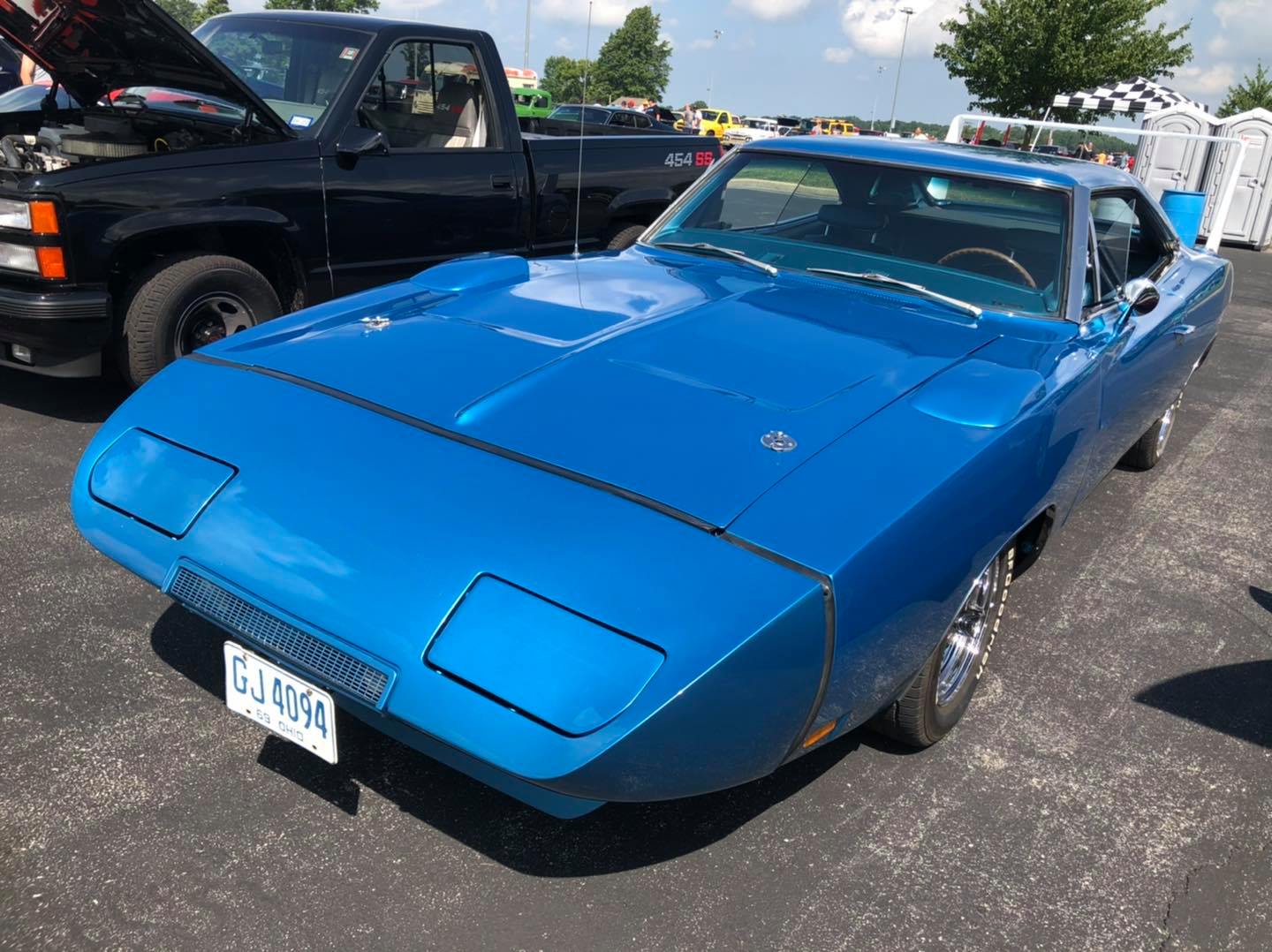
We’ll skip ahead chronologically to one of Mopar’s famed NASCAR Aero cars, the Dodge Charger Daytona. Dodge had experimented with aerodynamics on the earlier Charger 500 and took what it learned in the wind tunnel (namely the flush backglass that replaced the flying buttress roof pillars) and applied it to the Daytona.
With a new nose cone and sky-high rear wing, the Charger Daytona and its close cousin, the Plymouth Superbird, went on to dominate the NASCAR Super Speedways until the two (along with the Ford Torino Talladega and Mercury Cyclone Spoiler II) were essentially regulated out of existence.
Thanks to homologation rules, Dodge had to make 500 Charger Daytonas for the general public and the model itself was a one-year-only affair for 1969.
Get a full rundown of the Mopar aero cars here: A Quick History of the Dodge Charger Daytona & Plymouth Superbird
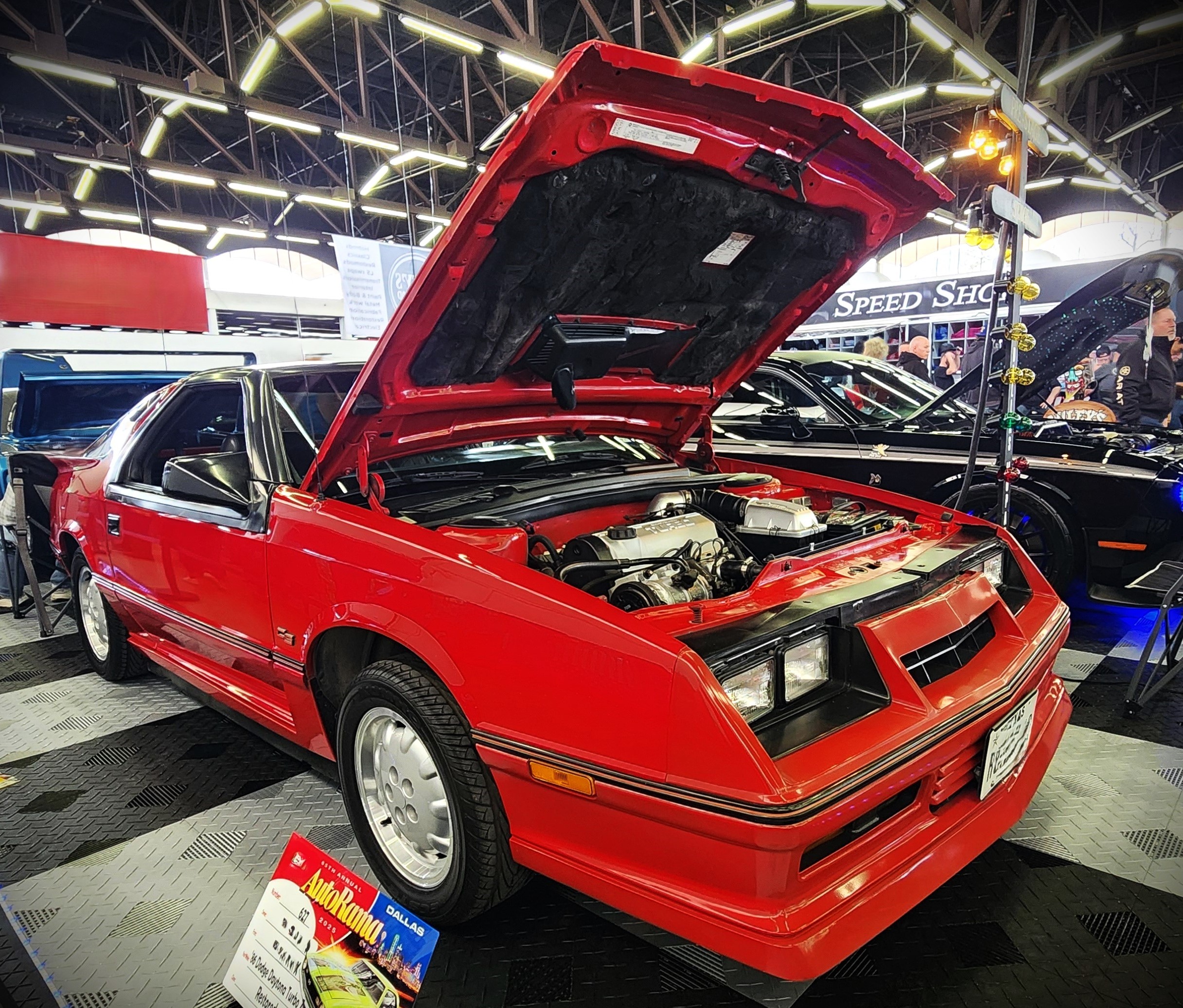
Dodge would revive the Daytona name on its FWD G-body platform in the 1980s. Performance peaked here with the famed Turbo Z Carrol Shelby model which, in addition to the turbocharged 140+ hp engine, the Daytona got a reworked suspension with stiffer springs and bushings.
The Daytona name would return again on the LX/LD Charger, before being applied to the Dodge brand’s first all-electric musclecar.
Ferrari 365 GTB/4 & 365 GTS/4 “Daytona”
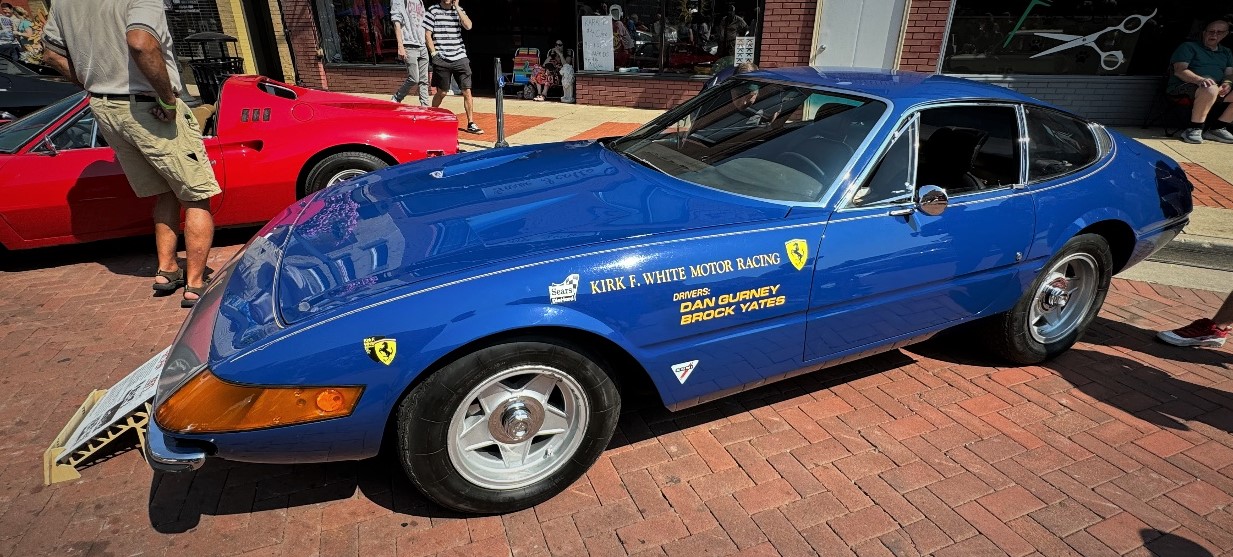
We have to use quotation marks here, because in the strictest sense, Ferrari doesn’t refer to these cars as “Daytonas.” Instead, the company opts for the official model designations of 365 GTB/4 coupe and 365 GTS/4 convertible in its technical and marketing literature.
That’s because Daytona is an unofficial nickname coined by the automotive press, simply due to the model’s release right after Ferrari had completed a podium sweep at the 1967 24 Hours of Daytona race.
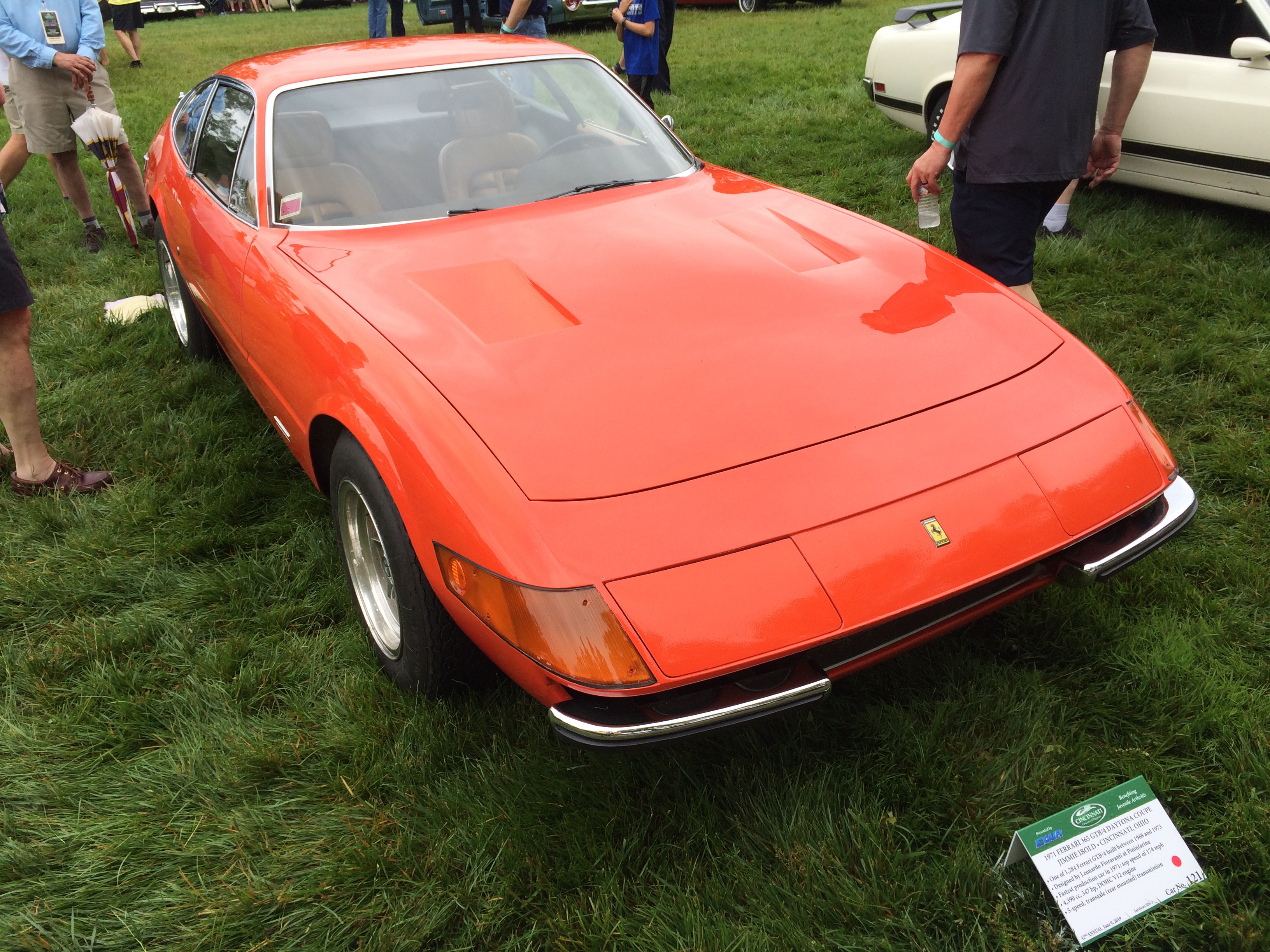
But the name was summarily embraced by the public—hence Daytona stuck.
Though it was only produced from 1968 to 1973, these Ferrari models left a big impact on pop culture, from “The Cannonball Run” to “Miami Vice” (even if the latter models were C4 Corvette derived kit cars…).
Triumph Daytona
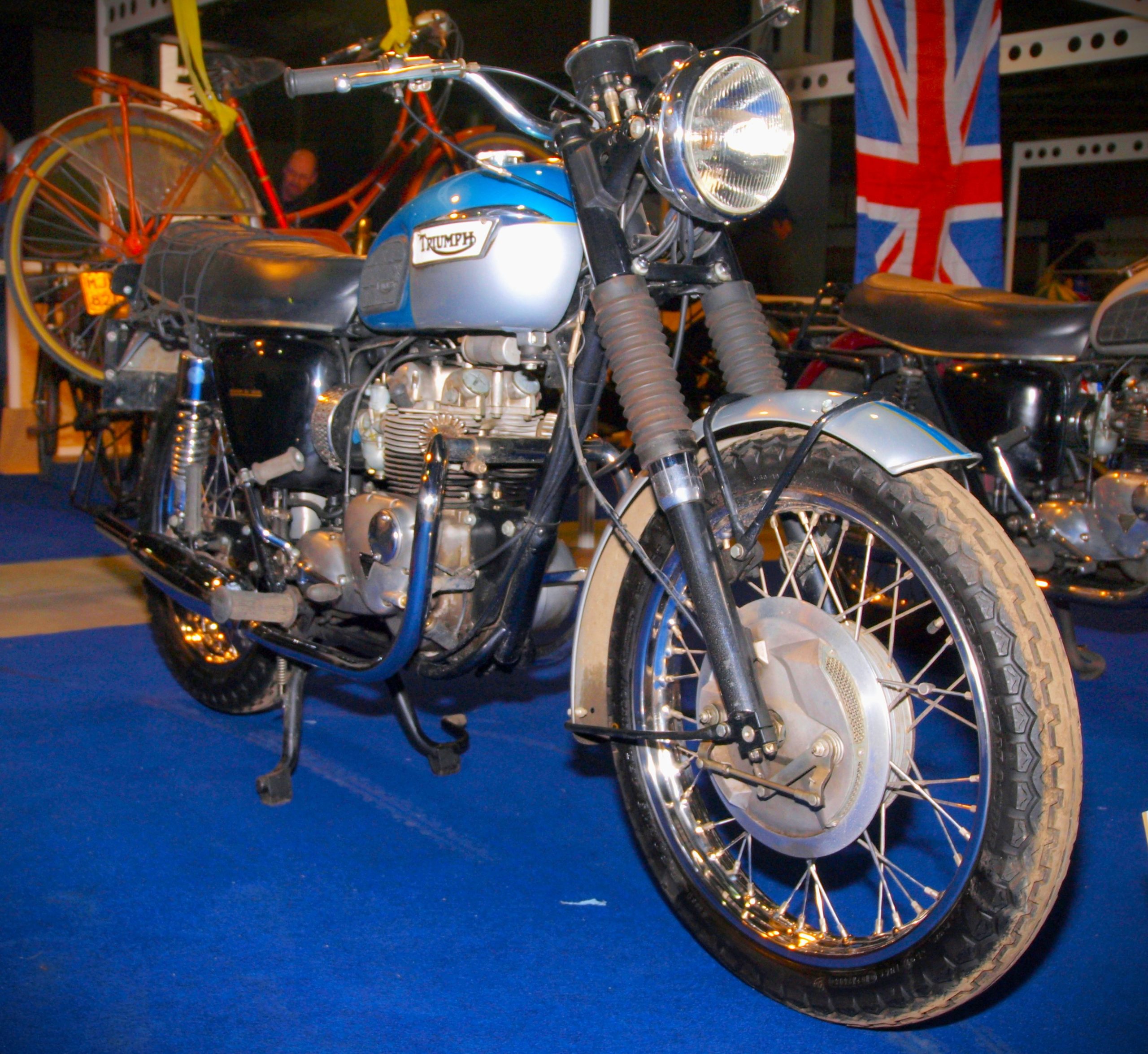
There was a two-wheel Daytona too. After all, the famous racetrack has hosted its fair share of MotoGP and other motorcycle races.
The original Triumph Daytona was derived from the company’s famed Tiger model, and was christened as a result of a Tiger’s win at the 1966 Daytona 200. The production bike featured a host of performance upgrades that helped it compete better with the ever-improving bikes coming over from Japan.
The first Daytona production run ended in 1970, but Triumph brought the name back in the 1990s on its sport and supersport bikes. And that legacy continues well into the 21st century with motorcycles ranging in displacement from 600cc all the way up to the liter class and beyond.
Lot Shots: Shelby Daytona Replica
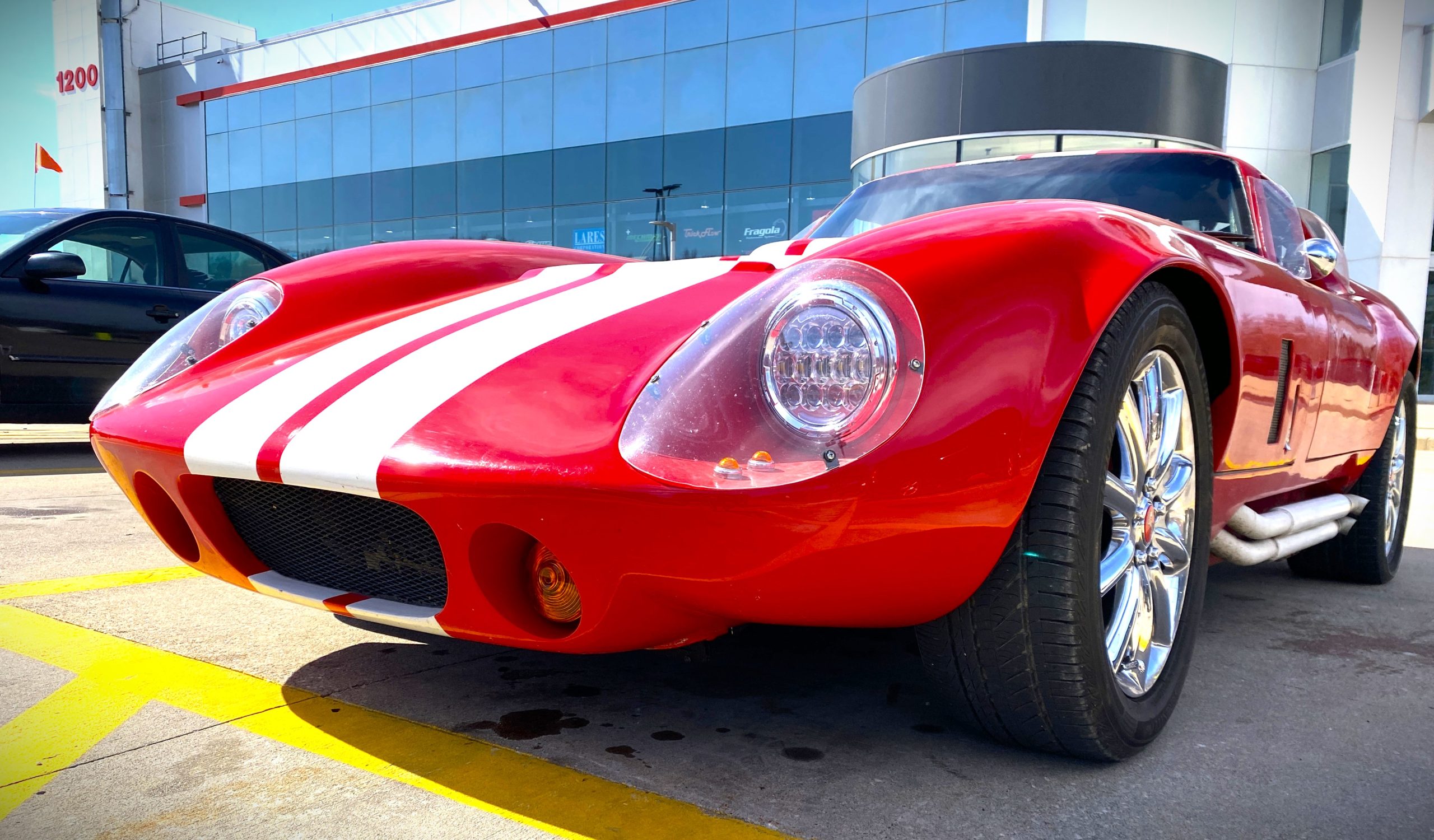
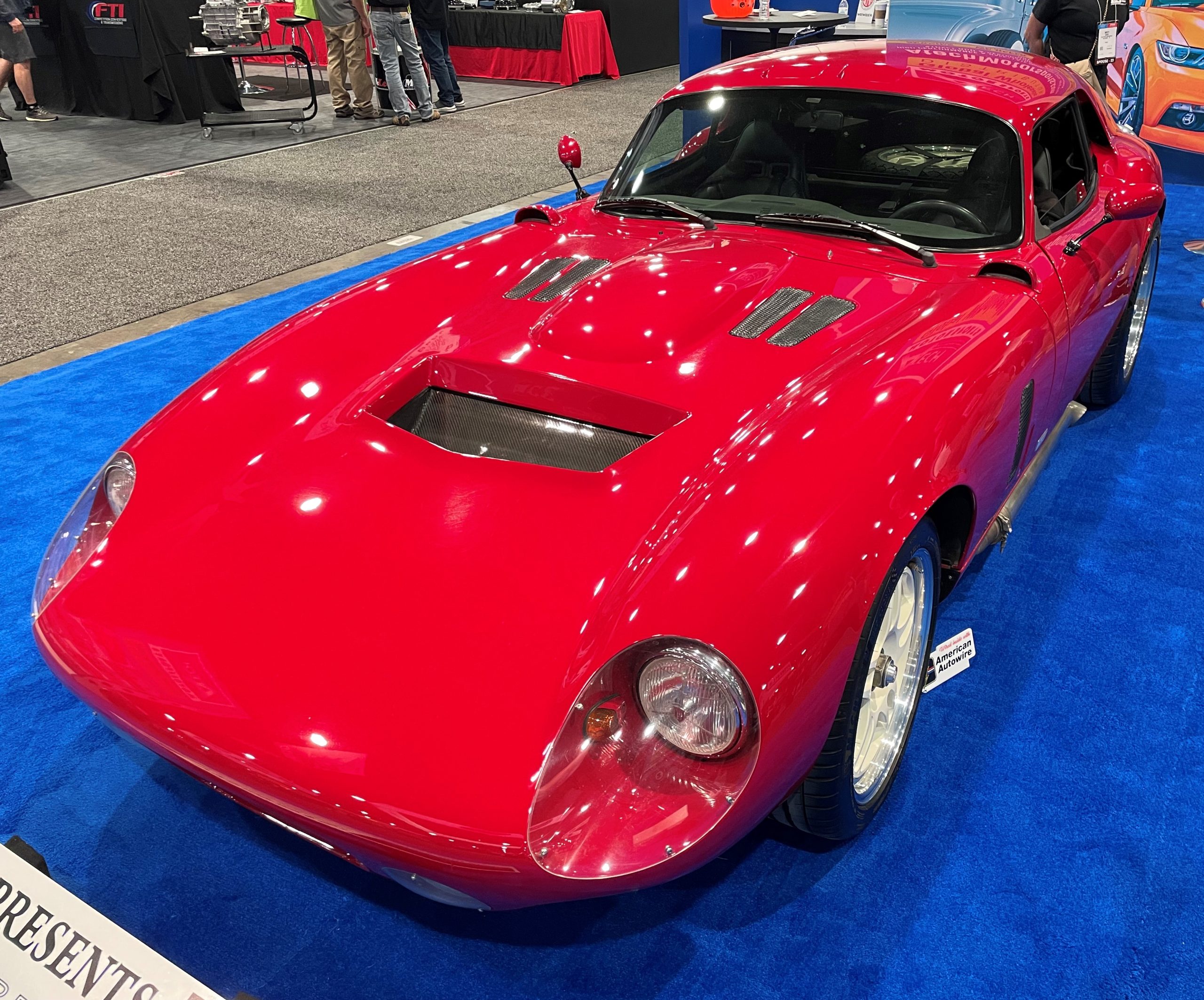
Now, let’s get to today’s Lot Shots Feature: a replica of a famed Shelby Daytona coupe.
Yup, the name Daytona was used by Shelby too.
Designed by the legendary Peter Brock, the Daytona coupe was Shelby’s entrant into the Grand Touring racing class. An evolutionary leap from the open-top Cobra, Brock incorporated a series of advanced aerodynamic features—notably the coupe’s distinctive Kammback rear end. The Daytona was a major success too, grabbing several notable GT Class victories in 1964 and 1965, and ultimately securing Shelby a Manufacturer’s Championship in 1965.
We won’t spend too much time on the original Shelby Daytona story here, but if you want a fascinating read, you’ll definitely appreciate our article with the man behind its design, Peter Brock. Check it out:
A Conversation with Automotive Icon Peter Brock—Discussing Design, Daytonas, Datsuns & His Studio Concept
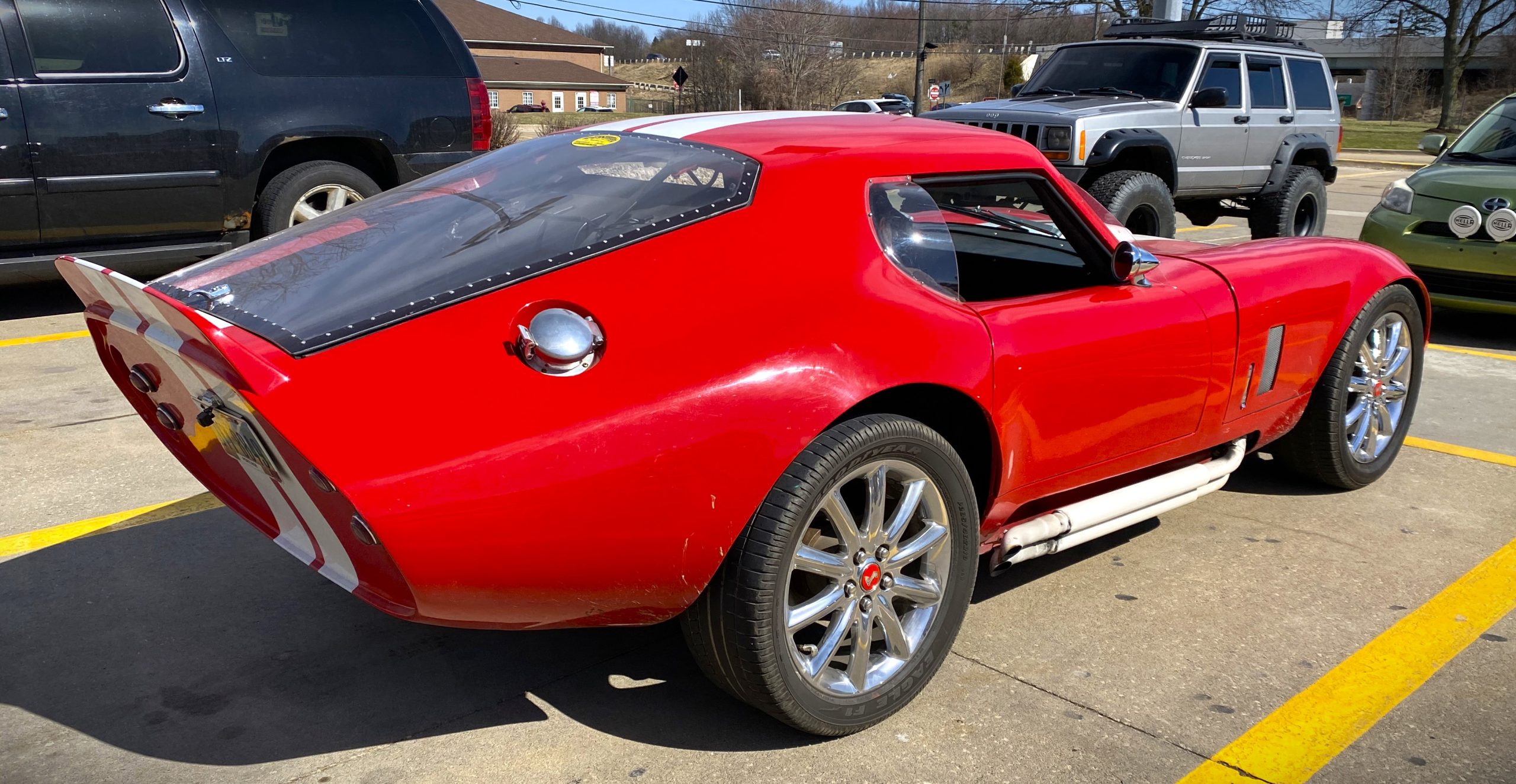
With only six original Shelby Daytona Coupes ever made, the real ones trade hands for millions of dollars—if and when they do come up for sale.
The silver lining here is that the Daytona has inspired several companies to offer kit cars and replicas, with perhaps the two most prominent manufacturers nowadays being Factory Five and Superperformance.
While we’re not 100 percent sure, we think this particular Lot Shots feature is a Factory Five model, simply based on the location of the fuel filler door. If you can confirm that, let us know in the comments section below.
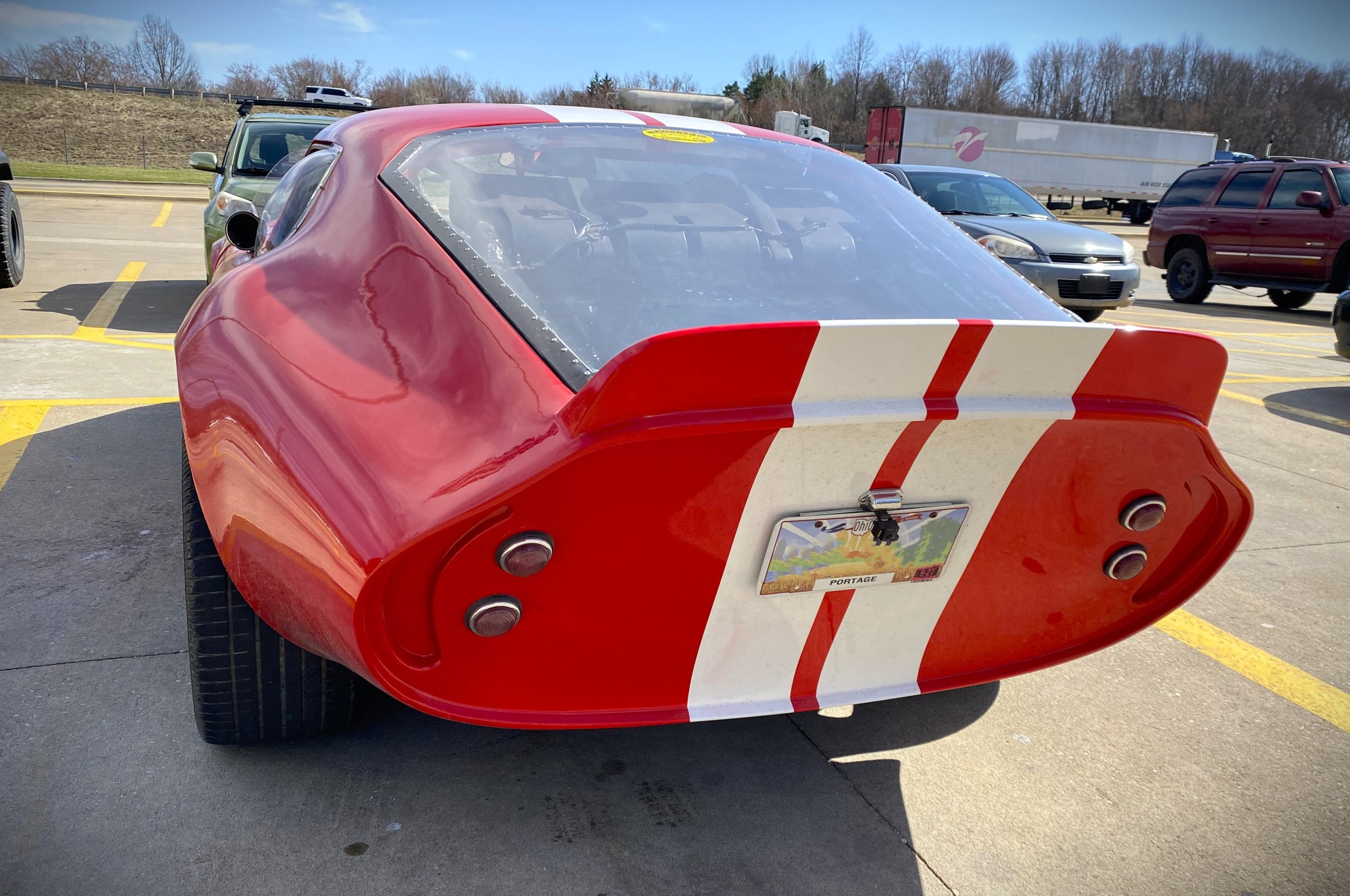
The Daytona’s distinctive Kammback rear is our favorite part.
While it may look jarring and unconventional to folks outside of racing, the clipped rear end actually improves the car’s aerodynamic profile significantly and helps to mitigate lift at high speed.
In fact, you’ll see versions of the Kammback tail still in use today, with the derivative teardrop shape seen on hybrids and EVs like the Toyota Prius and Honda Insight.
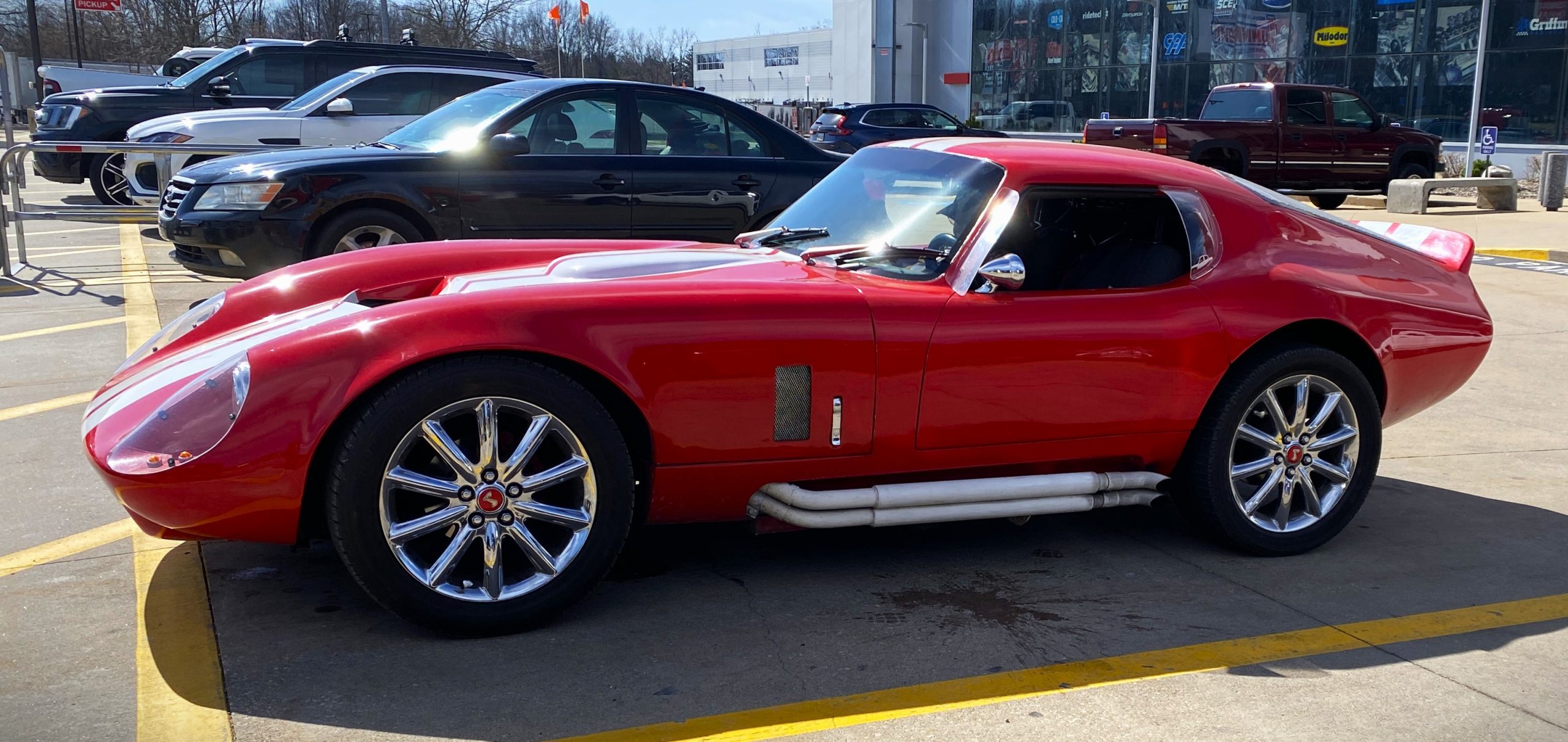
The whole car is tastefully executed, with a specific nod to function-over-form performance (which we’re big fans of). The stripes over red look particularly good here, and the build quality is impeccable.
And better yet, you can get your Daytona Kit Car titled and registered for the street—heck, Peter Brock still drives his personal Daytona Coupe regularly.
What’s In A Name?
We’ll wrap this back up by returning to the Immortal Bard.
As our Star-Crossed lover Juliet so famously mused, names can be inconsequential—it’s the tire shredding performance that really matters here. (We’re summarizing that last part.)
And when it comes to ripping around a racetrack, if your don’t have a few million bucks stuffed in your pockets, a Daytona replica like this Lot Shots feature is a smart, fun alterative.
Or pretty much any of the other Daytonas we’ve mentioned here too.
“Hammer Down & Lay a Patch!
– J-Lizzle Capulet, from Michael Bay’s “2 Romeo, 2 Juliet”


Comments