
Q: I’m adding a nitrous oxide kit to my carbureted fuel system, which uses a bypass-style regulator. Can I add a second regulator (either non-return or return style) to control nitrous fuel pressure separately?
A: Installing a second bypass (return-style) regulator to your existing fuel system will default the entire system to the lowest pressure setting. Adding a non-return regulator before or after the bypass regulator won’t provide adequate inlet pressure; non-return regulators require two times inlet to outlet pressure.
These options are a recipe for nitrous lean-out and potentially severe engine damage.
Installing a separate fuel system for nitrous is recommended when you need the ability to tune nitrous fuel system pressure separately from the main system, or when engine horsepower (including the total nitrous shot) exceeds 80 percent of a single pump’s supply capability.
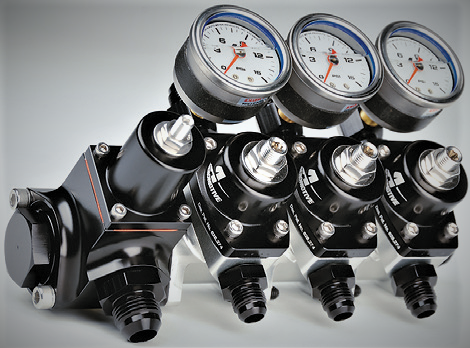
Another option for carbureted, nitrous-fed engines is to use modular non-return regulators like these stackable fuel regulators from Aeromotive. As the name implies, they can be stacked together to form a log, with the ability to control pressure separately at each distribution point while using a single fuel pump.
Complete the assembly with an A3000 Drag Race Regulator attached to the last stackable regulator to create the line pressure necessary to feed multiple carburetors and nitrous stages.
This system is perfect for use with inline fuel pumps from Aeromotive, like its A1000, A2000, A3000, Eliminator, Pro-Series Pump, or the Brushless 3.5 and 5.0 models.


Comments