
When I first started working on cars, I avoided front suspension work like the plague. With articulated pieces moving up and down in concert with parts going left and right, a front suspension was a symphony of automotive witchcraft that was best left to the local tire and wheel alignment shop.
But over time I started to dig into it. I began with shock changes, then tie rod ends, springs, and bushings. That eventually led me to doing race car wheel alignments. As I went I accumulated tools; they were the key to discovering front ends were rather easy to work on. Learn the job, use the right tool, and poof—it’s not that difficult. And you can do most of the work in the comfort of your own garage.
Story Overview
- You can repair or upgrade your vehicle’s front suspension with a small collection of tools
- Use caution when using a spring compressor to install or remove coil springs
- Air and battery-powered impacts, hammers, and other tools can make suspension work easier
- Tools like caster-camber gauges, toe plates, and turn plates allow you to do front end alignments at home
Let’s take a look at the tools you need to do basic front end work. In no particular order, here’s my go-to mix.
Spring Compressor
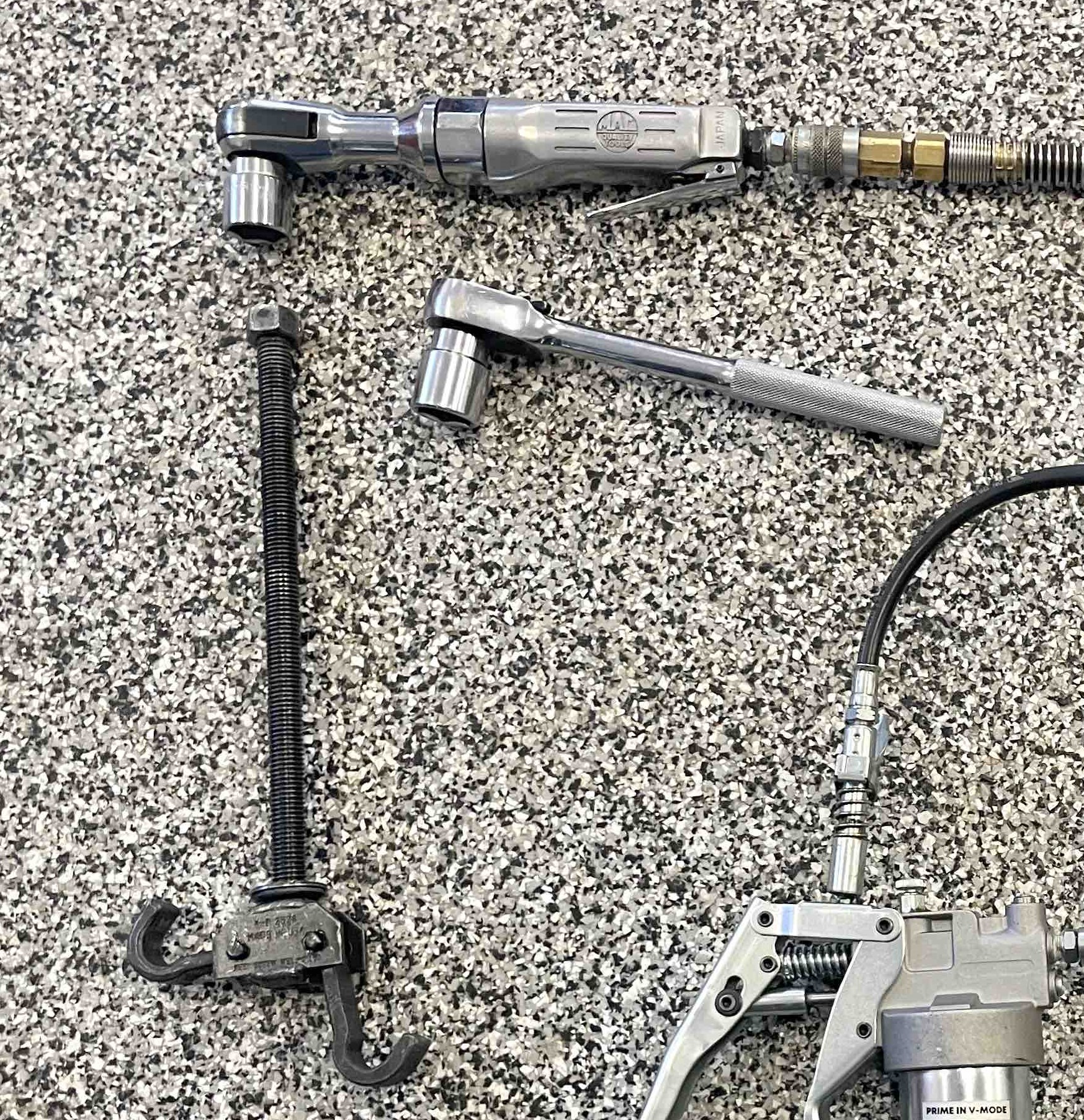
For me at least, the worst suspension job you’ll encounter is removing and replacing the springs in most coil spring-equipped cars. I use an old KD spring compressor that I’ve had for decades. Summit Racing sells a similar one made by SPC Performance.
I use a 3/8-inch drive air ratchet to get the spring compressor moving. When it runs out of steam, I switch to a 1/2-inch drive ratchet. A 1/2-inch impact will work, but most tool companies don’t recommend it.
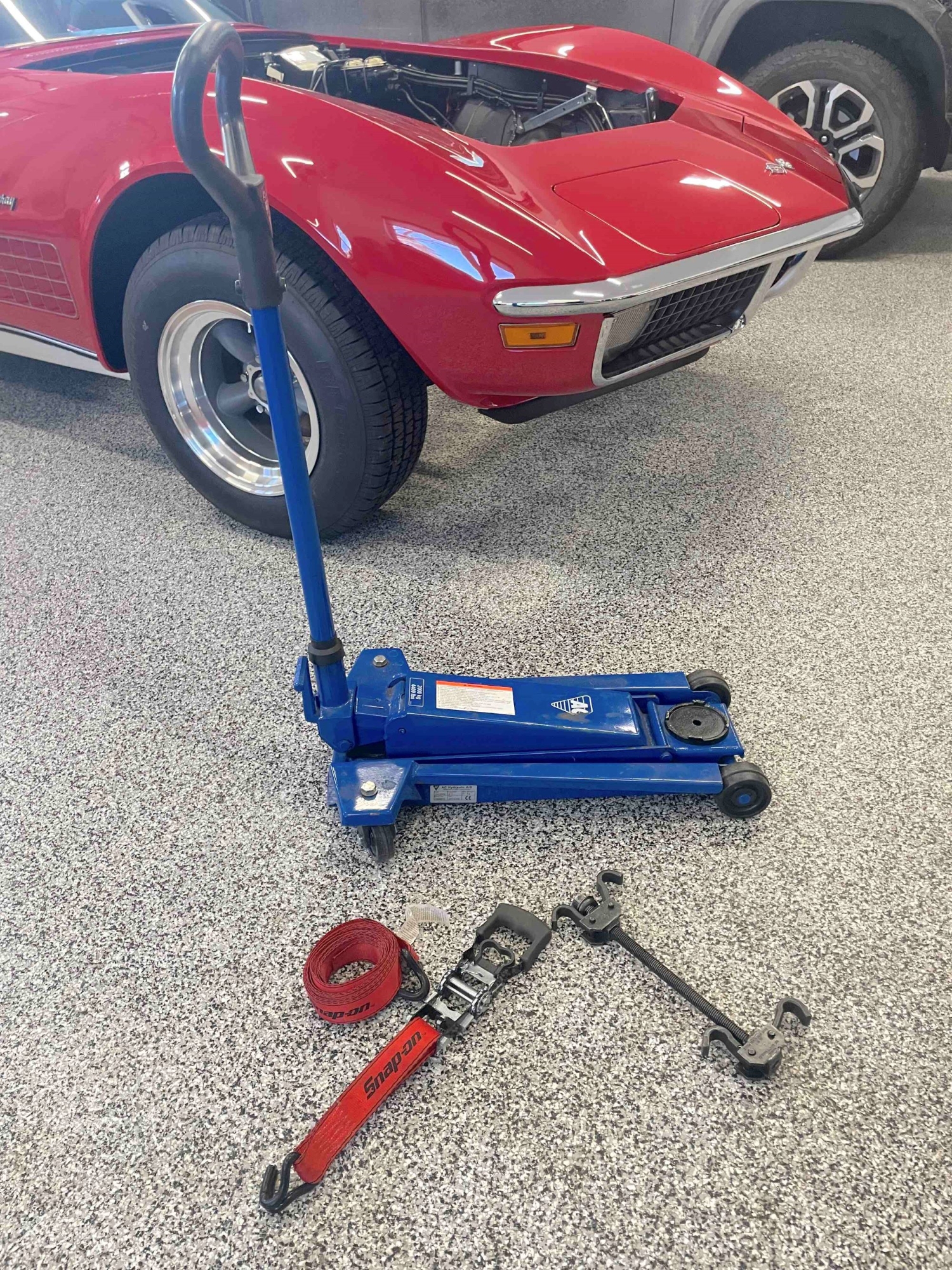
While on the topic, I tie both front springs together with a ratchet strap as a safety precaution. This contains the carnage if the threads let go on the spring compressor. It also keeps the spring from bowing during the installation process.
Floor Jack
You’ll need a floor jack for the obvious task of lifting the car to access the front suspension. A floor jack comes in handy as a safety device when removing a spring or when coaxing one into the spring pocket. I also use mine as an extra set of hands when moving a front sway bar into place.
Conventional Tools
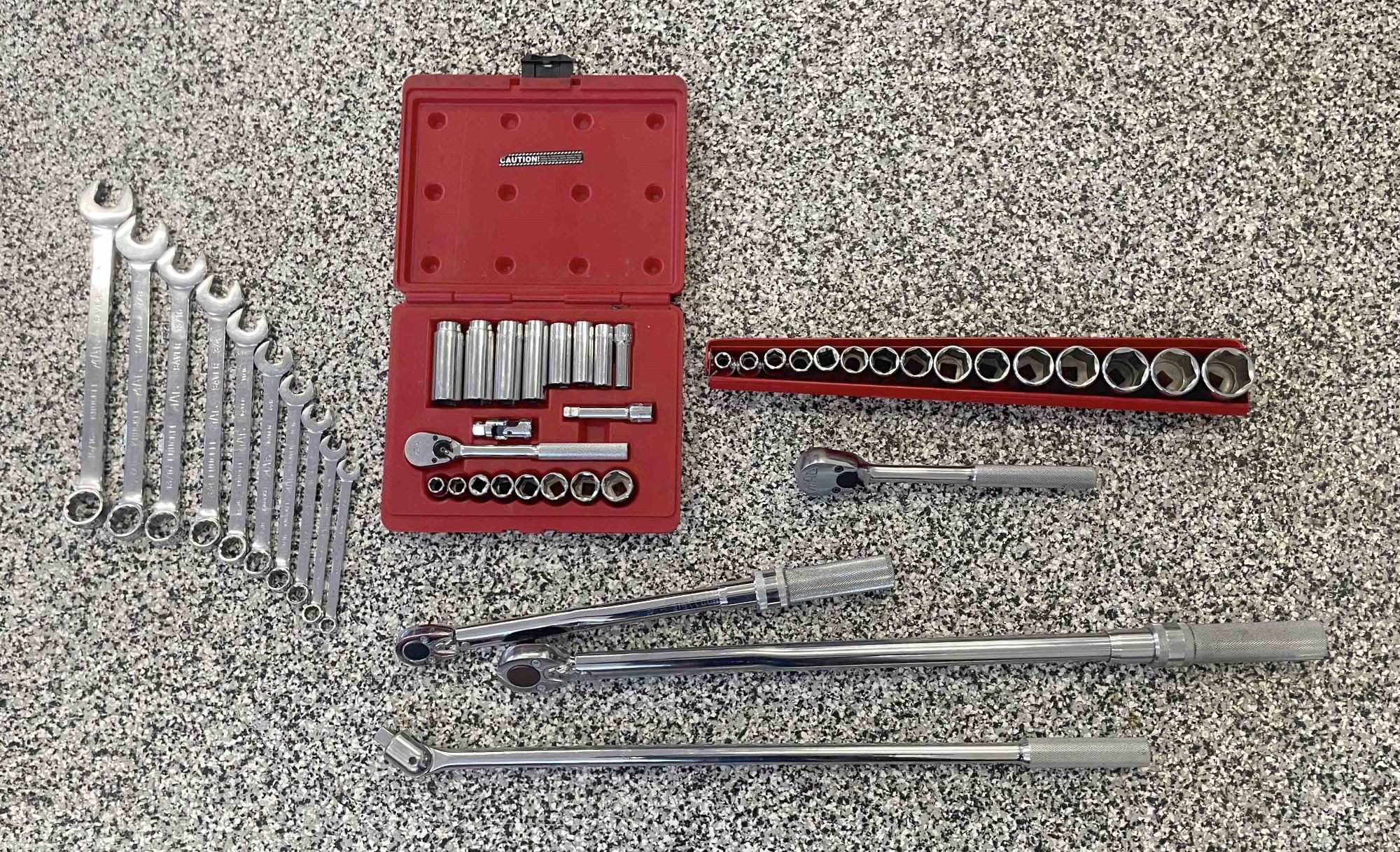
Here are some of the hand tools you’ll need to do suspension work. I can’t tell you exactly what size sockets or wrenches you’ll need because it varies by vehicle:
- 1/2-inch drive breaker bar
- 1/2-inch and 3/8-inch drive ratchets
- Standard and deep sockets (1/2-inch and 3/8-inch drive)
- Assorted combination (open and box end) wrenches
- 3/8-inch or 1/2-inch drive torque wrench
Air and Battery-Powered Tools
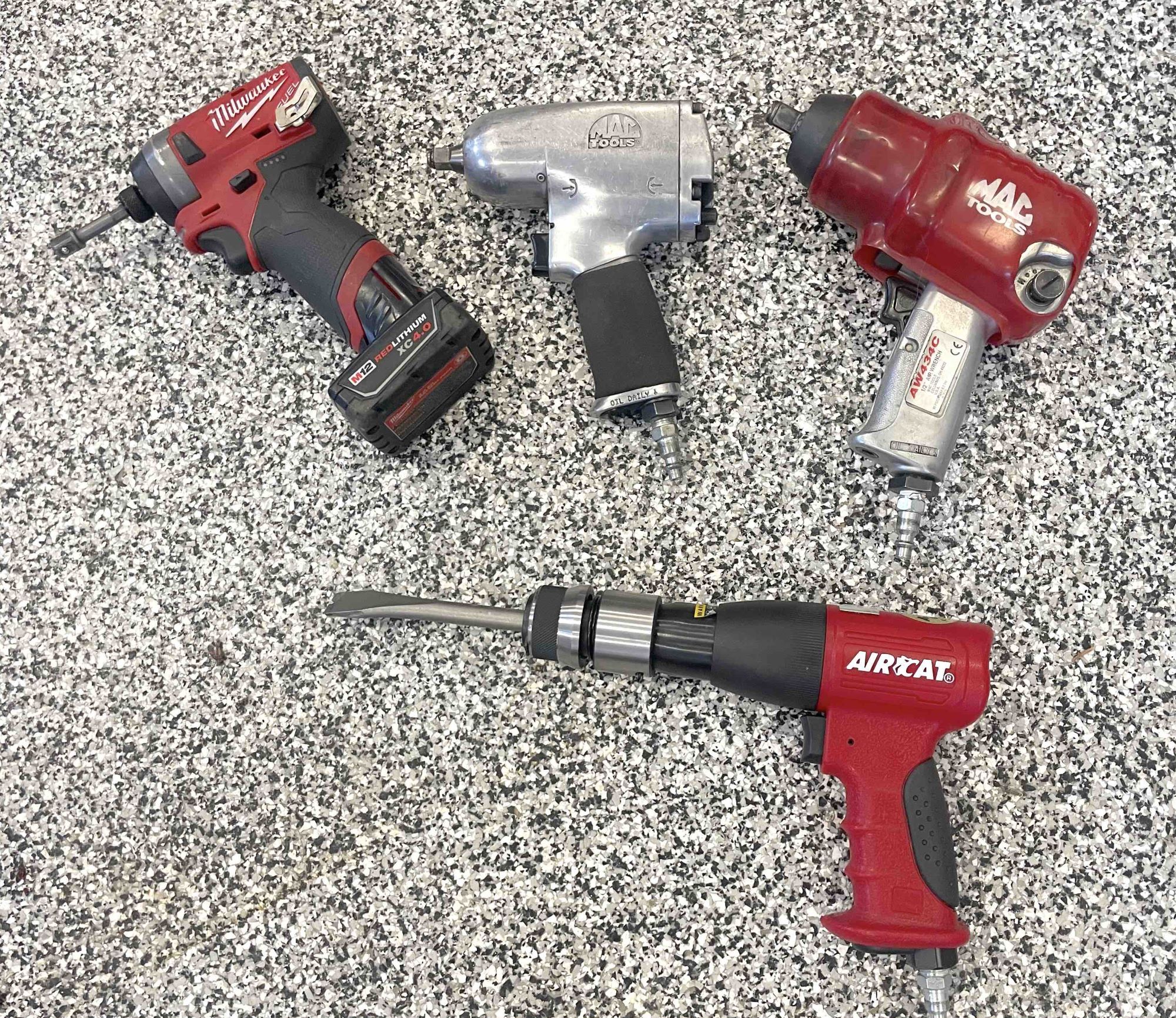
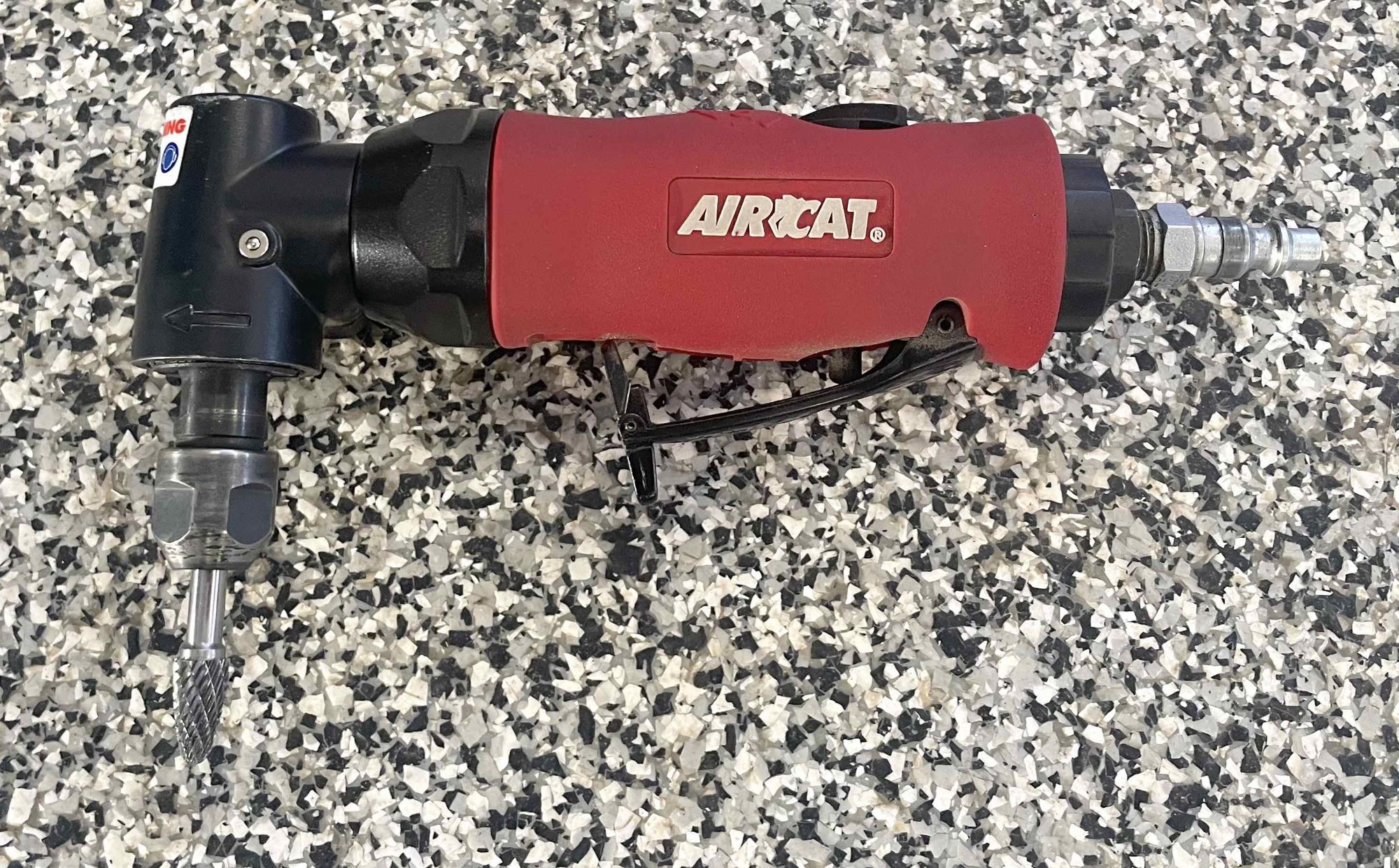
While you don’t need power tools to do suspension work, the brute force of a 3/8-inch or 1/2-inch drive air impact is sure nice to have when it’s needed. Quality battery-powered tools will also work; I use a Milwaukee Tool M12 impact for smaller tasks. If you’re knocking out control arm bushings, the go-to tool for most folks is an air chisel. I use a short-barrel AIRCAT air hammer with a chisel attachment.
Ball Joint and Tie Rod Splitters
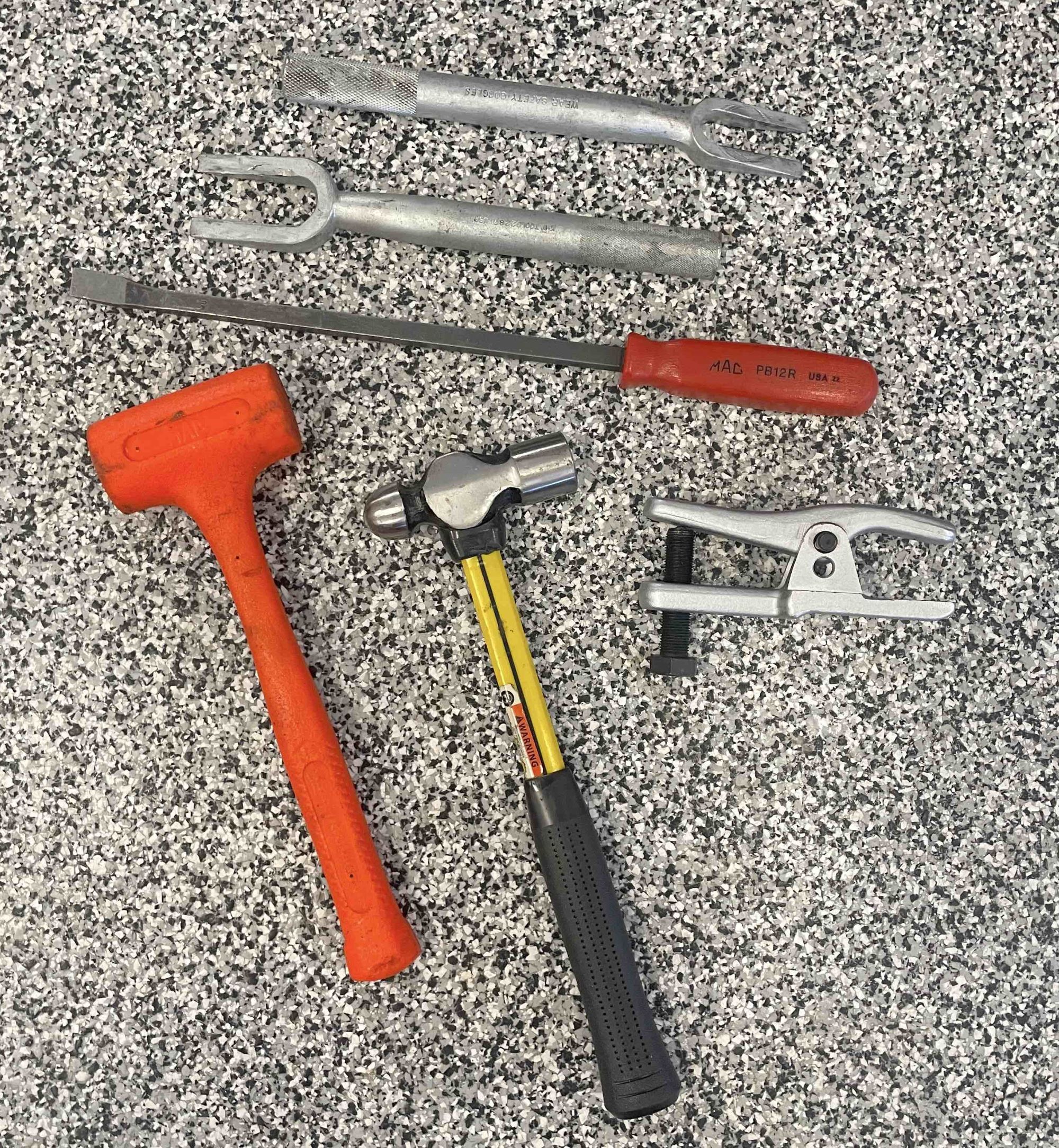
There are a couple of ways to split ball joints and tie rods. The most common is a pickle fork with a good-sized sledgehammer. I have two different sizes–one for ball joints and another for tie rod ends. I also have a ball joint splitting tool, similar to one made by OTC. It works wonderfully and doesn’t tear up ball joint or tie rod end boots like a pickle fork can.
It’s also a good idea to have a big dead blow hammer. Sometimes a tie rod end just might need a love tap to pop loose and that’s the tool for it. A big prybar always seems to come in handy when working with suspension pieces. I have a big one similar to this 18-inch long Milwaukee Tool prybar.
Shock Stud Socket
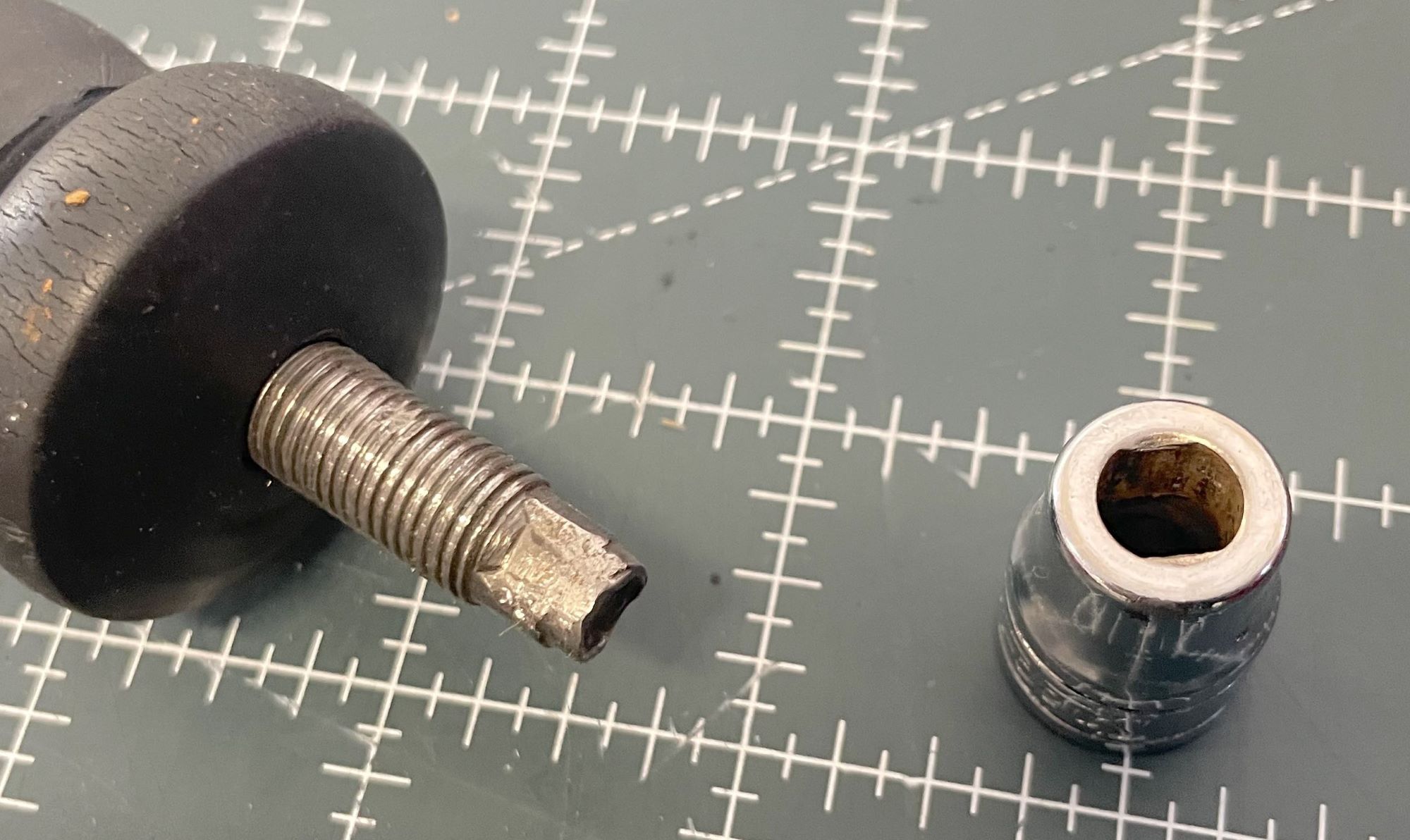
You’ll thank yourself for buying this one when doing a shock install. Designed to fit the double “D” stud of a typical GM shock, the socket allows you to hold the shock stem in place while you remove or install the shock. Summit Racing offers several different types.
Wheel Alignment Tools
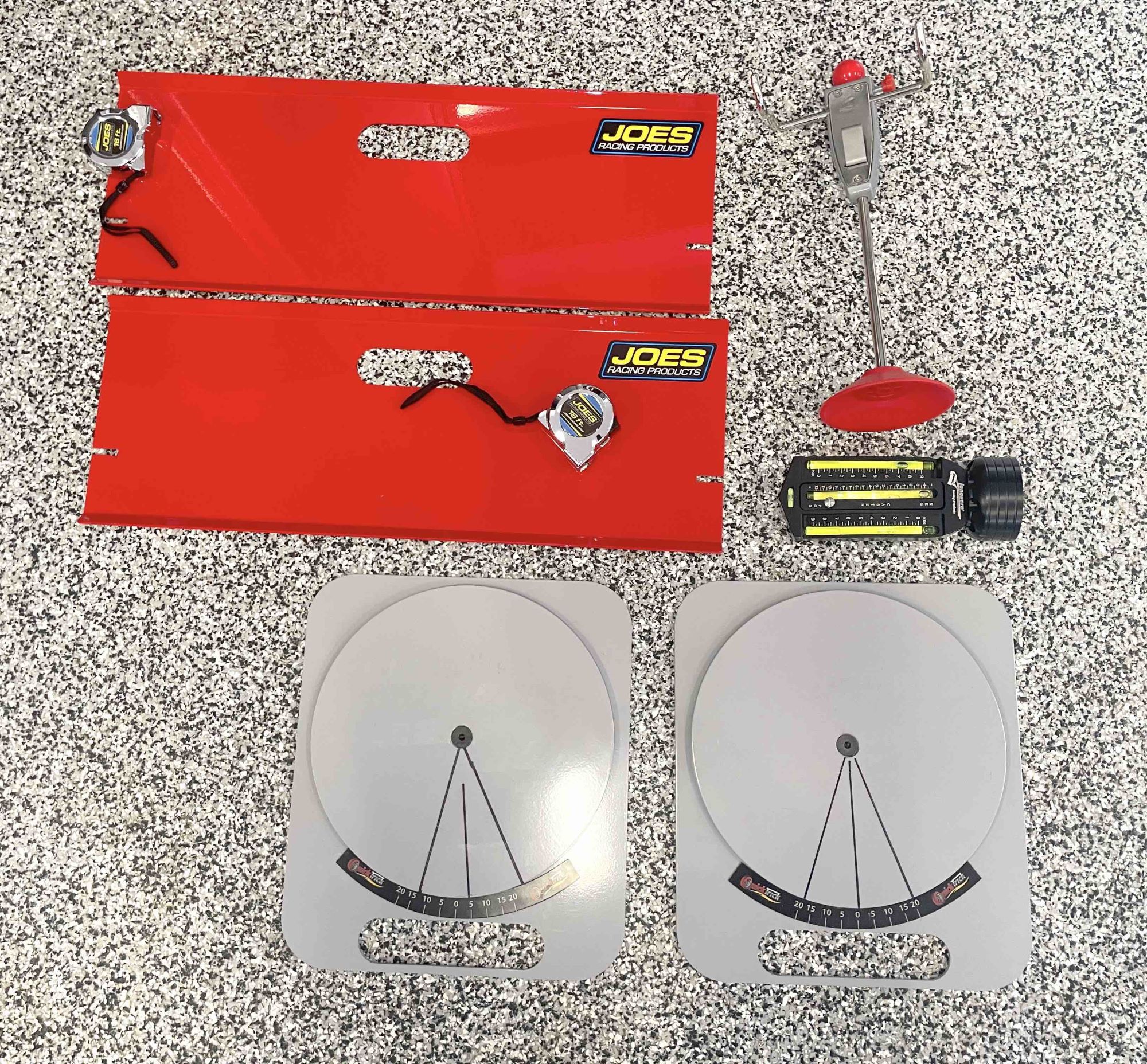
There are all sorts of options out there for wheel alignment tools. My collection includes a bubble-style caster-camber gauge; a set of turning plates; a set of toe plates with dedicated tape measures; and a steering wheel lock. I find it’s a good idea to have a regular carpenter’s level on hand to check the floor (or ground) where you’re doing the wheel alignment.
Once you have a good collection of the proper tools, you’ll discover there is no black magic to working on a front suspension.


Comments