After you’ve been twisting wrenches for more years than you care to count, finding tools that can make your life easier is very appreciated. One of those tools is the ratcheting box end wrench. As the name implies, these wrenches have the box end fitted with a ratcheting mechanism.

The first thing most people ask is why they need one instead of a regular combination wrench or a regular ratchet and socket. Simple—ratcheting box end wrenches are tailor-made for places where there’s no room for a ratchet, even a small 1/4-inch drive setup.

Story Overview

  • Ratcheting box wrenches are perfect for confined areas with little space to swing a regular combination wrench
  • Ratcheting box wrenches tighten or loosen bolts and nuts much quicker than combination wrenches
  • Ratcheting box end wrenches are available with six- or 12-point heads in a number of configurations

You can stick with a good old-fashioned combination wrench if you want. But if there’s no room to get a good swing on the fastener, you might end up using the open end of the wrench every second turn or so. This can be an invitation to rounding off the head of a fastener. That’s why box ends are preferred.

The beauty of ratcheting box end wrenches is speed. They’re often the choice of pros where time is money. If you have a lot of long fasteners that need to be tightened quickly and you can’t get a ratchet and socket on them, this is the tool for the job.

The ratcheting mechanisms are not really designed to loosen a tight fastener or fully torque one to spec. You’re supposed to break the fastener loose with a regular box end wrench, then ratchet it out. It’s possible to break the tool with excessive force, but I’ve never had a ratcheting box end wrench fail. Then again, I never really tried too hard!

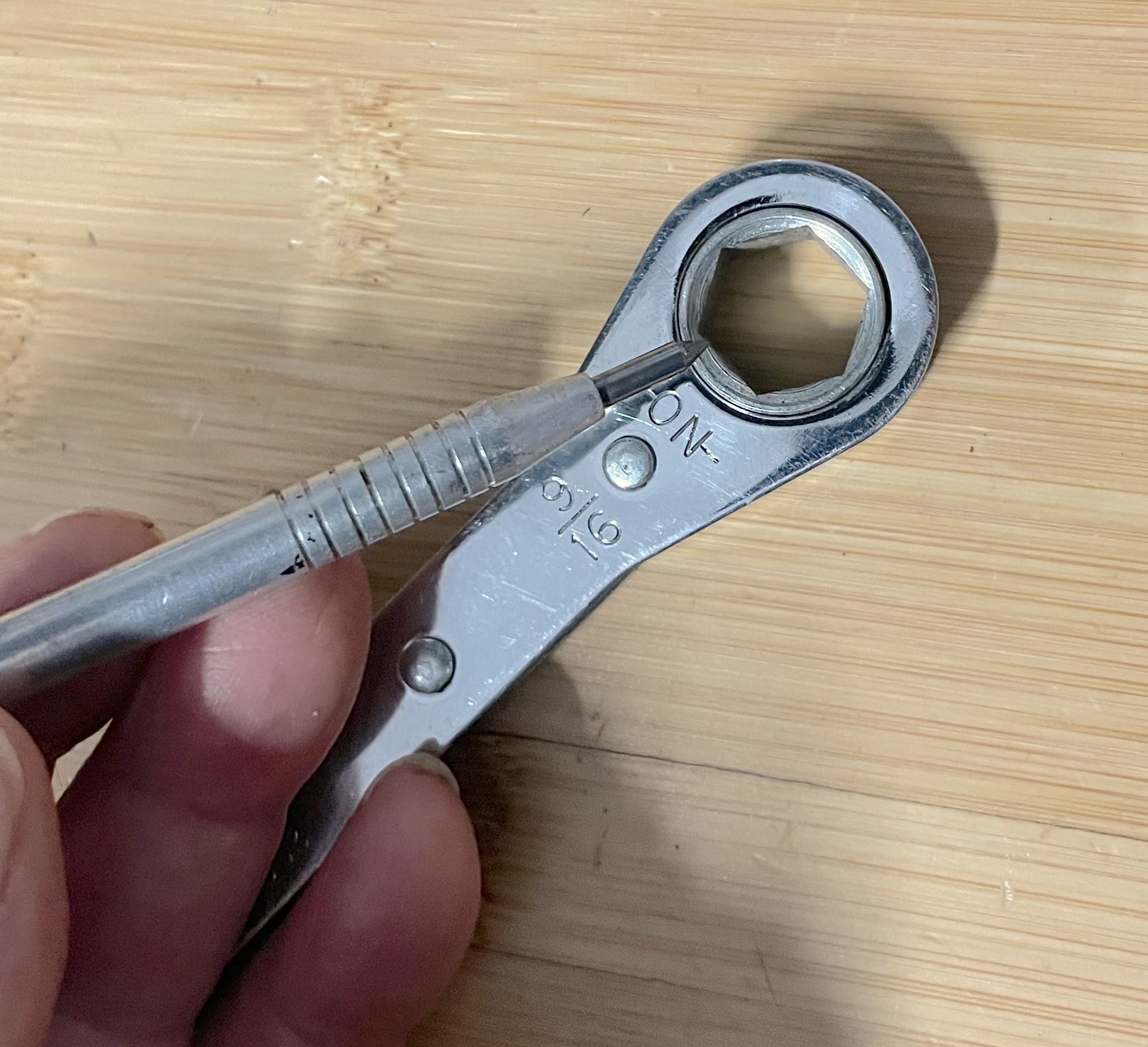
Ratcheting box end wrenches are made with a couple of reversing mechanisms. Some have a little lever you engage to change from loosen to tighten. Others have no lever—you just the flip the wrench over. The face of the wrench is engraved with the direction of rotation.

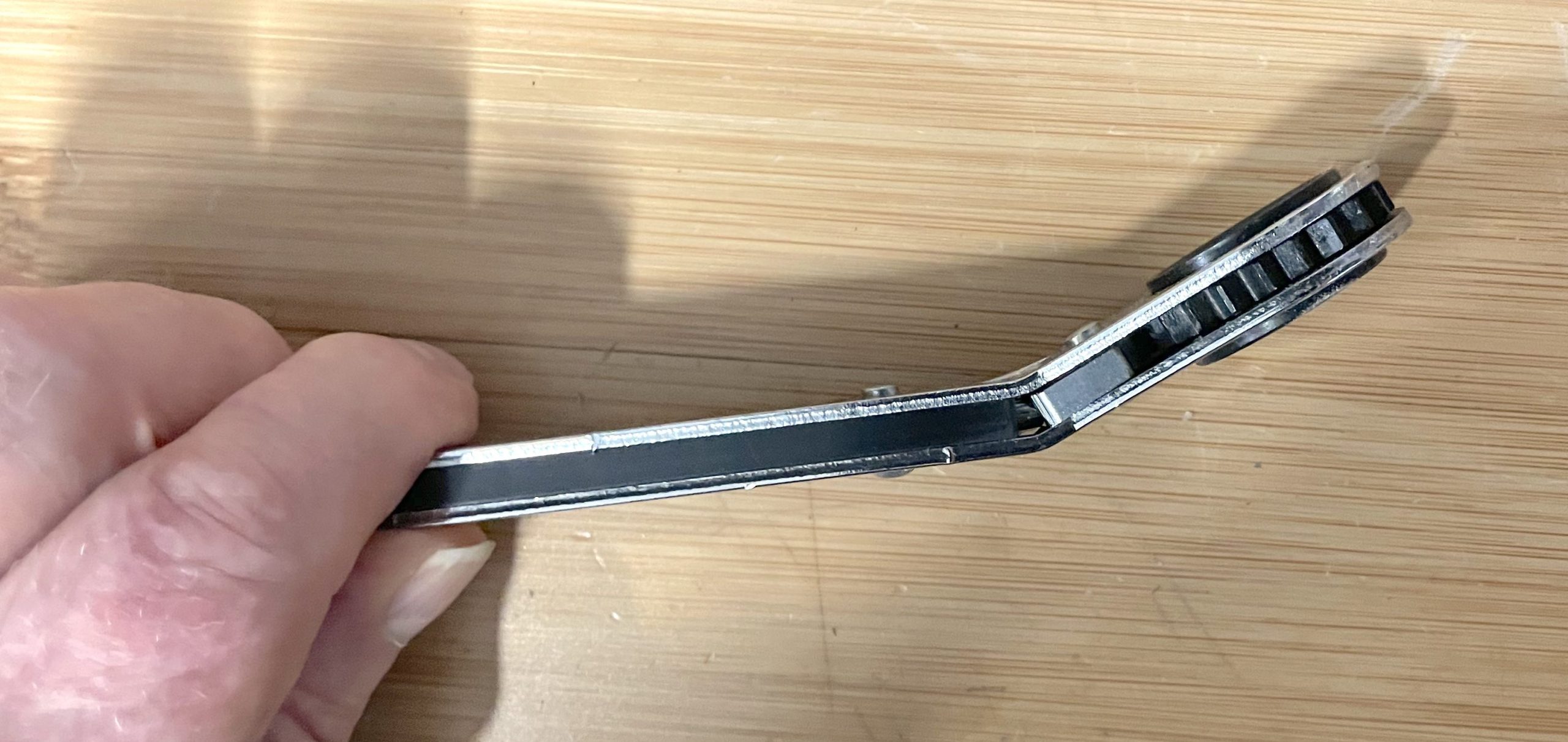
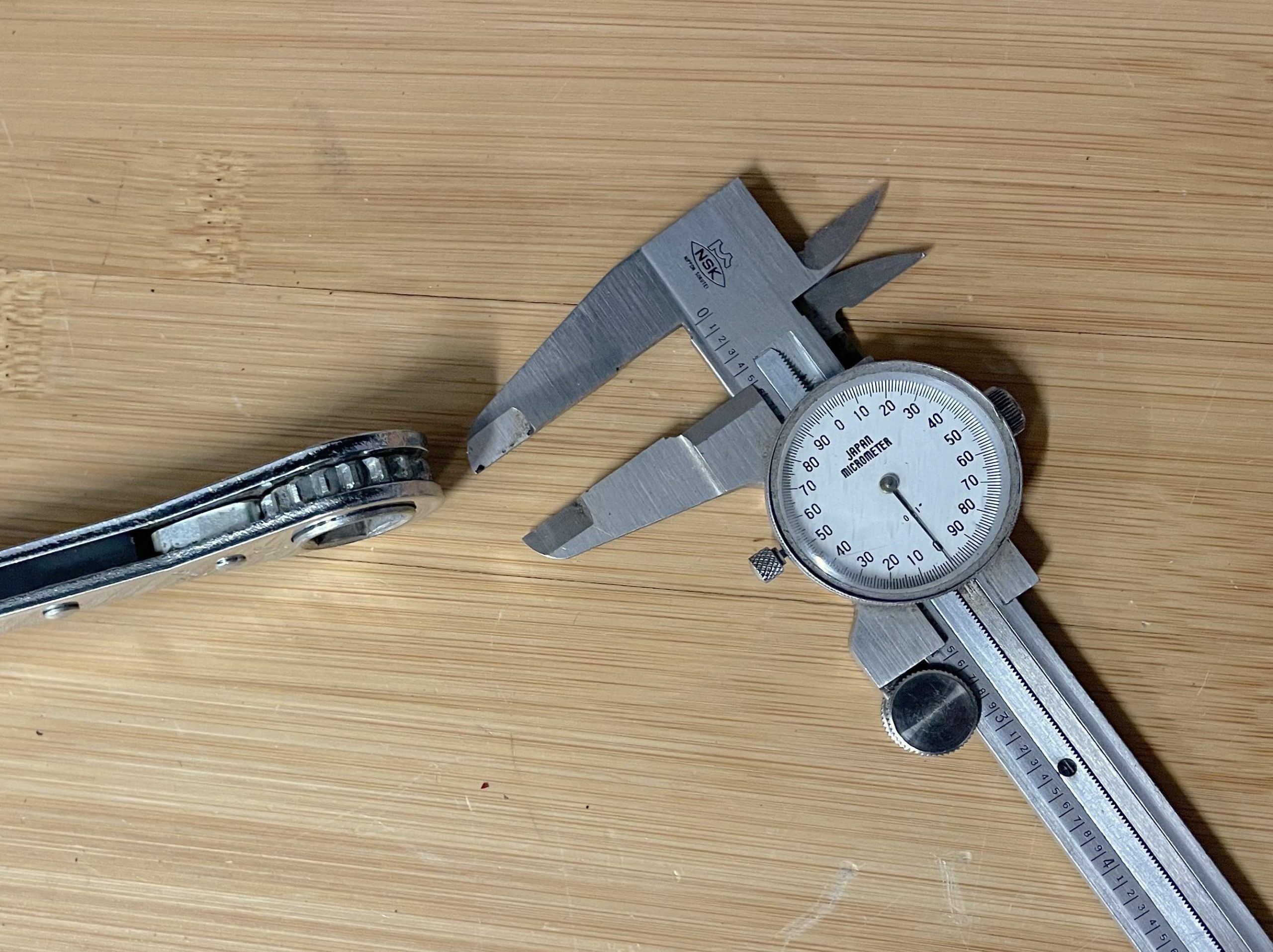
The typical ratcheting box end wrench is quite a bit larger than a conventional box end one. I compared the thickness and width of some examples from my toolbox. Fourteen millimeter and 9/16-inch ratcheting wrenches are 0.500-inch thick. Standard box wrench thicknesses ranged from 0.240-inch to 0.380-inch. The ratcheting wrenches are also wider.

There are several ratcheting wrenches and wrench sets on the Summit Racing website. Let’s take a look at some examples.
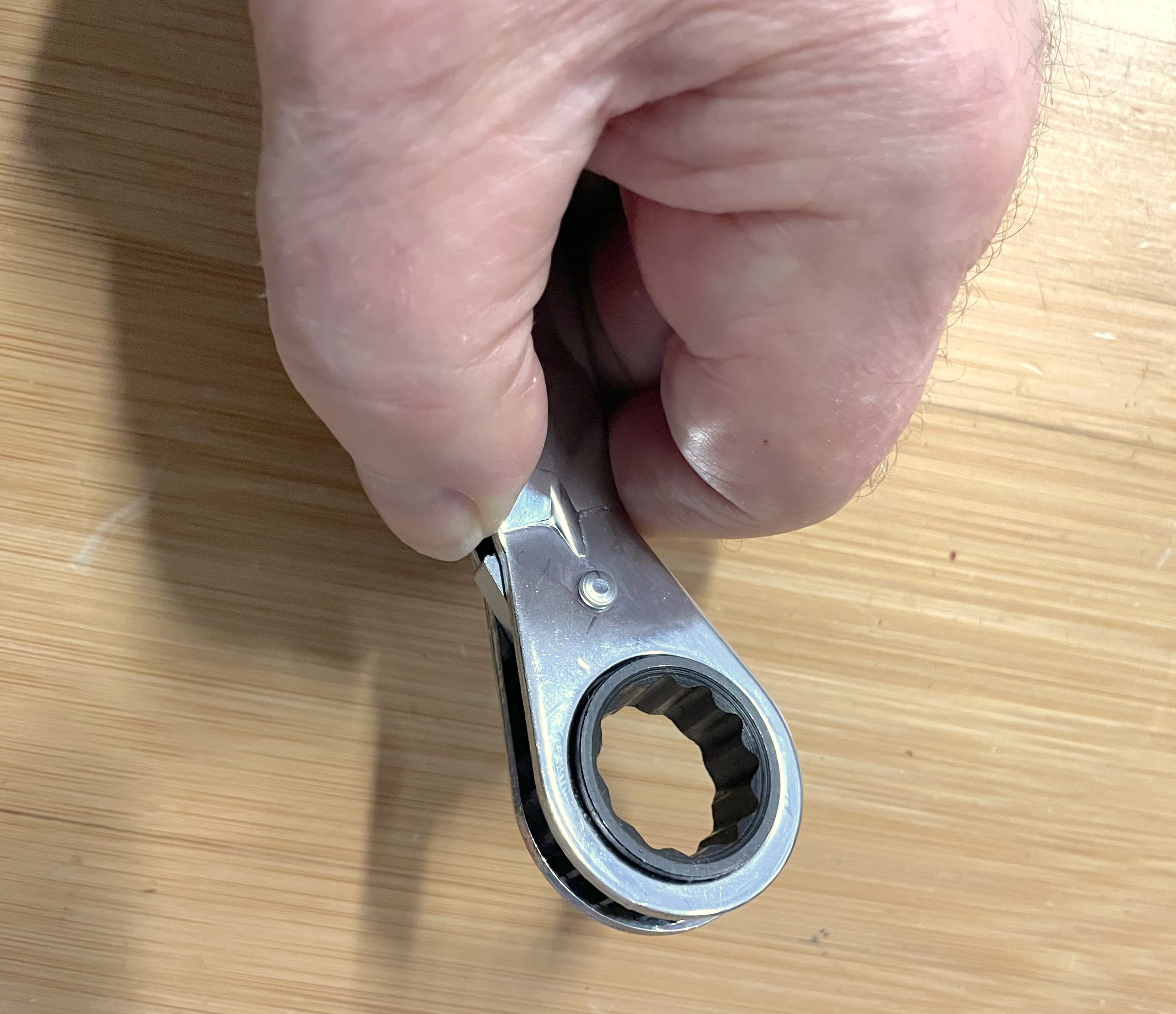
Ratcheting box end wrench reverse lever
When it comes to ratcheting box ends, there are a couple of different ways to reverse rotation. This one uses a small lever on the side of the wrench. (Image/Wayne Scraba)
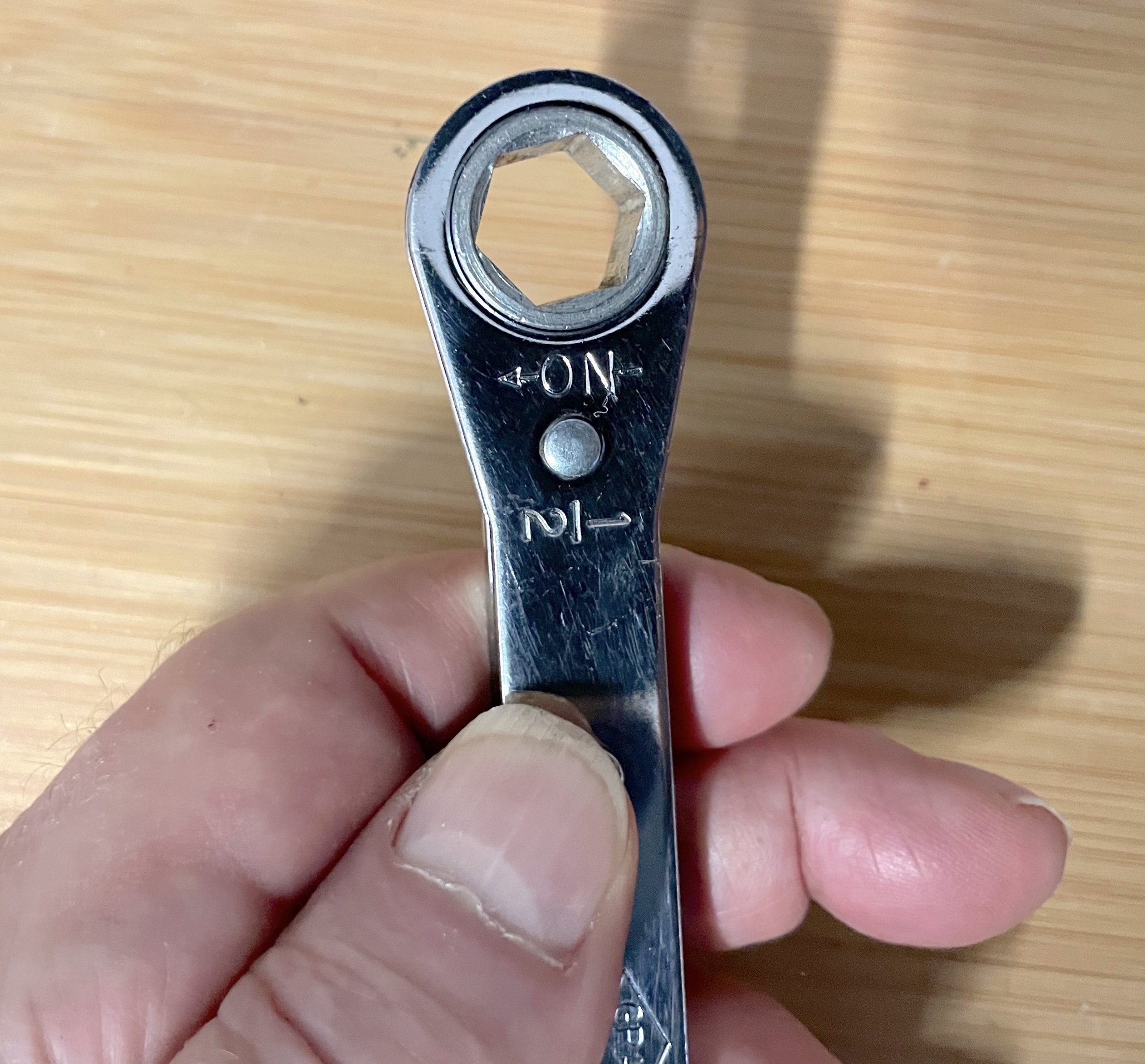
Ratcheting box end wrench with flip-over reverse mechanism
This wrench uses a simpler reversing mechanism. This side is marked ‘On’ and the other is marked ‘Off’—just flip the wrench over as needed. Note the arrow pointing to the direction of rotation. (Image/Wayne Scraba)
Angled ratcheting box end wrench
Many ratcheting box end wrenches are straight, but there are angled ones like this. There are dozens of different combinations. (Image/Wayne Scraba)
Measuring thickness of ratcheting box end wrench
You’ll soon discover that ratcheting box end wrenches aren’t quite as slim as a conventional wrench. The same applies to the width of the tool. The text offers some comparisons. (Image/Wayne Scraba)
Ratcheting box end wrench with six-point hex head
Ratcheting box end wrenches are commonly available in a six-point configuration like this, but they are available with 12-point box ends. (Image/Wayne Scraba)
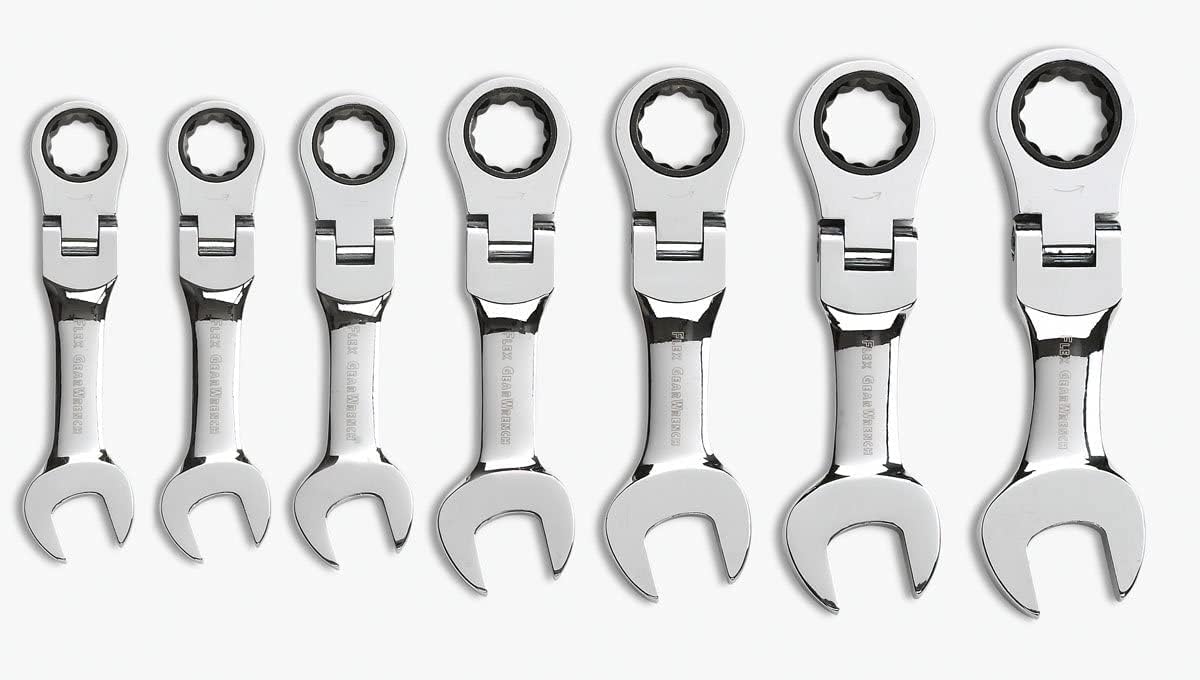
Gear Wrench short-beam ratcheting box end wrenches
This Gear Wrench Ratcheting Wrench Set has seven SAE wrenches with a ratcheting box end and an open end. They also have very short beams and a five-degree swing for use in really confined areas. The 12-point box end has a flex head and an off-corner loading design to get a better grip on the fastener. That reduces the chances of rounding a bolt head. (Image/Summit Racing)
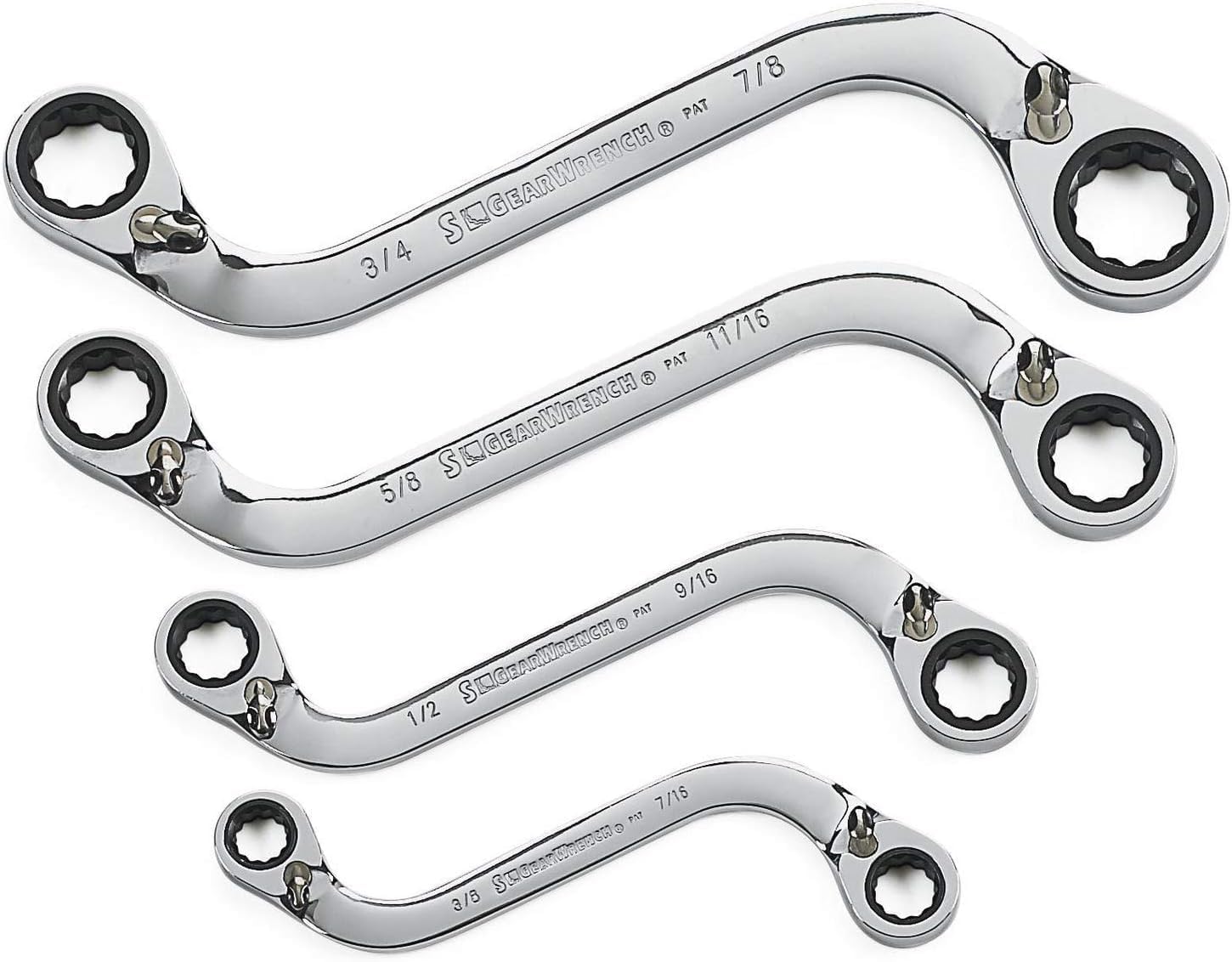
Gear Wrench S-shape ratcheting box end wrenches
Gear Wrench S-Shape Wrenches have an S-design to help you maneuver around obstructions. The zero-degree offset on both ends provides greater access to fasteners in the tightest spaces. They’re available in SAE and metric sizes. (Image/Summit Racing)
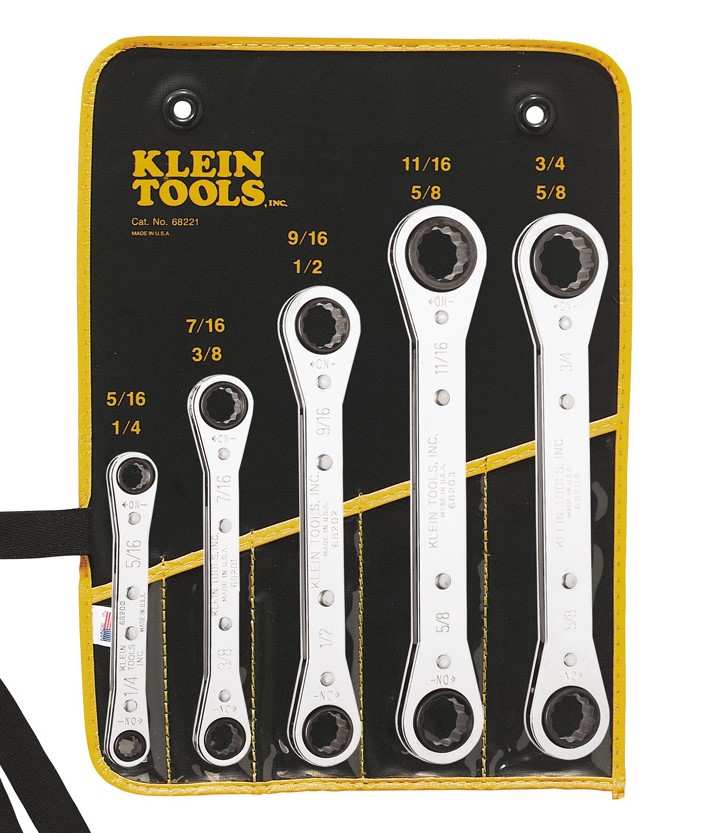
Klein Tool ratcheting box end wrenches
This Klein Tool Flat Face Wrench Set includes five SAE wrenches, each with a different size on each end. You flip them over to reverse the ratcheting direction. The wrenches are also available separately. (Image/Summit Racing)
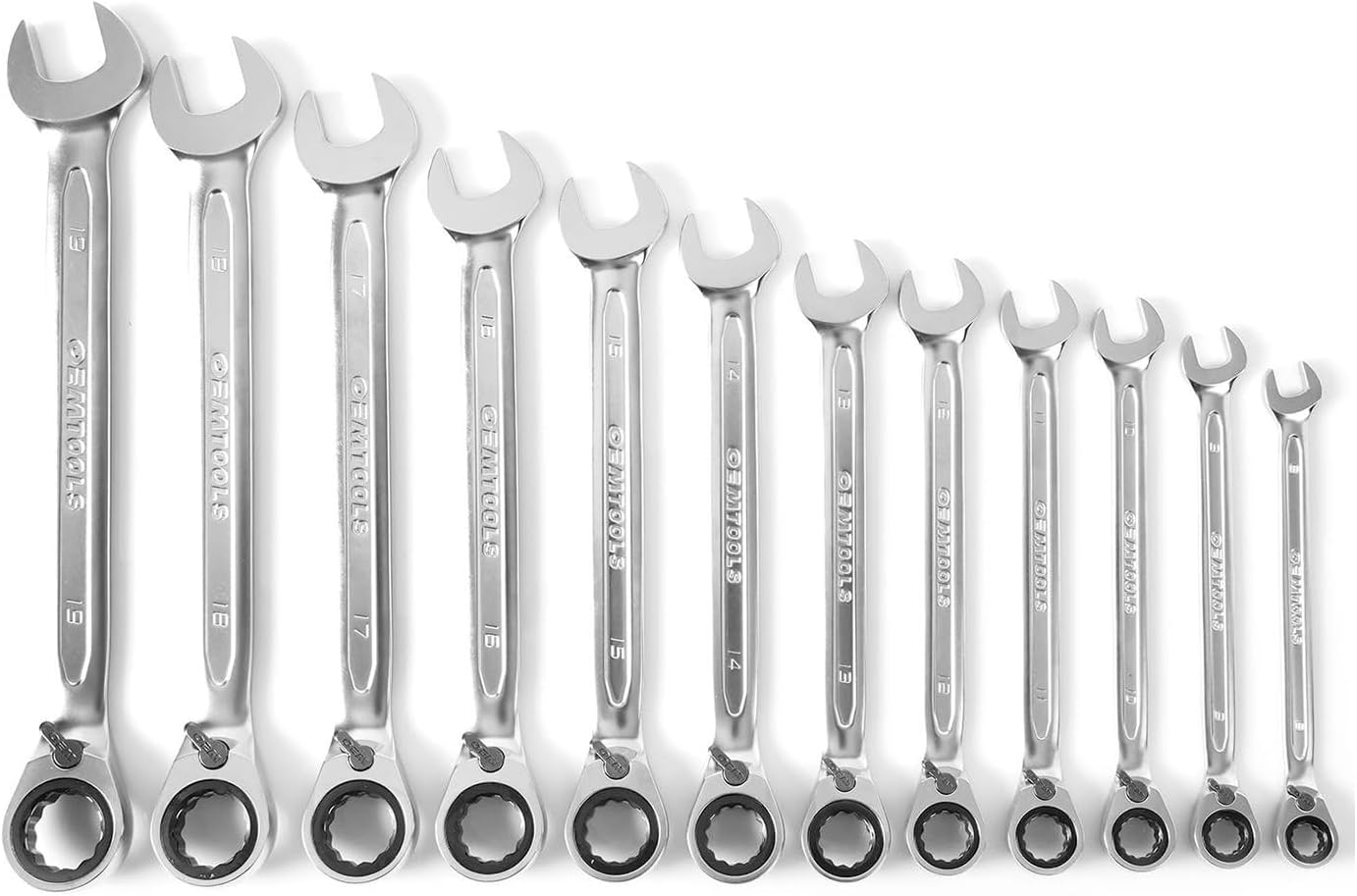
OEM Tools Ratcheting box end/open end wrench set
This OEM Tools RingStop Metric Wrench Set has patented ring stop on the box ends to prevent them from slipping past the fastener head. You can override the stop for double-nut or bolt and nut configurations. (Image/Summit Racing)
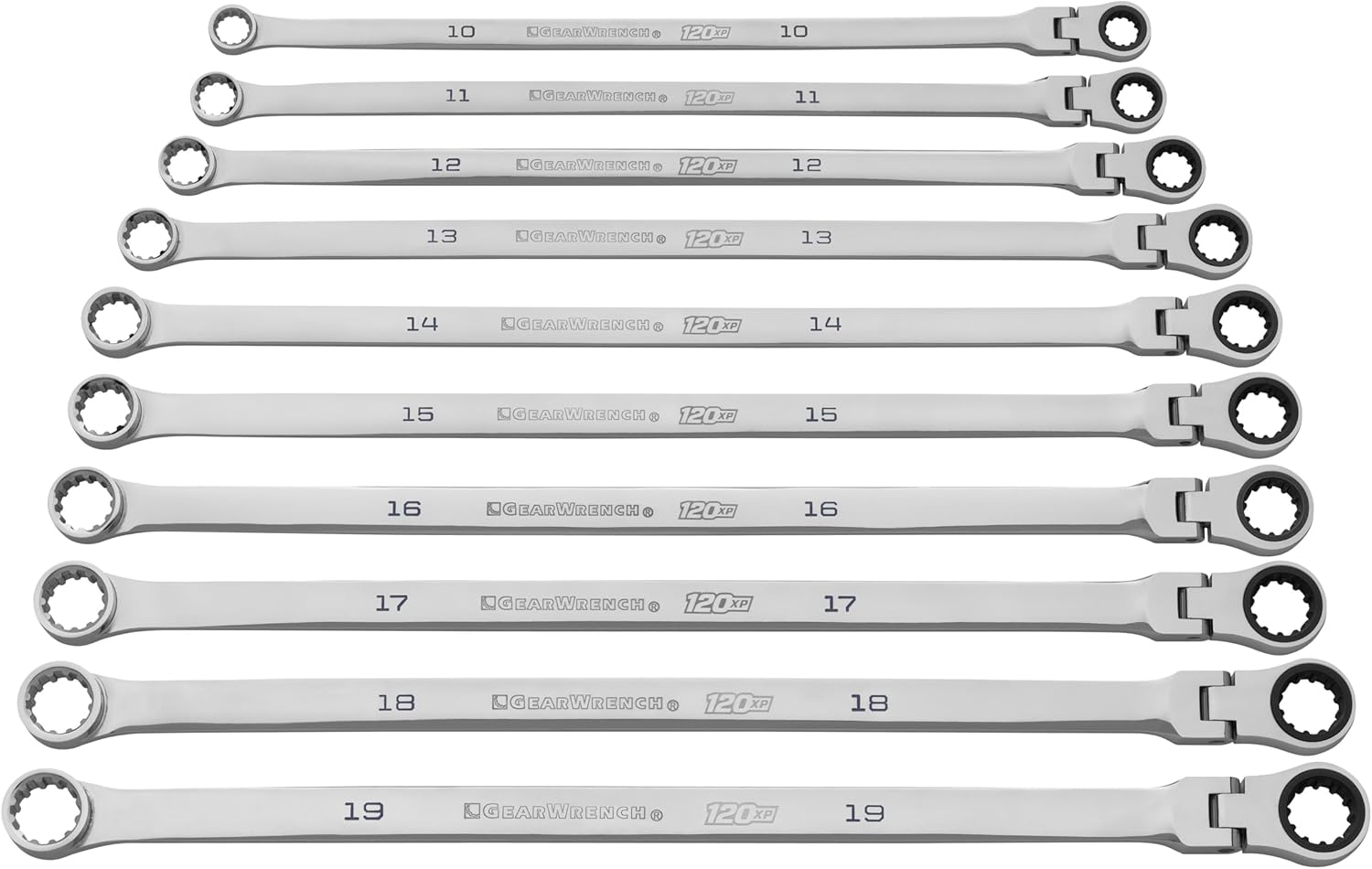
Gear Wrench flex head ratcheting box end wrench set
An interesting take on ratcheting box end wrenches is this Gear Wrench Flex Head Wrench Set. The metric wrenches have a conventional box end and a ratcheting box end with a flex head to reach those hard to get at fasteners. The wrenches have beams that are 25% longer than standard, which means you can place more torque on the fastener. (Image/Summit Racing)

Keywords
Share this Article
Author: Wayne Scraba

Wayne Scraba is a diehard car guy and regular contributor to OnAllCylinders. He’s owned his own speed shop, built race cars, street rods, and custom motorcycles, and restored muscle cars. He’s authored five how-to books and written over 4,500 tech articles that have appeared in sixty different high performance automotive, motorcycle and aviation magazines worldwide.