
No matter the potential of your cylinder heads, intake, blower, or nitrous kit, no gas-burning internal combustion engine can produce a single horsepower without spark plugs.
The spark plug ignites the compressed air/fuel mixture, and in the milliseconds after, a flame front propagates in the cylinder, fuel and oxygen are burned releasing energy and increasing pressure that is used to force the piston down the bore(s).
Therefore, reliable performance from your plugs is important for consistent power. OE manufacturers have taken the time to research and install the best plugs for each combination. However, once you’ve modified your engine, or if you’ve built a specific high-performance engine, you’ll have to figure out which plugs work the best. And SummitRacing.com is your source for any spark plugs you’ll need, including spark plugs for off-roading, watersports, powersports, and beyond.
Serious Spark Plug Tech
To learn more, we turned to a trio of spark plug experts: Don Ward, chief race engineer at E3 Spark Plugs along with Mike Burchi, senior product manager and Jason Sauriol, engineering manager at NGK Spark Plugs.
What we learned was interesting to say the least.
“Although they look similar to street spark plugs, racing spark plugs will have a colder heat range and a tighter gap,” said Don Ward chief race engineer, E3 Spark Plugs. “Heat range is determined by cylinder temperature. As compression ratio increases cylinder temps get hotter and a colder heat range spark plug is commonly used to take more heat out of the cylinder, thus, keeping the engine from going into detonation.
“Gap is determined by cylinder pressure. As the gap gets wider required voltage increases to fire the spark plug. If you increase required voltage past what your ignition system will make you will get misfires. It’s been my experience that gap doesn’t make horsepower in elevated compression engines. A naturally aspirated race engine will usually run a 0.025 inch gap, but a boosted engine will run a tighter gap. For instance, a Pro Mod will run 0.015 inch gap, and a Top Fuel car will run a 0.012 inch gap.
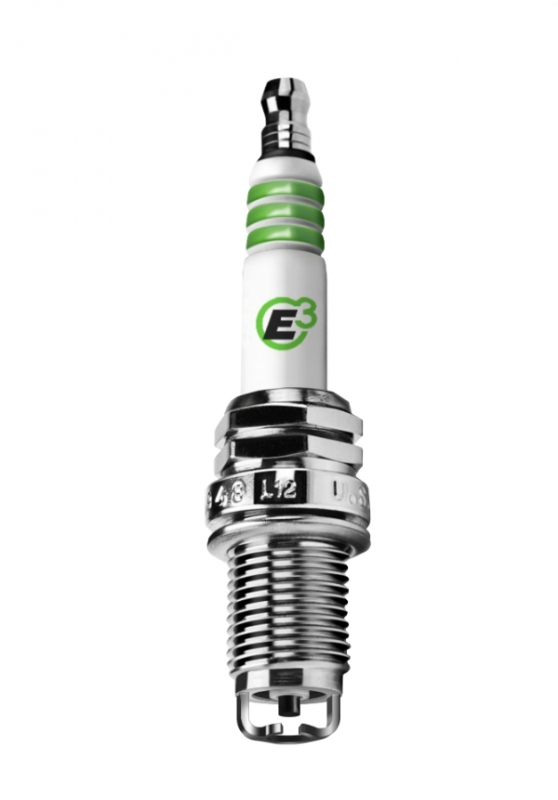
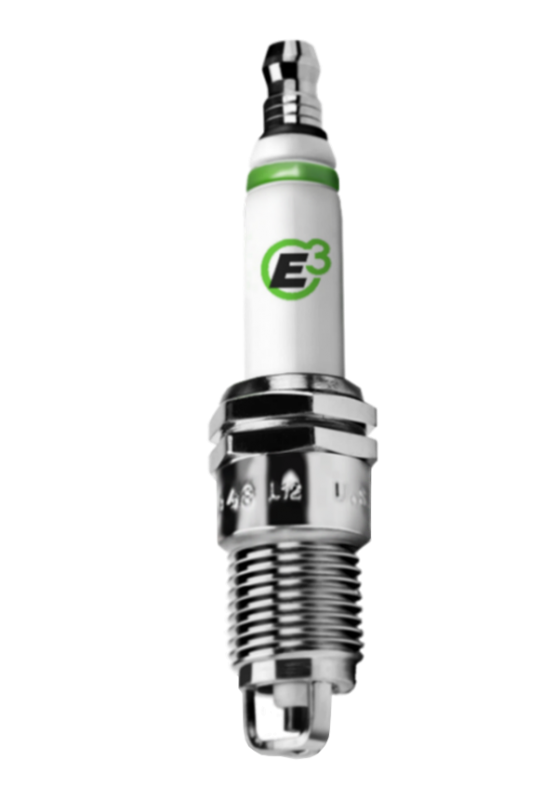
“Spark plugs were invented in the early 1900s, and the technology hasn’t changed much since their invention. Yes, they do now use precious metals to slow gap growth to make the plug last longer, but they still work the same as the original spark plug did. E3’s DiamondFIRE spark plug has a bridge ground wire that atomizes the fuel to get a bigger flame front growth to make more power and use less fuel than a J gap spark plug,” he added.
We also asked Jason Sauriol, engineering manager for NGK, what are some attributes of a race, or performance spark plug?
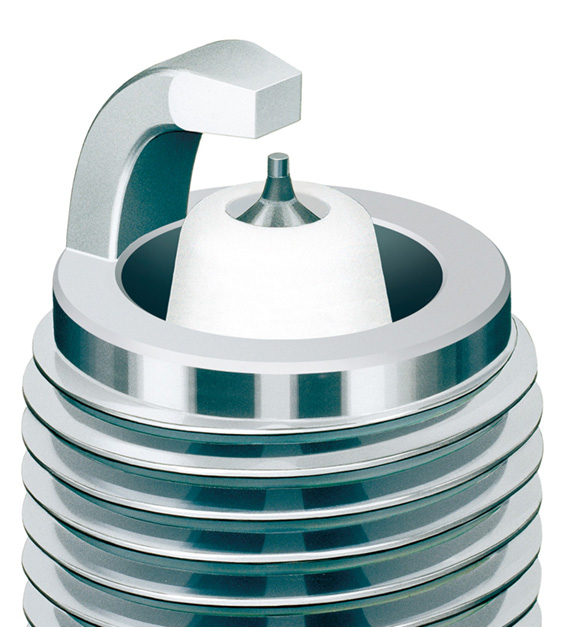
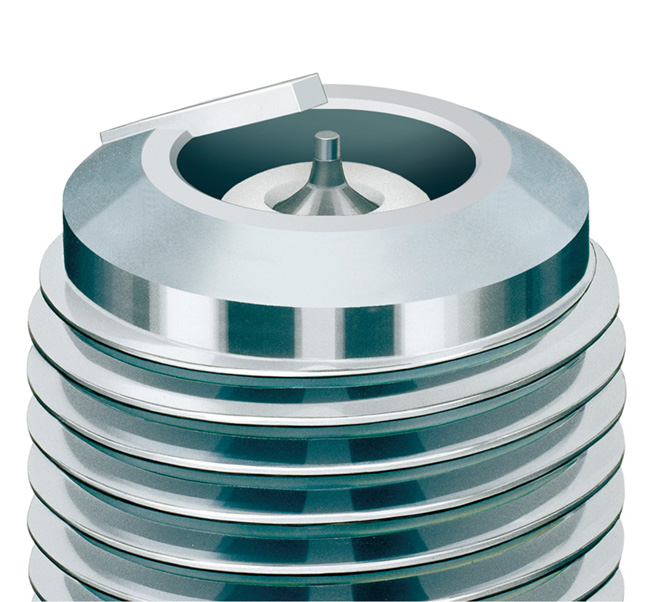
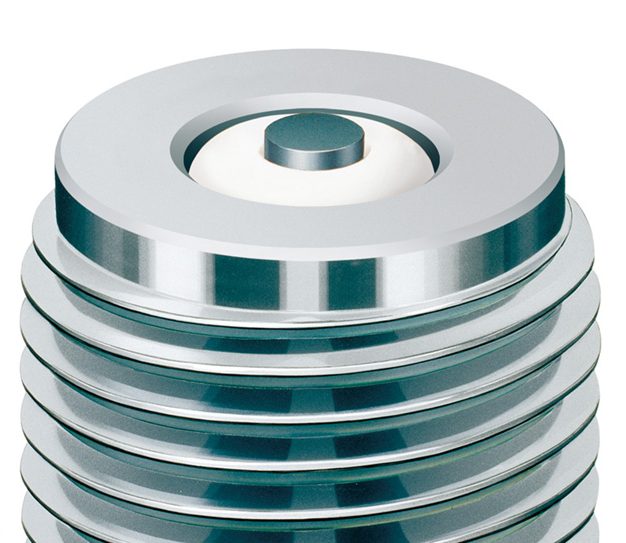
“Racing plugs for both two- and four-wheel vehicles have been developed and designed for use in engines that have been fine-tuned to achieve maximum power under specific racing conditions,” said Sauriol. “Racing plugs differ from standard plugs, both in appearance and performance, and often sacrifice plug life, and efficiency at low speeds for optimum performance and durability under torturous racing conditions. Racing plugs are designed to withstand sever mechanical and thermal shock and usually feature fine-wire center electrodes or fine wire ground electrodes for even better ignitability. Electrodes are made with precious metals, such as iridium or platinum for greater durability.”
What To Look for When Buying Spark Plugs
Sauriol explained the things to look for when selecting spark plugs:
- Shell Design: Determine what kind of shell fits in your engine and check the serial number of regulation plugs or the plugs you are currently using to verify the thread diameter, pitch, thread length and shell seat.
- Firing End Design: Although a good rule of thumb is that the more an electrode projects into the cylinder, the better ignition it provides, it’s also true that longer projections are more susceptible to the wear and tear of extreme temperatures. High-power, high-performance engines, of course, not only run hotter, they also vibrate more, which is why we recommend choosing a firing end design that reduces exposure of the electrode and insulator as much as possible.
- Heat Range: It’s important to choose a racing plug with a heat range that keeps the electrode at an optimum temperature under even the most torturous racing conditions. And remember, a higher heat range number does not improve engine performance, it increases the plug’s ability to dissipate heat.
- Resistors: Due to advances in ignition system technology, there is little if any difference in performance between plugs with resistors and those without. However, there are still some variations of some models that require plugs with resistors to avoid engine trouble.
Ward of E3 added, “First you must determine the right reach, motor-seat type and thread size of your cylinder heads. Reach of the spark plug is length of the shell from the gasket seat to the end of the thread area of the shell. The motor seat would either be a flat or tapered. The thread size would be 10mm, 12mm, 14mm, or 18mm. Most aluminum racing cylinder heads use a 3/4 inch reach or 5/8 inch hex gasket seat spark plug.
“Next, you need to decide which tip type you’ll use. There are two different tip configurations in spark plugs: One being a regular tip where the center electrode is very close to the end of the shell. The other is an extended tip where the center electrode sticks further past the end of the shell. The engine will usually make more power when you move the spark closer to the top of the piston, so you might have to index the spark plug to use an extended tip plug in a higher-compression engine. The exceptions to this rule would be boosted engines and engines on alcohol, which do not like the tip to be projected into the combustion chamber.
Heat range is yet another specification to investigate. The factory will specify a particular plug for a given engine, but once that engine is modified you may or may not need a different heat-range plug. “Heat Range is a measure of the amount of heat the spark plug can remove from the combustion chamber,” said Ward. “The higher the compression or boost in the engine the more heat it makes, so as compression or boost is increased the colder the spark plug should be.”
Sauriol added, “Spark plugs with a firing end that heats up quickly is a ‘hot type’ plug. The hot type, since the insulator nose is long and the heat receiving area of the insulator is large, it is heated to high temperature. The cold type is the opposite as the heat receiving area is small. For NGK, a cold heat range is a higher number, and a hotter heat range is a lower number. For example, a HR 4 is hotter than a HR 5. And a HR 8 is colder than a HR7.
“If the heat range is too low (meaning hotter), abnormal combustion or pre-ignition can occur, which could lead to the melting of the spark plug electrode that could cause problems such as piston failure. If the heat rating is too high (meaning colder), the spark plugs temperature remains too low and causes carbons to build up on the firing end (fouling); the carbon provides and electrical leakage path that gives rise to a reduction of spark.”
Reading Plugs
One of the most time-honored tuning traditions in racing is reading spark plugs. Like anything technical, it takes a keen eye and a good bit of experience to properly dissect and understand running condition, or condition of the engine tune, based on the “look” of your plugs. Before data logging was popular, reading plugs was one of the few ways to determine how your engine was performing. Today, we turn to a computer to see air/fuel ratio, cylinder pressure, and/or dozens of parameters that give us a window inside the engine.
Nevertheless, reading plugs remains an art used to assist in tuning.
“There’s lots of information on the Internet about reading spark plugs,” said Ward, “but there are three areas to concentrate on when you are tuning an engine. First you want to look at the timing in the engine. The ground wire of the spark plug will discolor from the heat in the combustion chamber. The more timing you run the more the ground strap will lose its shine. For drag racing, you want the heat in the ground strap to be very close to where the ground wire is welded to the shell. When you’re looking for fuel, you will look at the base of the porcelain tip of the spark plug.
“To see the fuel ring, you will have to have a spark plug light, or for beginners, you can cut the threads off the shell to see the fuel line. This line will be a light charcoal grey pencil line at the base of the insulator. The wider the line is the fatter the engine is. Next, inspect the tip of the porcelain insulator for black specs like pepper or blisters. If you see those, there is too much heat in the engine, and you’ll need to reduce ignition timing to cool it down. Additionally, when reading spark plugs, you are looking last second that the engine was running. So you need a clean cut at the end of the run. To get the most out of plug reading you need to use new plugs on every run.”
Mike Burchi, senior product manager at NGK added, “Being able to ‘read’ a spark plug can be a valuable tuning aid. By examining the insulator firing nose color, an experienced engine tuner can determine a great deal about the engine’s overall operating condition. In general, a light tan/gray color tells you that the spark plug is operating at optimum temperature and that the engine is in good condition. Dark coloring, such as heavy black wet or dry deposits, can indicate an overly rich condition, too cold a heat range spark plug, a possible vacuum leak, low compression, overly retarded timing or too large a plug gap.
“If the deposits are wet, it can be an indication of a breached head gasket, poor oil control from ring or valvetrain problems or an extremely rich condition—depending on the nature of the liquid present at the firing tip. Signs of fouling or excessive heat must be traced quickly to prevent further deterioration of performance and possible engine damage. Reading a plug both at WOT or idle is required. WOT is the main driving factor for choosing a heat range to ensure the proper amount of heat is being expelled into the engine head. If the plug is too hot, you will see extreme electrode wear (melting), and possibly insulator damage. As mentioned above, a slight tan/gray tint to the insulator means you have chosen the correct Heat Range you’re your application. However as most Racer’s know, choosing a HR that is very cold usually creates a fouling issue. Most of the time, especially with high lift and duration cams, you increase the engine speed to create more heat to burn off the carbon. However, using some of the higher ignitability designs that NGK offers (outside of the standard Nickel designs), you may be able to decrease the engine speed and get enough heat to burn off the carbon (self-cleaning usually occurs about 600degC), while still using a cold enough Heat Range to produce the required power.”
Burchi continued, “NGK has many different firing ends outside of the standard Nickel designs (Single Iridium, Single Platinum, Double Precious Metal with Pt or Ir Center Electrodes, plus Platinum pads on the Ground Electrode, Double Fine Electrodes (DFE), Square Tip (SPE), etc. The newer designs fed by OE requirements are on the market now in the NGK IX, and HX brands. Features include robust reliability/durability of the plugs to last in the severest of engine applications and drive cycles with extremely high pressures (IMEP/BMEP) without high electrode wear. Many of the applications that NGK Spark Plugs are used in require 100,000-mile service intervals per OE requirements.
“They also have high dielectric strength of the insulator using the highest grade of Alumina with the least number of impurities to be able to bridge the required gap, while not inducing a puncture or flash-over event (which can lead to a misfire or other larger failure). And these days even OE applications are seeing voltages of 40,000-plus volts due to high pressures (boost), high EGR ratios, and lean(er) air/fuel ratios.
Burchi offered some tips for anyone tuning and engine:
- When tuning a modified production engine don’t forget about changing the OE heat range. The OE may have left some “meat on the bone” as we have heard, however that is to protect for a multitude of ambient, fuel, and usage conditions. You can typically advance timing on an OE spark plug and be okay, however that is NOT a guarantee, especially with the growing requirements to meet fuel economy and increasing power targets with small displacement engines during only Stoich conditions (some applications cannot run rich to cool engine components). So, if installing power adders, or tuning the car for more performance, NGK recommends using a colder heat range.
- Be sure to gap for the application properly. For example, if your engine is NA, and you add a turbo or supercharger you shouldn’t use the same gap. Without getting into intense detail, the energy required to bridge the gap is much higher with forced induction than if the car was originally naturally aspirated from the factory. So, to keep from getting misfires (or worse) using 1.0 mm-or-greater gaps on NA, gap down for forced induction, especially when using the OE coils. Again, this is just an example and your application may be different, especially if using aftermarket coils.
- If you are using OE coils and you are adding power adders, please look at aftermarket options as well as NGK’s offerings of coils.
- Learn to read plugs. In this day and age we have knock sensors, temperature sensors, wideband (UEGO) sensors, etc. which provide a lot of information, but one of the best ‘windows’ into the engine is still the spark plugs.
You may also enjoy this article: A Guide to Reading Spark Plugs (Infographic)
When Should You Change Spark Plugs?
Lastly, you may wonder how often you need to change plugs. “This all depends on the application you have,” said Burchi. “First and foremost, please check for electrode wear and any signs of overheating (electrode melting). If using a precious metal spark plug (Iridium, Platinum, etc.), you cannot just gap down to the intended gap if you see more wear. If the wear is extreme in very short durations, you may be using the wrong spark plug for your application. Please talk to an NGK expert on which design may be best for you.”




Comments