Winning in motorsports requires a rock-solid racecar, driver talent and preparation that begins at the shop. Readying your racer, (or show car, or street machine), before you hit the track is key to finding success. Whether it’s fine-tuning the engine and suspension or simply doing regular maintenance, it’s important you’re ready for battle. At the bare minimum, this means having a toolbox and garage (or driveway) that’s geared to your needs.
Of course, there are common tools such as a tire-pressure gauge, jack, and jack stands (or a more elaborate jacking setup), plus hand tools and a toolbox. And it goes without saying that the type of work correlates with the level of performance and/or the class of competition.
Successful drag racers know the importance of having the right tools for the job. This can be anything from the correct size wrench to the skills needed to win. (Image/Evan Smith)
For instance, Pro Stock teams check valve springs, resurface the clutch, and, at times, change gear ratios nearly every pass. Nitro teams go further and do a complete teardown of the engine, removing everything, right down to a bare block. They commonly change bearings, rods and pistons, and head gaskets every single pass!
Most sportsman racers can spin wrenches, and they typically travel with tools necessary for working on the car. But beyond sockets and ratchets, other tools may include a weather station, practice tree, or anything that gives you an edge. In any case, there are general tools and specialized tools designed for each specific task.
And while you may start with the basics, your arsenal of tools will grow over time. Beginners probably have the standard sockets, screwdrivers, and wrenches, because it would be impossible for a new racer to know exactly what they need—and afford it all in one shot. The cool thing about our sports is that most racer are willing to help. How many times have you needed to borrow a gasket or something on the fly?
John Force Racing’s Lanny Miglizzy is a track specialist with a giant assortment of tools he uses to read and record track conditions. His information is used by crew chiefs to dial in the clutch for each pass down the track. (Image/Evan Smith)
Everyone learns that tools are more than jacks, sockets and wrenches. A “tool” is anything you use to improve your skills or performance. In drag racing, tools can be your weather station, data-logging equipment or App, like DragInsights.com, which is a fantastic way to look at and analyze performance.
Bobby Fazio, who has won two events over the last few years in his Super Stock stick-shift Mustang said, “DragInsights has really helped me research my opponents for each round. I can see average reaction times, lane preferences, win percentage and so much more. And it helps me personally, because I can look at my data to see win percentage by lane and keep track of reaction-time average and all the aspects of drag racing. Our sport is based around precise measurements and numbers, and this tool helps with analyzing all of it,” he added.
Serious racers look at the big picture and have a plan for setting up the car for each round of racing. Not only do they have an eye on the next round, they consider all the variables and load the proverbial “toolbox” with items necessary to be successful. This includes vehicle preparation, track conditions, weather, the mental approach to racing. You can “build” your own toolbox by reading books on winning and improving mental focus by visiting a sports psychologist and by becoming an expert on vehicle performance and weather prediction.
Another tool that’s available are educational programs such as Frank Hawley’s Drag Racing School or Peter Biondo’s webinar playbook. In addition to teaching best practices for physically driving the car (burnout/staging/run), these schools educate racers in unique ways.
Ultimately, being successful boils down to being prepared and then executing during those important few seconds. Get it right and you’re on your way to the winner’s circle, do it wrong and you’re strapping down the car—and even that requires tools—so be prepared and hopefully you be the one hoisting the trophy at the end of the day.
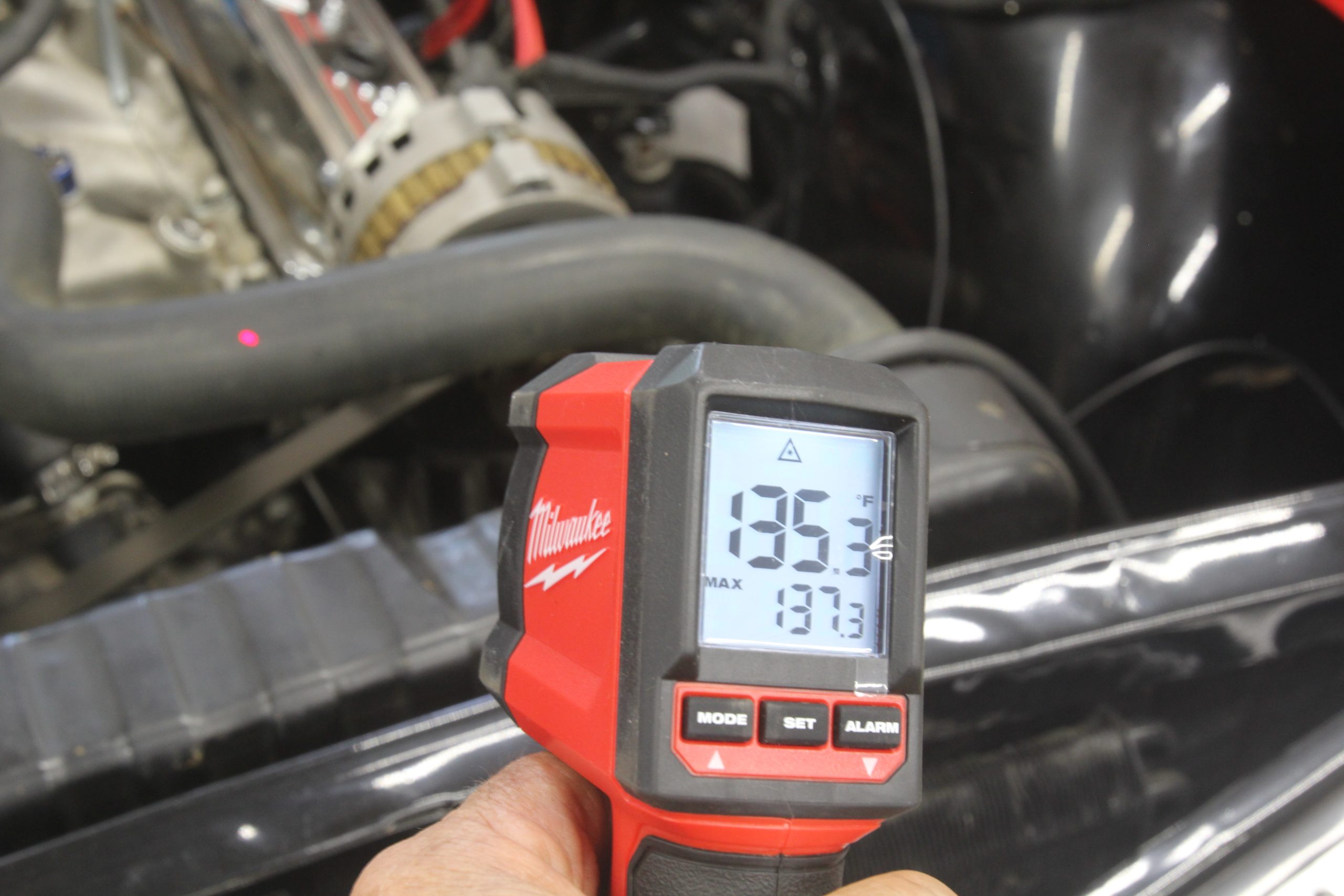
Milwaukee PACKOUT rolling tool chests are large tool chests that have a 250 lbs. weight capacity and are constructed with impact-resistant polymers and water and debris protection to withstand harsh jobsite conditions. They also feature an industrial-grade extension handle and 9 in. all-terrain wheels to ensure tool chest can be rolled anywhere on the jobsite. The storage systems feature modular connectivity capability to allow you to bring two stacks (each unit sold individually) onto the site with a dual stack top. (Image/Milwaukee Tool)Cool Shirt Cool Water Shirts are designed to help you maintain a safe core body temperature while working or racing in hot environments. They’re not just a shirt—these unique garments feature built-in, non-kink tubing throughout to supply consistent, continual cooling to the wearer’s torso. Cool Shirt Cool Water shirts help to reduce dehydration and prevent heat stress. Wearers can expect increased productivity and reaction time—with reduced errors! Designed for use with Cool Shirt Cooling Systems, these shirts are a smart investment for your health, safety, and comfort on the job or at the track. Order the size and color you prefer. (Image/Cool Shirt Systems)Summit Racing Aluminum Hydraulic Floor Jacks are made of strong, lightweight aluminum, but their lifting capacity is anything but lightweight. These jacks have been tested to meet ASME PASE-2014 and ANSI Z535 safety standards. They feature a rapid-rise low-profile front roller for quick, accurate placement and have a rotating rubber saddle pad to prevent marring. (Image/Summit Racing)An alternative to a floor jack is the 5000TLX Extended Portable Vehicle Lift from QuickJack. It has a 5,000 lbs. capacity, open-center design, low-profile frame, automatic safety locks and 6 in. extended lift point reach. (Image/QuickJack)A-iPower inverter generators deliver clean, quiet power. Powered by A-iPower engines, the generators are ideal for outdoor events, camping, travel, and more. Some of the inverter generators offer added convenience and power with parallel capabilities. Utilizing the parallel cables, two generators can be linked together to create double the power. A-iPower inverter generators assure power and quiet operation wherever you take them. Numerous options and power outputs are available. Select the model that best fits your needs. (Image/A-iPower)A Digital Infrared Thermometer can be used for many things such as reading track temp or parts of the engine. In fact, OnAllCylinders contributor Jeff Smith wrote a lengthy article explaining how handy they can be around the shop. Click here to read it. (Image/Jeff Smith)Practice Trees come in all shapes and sizes and are invaluable for driver training and improving your reaction time. (Image/Portatree Timing Systems)If you’re looking to improve your skills, check out Frank Hawley’s Drag Racing School. (Image/Evan Smith)Believe it or not, the right pair of driving shoes can help you win by providing better feel and a deeper connection to your car. (Image/RaceQuip)Having a fully charged battery is very important so consider a portable generator and battery charger a pair of must-haves. (Image/Evan Smith)Drag racing engines can be hard on valve springs, so a basic hand-held checker is nice to have. (Image/LSM Racing Products)Spare plugs are a must for most racers. (Image/Evan Smith)Safety gear certainly counts as a tool. Suits, helmets, harnesses, and more all protect you and add to your level of comfort in the car. If you feel safe, you’ll be more confident, and performance will likely improve. (Image/HANS Performance)Keeping track of corner weights with a set of portable scales is a good idea, especially if you move ballast often. (Image/Evan Smith)It’s a good idea to carry consumables such as head gaskets, oil filters, oil, etc. (Image/Evan Smith)Data logging/acquisition is a great tool that most racers couldn’t live without. (Image/Racepak Data Systems)A quality torque wrench is a must-have for obvious reasons. (Image/Evan Smith)A portable welder can be a lifesaver. (Image/Lincoln Electric)Every racer should investigate having an engine diaper, regardless of class. (Image/Evan Smith)Summit Racing 52 in. rolling cabinets are perfect for keeping your tools organized and right where you need them. The shell is made of 20-gauge steel and the drawers are 21-gauge steel that is powdercoated to protect against rust. (Image/Summit Racing)Drag racing engines love to be cool, so you’ll see chiller systems all over the pits. There are expensive models, but you can build your own for a few bucks. (Image/Evan Smith)Photographers can be a great asset, as today’s high-speed cameras can shoot 30 frames per second or more. A quality series of photos can help you analyze your launch. (Image/Evan Smith)Having solid preparation will give you the best opportunity to win. You won’t be worried about mechanicals, and you can focus 100 percent on driving once you strap into the car. (Image/Evan Smith)Most professional race teams can handle just about anything including grinding and welding should the need arise. (Image/Evan Smith)Top Fuel and Funny Car teams are masters at trackside engine building. (Image/Evan Smith)Race Ramp 67 in., 2-piece XT ramps are ideal for low ground clearance vehicles with tires up to 12 in. wide. With an incline of only 10.75 degrees, they raise the car 10 in. while weighing only 15 lbs. each—a result of their Space Shuttle foam technology construction. Once you have your vehicle secured with these 2-piece XT Race Ramps, you can remove the back “ramp section” and have access from the side of the vehicle, as well as from the front and rear. (Image/Race Ramps)Every racer needs a tire pressure gauge and Summit Racing offers a wide variety at many price points. (Image/Summit Racing)
Evan is the former editor of Muscle Mustangs & Fast Fords magazine/Mustang-360.com and regularly competes in drag racing and open track road race events. A diehard Blue Oval guy, Evan is also a factory test driver for The Ford Motor Company.





Comments