
A while back, we told you about the Porsche 912—a rear-engine sports car designed to slot below the 911 as Porsche’s entry-level option.
The 912 was born because, after discontinuing the beloved 356 series, Porsche no longer had an affordable alternative to the iconic 911. The 912 was essentially a stopgap measure consisting of a 911 chassis fitted with a four-cylinder powerplant, instead of the 911’s six.
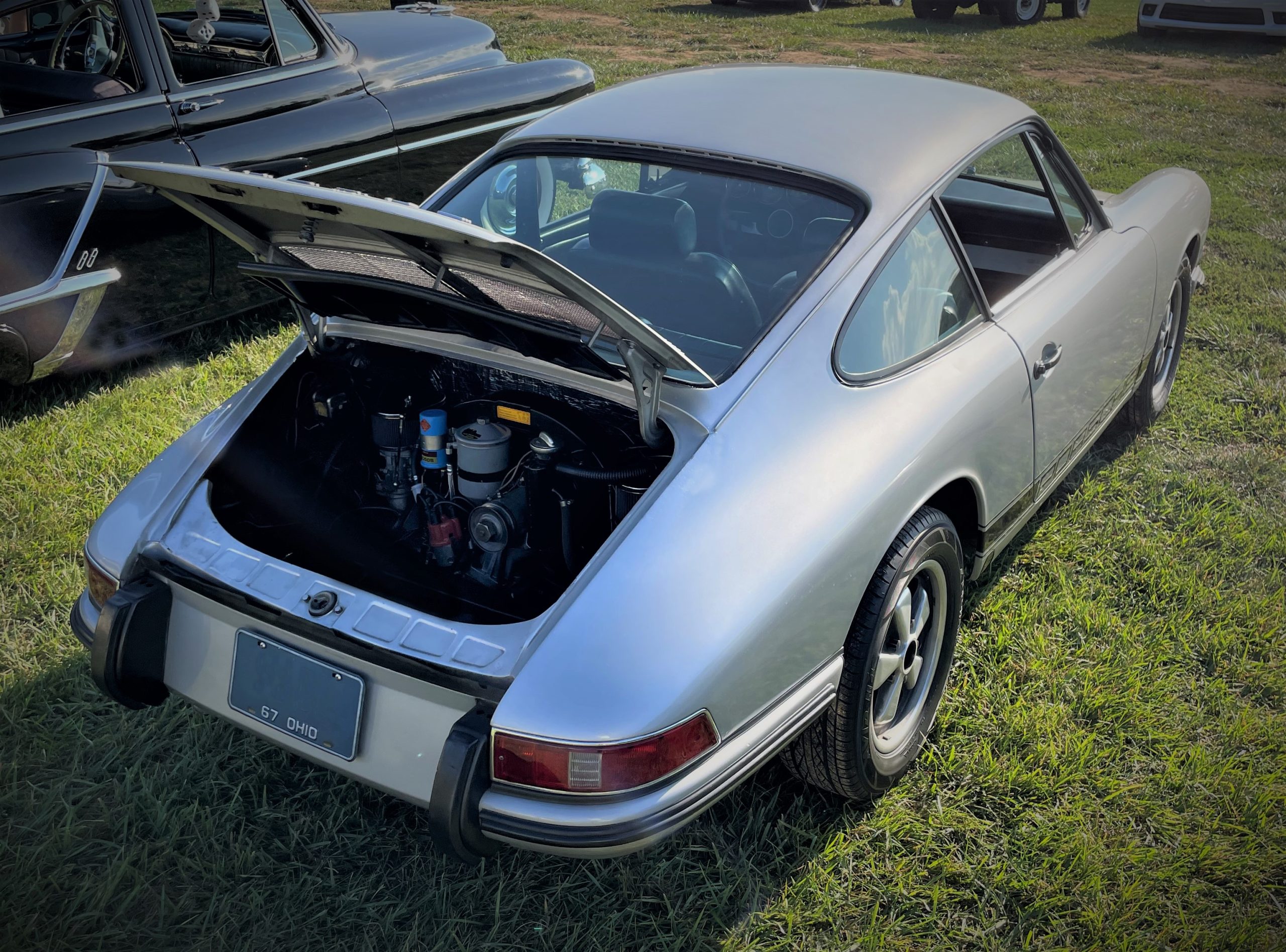
It was relatively short-lived, because Porsche had plans for a clean-sheet design to address the lower end of the sports car market.
At the same time, Porsche’s neighbor to the north, Volkswagen, was looking for a replacement for its aging Type 34 Karmann Ghia coupe. Thanks to some pre-existing contractual obligations between the two German automakers, they stuck up an arrangement to co-develop a new sports car.
The result was the Porsche 914.
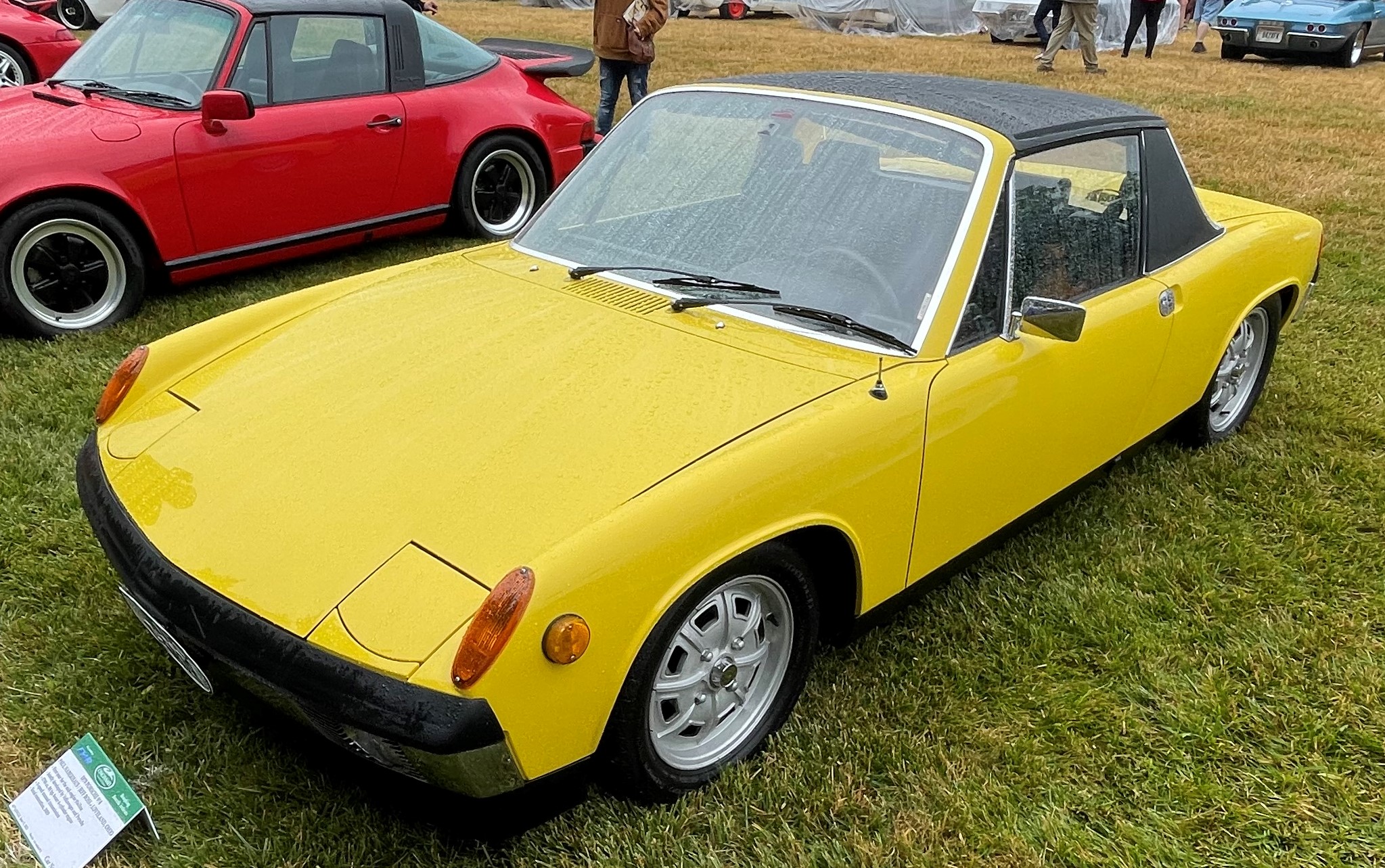
Meet the New Volkswagen…errr…Porsche…errr…VW-Porsche 914
While the 914 was styled in-house at Porsche, the base model 914 was fitted with the latest iteration of VW’s trusty air-cooled Boxer four. Buyers seeking more performance could opt for the 914/6, which was a 914 equipped with a Porsche-derived flat six cylinder.
But since the whole project was a partnership from the very beginning, the four-banger 914s were originally supposed to be sold as Volkswagens, while the six cylinder models were expected to wear the Porsche badge exclusively.
Somewhere along the development timeline though, the VW and Porsche brass grew concerned about a split 914 identity. So when the 914 was finally ready to party, it was sold as a combined “VW-Porsche” nameplate in Europe and solely as a Porsche in the United States, regardless of the driveline configuration.
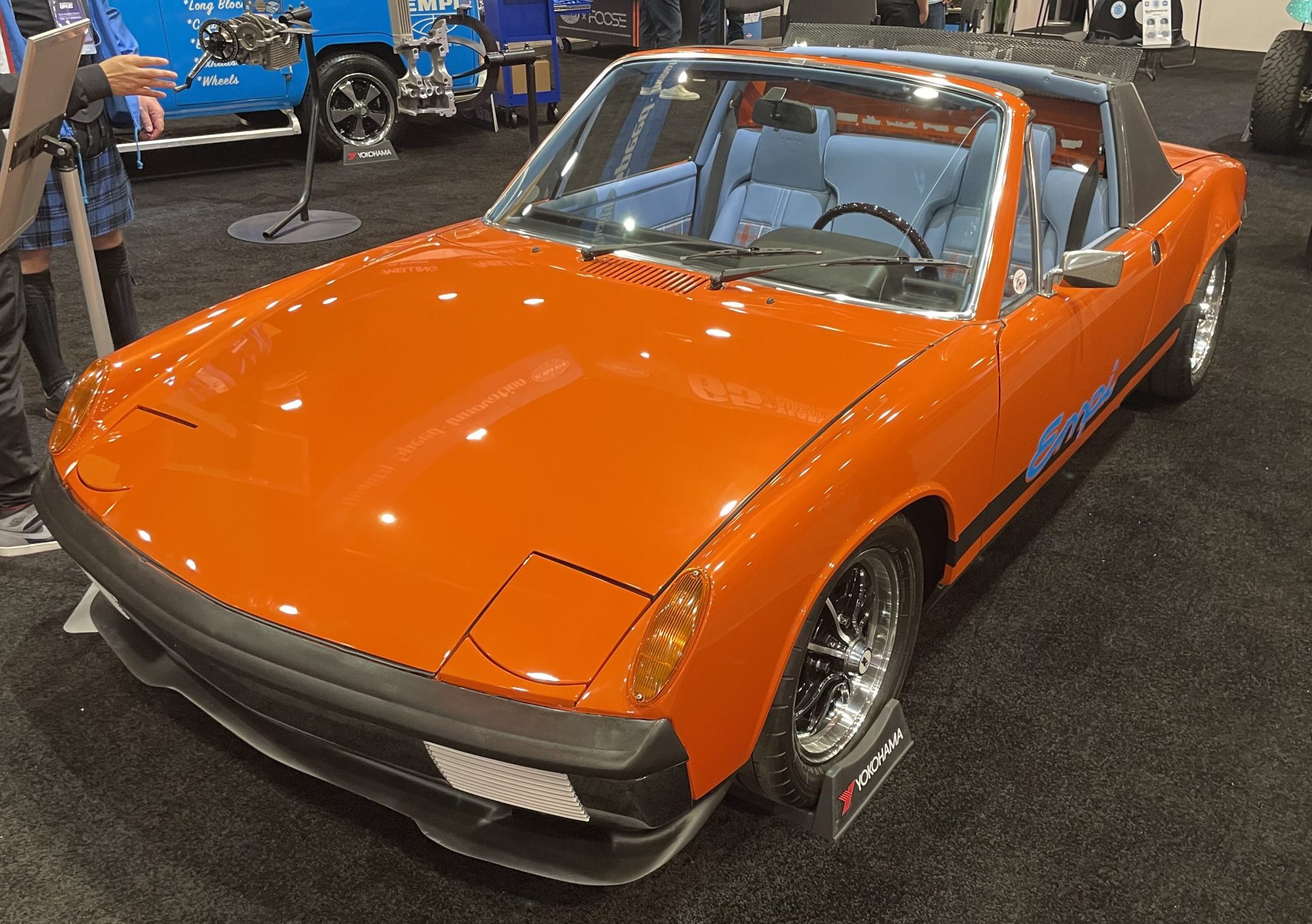
Porsche 914 Production & Submodels
The 914 was produced from 1969 through 1976, with around 115,000 cars put on the road in that timespan.
Given the nature of the joint venture, production was split between Porsche’s factory in Stuttgart-Zuffenhausen and the VW-aligned Karmann factory in Osnabrück. Most 914s were sent Stateside for the North American market.
The entry-level sports car strategy for the 914 worked too, as it was a huge sales success—easily becoming Porsche’s best-selling model during that era.
The early four cylinder models were fitted with a 1.7L engine good for close to 80 horsepower, while the 914/6 got a 2.0L Porsche flat six that made 110 hp.
The six was a derivative version of the 911’s Boxer powerplant, with different pistons that dropped compression and a revised tune that retarded engine timing. The end result was a decrease in power when compared to the flat six fitted in the vaunted 911.
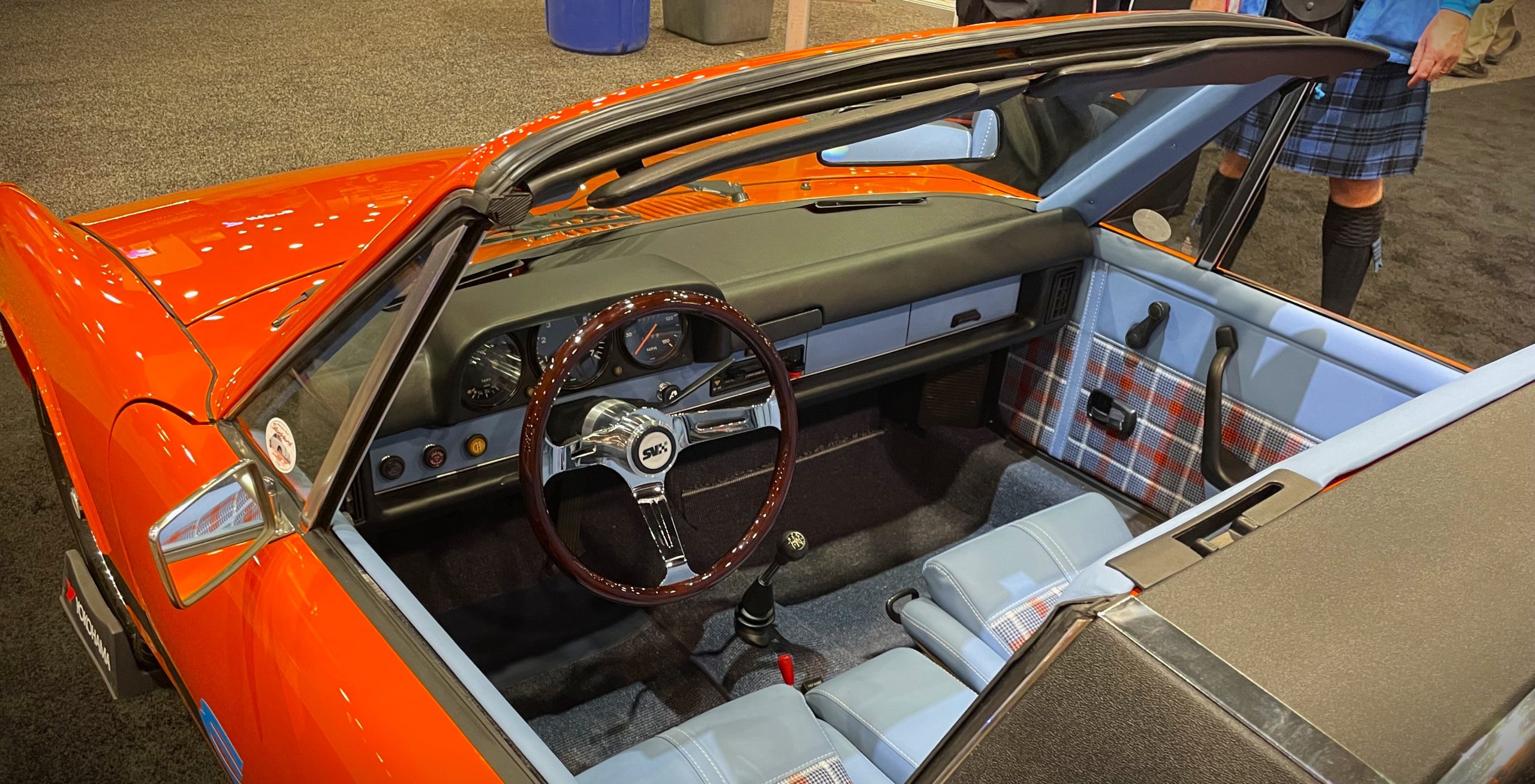
The top-tier 914/6 trim didn’t last too long, due in large part to its MSRP creeping ever closer to 911 territory—after all, Porsche execs didn’t want the “budget” model stepping on the toes of its flagship. Perhaps more importantly, well-heeled buyers were probably more inclined to jump into a 911 instead of the more downmarket 914.
As a result, 914/6 production was halted after 1972. In its place came a new 2.0L VW four cylinder that made 100 horsepower, which if you’re keeping track at home, was only 10 shy of the outgoing Porsche six-cylinder anyway.
A year after that, a new 75 horsepower 1.8L four cylinder joined the 2.0L and replaced the outgoing 1.7L.
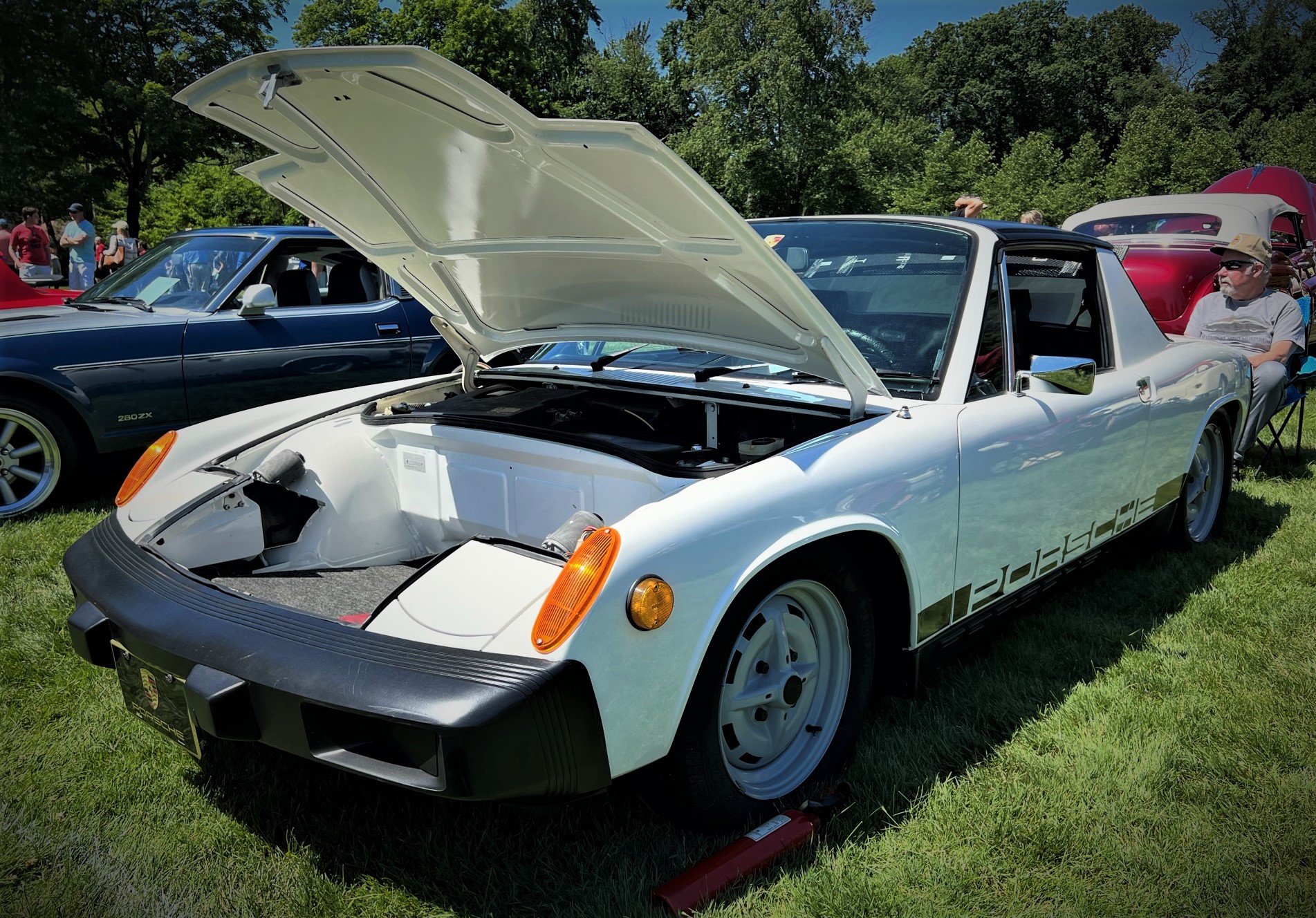
It’s also worth mentioning that the United States received de-tuned versions of these later engines, to meet ever-increasing emissions standards. And it’s those same emissions standards that signaled the demise of the 914.
Thanks to its air-cooled nature, Porsche had a difficult time getting the 914’s VW-sourced four emissions compliant and it knew the engine’s days were numbered. As a result, a replacement for the entry-level 914 was already on the drawing board in Porsche HQ by the early 1970s.
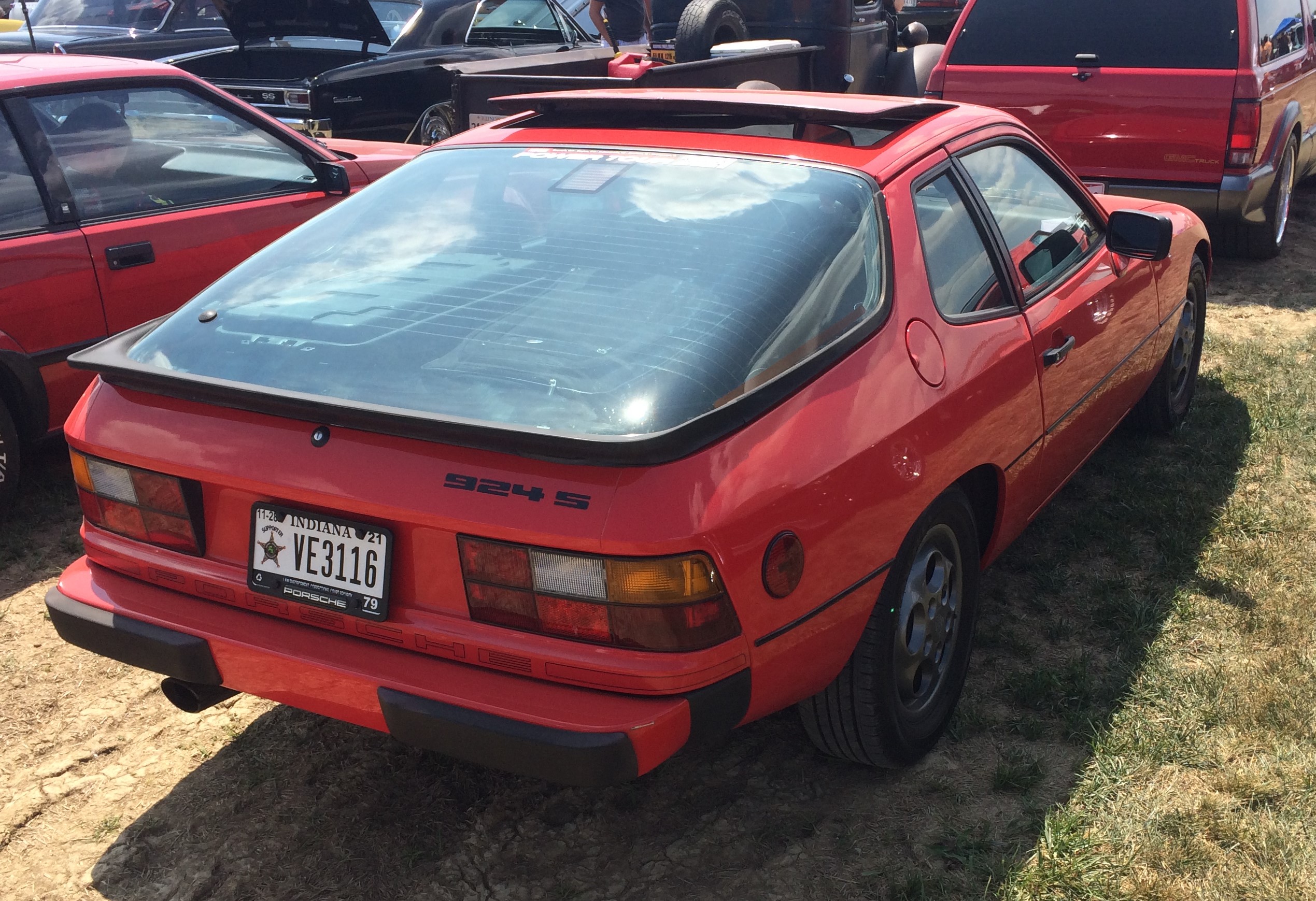
As the 914 drove off into the sunset, a new front-engine, rear-wheel drive “924” was announced for 1977. In a curious twist, Porsche actually resurrected the aforementioned 912, this time called the 912E, for a single year in 1976 to fill the void left by the 914 prior to the arrival of the all-new 924.
Porsche 914 Design, Driveline & Layout
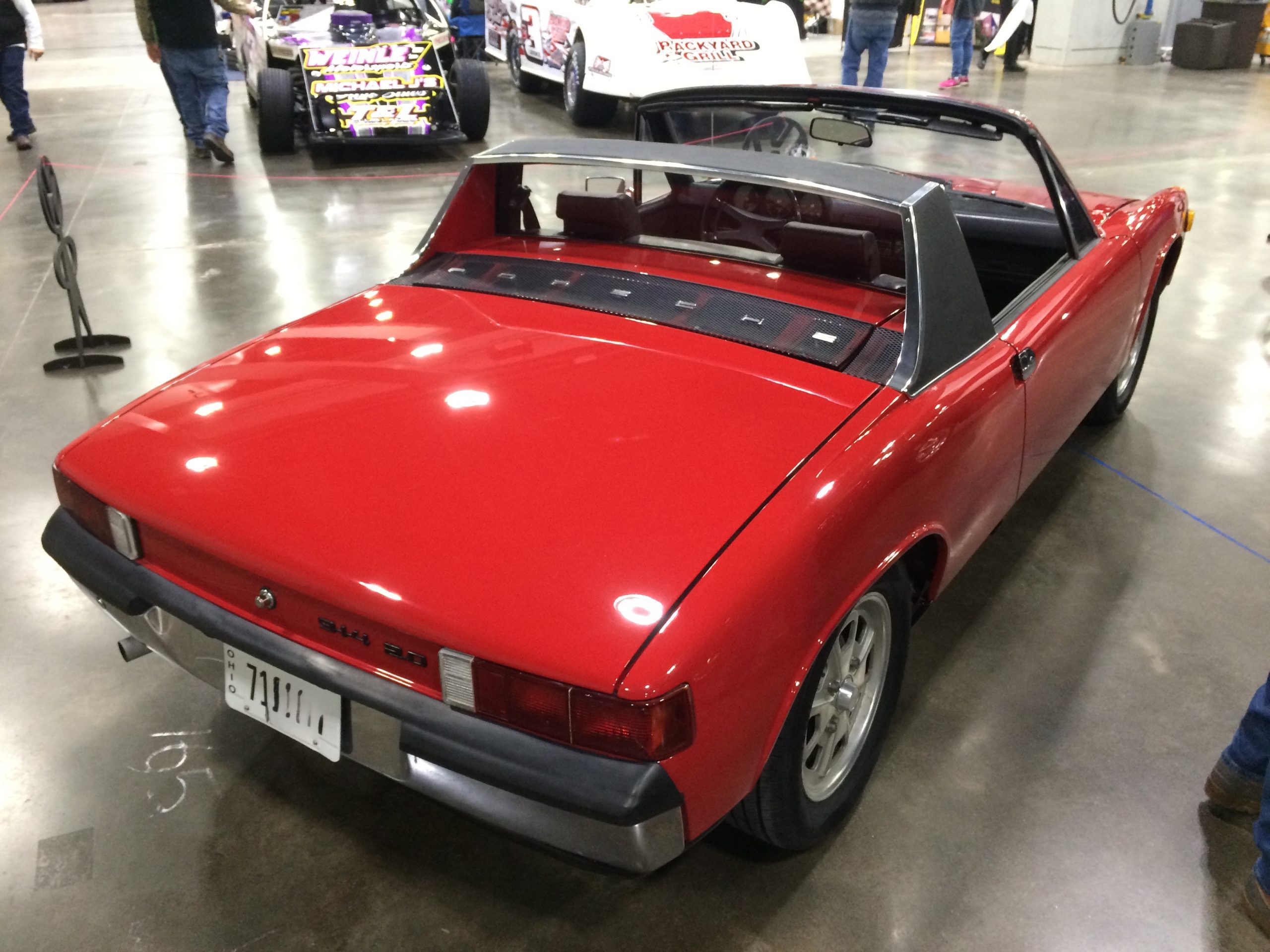
Perhaps the most obvious design cue to note is that the 914 has a Targa-style top, with a removable roof panel. Unlike some of its earlier models, Porsche had set out to make the 914 a Roadster from the get-go.
But underneath that unusual (and somewhat polarizing) body is the 914’s most remarkable feature:
In contrast to both contemporary rear-engine Volkswagens and Porsches, the 914 was a true mid-engine sports car. That essentially means the engine is placed ahead of the rear axle, but behind the passengers.
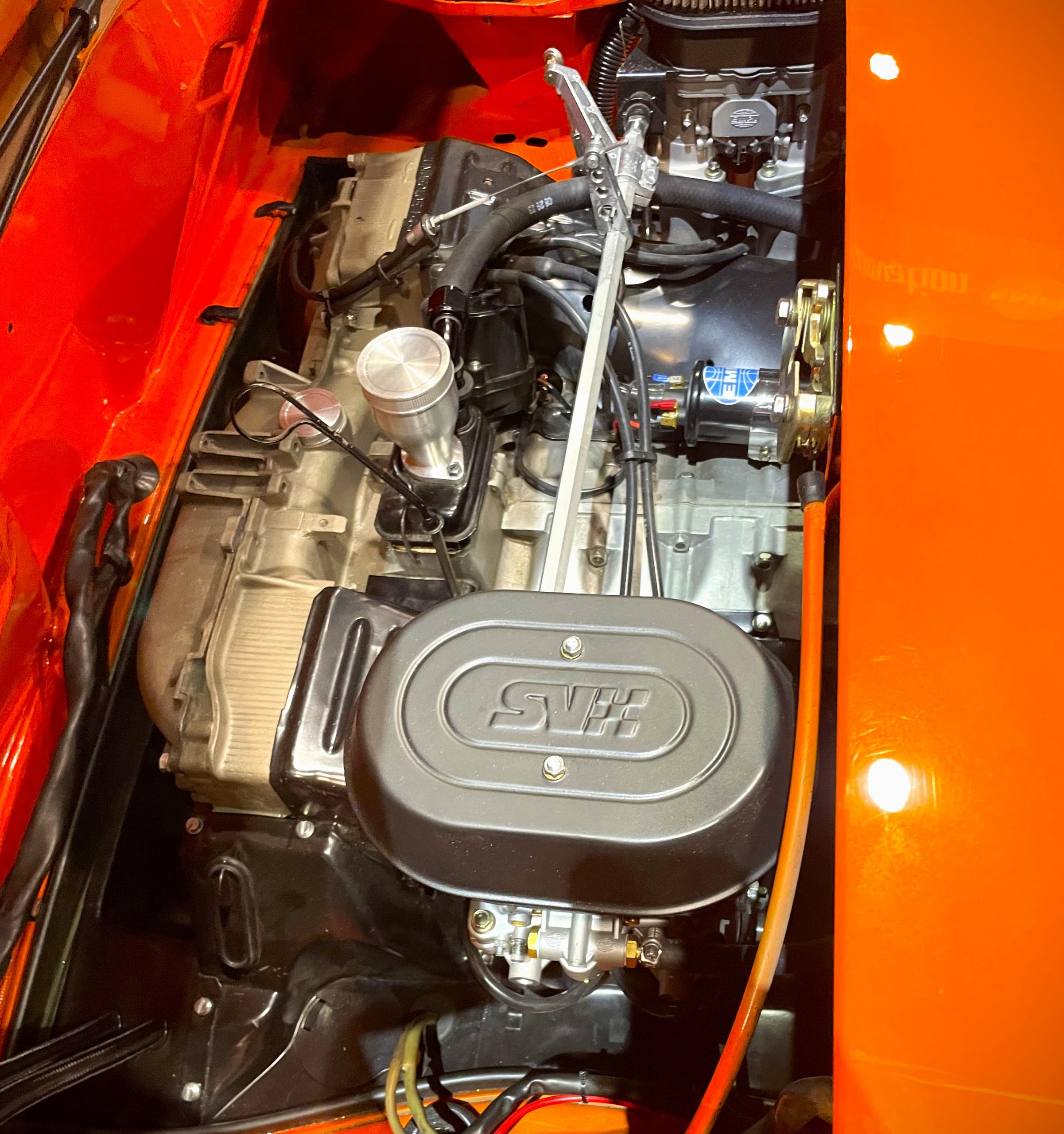
With the release of the 914, Porsche became the first German manufacturer to mass produce a mid-engine sports car for public roads.
A mid-engine design has plenty of upside for performance-minded drivers. It allows an automaker to better balance the weight of the vehicle, and with power being sent to the rear, it allows more of that weight to be positioned over the back wheels to improve traction.
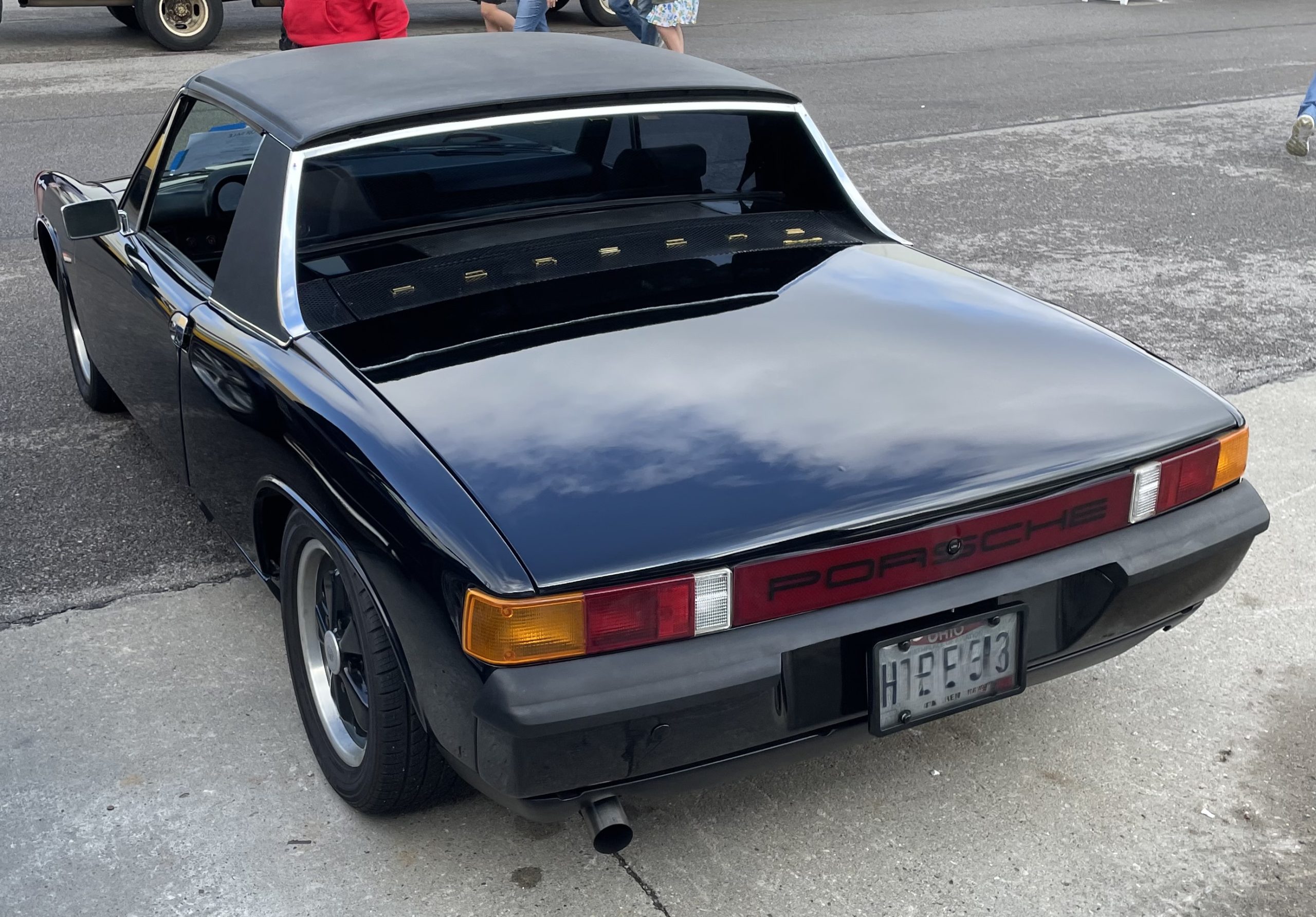
On the 914, the engine bay is located immediately aft of the passenger cabin, in a somewhat narrow compartment ahead of a long back decklid that covers a respectable rear trunk that sits above the remainder of the driveline. The engine is connected to a transaxle that sends power through half-shafts directly to the rear wheels.
The Porsche 914 Legacy
Publications from the era wrote fondly of the 914’s handling performance and plenty of folks let their 914s loose on autocross tracks and road courses around the planet. After the addition of factory-supplied sway bars midway through the 914’s production run, these German roadsters became even more adept at corner-carving.
Unlike other Porsches though, these 914s have flown under-the-radar of the collector’s market until recently. In fact, these were typically overlooked as a result of their VW lineage and remained a bona fide sports car bargain for decades.
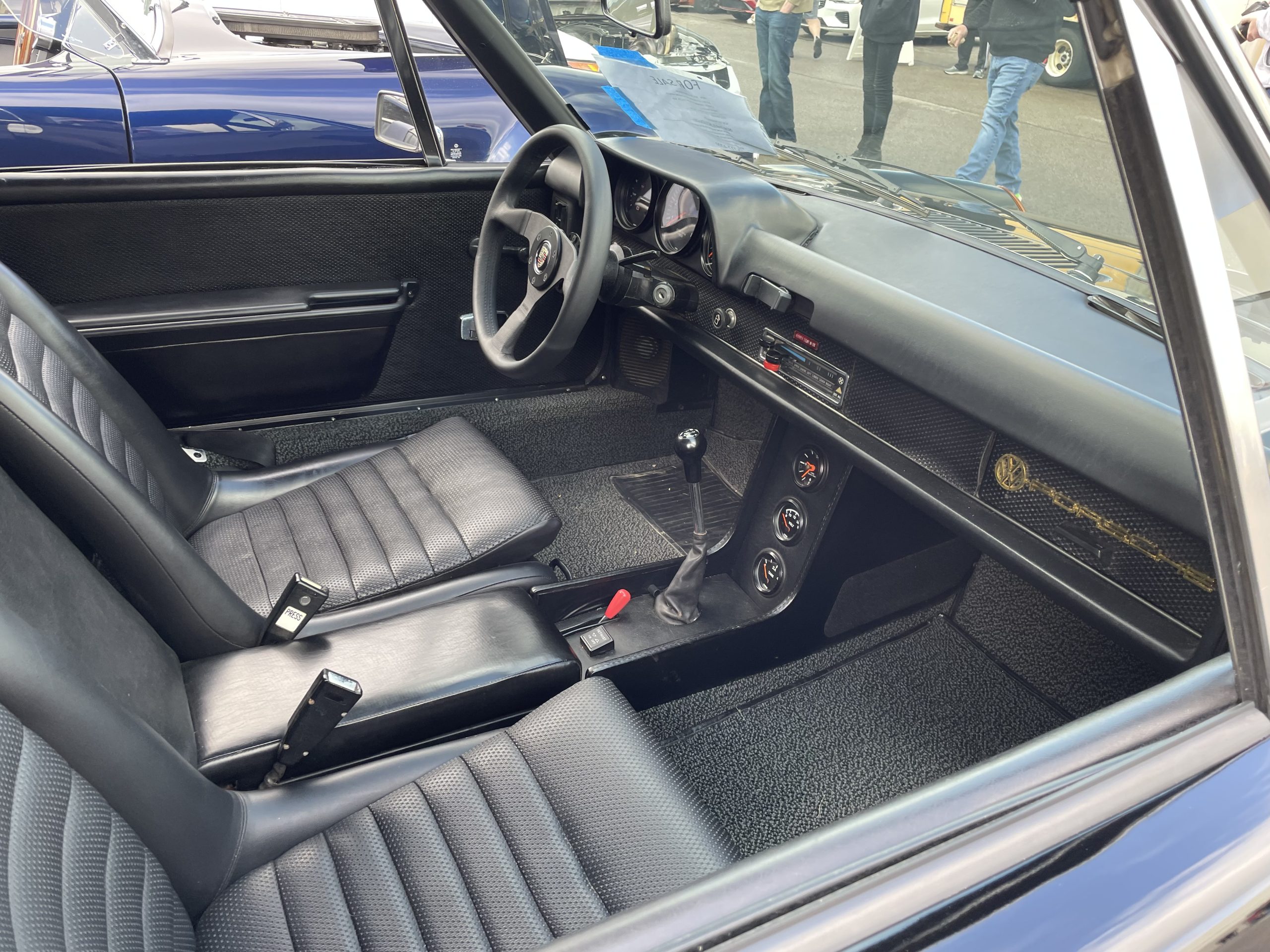
Now however, with prices of 356s, 911s, and 912s hitting the stratosphere, the 914 is drawing the eye of many vintage car aficionados.
So if you’re looking for a used Porsche 914 to turn into an autocross car or unique driver at your local Cars & Coffee, expect to pay a premium for good, clean examples. As with many cars from the era (including Volkswagens), these cars were often used and abused by owners who didn’t give much thought to long term collector value—which meant many 914s succumbed to catastrophic rust damage. (Do an internet search for “914 Hell Hole” and you’ll see what we mean.)
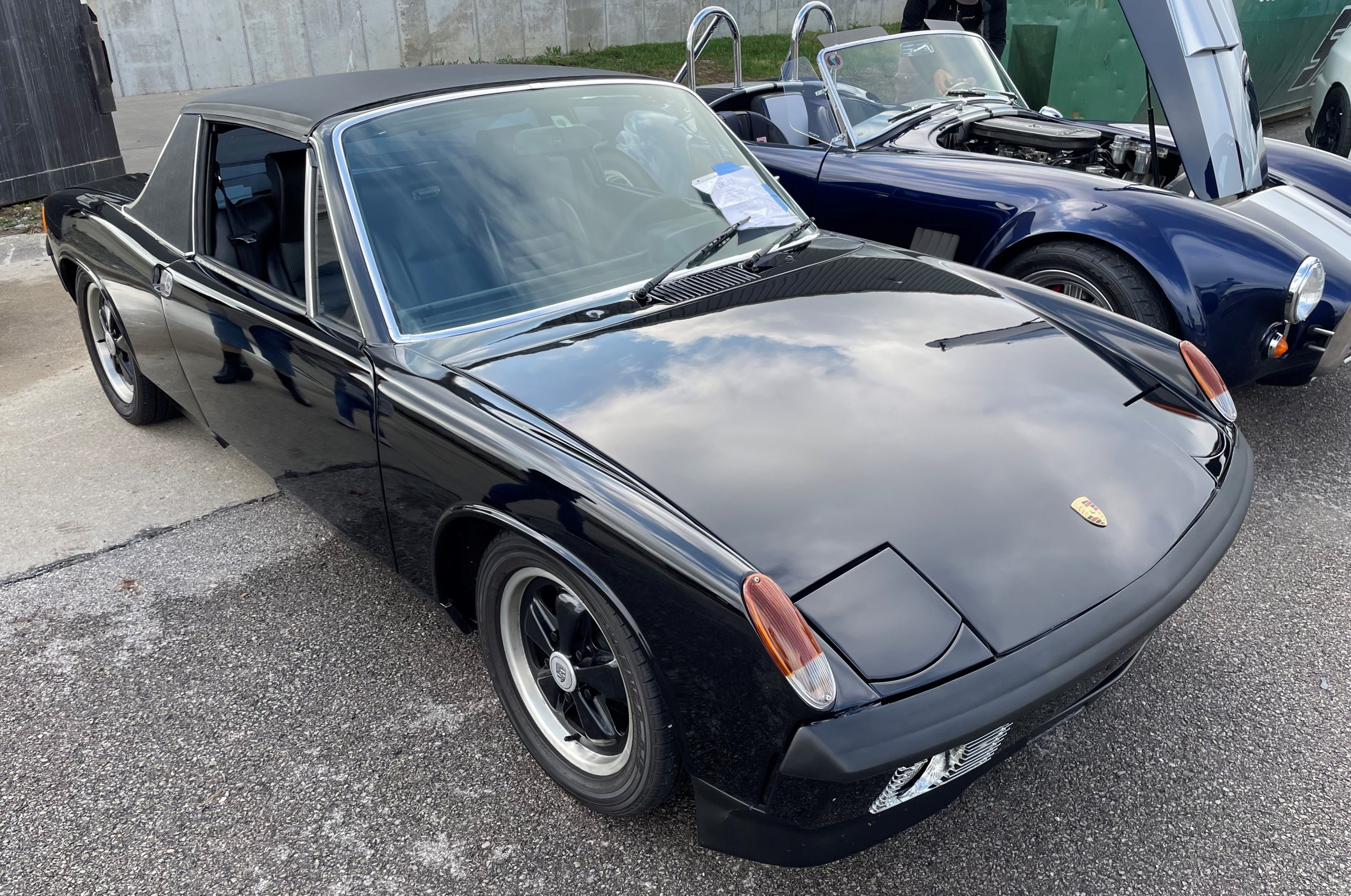
All told, the 914 is one of the more interesting chapters in the Porsche and Volkswagen history books. And thanks to its sales success during the 1970s, it can be credited with helping keep the Porsche legacy alive during the malaise era, even as other performance brands struggled to stay afloat.
With such a unique silhouette and fascinating backstory, we love seeing 914s pull up into car shows. If you ever come across one in your travels, it’s worth tracking down the owner for a little insight behind the car.
Into interesting, unique Porsches and Volkswagens? You might enjoy these articles too:


Comments