My project is a 1973 Opel GT Pro Street car. The engine is a SBC 350 with 4 bolt mains and the heads will be replaced with older 2.02/1.60 style heads. I will be using a “thumper” style cam, coil near plug ignition, modified sequential EFI and an LS controller coupled to the 4L60E trans. The rear end is a 4.11:1 Winters quick change turning 31 inch tall tires.
All of this is with a full roll cage with the rear mounted via a 4 link suspension. I have reinforced the whole body/frame structure. This will only be a fun driver and not raced. Am I on the right track with the motor modifications? I will improve the compression ratio, change the heads for better flow, change the cam for better breathing better ignition with 8 coils, and other mods. Any suggestions? Thank you in advance.
J.Z.
***
All of this sounds quite aggressive.
The first thing that stands out to me is the combination of the 4.11:1 rear gear and the 4L60E transmission. The 4L60E (like its predecessor the 700-R4) uses a 3.06:1 first gear ratio. This is a much deeper first gear ratio than, let’s say a TH400’s 2.48:1. To determine the overall first gear ratio, we multiply 3.06 x 4.11= 12.57:1. This is pretty deep. To compare, this would be equivalent to using a 5.07:1 rear gear with a TH400’s 2.48:1 first gear (2.48 x 5.07 = 12.57).
This means when driving the car, the transmission will probably shift out of first gear before your front tires exit the crosswalk at a typical stop light. Some of this will be mitigated by your taller 31 inch rear tires. This slightly reduces the effect of gear ratio. If we use a 26-inch tall rear tire as the standard, then your 31 inch tire is 19 percent taller. So we can reduce that 5:01 rear gear by 19 percent which is still equivalent to a 4.10:1 rear gear. The trans will still shift first to second very quickly.
You might want to consider using a taller rear gear. The beauty of your Winters quick change is that you can make gear ratio changes very easy. I’m not sure how strong those quick changes are if you decide to launch the car hard from a dead stop.
ECU & EFI
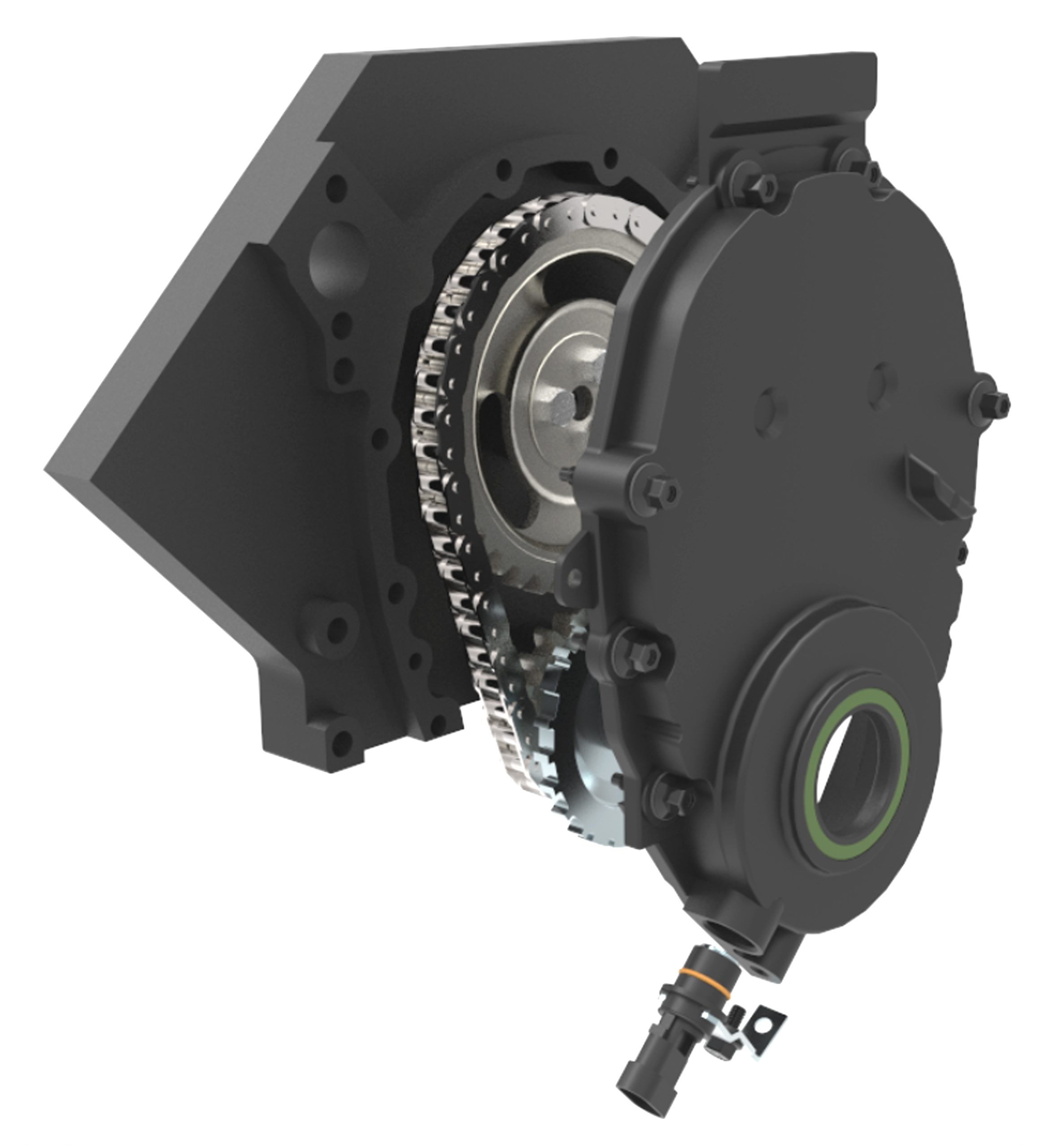
I like your idea of using an OE LS engine computer with coil-near-plug ignition, that’s something I have always wanted to try on a small block Chevy. I think that timing accuracy will be improved and it might offer some slightly power improvements. I’m assuming you will be using some kind of 4X wheel on the crankshaft to give you a reference point for TDC, which his essential for the computer. However, the early LS computers require a 24x crank wheel to deliver the accuracy needed.
There is a company called EFI Connection that offers the 24X crank wheel and cam sensor parts to convert a small block Chevy to a coil-near-spark LS style EFI system. You might look into this if you have not already started down this path.
There are some really positive advantages in improved power and performance using this idea. Our friend Jim Hall at TPIS in Wisconsin did a dyno test upgrading a second generation LT1 Opti-Spark to the EFI Connection kit and saw some impressive average power gains of over 18 lb.-ft. of torque throughout the entire test run on the engine. That should get your attention.
Cylinder Heads
You also mentioned using older iron heads on your small block. You might consider going with a more modern aluminum performance head for multiple reasons. Older iron heads are often prone to cracking and you’d hate to invest good money only to discover the heads are cracked. But even if they are serviceable, by the time you invest in new exhaust seats, new guides, a valve job, new springs, retainers and locks and machine for screw-in studs and guide plates, you will have more than $1,000 wrapped up in 1960s technology.
Conversely, choosing any number of aluminum aftermarket heads offers brand new parts that are 40 pounds lighter and will out-flow any stock 1970s cylinder head. A set of Trick Flow 195cc heads for example would be a step in the right direction and you would not be spending that much more than what it will cost to rebuild a set of stock heads.
***
Overall it sounds like your Pro Street Opel will be nothing less than a ton of fun. One of our most favorite drag race cars of all time was the small-block Chevy powered Opel GT built by Mike Sullivan and Dave Hutchens.
The Wayne County Speed Shop car won 11 NHRA nationals events in Competition Eliminator and Modified Eliminator—later Larry Kopp raced the car and won even more races.
Enjoy!


I have a 1979 c10 chevy truck with a 350 small block will a th 400 bolt right