
Special Hat Tip to Cole Bryant of Bryant Media and Jason Eustaquio of Aegis.Aperture for allowing us to use their photos in this article. In addition to being gearheads, both Cole and Jason are fantastic photographers with great eyes for shooting motorsports events. We encourage you to check out Cole’s Instagram Page here and Jason’s Instagram Page here to see more of their work.
***
Drifting: How It All Began
We’ve all seen videos of crowds taking over intersections and doing donuts with little regard for safety—bystanders often standing just feet away from vehicles whipping around with barely any control.
Let’s set the record straight: that’s not drifting.
In fact, street takeovers are the antithesis of what drifting truly is—a disciplined motorsport built on precision, control, and skill, where drivers navigate winding tracks and mountain roads with intent.
Now that we’ve got that sorted—much to the delight of drifters worldwide—let’s explore the origins of this thrilling motorsport.
Drifting started as an underground driving technique on Japan’s mountain roads, known as touge (pronounced “toh-geh”), during the 1970s and ’80s. Drivers navigating these tight, twisty routes discovered that by intentionally inducing oversteer—sliding the rear of the car through corners—they could carry more speed while staying in control.
Initially a practical technique used in informal racing, this new flashy driving style gained mainstream visibility thanks to Kunimitsu Takahashi, a former motorcycle racer turned pro driver, who used controlled slides in competition to maintain momentum through corners.
His success and unique driving method caught the attention of a younger generation, particularly Keiichi Tsuchiya, a street racer who would become known as the “Drift King.” Tsuchiya popularized drifting not just as a technique but as an art form through his legendary 1987 video Pluspy, which showcased him skillfully drifting his Toyota AE86 along the narrow mountain roads Japan is known for.
As drifting captured the imagination of enthusiasts, it evolved into an organized motorsport. In 2000, Japan launched the D1 Grand Prix, the first professional drift series, where drivers were judged not solely on speed, but also on angle, line, and style. In 2003, the U.S. launched its own professional drift series, Formula Drift, inspired by Japan’s D1 Grand Prix.
The sport rapidly spread around the world, thanks in part to pop culture touchstones like the anime “Initial D”, video games like “Gran Turismo”, and Hollywood films such as “The Fast and the Furious: Tokyo Drift”.
Today, drifting stands as a globally recognized motorsport and performance art, blending precision driving, visual flair, and competitive spirit in a way that’s as thrilling to watch as it is to experience behind the wheel.
It’s About Community
Drifting isn’t just about getting sideways, it’s a unique blend of motorsport, street culture, and self-expression. Unlike traditional racing, where the fastest time wins, drifting is judged by style, precision, and control. At its heart, it’s about pushing a car to its limits while looking good doing it.
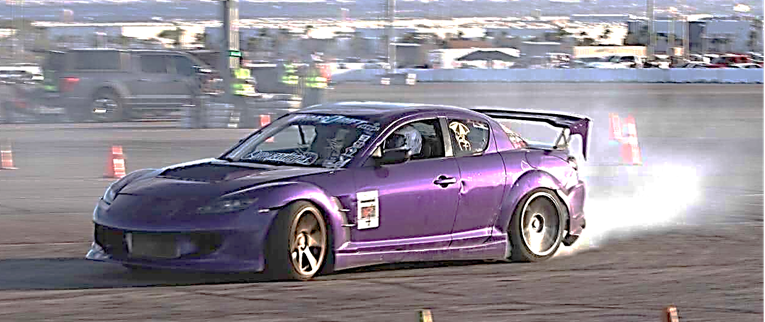
The culture is rooted in a tight-knit, grassroots community. Whether you’re driving a $2,000 beater with a welded diff, or a pro-level competition machine, what matters most is passion and attitude. Events feel more like festivals than races—pit crews grilling food, friends lending tools, and newcomers welcomed with tips, encouragement, and high-fives.
The community thrives on shared learning and teamwork, whether wrenching in the pits or at home, bonded by the thrill of smoking tires and sliding through turns.
Choosing the Right Car for the Job
So, what makes a good drift car? Essential features include rear-wheel-drive, a manual transmission, and (at the very least) a welded differential—both rear wheels must spin at the same speed while drifting to maintain proper control of the vehicle.
Contrary to what many might assume after witnessing the high-speed, smoky runs of professional drivers, the best vehicles to start drifting with are generally low-power, lightweight cars that require a driver to master the technique of drifting rather than simply surviving the unruly ride associated with high-horsepower, competition-level cars.
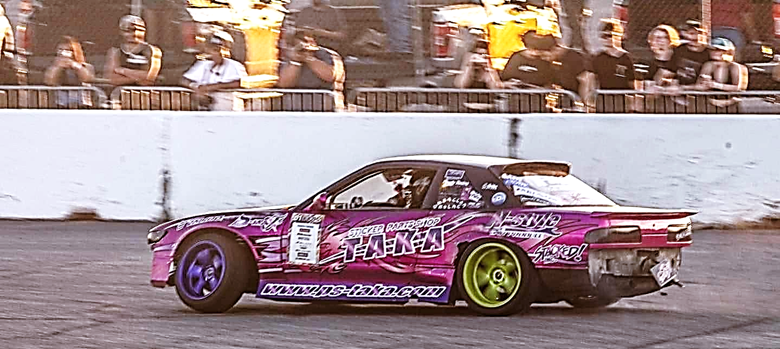
Great entry-level options for aspiring drifters include the Mazda Miata, Nissan S-chassis, and the Scion FR-S/Subaru BRZ/Toyota 86 triplets—all known for their lightweight, rear-wheel-drive layouts and balanced handling.
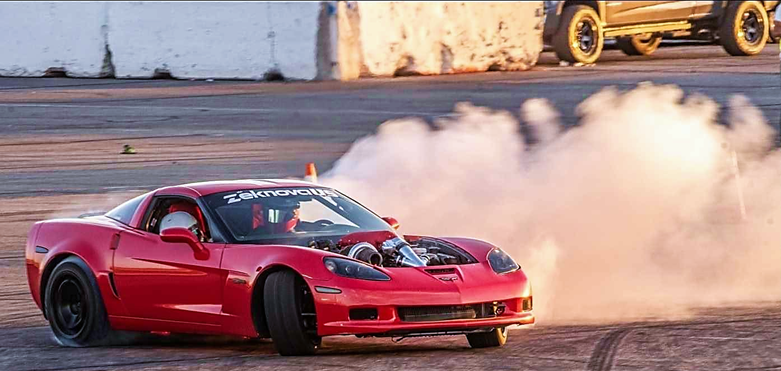
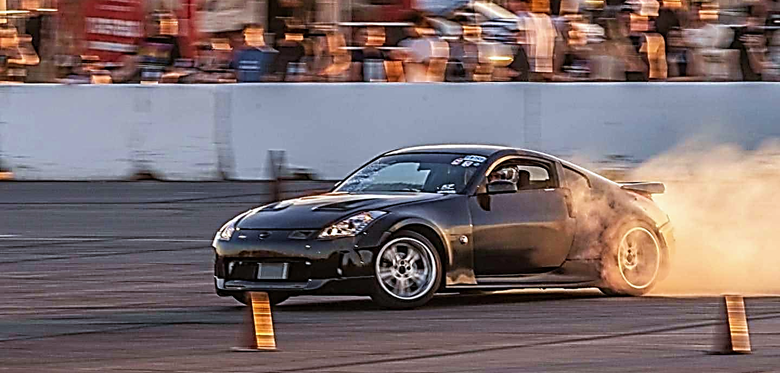
As drivers progress and master the fundamentals, more powerful platforms like the Nissan 350Z and 370Z, or even the C5 and C6 Corvettes, become appealing choices for those looking to avoid the difficulty and expense of engine swaps and elaborate modifications.
High-level and professional drifters typically pilot purpose-built machines that share little with their original street-legal counterparts. These cars are extensively modified to prioritize performance, control, and safety on the track—often at the expense of everyday drivability.
Common upgrades include tubed front and rear ends for easy repairs and weight reduction, full roll cages for enhanced structural rigidity and driver protection, and rear-mounted radiators that improve cooling efficiency while reducing the risk of damage in collisions.
Advanced steering and suspension setups are also essential, offering increased grip, precision, and significantly more steering angle. Increased steering angle allows drivers to manage oversteer more effectively during high-angle drifts—an important part of competitive drifting and a cornerstone of the driving style. Under the hood, high-horsepower engines paired with reinforced transmissions allow these drivers to maintain control at the extreme speeds and angles demanded by top-level competition.
At the end of the day, almost any rear-wheel-drive car with a manual transmission can be used for drifting, however, for the best experience, it’s smart to avoid large, heavy vehicles like full-size muscle cars, trucks, and SUVs. These platforms are typically harder to control, less responsive in corners, and often lack aftermarket support for drift-specific parts that will be required as a driver improves their skills.
How Does Drifting Work?
Most racing enthusiasts have a basic idea of what drifting looks like—a car sliding sideways through a turn while the driver skillfully countersteers to maintain control. A memorable example is found in the Disney-Pixar film “Cars”, where Lightning McQueen learns that sometimes, you have to turn right to go left.
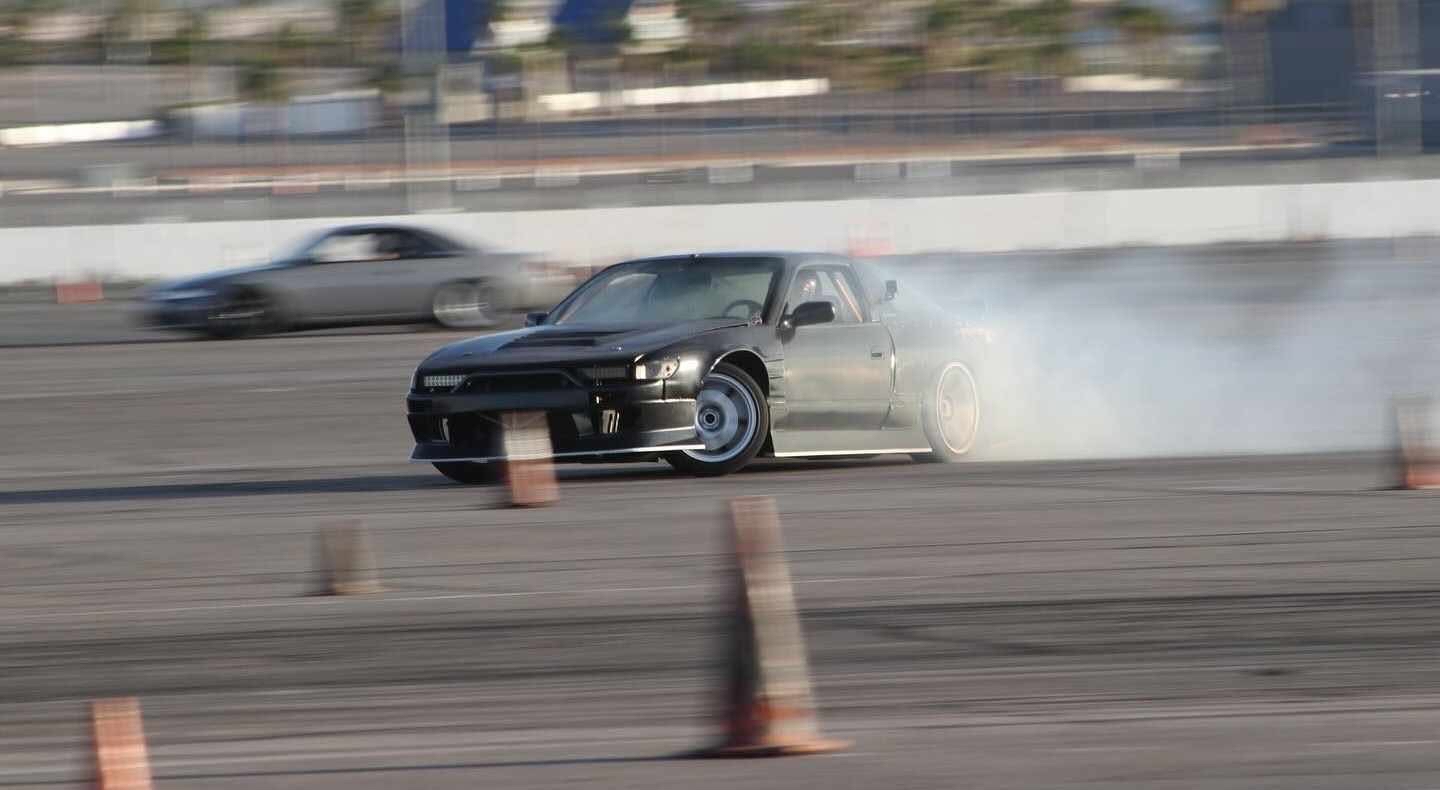
In technical terms, drifting is the controlled loss of traction in the rear wheels while maintaining forward momentum through a turn. The driver deliberately oversteers, using precise throttle input, steering angle, and sometimes braking to break traction and keep the car sliding along a desired line of travel. Once the rear wheels break loose, the driver countersteers—turning the wheel in the opposite direction of the corner—to balance the car and guide it through the drift.
The goal is to maintain a smooth, stable slide from entry to exit without spinning out or regaining full traction too early.
There are several techniques to initiate a drift, depending on the car and the driver’s style. Common methods include the clutch kick (momentarily disengaging and re-engaging the clutch to jolt the rear wheels), feinting (swaying the car to shift weight and unsettle the rear), and the handbrake (locking the rear wheels to induce a slide). Once initiated, maintaining the drift is a matter of managing throttle and steering inputs in real-time—a delicate balance that separates skilled drifters from beginners.
If you’re curious about drifting and want to see it up close, consider attending a local drift event as a spectator. Chances are, you’ll have the opportunity to ride along with an experienced driver who can talk you through the action and demonstrate the techniques in real time.
What Do I Need to Give It a Try?
Once you’ve got a car capable of drifting, the next big question is: “Now what?” In this section, we’ll walk through the essentials every aspiring drifter should know before hitting the track for the first time.
Taking your drift car out for the first time is an unforgettable experience. The best way to get comfortable with both your car and the sport is by attending a sanctioned drift event or visiting a licensed motorsports facility for a drift day. Fortunately, these venues are becoming increasingly accessible around the world, providing a safe and legal environment for learning and improving your skills.
Most events include a tech inspection before you can hit the track, so be sure to review the specific requirements in advance. Once your car is ready, you’ll need a few key pieces of personal safety gear. For most grassroots events, the basics include safety equipment like a Snell-rated helmet, long shirt or jacket and pants (preferably cotton), and closed-toe shoes.
With the essentials handled, it’s wise to bring a few extra tools and supplies: fire extinguisher, a tire pressure gauge, a jack and jack stands, spare rear tires, fluids like coolant and oil, and some good old-fashioned duct tape and zip ties—your new best friends in the pits.
Finally, don’t forget your event registration, any required fees, and most importantly, a positive attitude.
Drifting is as much about community as it is about driving, so show up ready to learn, have fun, and support your fellow drivers and fans.


Howdy, trying to reach out on social media cause my friends in Vegas Drift noticed my work was being used in the article an credited to Lukas, I don’t mind if my photos are used in the Article, I would just like that my photos, The red C6, Pink an Purple s13, and black 350z photos are credited to Cole Bryant of Bryant Media
It’s really cool to see my build making it into articles. Drifting is the fastest growing motorsport because it’s the most fun! Less ego measuring than any other time-based motorsport. The competitive aspect is there for those who seek it but the vibes at a typical Vegas Drift are all about safe seat time, improving individual skill, and making memories with friends. I’d be stoked to be involved in any future articles as well as give a ride to anyone at a Vegas Drift event, just come find me and say what’s up! @ThatredC6✌️