Travel with us way back to 2011, when Ford introduced the 5.0L Coyote to replace the 4.6L 3-valve.

After the demise of the 2003-04 Terminator Cobra, Mustang owners were limited to the Shelby offerings if they were looking for honest GM-killing power. Lucky for enthusiasts, Ford stepped in to fill the performance void by offering the new 5.0L Coyote motor.

Though it lacked the boost we loved so much in the 2003-04 Cobras, the new motor offered some impressive power. Thanks to things like the hike in displacement, variable cam timing and revised intake design, the power output of the 5.0L surpassed the previous 4.6L three-valve by more than 100 horsepower! That was a significant jump in power, but one that was necessary to keep pace with the oversized offerings from GM and Dodge.

The question for us was did the Coyote respond to aftermarket modifications like the legendary 5.0L and the more recent 4.6L motors did? To find out, we took Ford up on their offer to test a Coyote crate motor, complete with the Ford Performance controls pack to allow installation of the 5.0L up on the dyno.
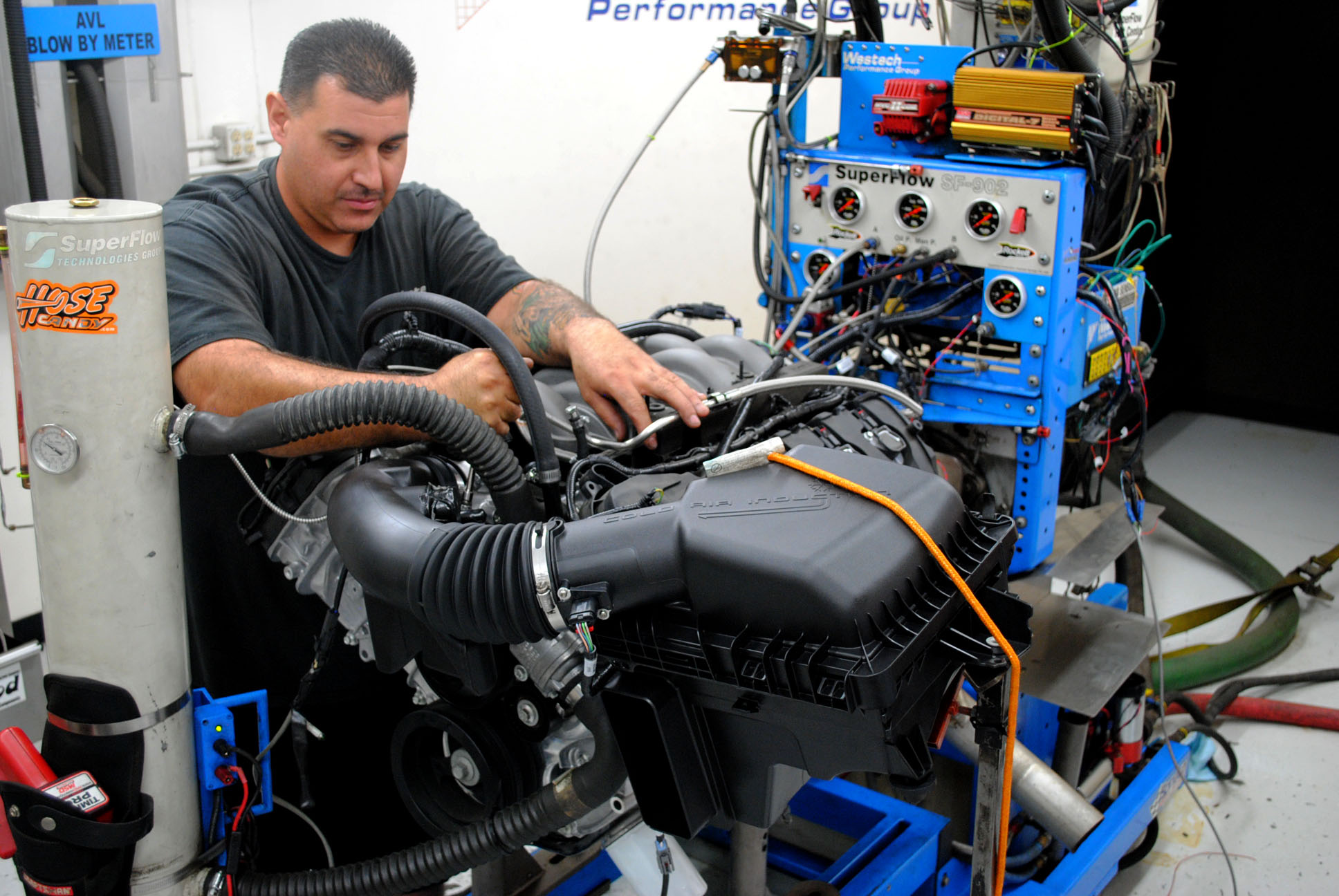
man installing manifold onto a coyote engine on dyno
Just how good was the then-new 5.0L Coyote motor and (more importantly) how well did it respond to modifications? (Image/Richard Holdener)

To get things started, we installed the motor up on the dyno, hooked up the Controls Pack and equipped the motor in typical (dyno) fashion, meaning an electric water pump, factory exhaust manifolds feeding short exhaust extensions and the factory MAF/air intake assembly.

Run in this manner, the Gen. 1 5.0L Coyote motor produced 448 hp at 6,600 rpm and 405 lb.-ft. of torque at 4,500 rpm. This compares to the rated output of 412 hp at 6,500 rpm and 390 lb.-ft. at 4,250 rpm. The difference between our numbers and those generated by Ford can be attributed to the lack of exhaust, accessories and the coolant temperature (165 degrees).

Fans of the original will not doubt remember that the 1987 5.0L was rated at a mere 225 hp and 300 lb.-ft. of torque and that the power curve had long since signed off at 6,500 rpm. By contrast, this modern 5.0L carried power beyond 6,500 and managed to thump out over 375 lb.-ft. of torque from 4,000 rpm to 6,000 rpm. Even down as low as 2,700 rpm, the Coyote produced 325 lb.-ft. of torque. The factory calibration produced 26 degrees of total timing (with less timing lower in the rev range) and a consistent air/fuel curve that hovered safely in the low-mid 12s. After back-up runs illustrated the repeatability of the combination, we were ready to start making changes.

First on the list of mods for our mod motor was a set of long-tube headers. These beauties came from American Racing Headers and featured 304 stainless steel construction, 3/8 inch (thick) flanges and merge collectors with scavenger pipes. The headers were available with either 1-3/4 or 1-7/8 inch primaries and a direct-fit X- or H-pipe. The system can be ordered with or without cats, and was designed obviously for off-road use only. Installation of the headers was straight forward and included an 18 inch collector extension to serve as the exhaust system.

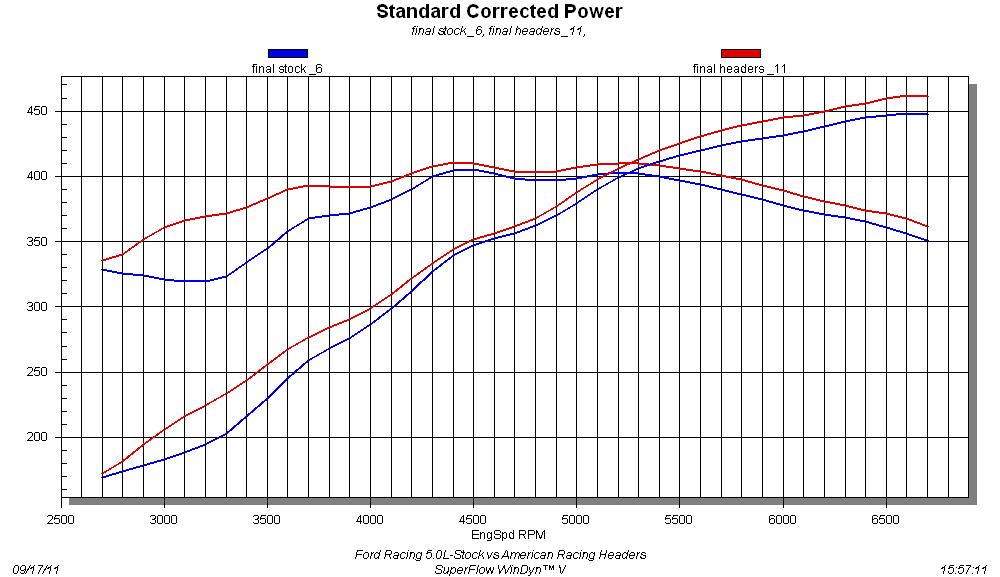
Equipped with the headers, the peak power numbers jumped to 462 hp at 6,600 rpm and 411 lb.-ft. at 4,400 rpm, but the torque output was up by as much as 49 lb.-ft. at 3,200 rpm.

Oddly enough, the installation of the headers altered the air/fuel ratio. Down were the gains were greatest, the air/fuel was now richer (as rich as 11.5:1), while at the top of the rev range the air/fuel was nearly perfect at 13.0:1. We suspect that additional power was available from the header swap had we the ability to further tune the combination, but know that the headers offered significant power gains through the entire rev range.

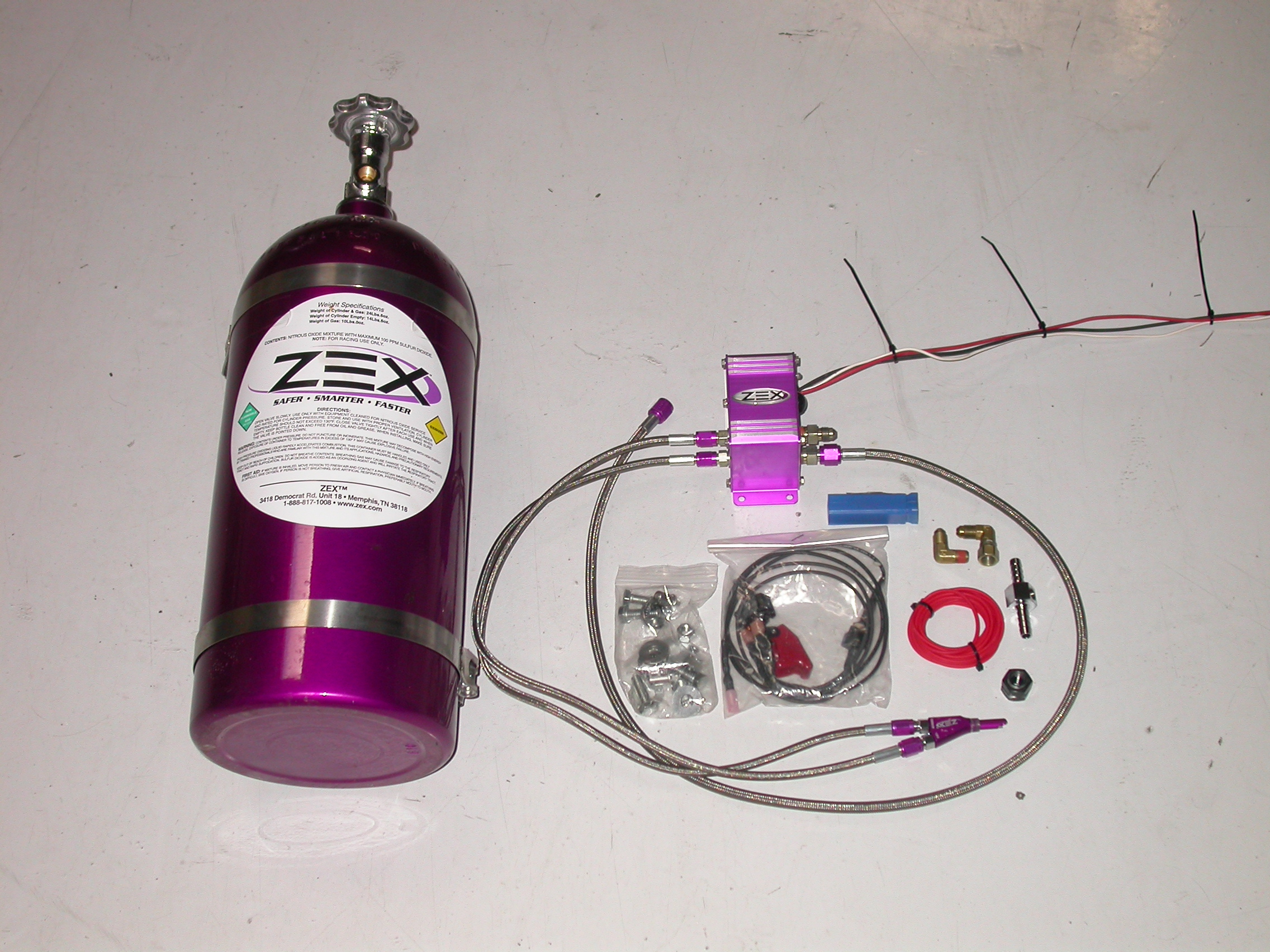
The real power came once we added nitrous to the Coyote. We installed a wet EFI nitrous kit from Zex designed specifically for the 2011 5.0L Mustang. The Zex nitrous kit featured Active Fuel Control that altered the fuel delivery according to the nitrous bottle pressure. The electronic TPS activation switch was designed specifically for the drive-by-wire throttle body and the Zex system was fully adjustable from 75 hp to 175 hp.

Given our limited ability to tune the ECU (we wanted to retard timing by 3 to 4 degrees), we decided to play it safe and start with the minimum power setting of 75 hp. Not wanting to detonate our brand-new Ford Performance crate motor, we opted to add a splash of Rocket Brand race fuel to the mix as well.

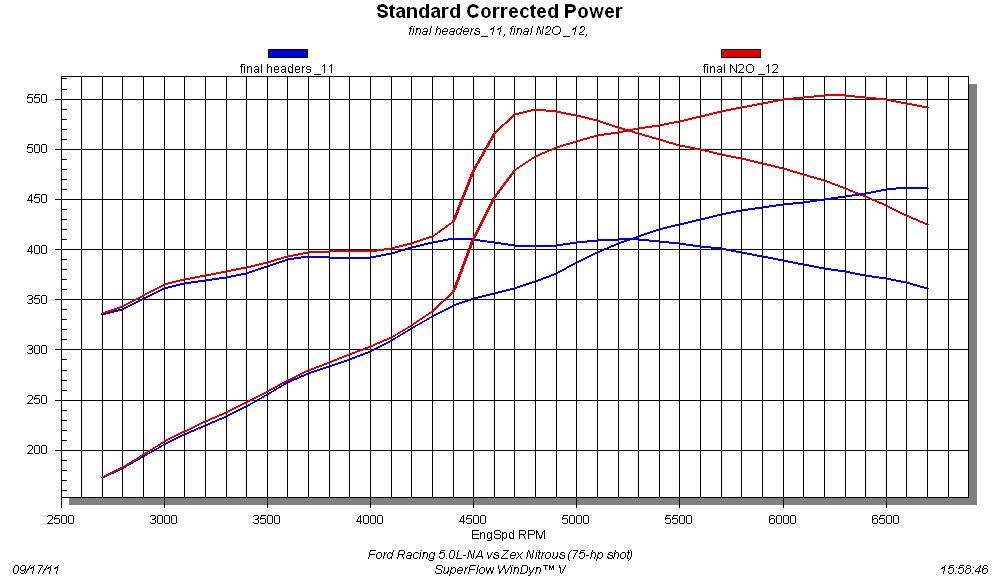
Using Westech’s custom bottle heater, we raised the bottle pressure to just over 900 psi and gave the system a whack. The Zex nitrous system performed flawlessly, and the peak power output jumped to 554 hp and 540 lb.-ft. of torque. The air/fuel mixture hovered safely once again near 11.5:1 and the Ford Performance 5.0L never missed a beat.

Later, the same motor would get a Kenne Bell blower, ported heads, cams and a turbo…
stock 5.0L coyote engine dyno chart
Replacing the stock exhaust manifolds with long-tube headers had a decided effect on the power curve. More than just an increase in peak power from 448 hp and 405 lb.-ft. of torque to 462 hp and 411 lb.-ft. of torque, the headers were worth as much as 48 lb.-ft. at 3,200 rpm. Best of all, the headers improved the power output through the entire rev range. It is also important to note that none of the gains came from tuning the combination—all we did was install the headers. (Dyno Chart/Richard Holdener)
stock 5.0L coyote engine with zex nitrous system dyno chart
Nitrous is great because it always adds power and a lot of it. Using the Zex wet EFI kit, we installed jetting to supply an additional 75 horsepower to our already potent Ford Performance crate motor. By optimizing the bottle pressure, the power output jumped from 462 hp to 554 hp. Torque production soared as well, from 411 lb.-ft. to 540 lb.-ft. The Zex nitrous kit offered nearly 100 hp through the entire rev range. (Dyno Chart/Richard Holdener)
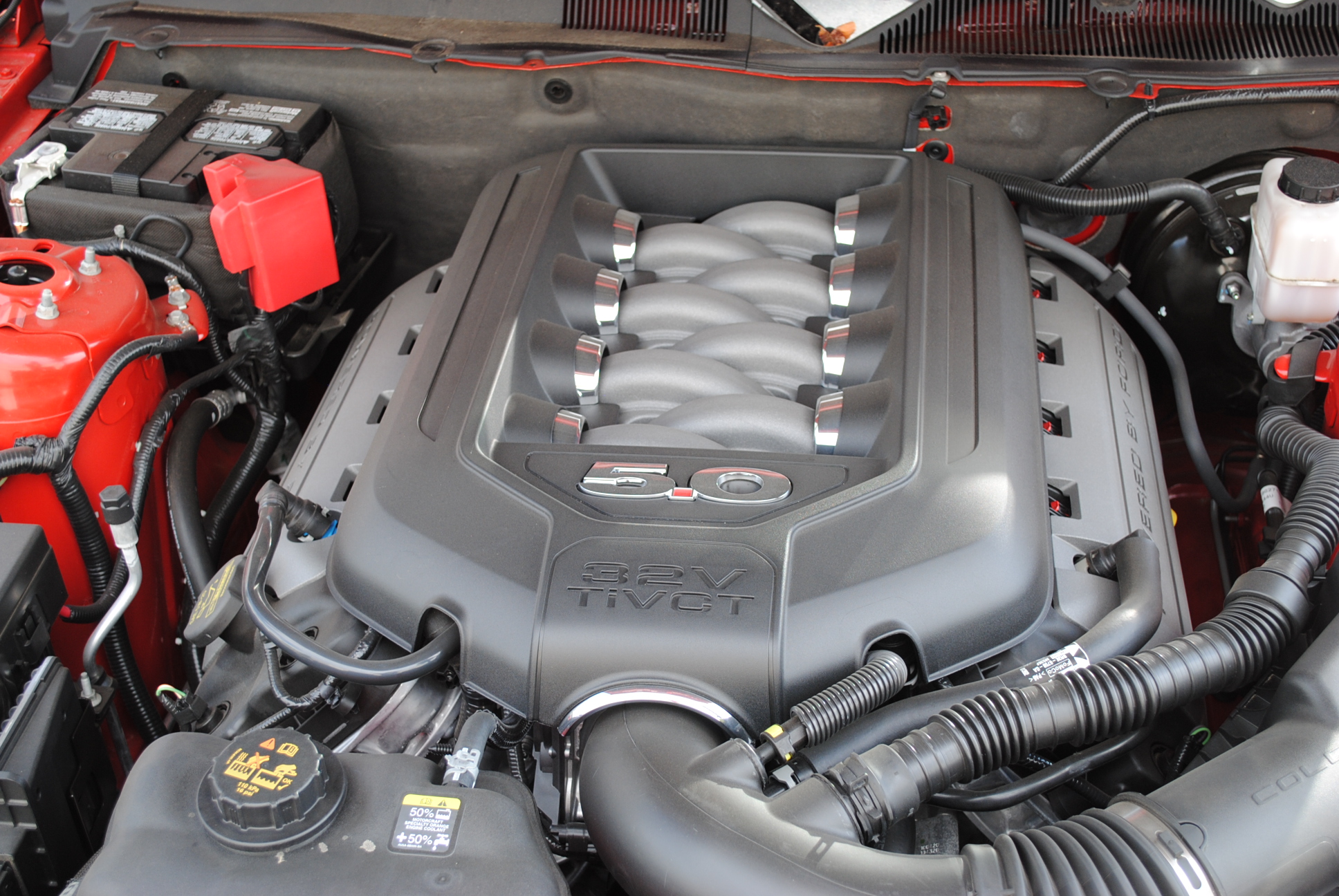
5.0L coyote V8 in a ford mustang
Installed in the 2011 Mustangs, the 5.0L Coyote motor offered increased displacement, variable cam timing and better cylinder heads compared to the previous generation four-valve Cobra motors. (Image/Richard Holdener)
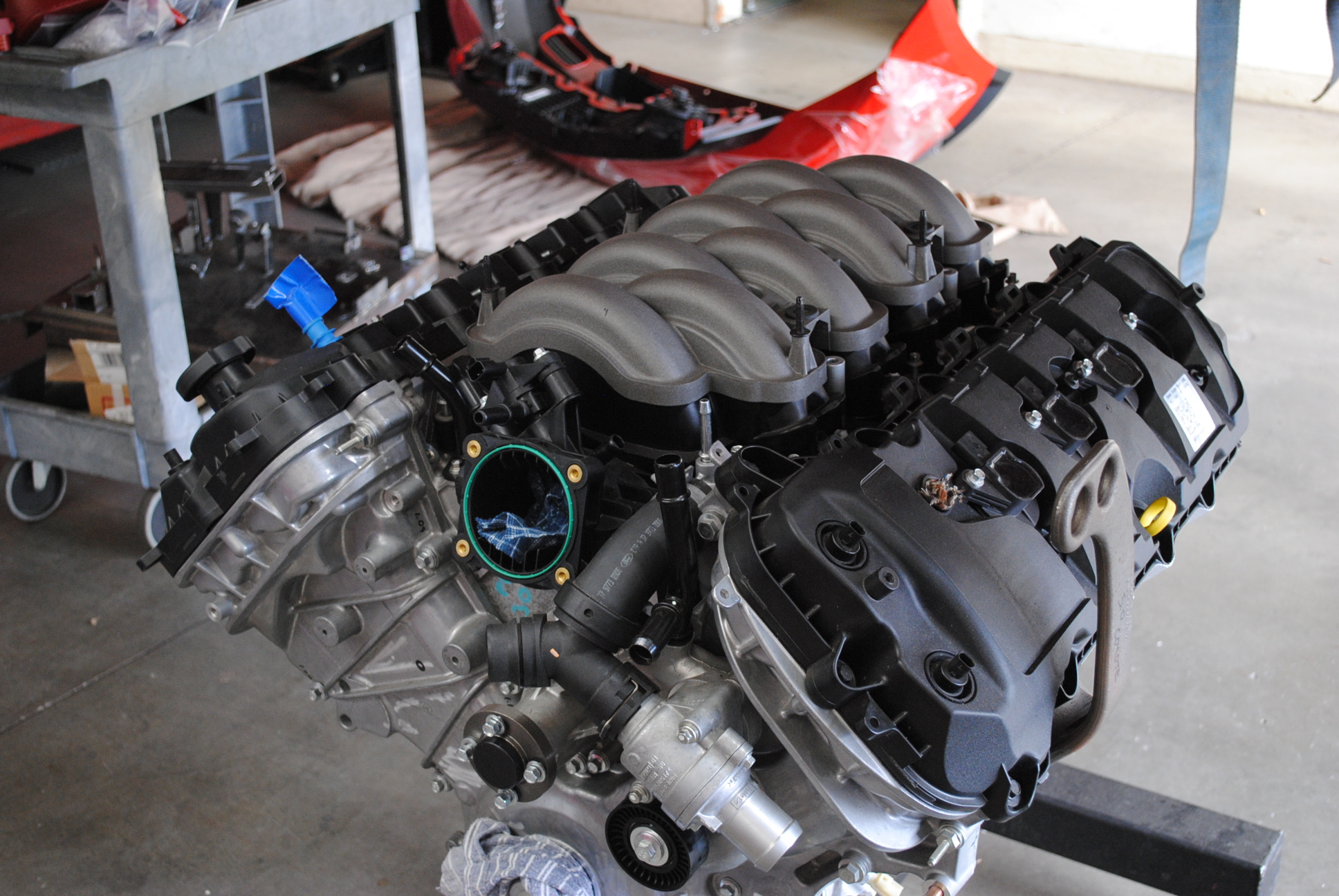
5.0L coyote v8 on an engine stand
Obviously not all Ford enthusiasts have or want the Coyote motor in a 2011 Mustang, so Ford Performance saw fit to offer the new 412-hp 5.0L Coyote in crate engine form (PN FMS-M-6007-M50). (Image/Richard Holdener)
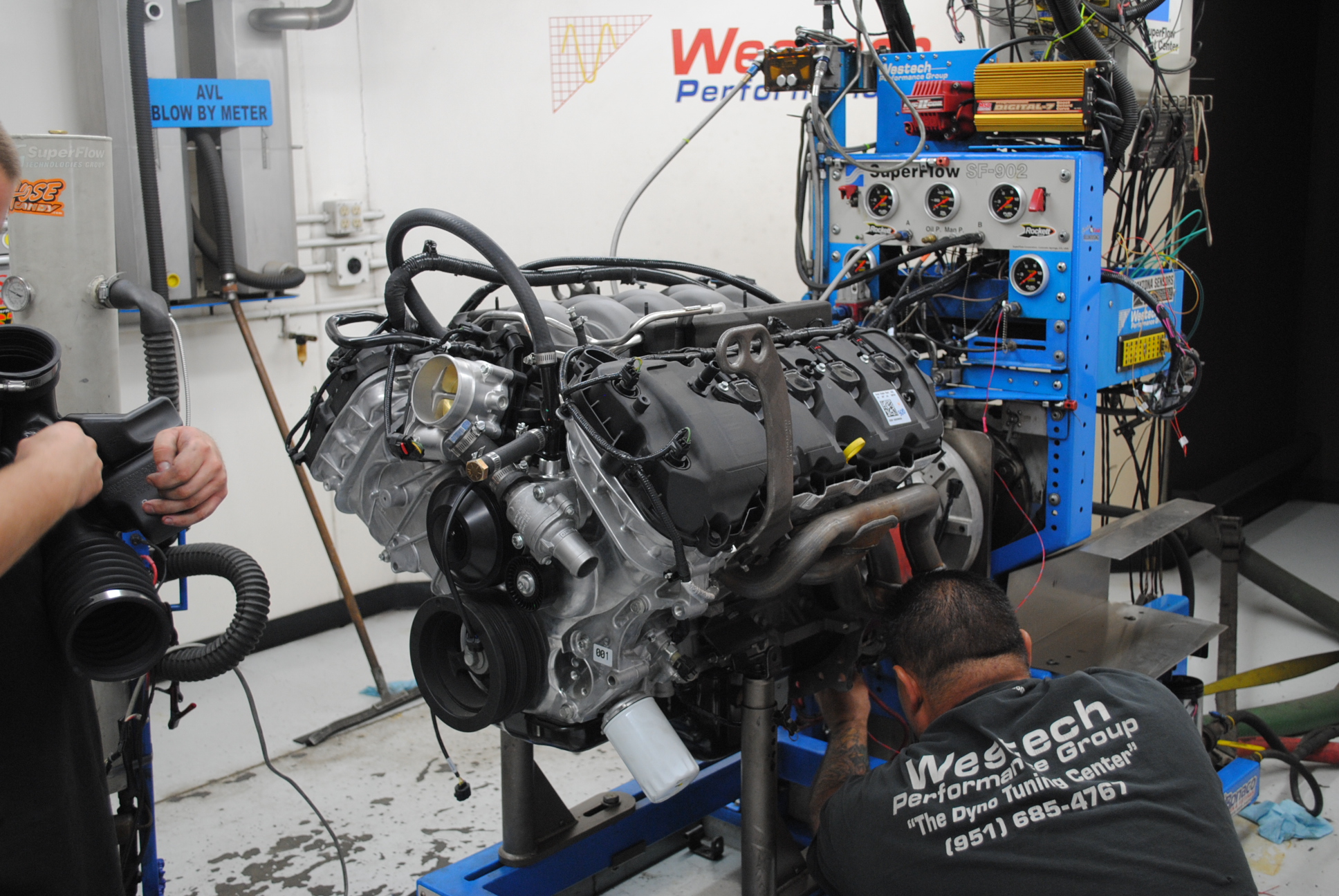
5.0L Coyote V8 on engine dyno
Running any new combination on the engine dyno requires a few hours of hook up. Things like motor mounts, water lines, and throttle activation all must be addressed before you can make any noise. (Image/Richard Holdener)
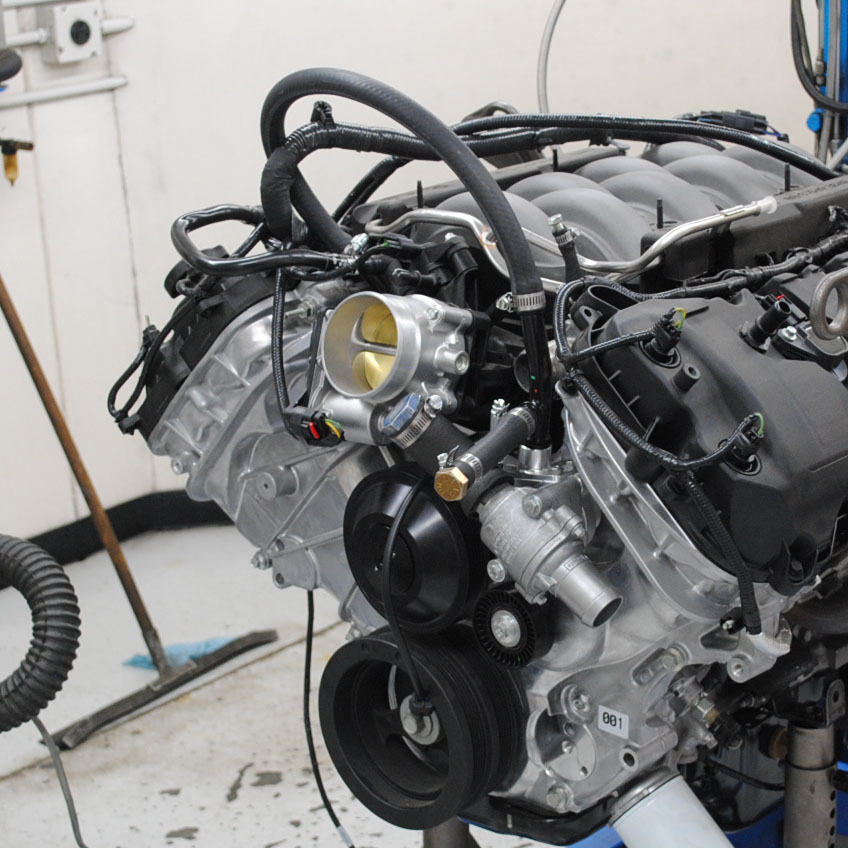
throttle body on a 5.0L Coyote V8
In addition to variable cam timing, the 5.0L Coyote also featured an 80mm drive-by-wire throttle body. Note also the lack of accessories and Meziere electric water pump. (Image/Richard Holdener)
profile view of manifold on a coyote V8
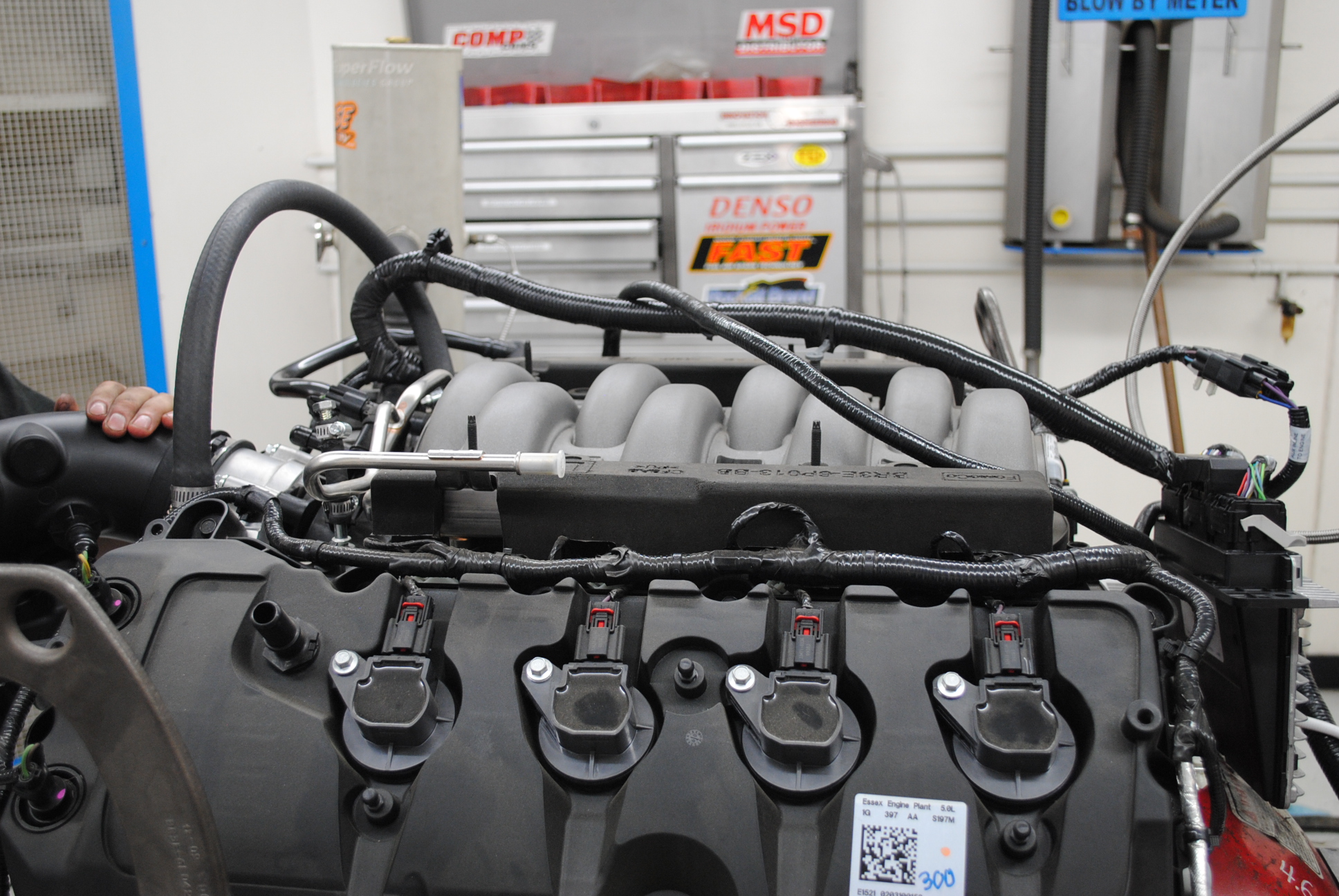
Feeding factory composite intake was a set of stock injectors. The fuel rail was fed by a powerful Aeromotive A1000 fuel pump. (Image/Richard Holdener)
Coyote V8 on an engine dyno test pull
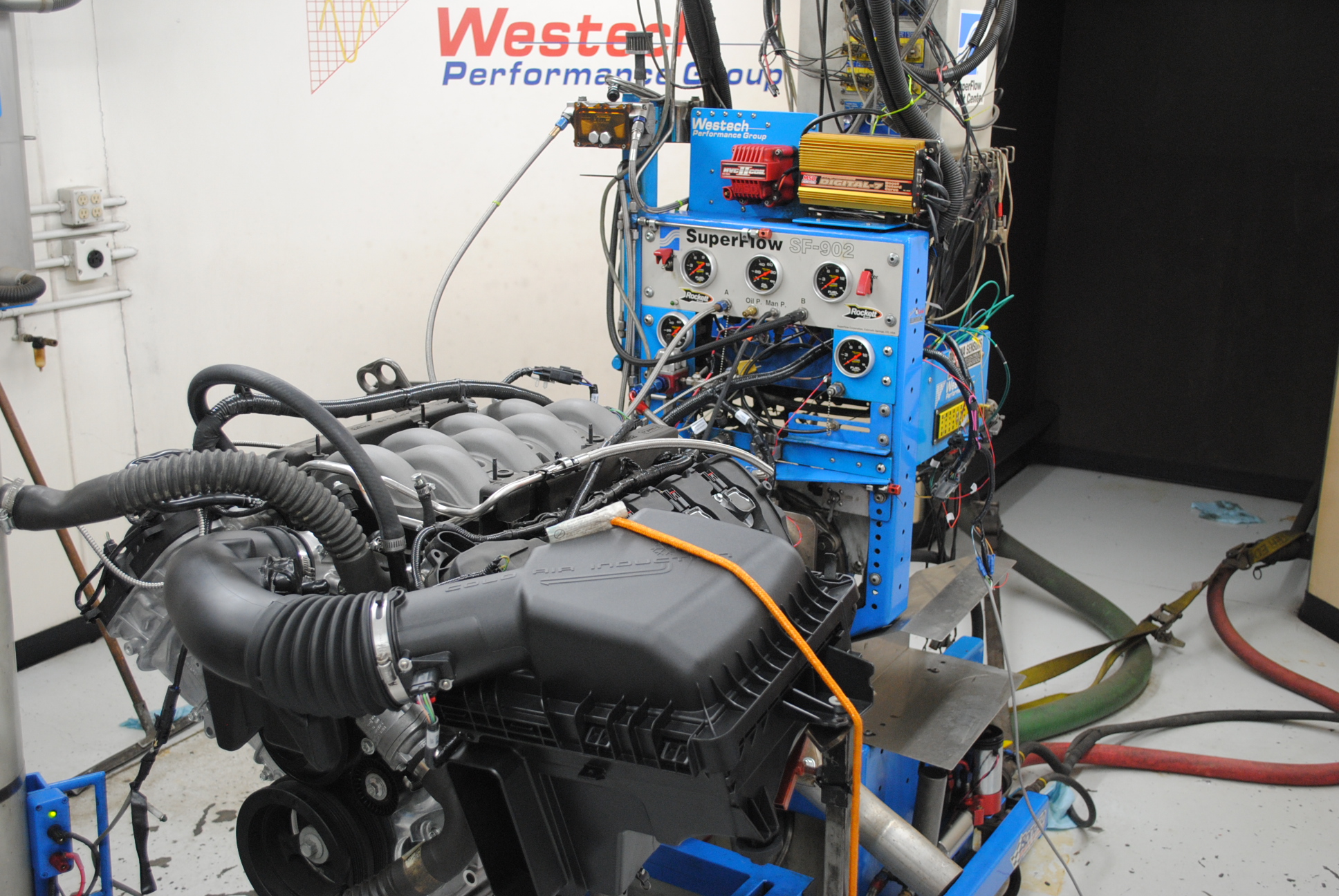
Included in the Controls Pack from Ford Performance was the factory airbox, MAF, and air intake system. There is more power to be had by replacing the stock air box and MAF sensor, but that test will have to wait until we get our programming. (Image/Richard Holdener)
5.0L Coyote exhaust header on dyno
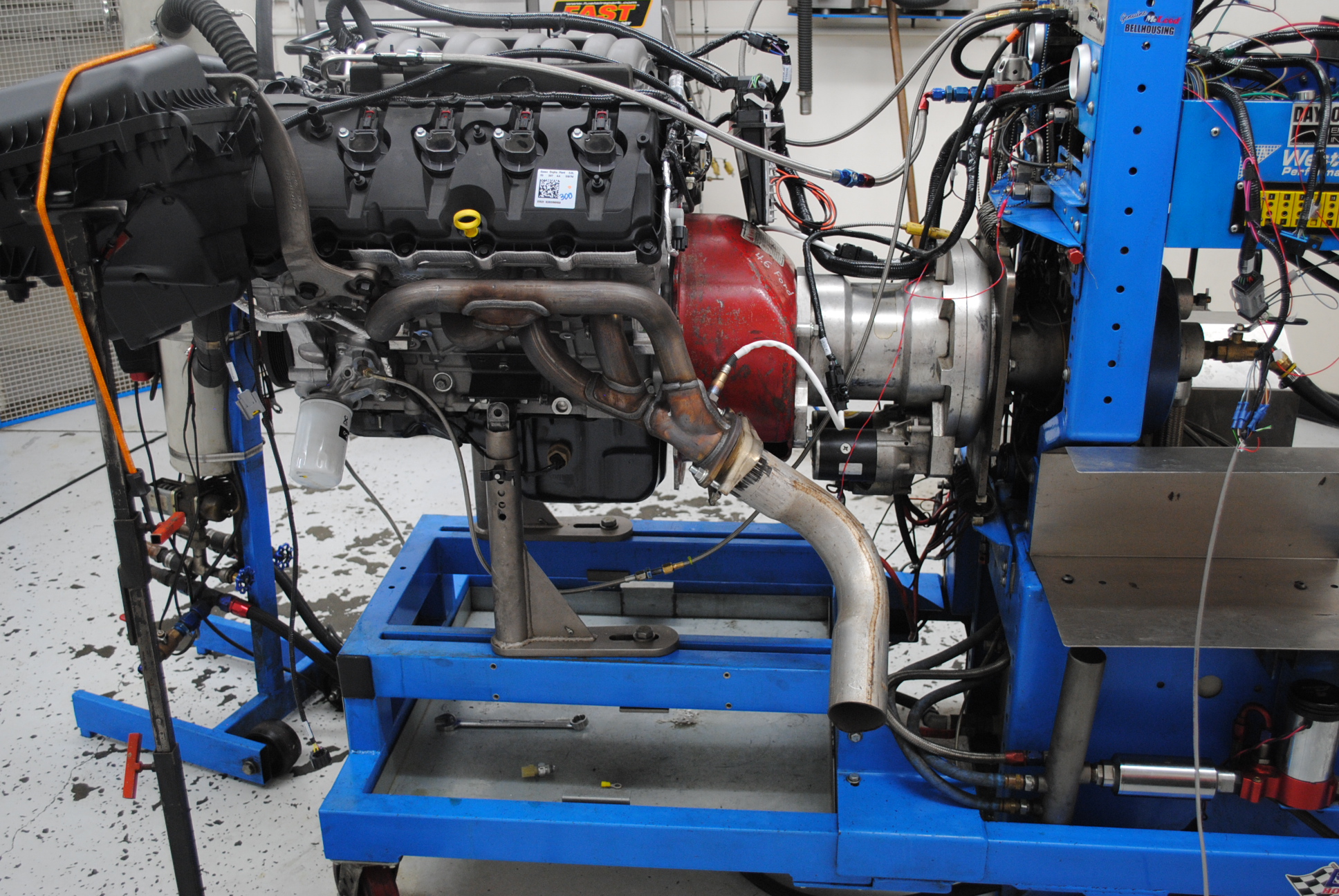
The Ford Performance crate motor was shipped with a set of factory tubular exhaust manifolds. Note our shorty exhaust system run on the engine dyno. (Image/Richard Holdener)
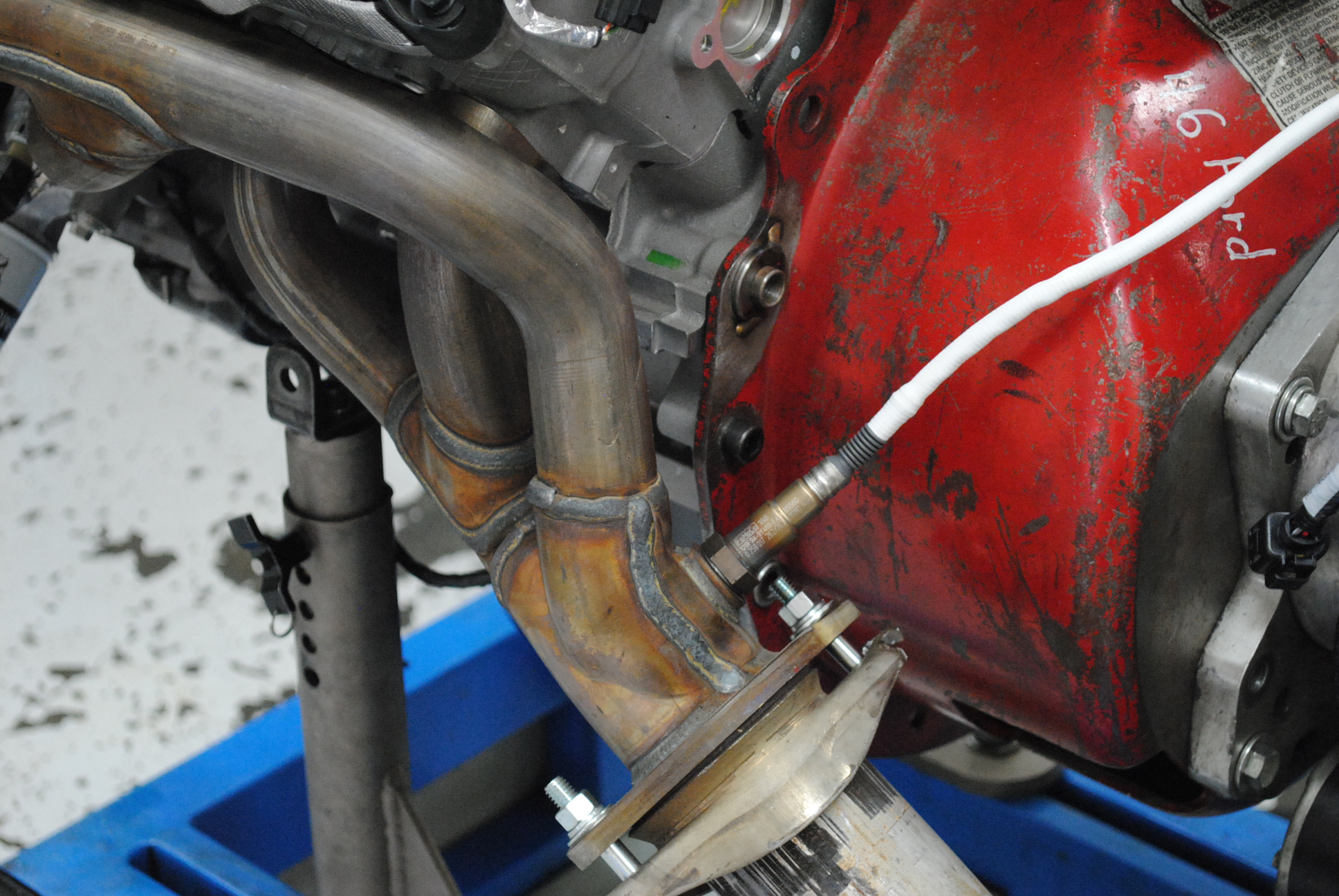
o2 sensor on a coyote V8 exhaust header
The Controls Pack also included a pair of oxygen sensors, but we added a third to log the air/fuel mixture independently of the Ford ECU. (Image/Richard Holdener)
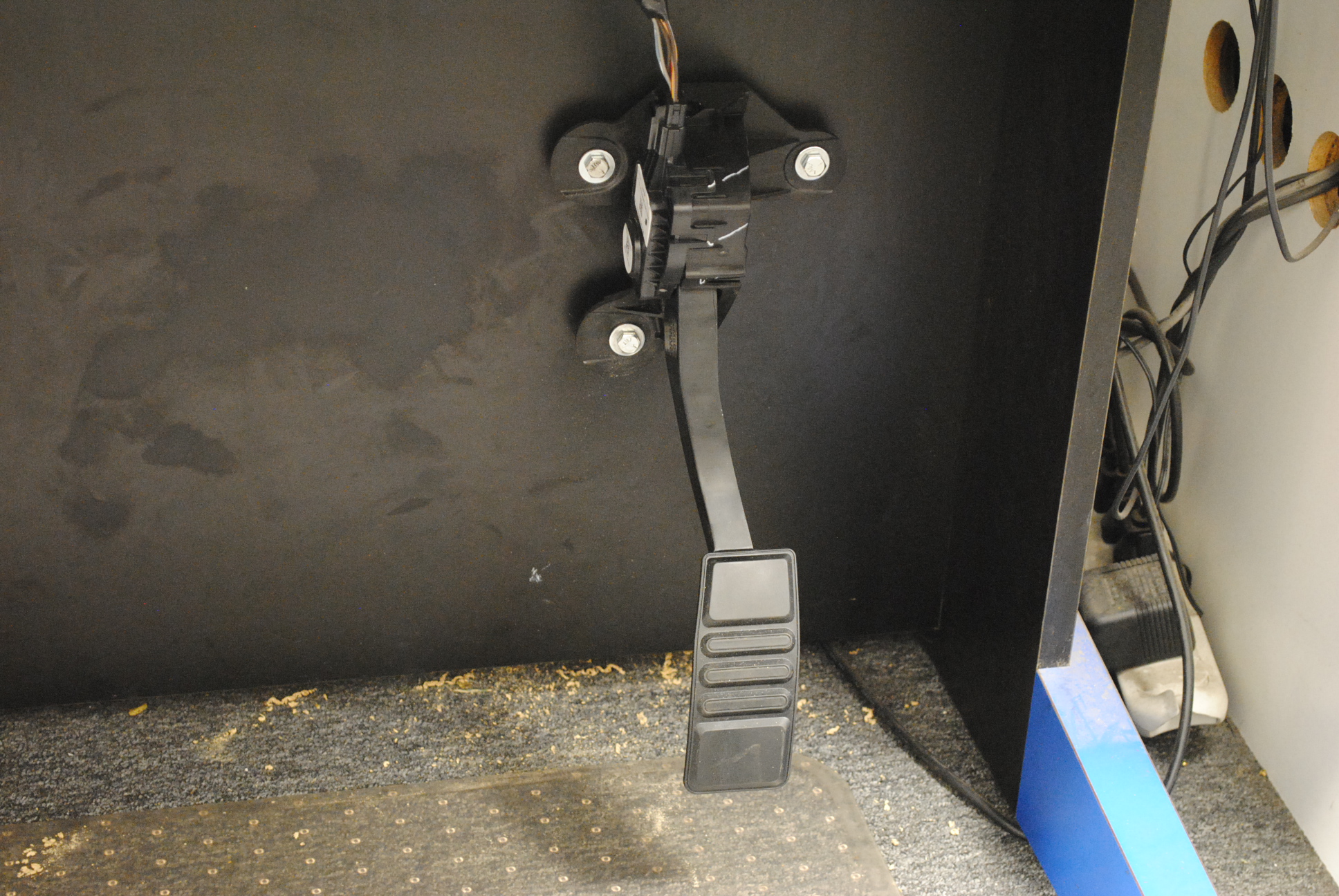
ford coyote v8 throttle pedal mounted on dyno bulkhead
Also included in the Controls Pack was this drive-by-wire throttle pedal assembly. Running the dyno by stomping on the loud pedal was pretty cool. (Image/Richard Holdener)
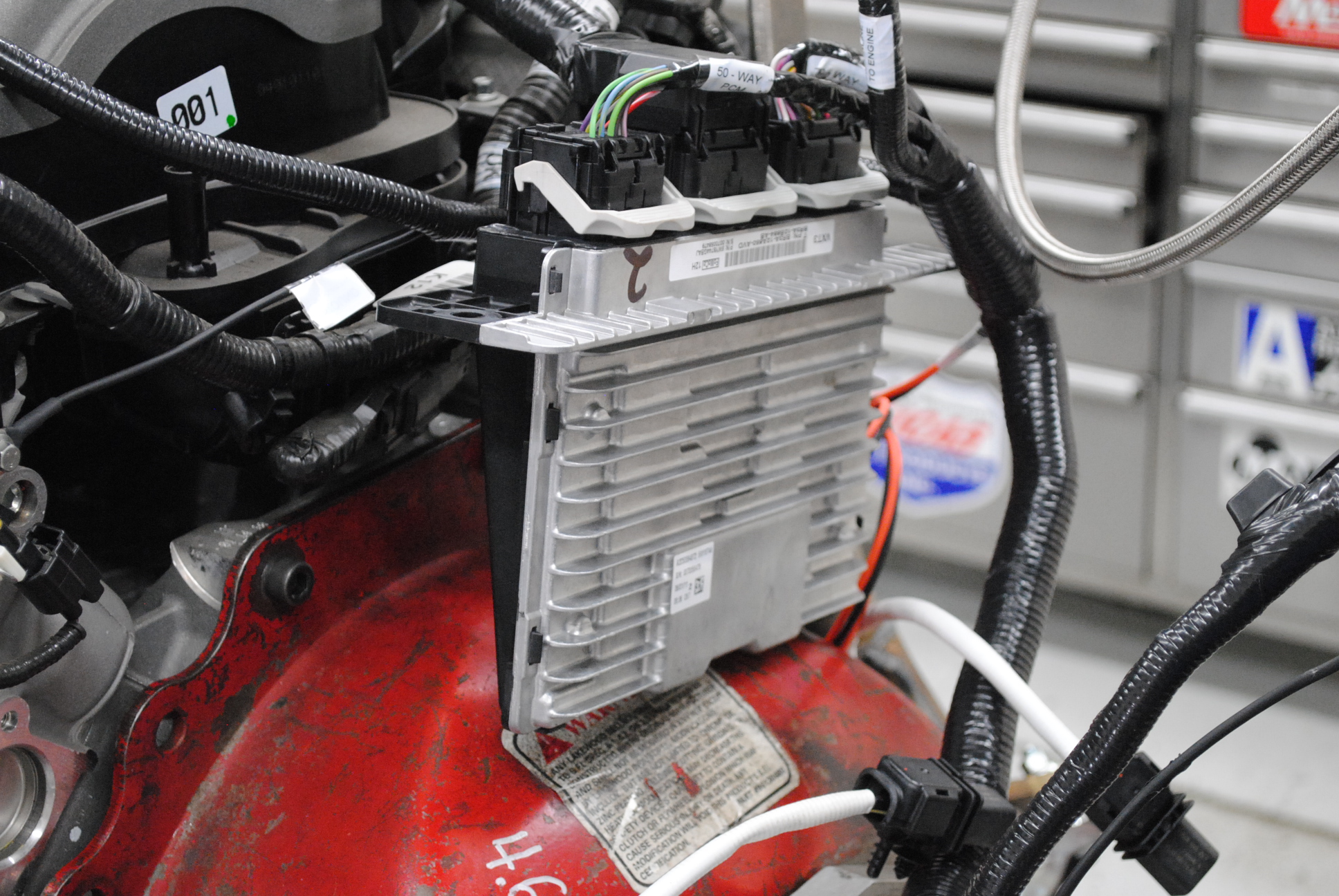
ford ECU for a coyote V8 mounted on dyno
The ECU provided in the kit was a simple plug & play. Ford Performance purposely minimized the number of loose wires to streamline the installation. Run in stock trim, the 5.0L Coyote produced 448 hp and 405 lb.-ft. of torque. (Image/Richard Holdener)
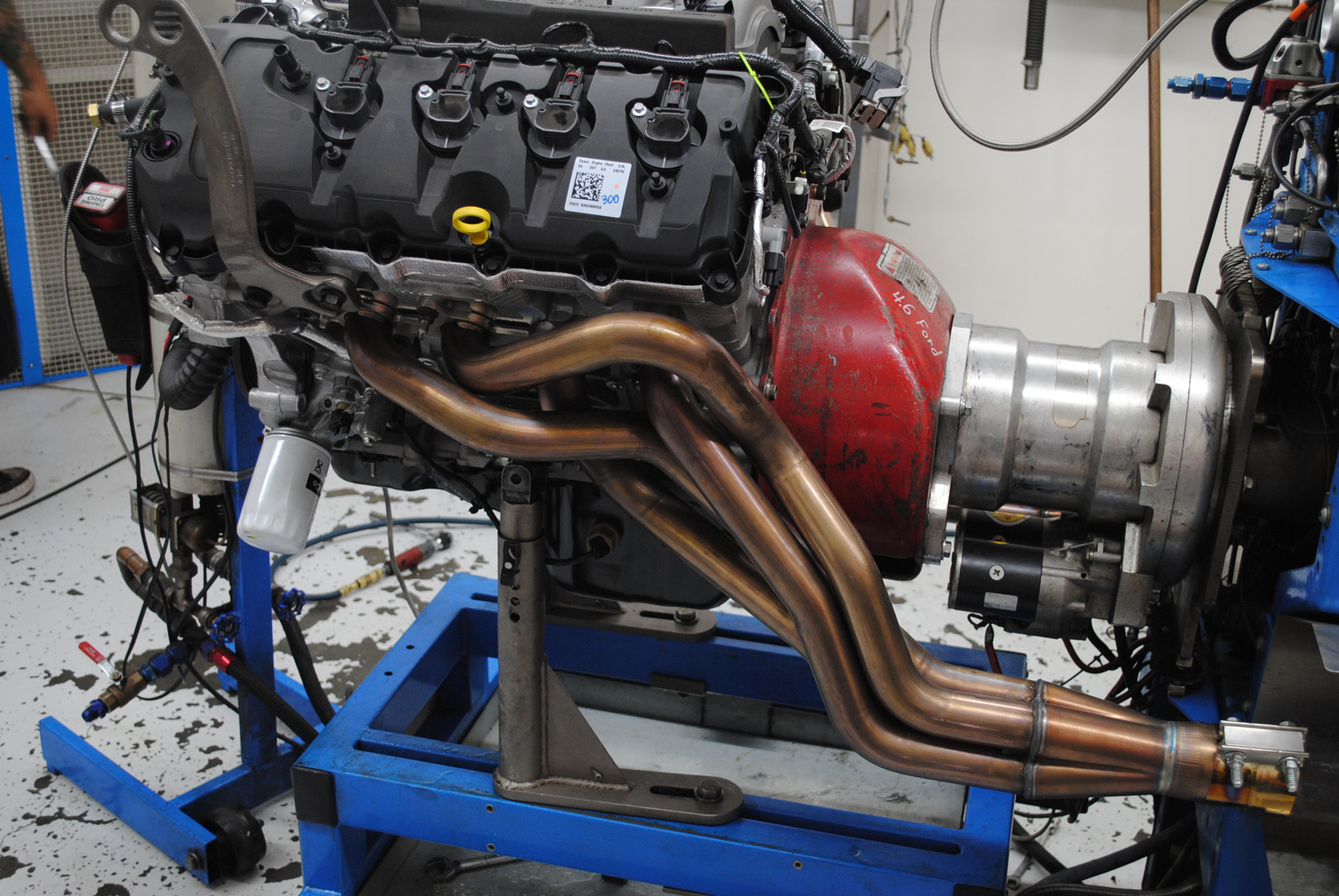
long tube headers on a Ford Coyote 5.0L dyno run
After our baseline runs, we installed these 1-3/4 inch stainless headers from American Racing Headers. The headers improved the power output from 448 hp to 462 hp, but torque production was up by as much as 48 lb.-ft. at 3,200 rpm. (Image/Richard Holdener)
Zex Nitrous system components on floor
Zex supplied a wet EFI nitrous kit designed specifically for the 2011 Mustang. The Zex kit was adjustable from 75 hp to 175 hp. (Image/Richard Holdener)
Zex nitrous manifold on dyno
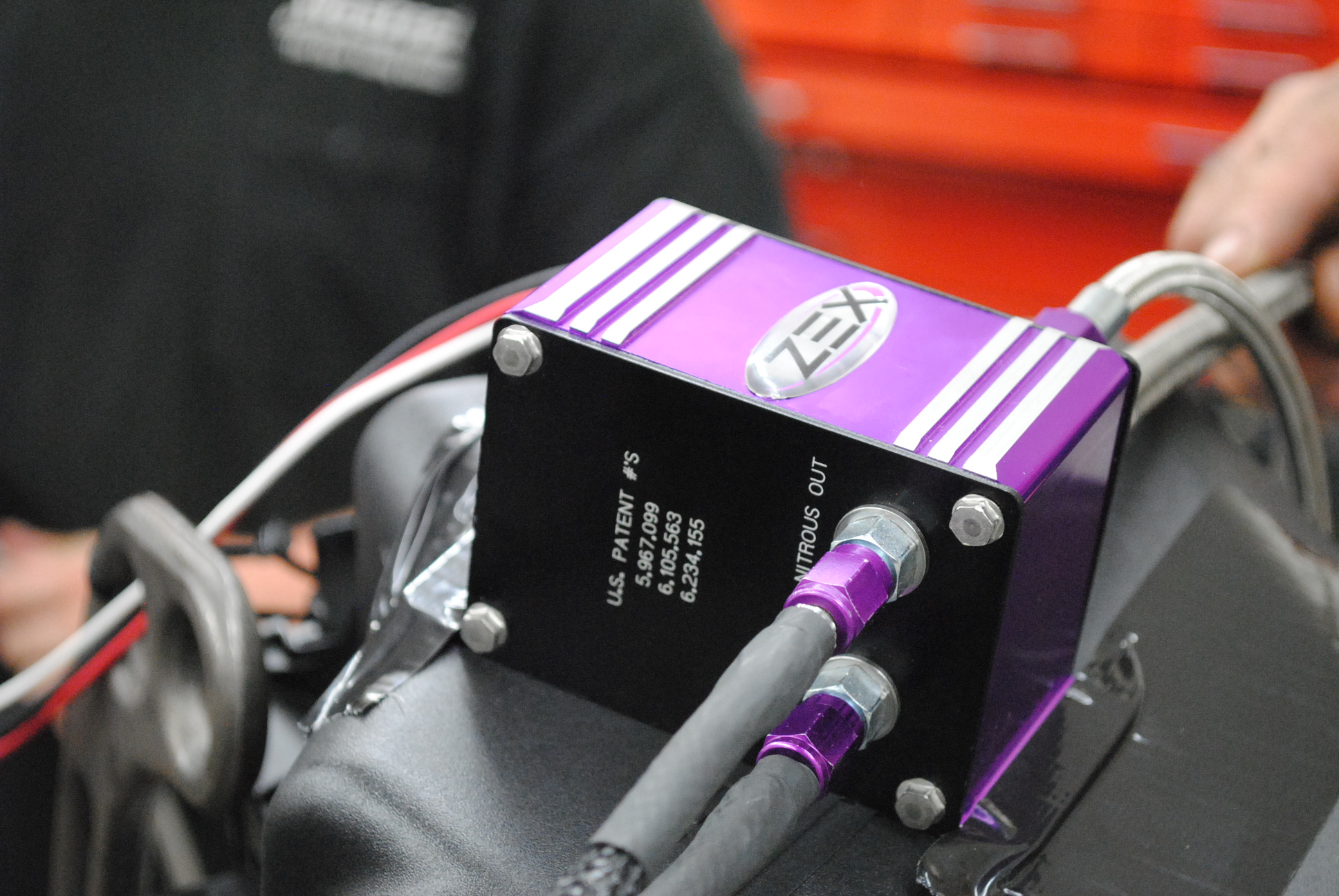
The Zex kit featured this unique controller that actually learned the WOT voltage from the TPS. This safety feature ensured nitrous activation only under wide open throttle. (Image/Richard Holdener)
zex nitrous Y-fitting installed in intake tube
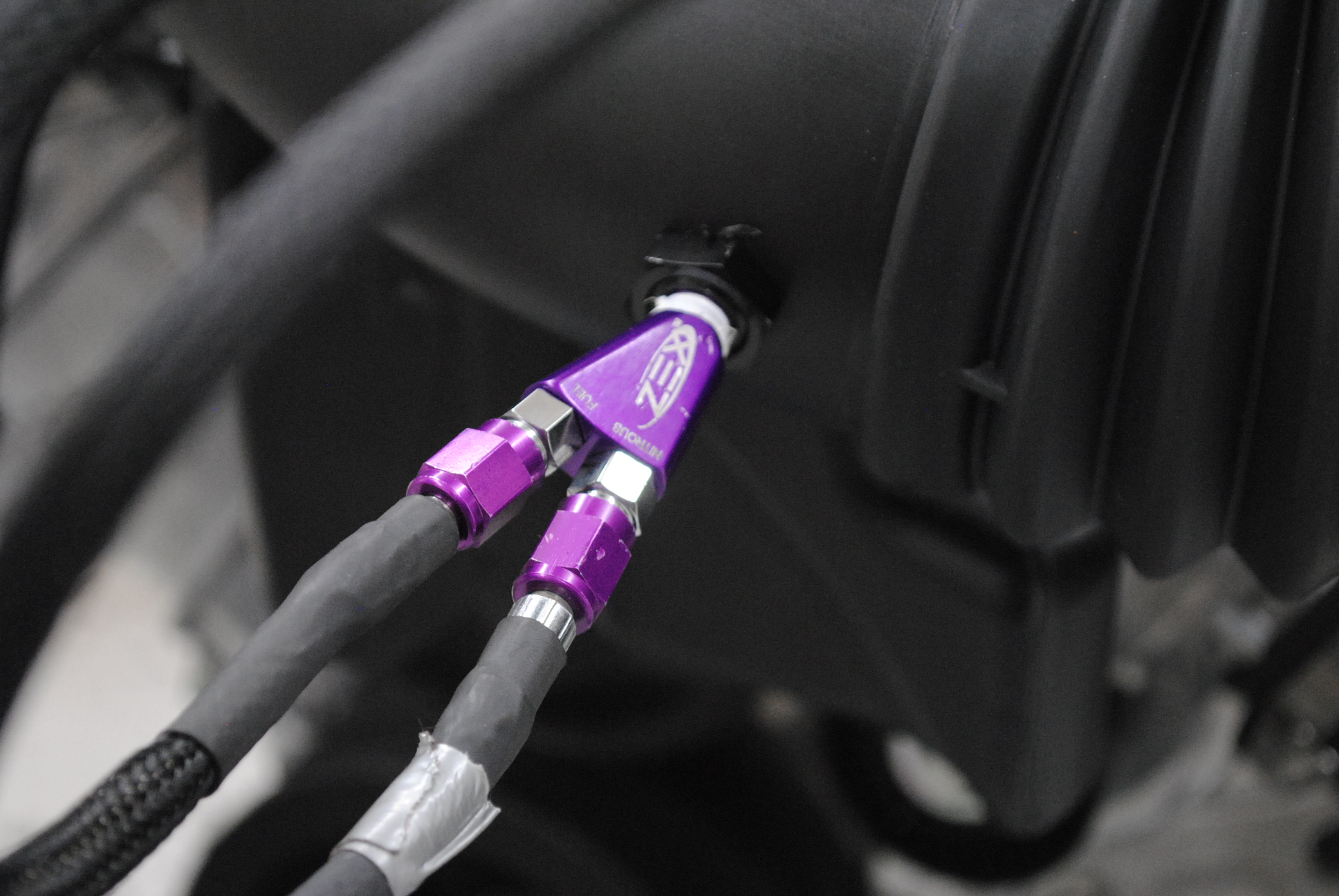
The Zex kit featured a single fogger nozzle that combined the fuel and nitrous. We installed the nozzle in the intake tract after the mass air meter. (Image/Richard Holdener)

zex nitrous plumbing installed on a Coyote V8
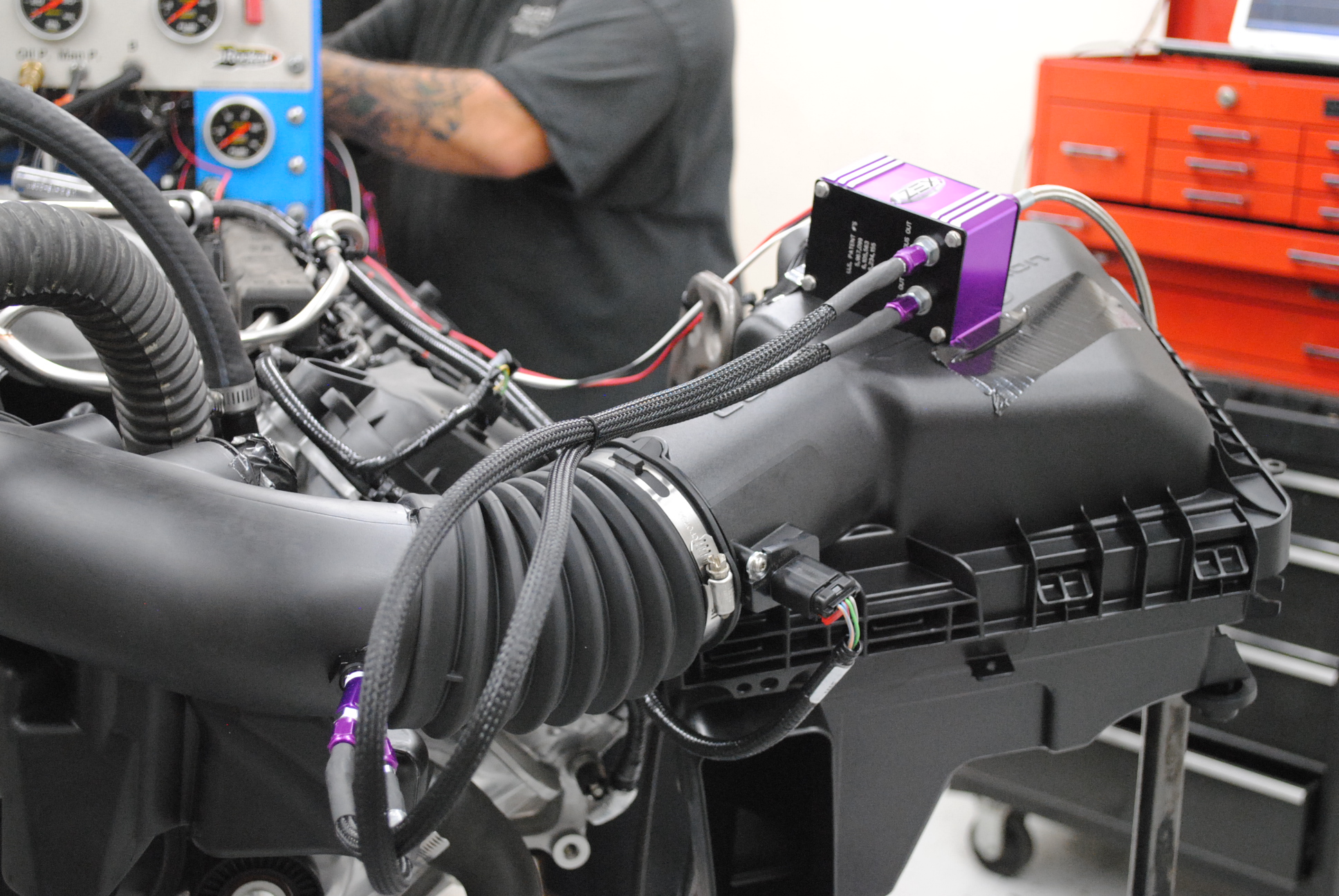
Run with jetting to supply an additional 75 horsepower, the Zex nitrous kit improved the power output from 462 hp and 411 lb.-ft. to 554 hp and 540 lb.-ft. of torque. (Image/Richard Holdener)

Share this Article

Richard Holdener is a technical editor with over 25 years of hands-on experience in the automotive industry. He's authored several books on performance engine building and written numerous articles for publications like Hot Rod, Car Craft, Super Chevy, Power & Performance, GM High Tech, and many others.