
From the early Flathead era to today’s overhead cam configurations, automotive cylinder head design has evolved greatly over the years. Some of the biggest changes have taken place within the combustion chamber, where new chamber designs have literally reshaped the way cylinder heads help produce power.
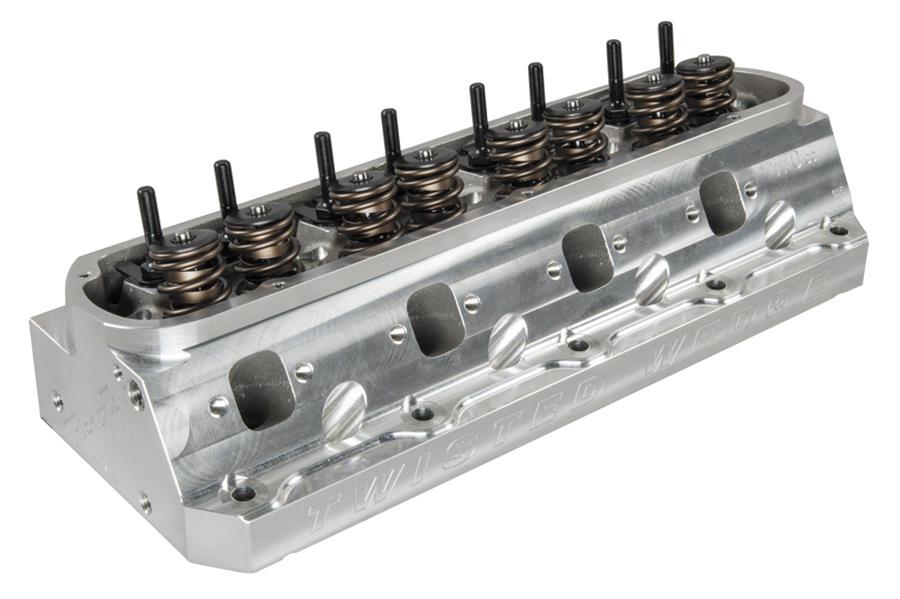
One of the most impactful changes came from the folks at Trick Flow Specialties when they introduced the Twisted Wedge 170 heads back in 1996. This innovative design set the small block Ford world on fire back in the 1990s, but the same things that made it so dominant then still set it above the competition today.
What makes the Trick Flow Twisted Wedge head so great?
It’s all about the valve angle.
Rather than all the valves being on the same angle and centered within the combustion chamber like in traditional in-line wedge heads, Twisted Wedge heads rotate the intake/exhaust orientation within the combustion chamber. This alters the valve angles to be shallower and moves the intake valve away from the cylinder wall to reduce valve shrouding.
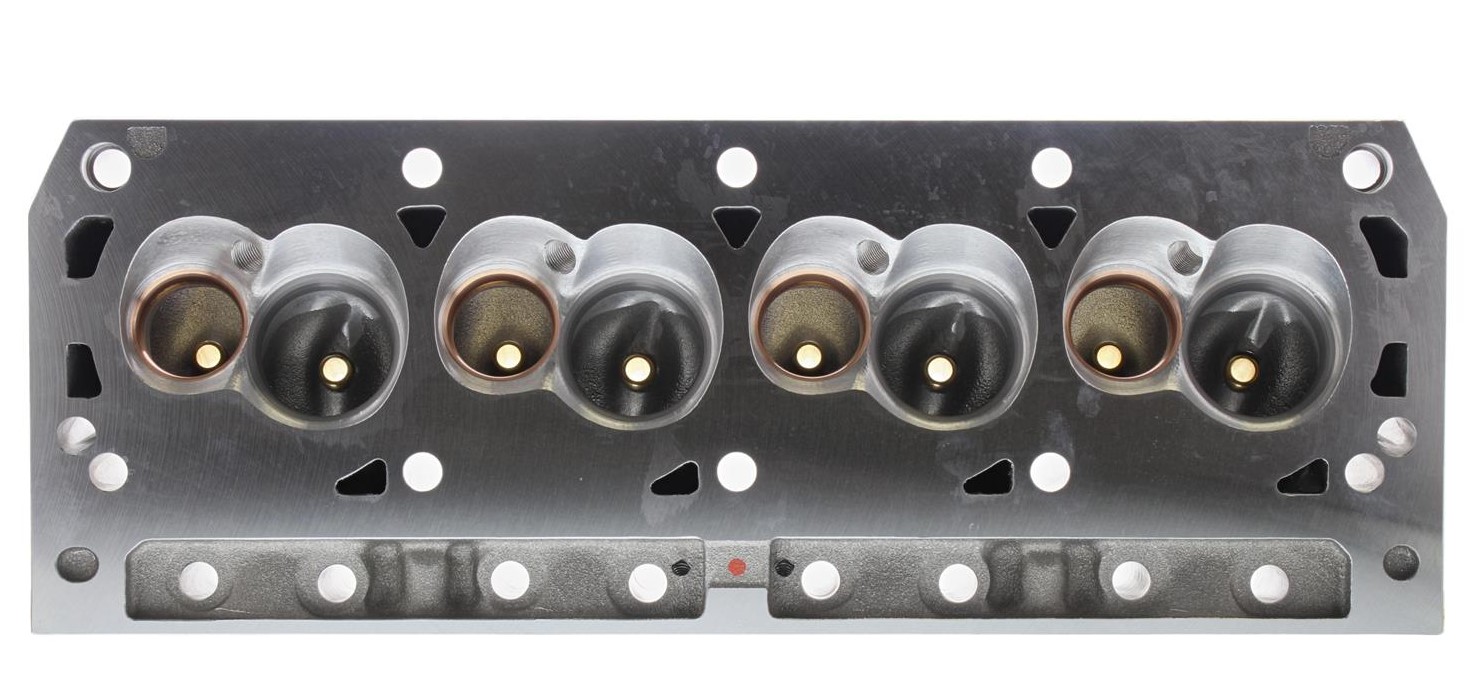
“A shallower valve angle improves airflow by reducing valve shrouding and positioning the valve more optimally within the bore throughout the entire lift range,” Trick Flow’s Cory Roth said.
This significantly improves flow at higher lift, and the shallower valve angle improves piston-to-valve clearance for higher lift cams.
The Twisted Wedge configuration also makes it possible to create a smaller combustion chamber size for improved compression (available in 58cc and 61cc configurations, compared to 63-66cc for the stock GT40 head). It also allows a more centrally located spark plug which promotes combustion efficiency and more even piston loading during the power stroke.
“We designed the Twisted Wedge with a 15° intake and 17° exhaust valve angle, compared to the stock 20° configuration. This tightens the combustion chamber to increase compression while improving piston-to-valve clearance, allowing the use of higher-lift camshafts with stock pistons,” Roth explained.
Over the years, Trick Flow has been able to complement the performance benefits of the Twisted Wedge design with additional technological advancements. For example, Trick Flow Twisted Wedge heads come with CNC profiled combustion chambers to further minimize valve shrouding, promote flow, and incorporate larger quench pads. Multi-angle competition valve jobs and back cut, swirl polished stainless steel valves are optimized to work together to maximize airflow. Trick Flow has also developed what it calls “Fast as Cast” port treatment, which offers vastly superior air flow and fuel atomization compared to as-cast ports at a lower cost than fully CNC-ported heads.
Trick Flow has also expanded the amount of applications, intake volumes, and even valve angles under the Twisted Wedge umbrella. For example, you can get a Twisted Wedge head for your 4.6/5.4L mod motor. You can also get the heads with 190cc and 205cc intake runner volumes, and the 11R version includes 11-degree intake valve angles for even greater airflow.
We’ve shown the Twisted Wedge in action on a variety engine builds on this very site:
The Trick Flow team says it’s heard a variety of myths related to the Twisted Wedge design. The most prominent—even perpetuated by respected journalists and engine builders—is that the Twisted Wedge 170 won’t work with stock pistons. According to Trick Flow engineers, the 170 does indeed work with stock pistons and many of their customers currently running this specific cylinder head are using stock pistons.
“The Twisted Wedge design promotes great airflow and has a really good, efficient chamber design,” Trick Flow’s Ryan Norman said. “One of the other huge advantages would be that end users can put a set of Twisted Wedge heads on a stock bottom end small block Ford and not have to worry about piston to valve clearance with larger-than-stock camshafts. We fully believe that there is not a better low-budget, entry level cylinder head on the market, especially with our latest update.”
The real key is cam selection.
Trick Flow’s Stage 1 or 2 cams are really in the sweet spot of where the TW170 performs best, particularly on a stock 302 short block. Many customers opt for Trick Flow’s Stage 1 camshaft to use with the TW170 head, but the Stage 2 cam will even clear in most cases. However, valve-to-piston clearance isn’t as simple as just looking at total valve lift. Trick Flow is quick to point out that lift, total duration, ramp rate, LSA, and timing are all factors, and the tight spot is really at 10° ATDC when the valve is still opening. That makes degreeing the cam properly and checking piston-to-valve clearance extremely important.
“We recommend good quality components for longevity such as Trick Flow rocker arms, MLS head gaskets, head bolts, and rocker stud girdles,’ Norman said. “When it comes to performance, the Twisted Wedge 170 cylinder heads make great power with any of our intakes manifolds and our 3001 and 3002 camshafts. We have a few top end kits available that make 350-360hp and 350-370 ft.-lbs. of torque and include everything needed to bring durability and power to a stock Ford 5.0.”
If your build and performance goals need more cam, then you’re likely at the point where you also need more displacement, and you should also consider Trick Flow’s higher performance CNC ported Twisted Wedge 11R.
As the quest for higher performance continues, we’re likely to see even more cylinder head innovations.
But, if the past 30 years or so is any indication, few will have the staying power of the still-popular Twisted Wedge.


Comments