
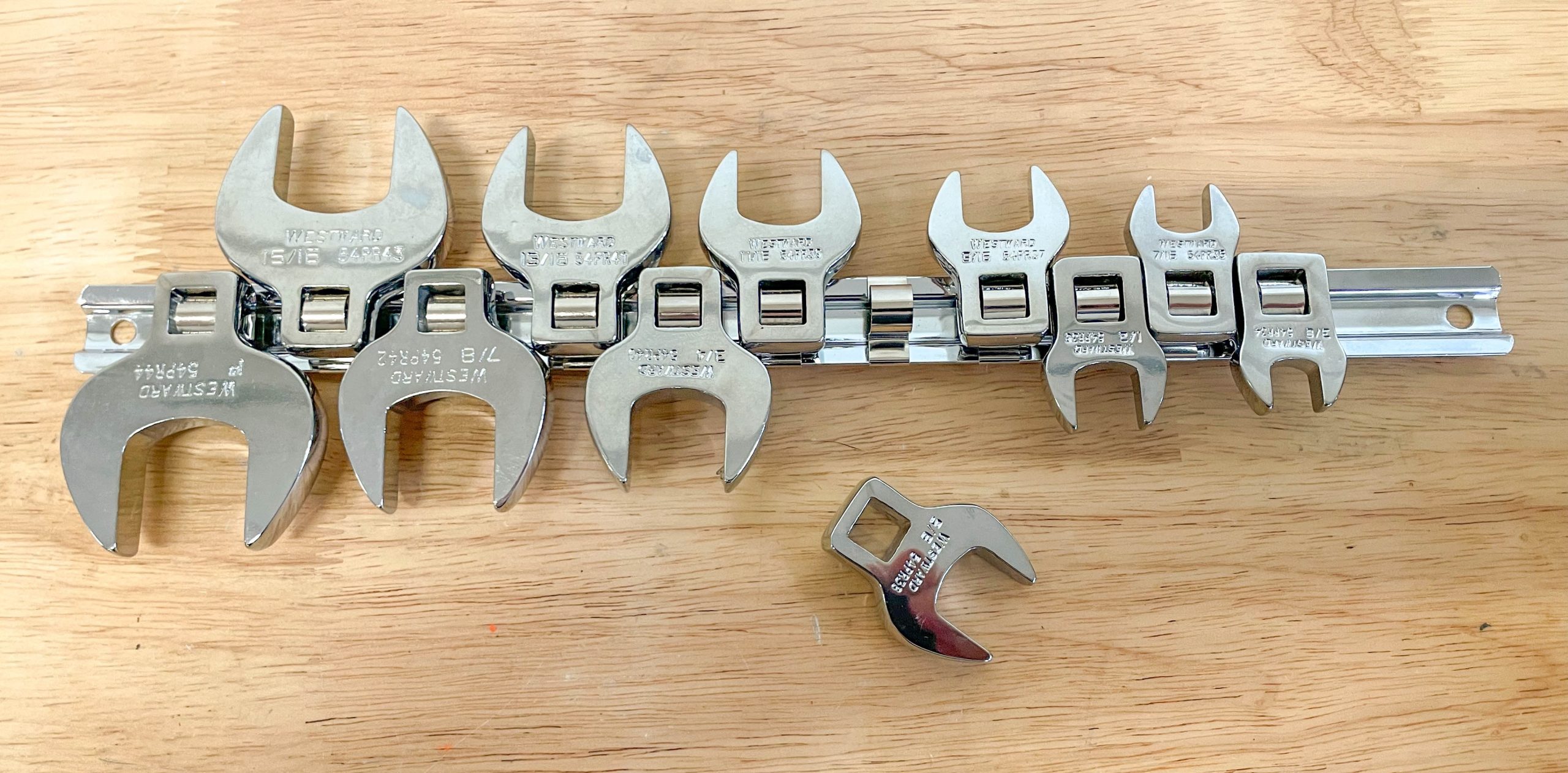
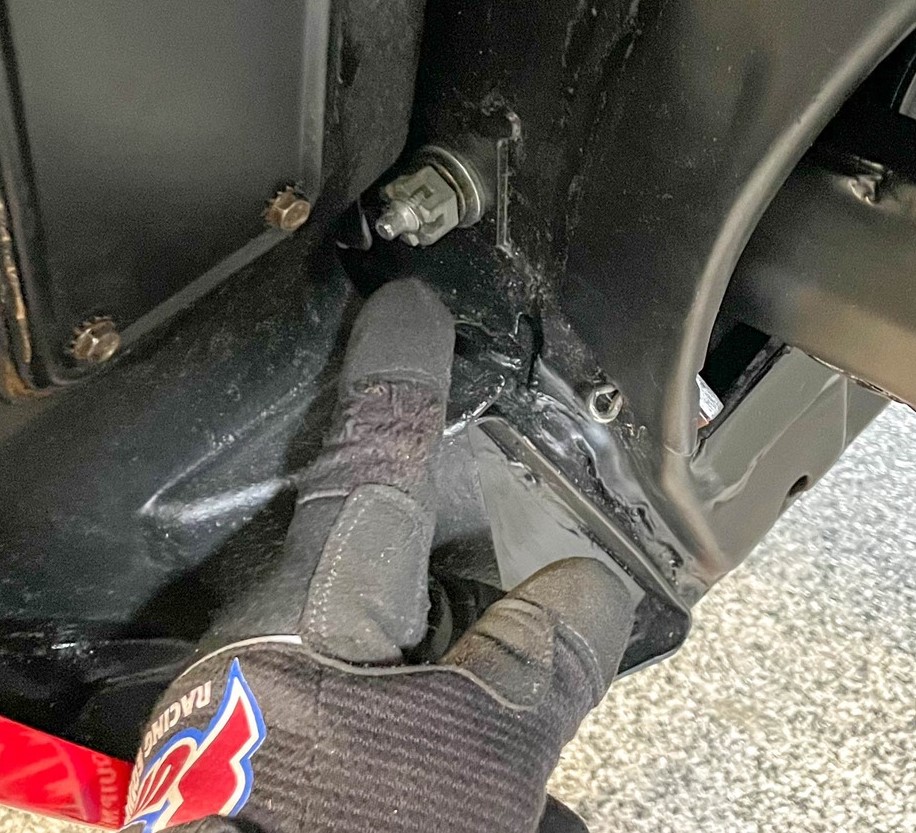
Like a lot of tools, you probably won’t use crowfoot wrench extensions on a regular basis, but boy are they good to have when you do need them. Crowfoot wrench extensions are particularly useful in tight spots where you can’t get a socket over the fastener or there is no room to reach it with a ratcheting or regular box end wrench.
Most crowfoot wrench extensions are available in metric and SAE sizes for 3/8- or 1/2-inch drive ratchets. Most are conventional open-end types, but there are flare wrench versions for brake and other types of fittings.
Using a Crowfoot Wrench Extension with a Torque Wrench
Using a crowfoot extension with a regular ratchet is as simple snapping as it on the drive head. But if you’re using a crowfoot with a torque wrench, you can’t do that. You have to know how to orient the crowfoot on the wrench to get an accurate torque reading.
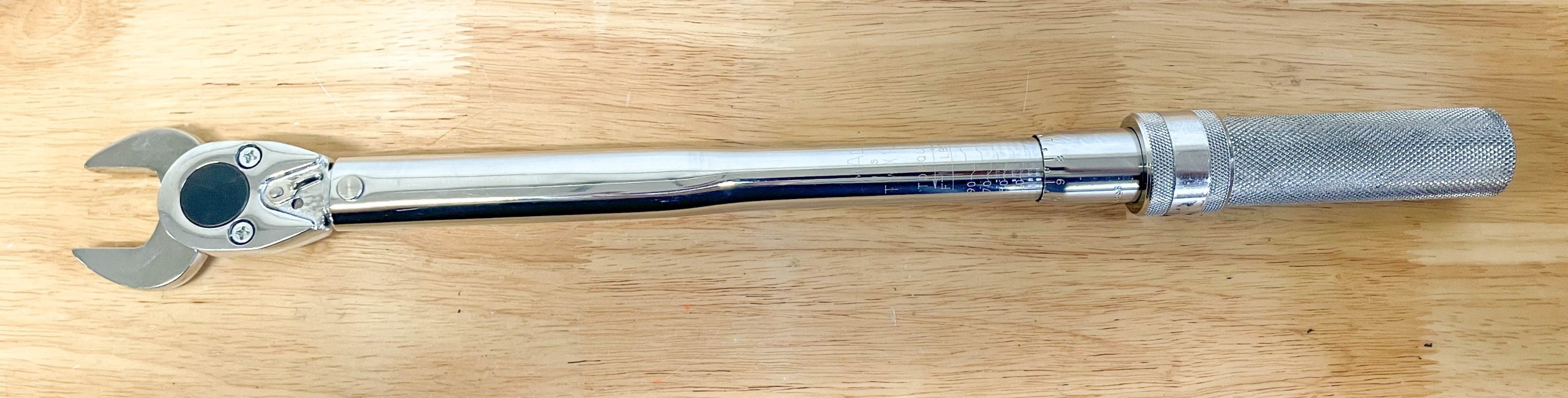
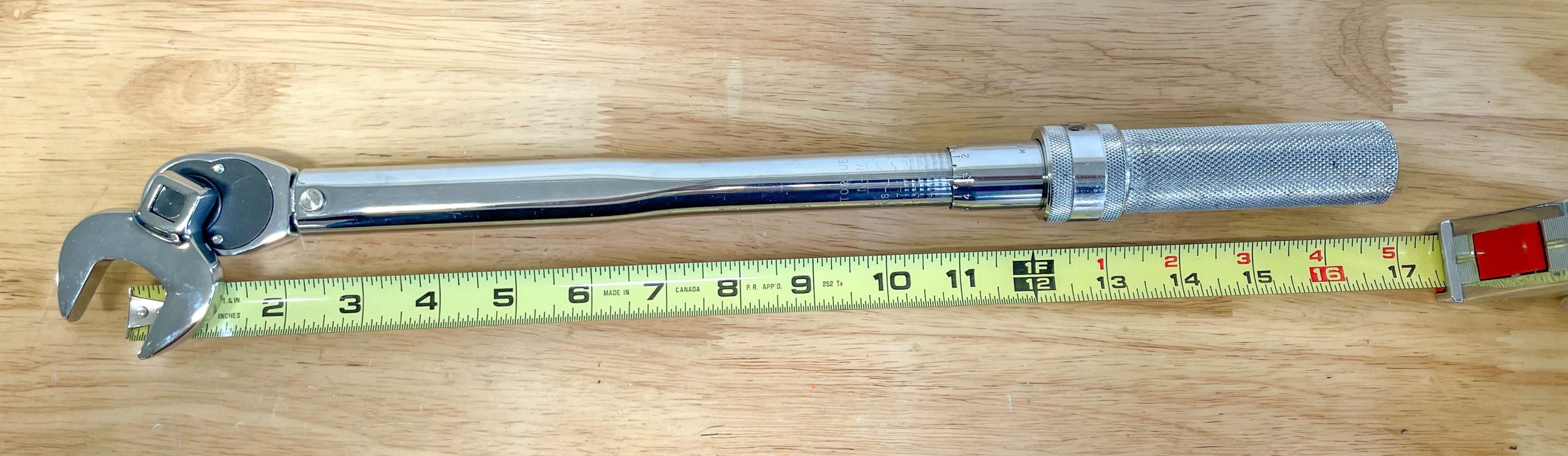
Here’s why: Torque equals force times distance. When using a torque wrench, you apply the force with the handle. The measurement between the center of the wrench handle and the square drive on the head is the distance. Adding a crowfoot extension parallel to the torque wrench increases that distance by adding the measurement from the center of the wrench drive to the center of the crowfoot jaw. If you set the torque wrench to 50 foot-pounds, the actually torque figure you get when the wrench clicks (or hits 50 on the gauge) is wrong.
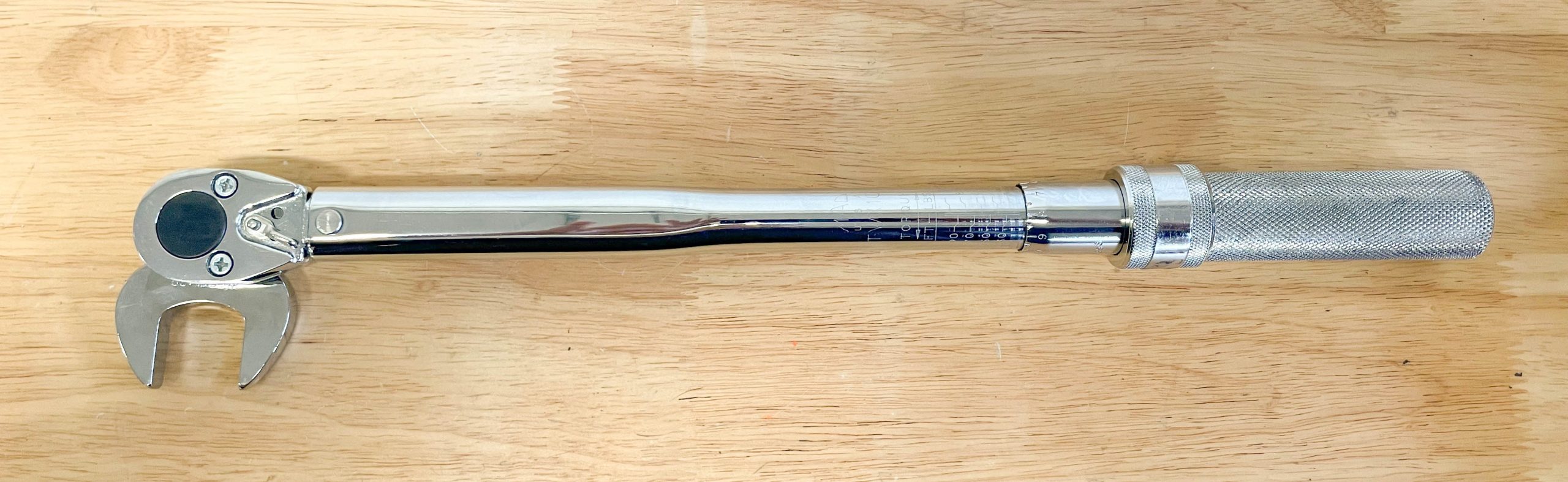
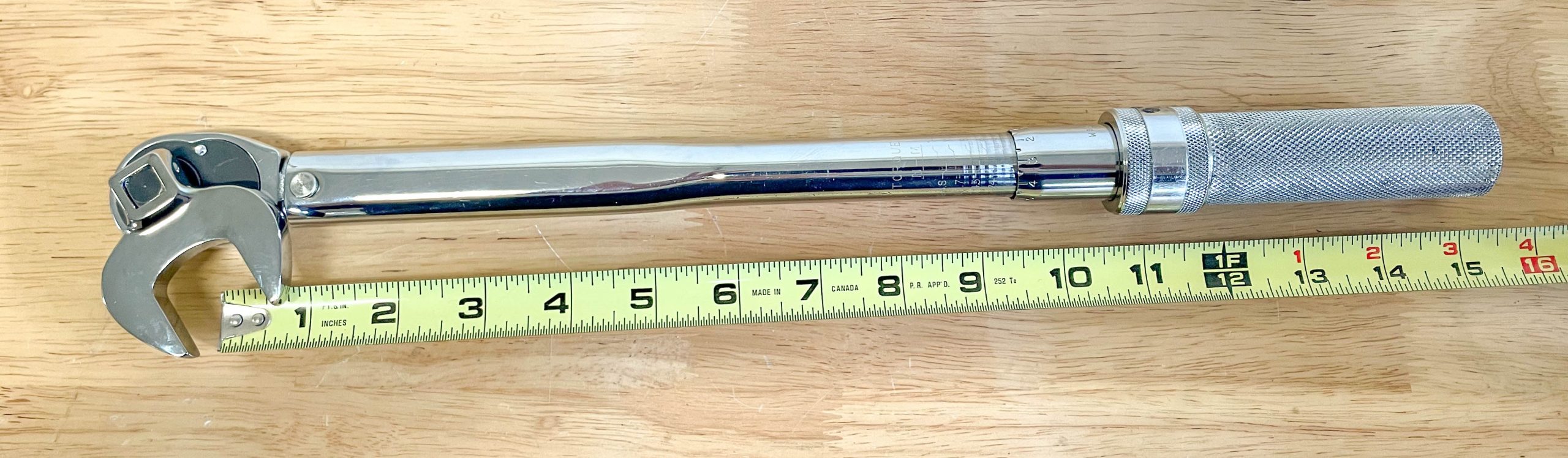
One way to ensure an accurate torque reading with a crowfoot wrench extension is to orient the crowfoot 90 degrees to the torque wrench handle (see the photos). That will keep the wrench handle-to-head distance unchanged and the amount of torque at the fastener accurate.
Unfortunately, it’s not always possible to get the crowfoot extension on the fastener with a 90-degree orientation. Now you’ll have to use some math to calculate the actual torque applied to the fastener with the crowfoot extension mounted inline with the torque wrench handle. Here’s the basic formula:
Torque Specification x Length = Torque Wrench Setting
Length + Crowfoot
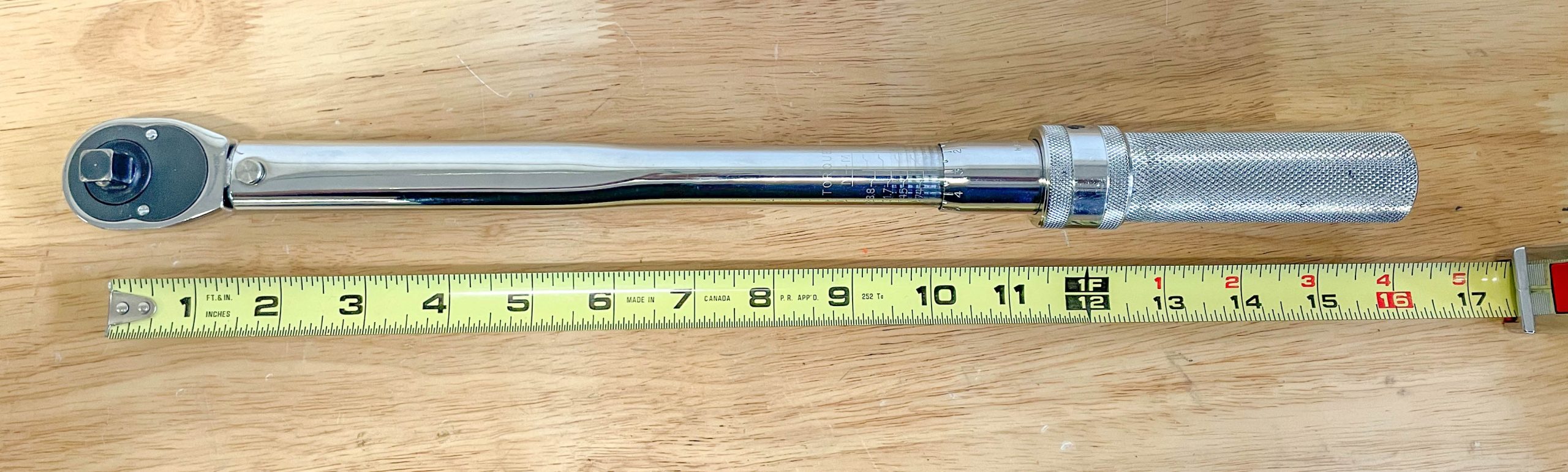
Length is the distance between the center of the torque wrench handle and the center of the wrench square drive.
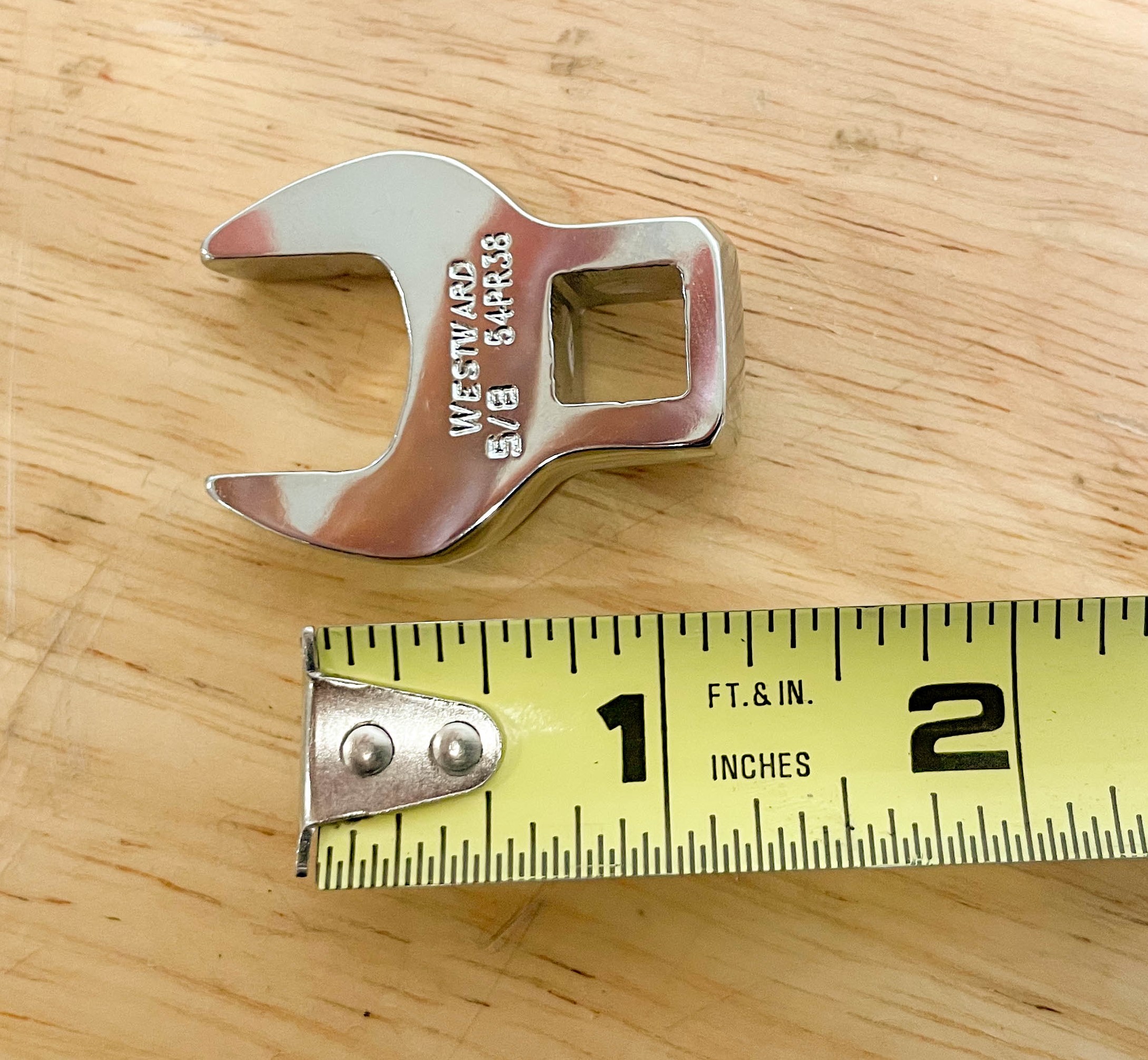
Crowfoot is the distance between the center of the wrench square drive and the center of the crowfoot jaw.
Let’s apply the formula to determine the wrench setting using a 3/8-inch drive torque wrench along with a 3/4-inch SAE crowfoot extension and a torque specification of 60 foot-pounds:
60 Foot-Pounds (spec) x 14.25
14.25 + 1.25
60 Foot-Pounds (spec) x .9677 = 58 Foot-Pounds
You can use the formula when you have to attach the crowfoot 45 degrees to the torque wrench handle by measuring from the center of the handle to the center of the crowfoot jaw to determine the ‘Length + Crowfoot’ dimension.
If you have to mount the crowfoot extension closer to the handle then the crowfoot length must be subtracted instead of added because the overall length of the torque wrench has decreased.
Another thing to keep in mind is a physically larger the crowfoot extension will also change the distance between the square drive and the center of the crowfoot jaws. As a result, there is no true ‘universal’ crowfoot center-to-center dimension.
Using a crowfoot extension with a torque wrench isn’t hard, it just takes some attention so the actual torque applied is correct. Check out the accompanying photos to learn more.


Comments