
A while back, we ran a short history on the Nissan/Datsun Z sports cars, and you can check those out below:
- Nissan/Datsun Z Sports Cars, Part 1: The Inline Six Era
- Nissan/Datsun Z Sports Cars, Part 2: The V6 Era
Here’s the thing though, since they were available in the United States from the get-go, those Z cars are well-known to American gearheads, and we certainly see plenty of them at car shows and autocross events nowadays.
But there is another car in Nissan’s lineup that has a similar performance pedigree, yet is still relatively unknown to folks here in the States—elsewhere in the world however, it’s a bona fide motorsports and pop culture icon.
We’re talking about the Nissan Skyline GT-R.

Talk to any import car enthusiast (particularly a younger one) about their favorite models, and there’s a good chance they’ll mention the Nissan Skyline GT-R at least once in the conversation.
That’s because, thanks to comic books, video games, and movies starting in the 1990s, the Skyline has become the poster car for gearheads all over the planet.
Except, of course, in the United States—where, until recently, the car was not available.
So we’ll give you some of the many, many reasons the GT-R is so highly regarded in import performance circles, starting with a quick rundown of the Skyline origin story.
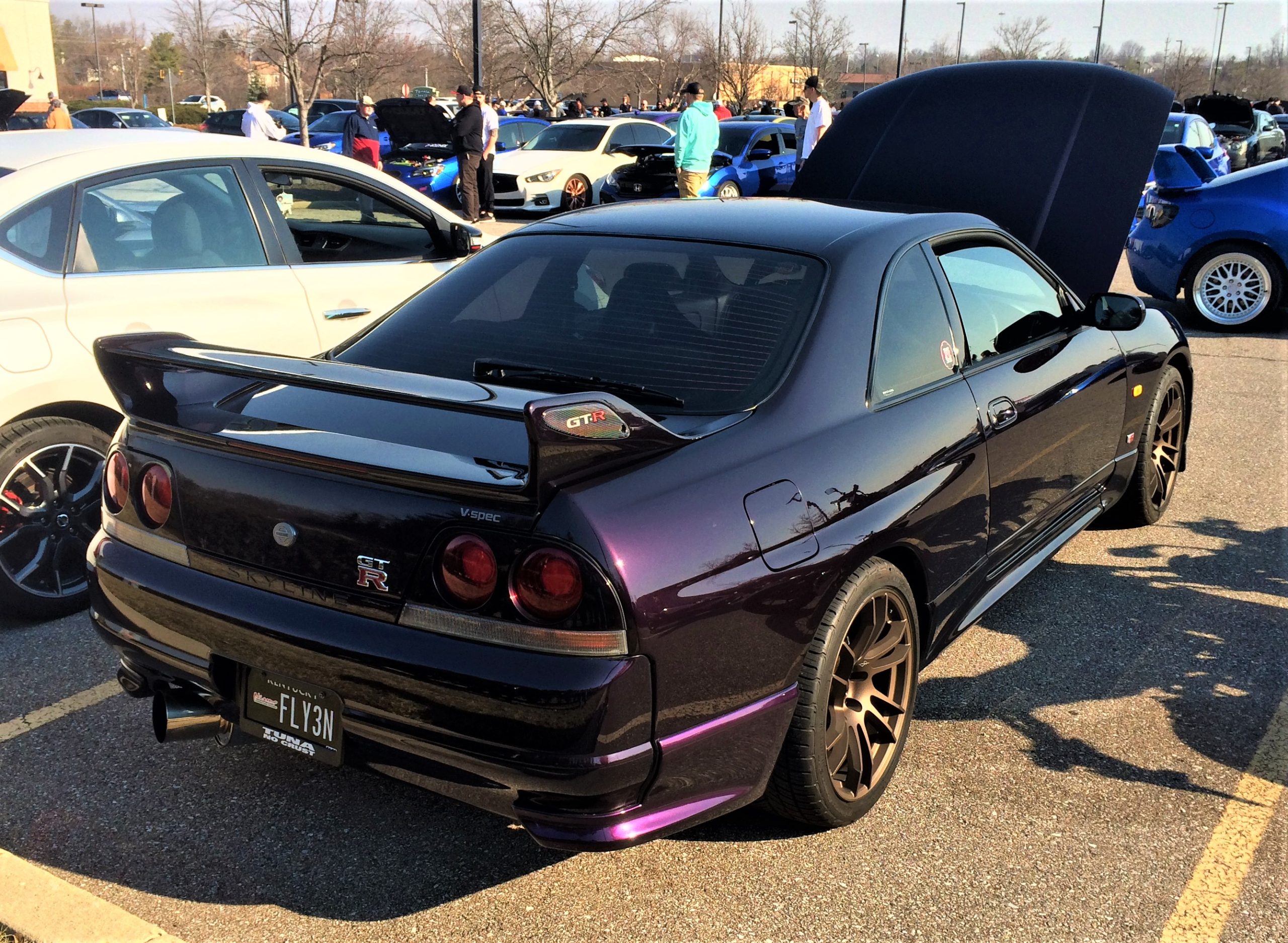
(Image/OnAllCylinders)
From Luxury to Lap Times
Before it redefined what Japanese sports cars were, the Skyline was designed as a luxury car.
In fact, the name didn’t even belong to Nissan at first.
That’s because the Skyline was introduced in 1957 by the Prince Motor Company as the “Prince Skyline”, a four-door sedan or a five-door station wagon featuring a 1.5L GA-30 four-cylinder engine, which put out a modest 60 horsepower.
Don’t confuse this car with the Ford Skyliner hardtop convertible from the same era. Learn about the Ford Skyliner distinction here.
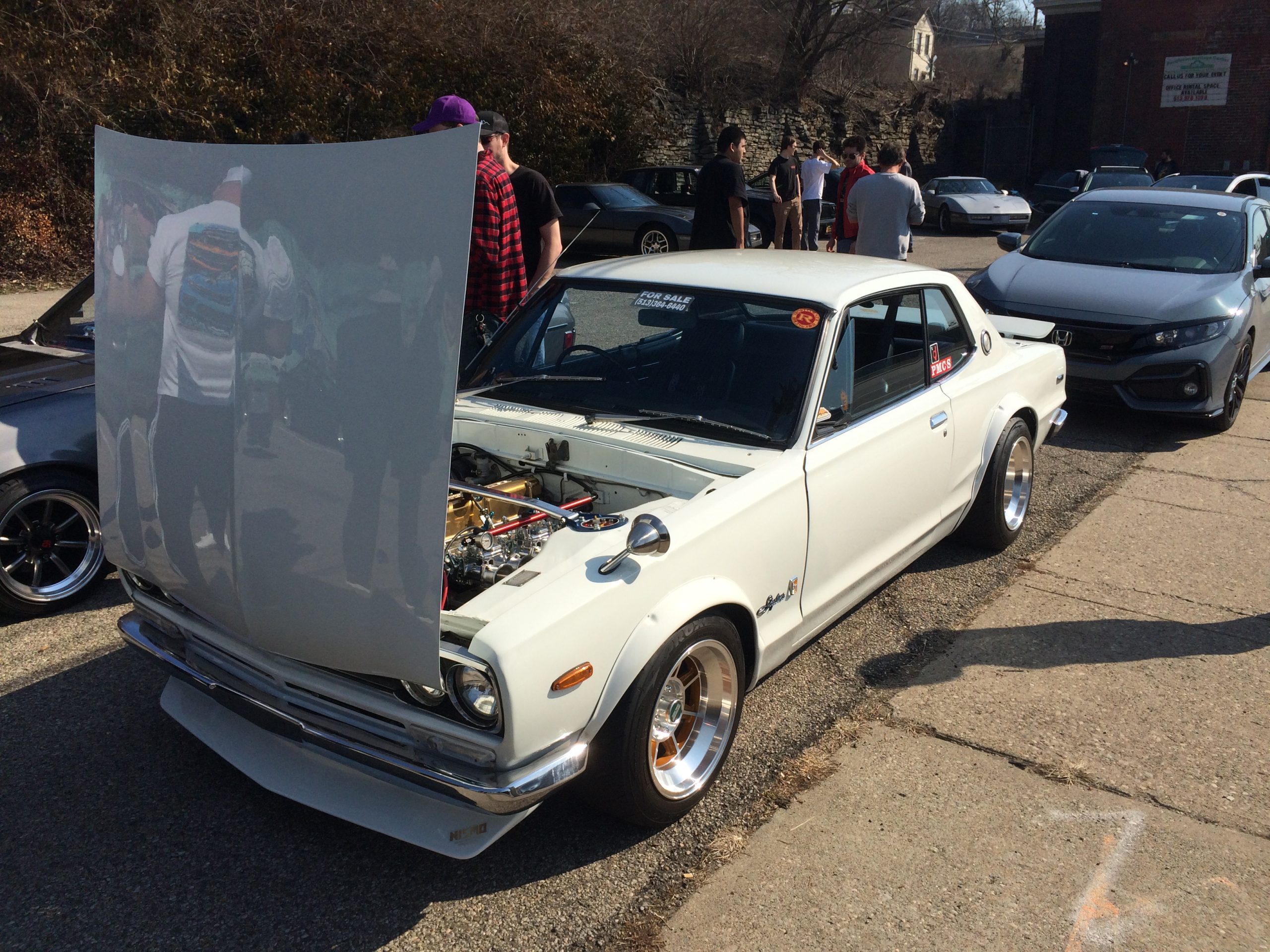
While the Prince Motor Company did have a sporty variant dubbed the Prince GT Skyline, the car’s legend really began when Prince merged with Nissan in 1966.
The Skyline name carried over to Nissan—and so did the designers behind it.
Pretty soon after that, the first Nissan Skyline GT-R was introduced at the 1969 Tokyo Motor Show.

Designed by the legendary Shinichiro Sakurai, this performance version of the Skyline featured an inline six that made 160 horsepower. (Sakurai would go on to lead the Skyline development program for decades.)
The first-gen. GT-R was based off a prototype race car the company designed earlier, which featured an inline six engine with a four-valve dual overhead cam engine and four-wheel independent suspension, according to Nissan.

With all of that, the Skyline blew past its competition and won 52 races in its first three years of competition in the Japanese domestic touring circuit (48 of those were consecutive, by the way).
This car was on a rocket ship to the moon…until a global gasoline crisis in 1973 put an end to the party and Nissan temporarily shelved the Skyline GT-R.
To be clear, there were plenty of Skyline models to come out after that decision, but they were not the high performance GT-R variants—which meant enthusiasts had to wait and hope for its resurrection.

Back with a Vengeance
To the delight of gearheads everywhere, Nissan brought the GT-R trim back in 1989.
And it did so with a serious performance boost.
Often referred to as an “R32” thanks to its internal Nissan chassis code, the freshly-minted R32 Skyline GT-R is a beast of a two-door coupe. For that reason, the R32 is what a lot of enthusiasts picture when they think of a textbook representative of the entire GT-R family.
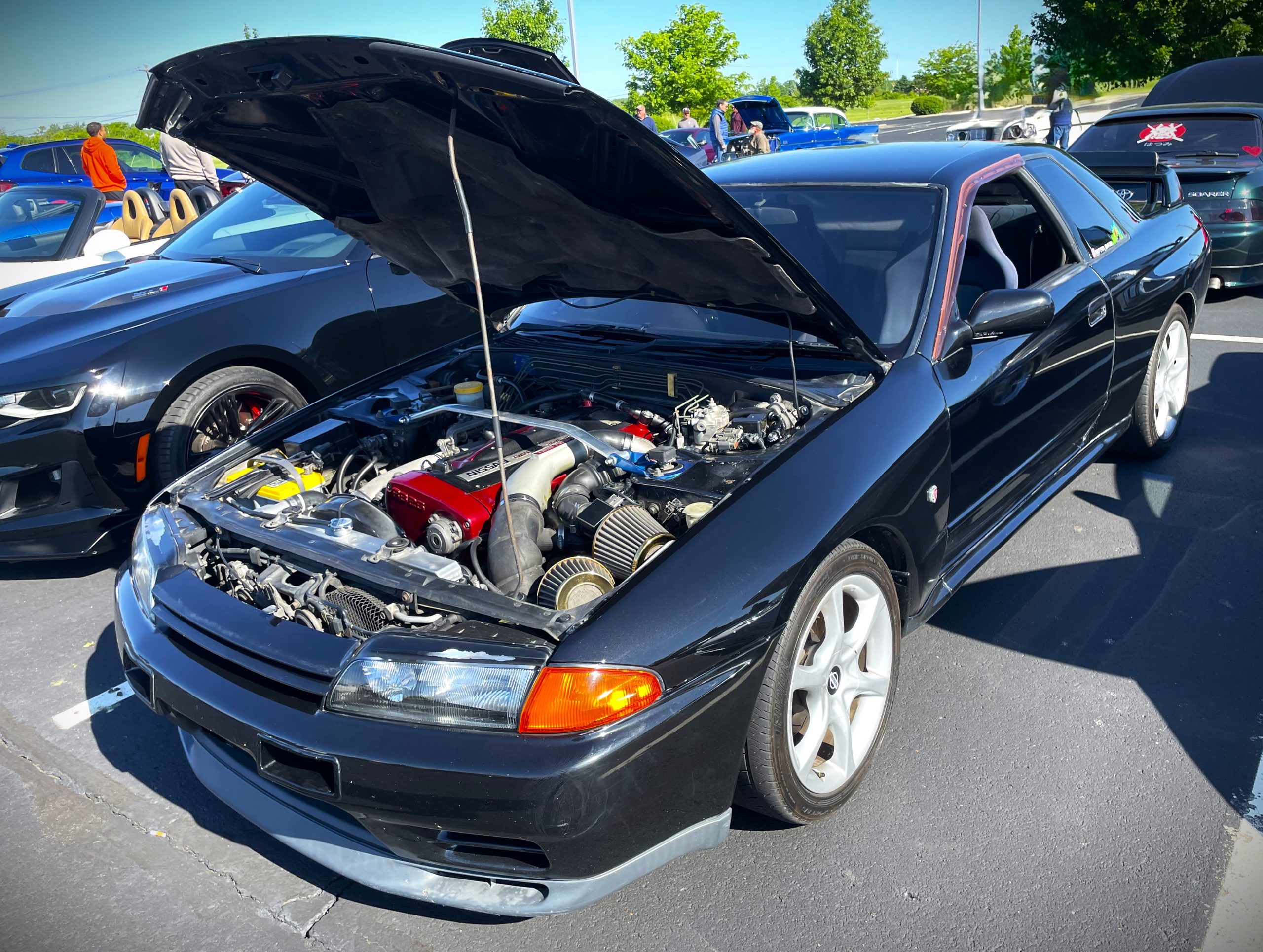
It featured a five-speed manual, all-wheel drive, and a new 2.6L version of Nissan’s RB series engine. Dubbed the RB26DETT, the the twin-turbo inline six put out 280 horsepower and 260 lbs.-ft. of torque.
But…most enthusiasts agree that those numbers were fudged a bit and, in the real world, output was closer to 330 horsepower and 293 lbs.-ft. of torque.
The reason its horsepower was under-reported at the time was because Japan’s automakers had a gentlemen’s agreement to limit the advertised power of their cars.
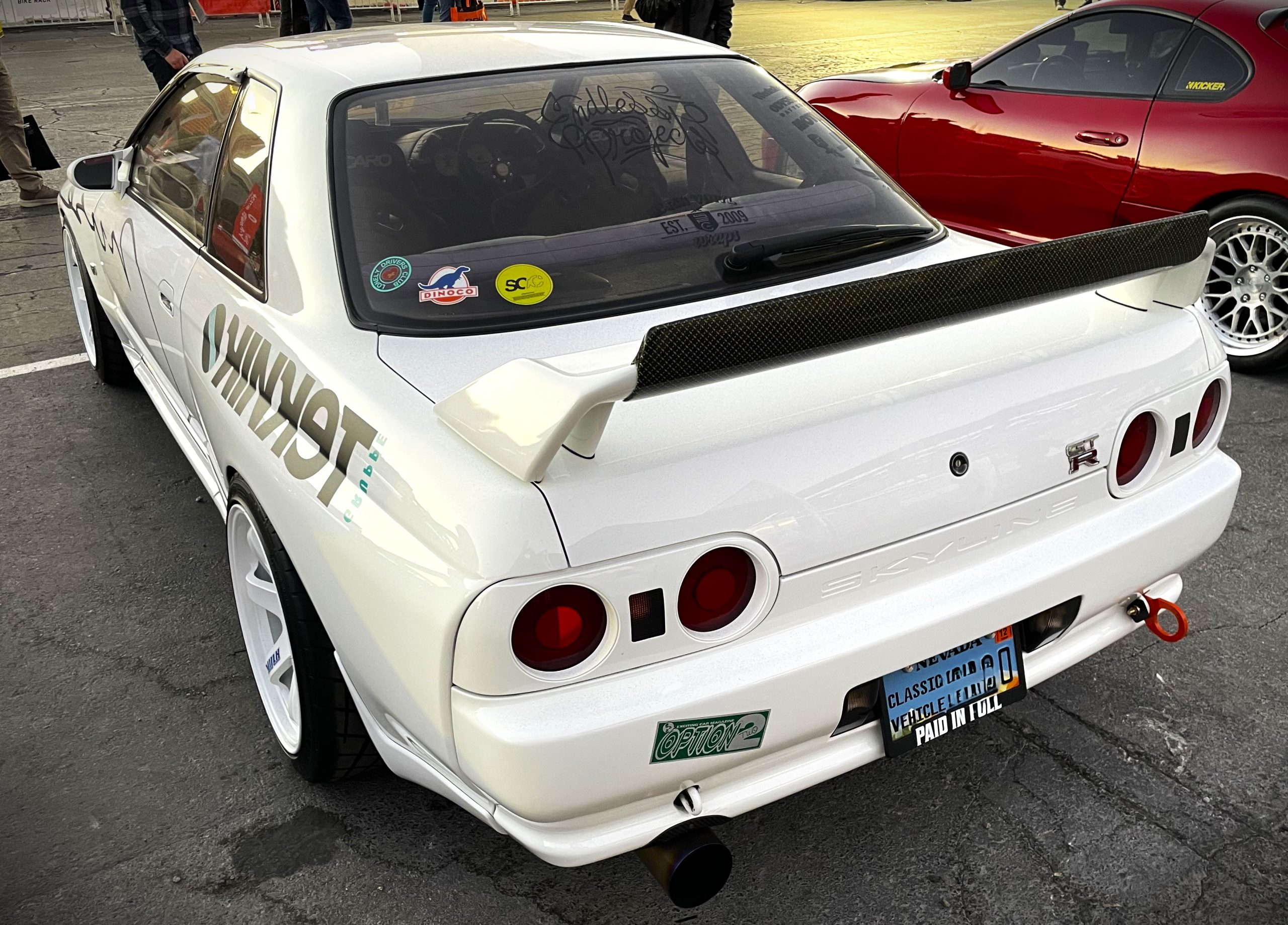
The R32 was so powerful at the time, it won everything Nissan entered it in—and that’s not hyperbole either.
In the Japanese Touring Car Championships, this car took home first prize every race. It also dominated international events, winning the Australian Touring Car Championship circuit for three years and The Nürburgring 24 Hours. Its race pedigree was so infamous that the monster car from the Land of the Rising Sun earned a nickname….
…Godzilla.

Nissan could have stopped there and called it a day. But instead, they took the design of the car a step further.
The new model had the same horsepower and torque, but the team improved the weight distribution, body stiffness and all-wheel drive system. This version was called the R33 Skyline GT-R, and it was the first sport coupe to ever go around the Nürburgring in under eight minutes.

When the R34 came out in 1998, it featured a shorter wheelbase and a more aerodynamic body, which had a front bumper with integrated air intakes and a splitter to direct airflow better. Meanwhile, on the rear end, the car had a spoiler and diffuser to improve air exit.
Throw in a six-speed manual transmission and you had the crown jewel of Japanese high-performance racing.
In competition, the R34 Skyline GT-R carried a weight penalty of as much as much as 220 pounds to even the playing field for other cars.
Didn’t matter, it still won.
During the 1999 All Japan Grand Touring Car Championship, Team Pennzoil famously won with a 309 pound weight penalty on their NISMO GT-R.

No version of the Skyline was officially imported to the U.S. due to safety and emissions regulation compliance issues. But since the 25-year import window has lapsed, you can now either import a Skyline GT-R from Japan yourself, or find a seller in the States who’s already done it.
But it probably won’t be cheap, though.
If you want to avoid some sticker shock, we suggest going for the R33 GT-R, as there’s a good chance you’ll find them cheaper than the O.G. R32 or vaunted R34. You’ll also find plenty of other non-GT-R Skylines on sale too, with popular trims like GTT and GTS becoming affordable alternatives.
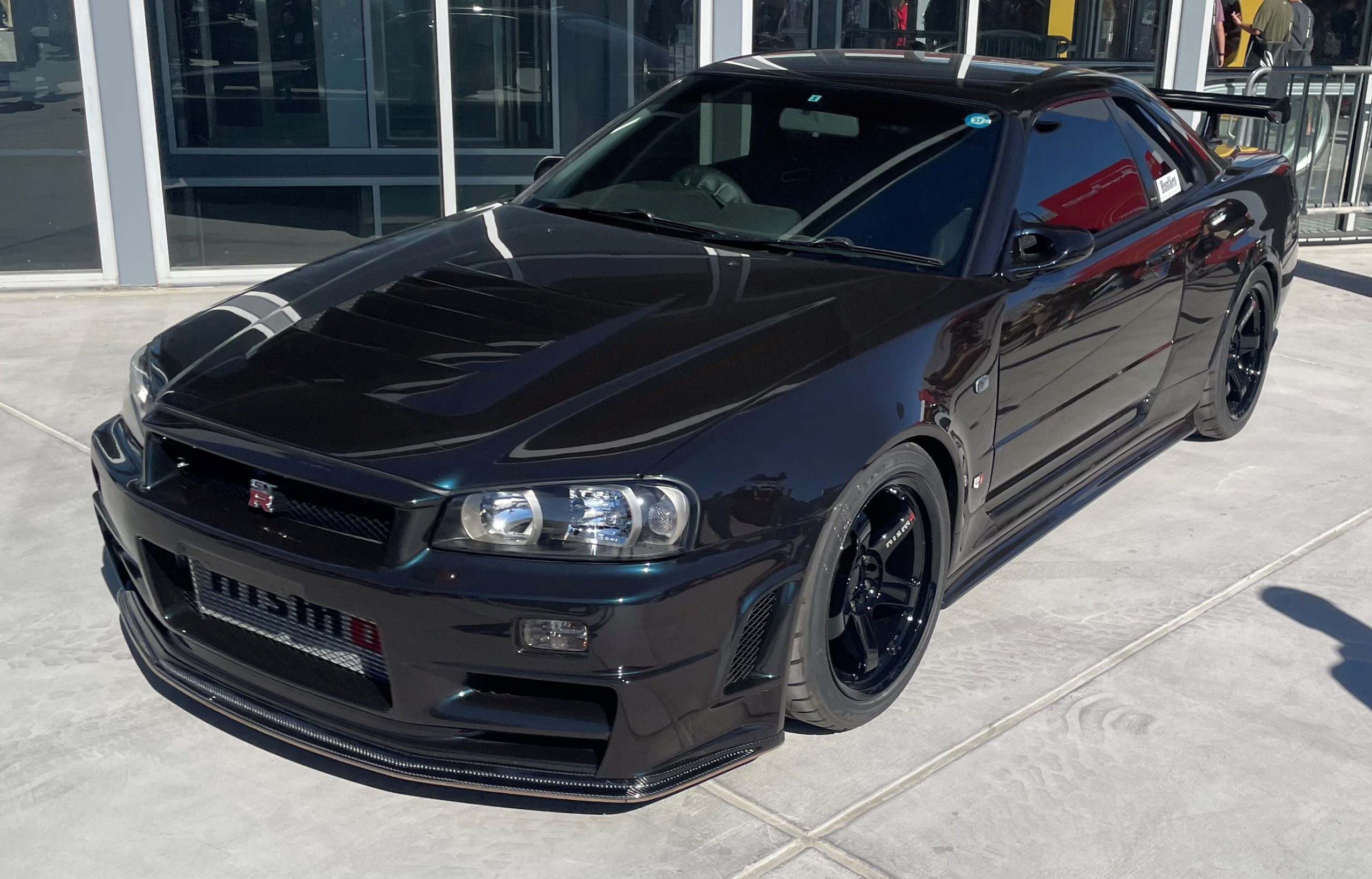
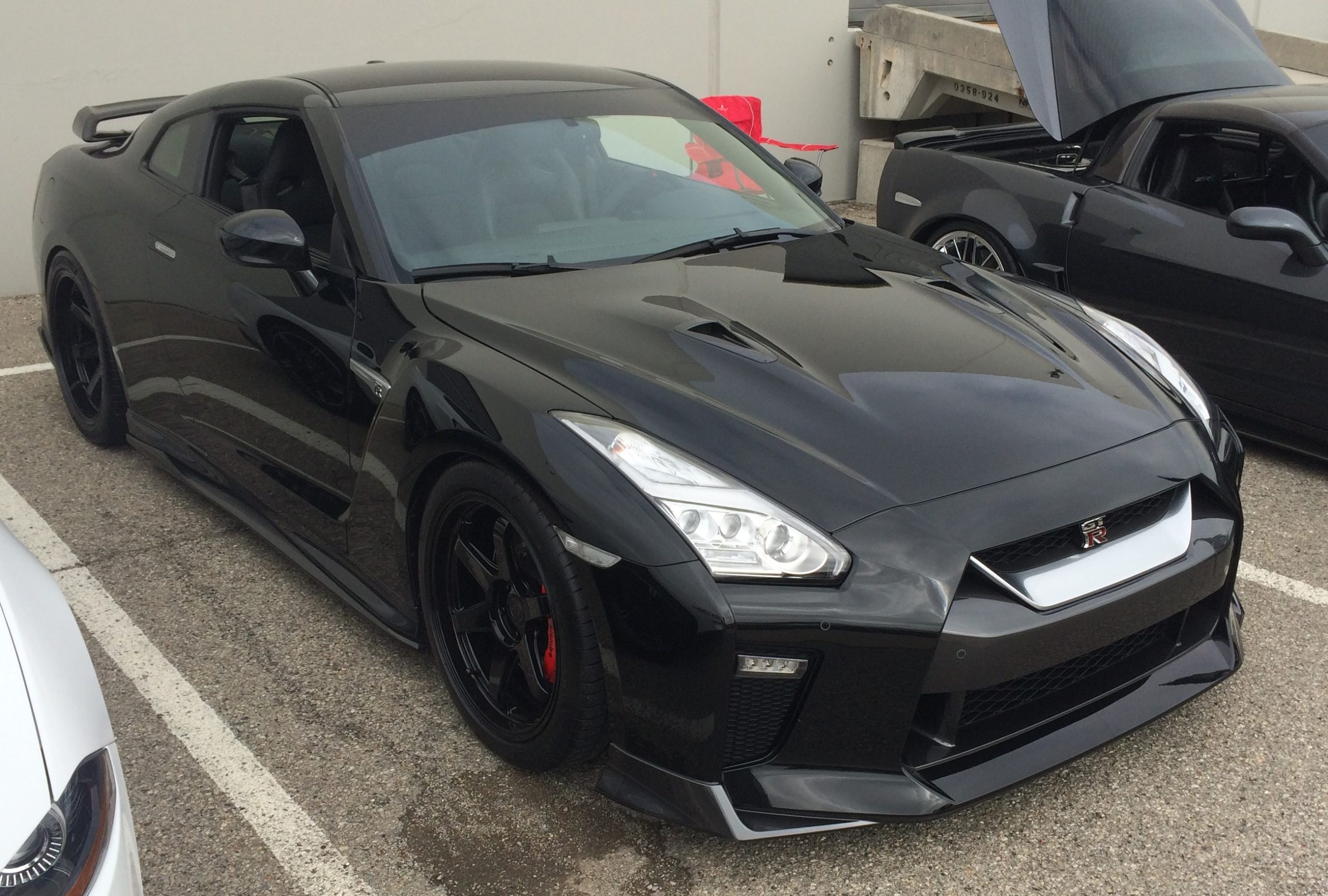
Eventually, Nissan introduced the R35 GT-R in 2009.
Though Nissan had formally ditched the name Skyline for the R35 generation, there was no doubt it carried the GT-R goods—starting with a 3.8 liter twin-turbocharged engine that made 565 horsepower and 467 lbs.-ft. of torque. That, coupled with all-wheel drive, was enough to give the GT-R a 0-60 time of 3.5 seconds (but some reports say that it’s closer to 3.3 seconds).
On top of that, at the time, the GT-R’s launch time FASTER than the Dodge Viper and Corvette Z06.

Of course, the catch is these R35s cost $60,000 at the time they came out. Now, latest models come with a whopping $121,000 price tag.
So, in a way, it’s still unattainable for most Americans again—full circle moment!
If you’re one of the lucky folks that could actually afford a GT-R, first congratulations, what’s your secret? But also, why not soup it up with some cool parts from Summit Racing? You can find suspension upgrades, tuning components, give it some extra juice, and more.

Godzilla is Everywhere
Sure, the Skyline GT-R earned glory and fame on the track, but it was the media that cemented it as a Japanese icon. The car was featured in manga (Japanese comics) like “Initial D“, where Takeshi Nakazato drove an R32 GT-R V-Spec in Black Pearl Metallic.
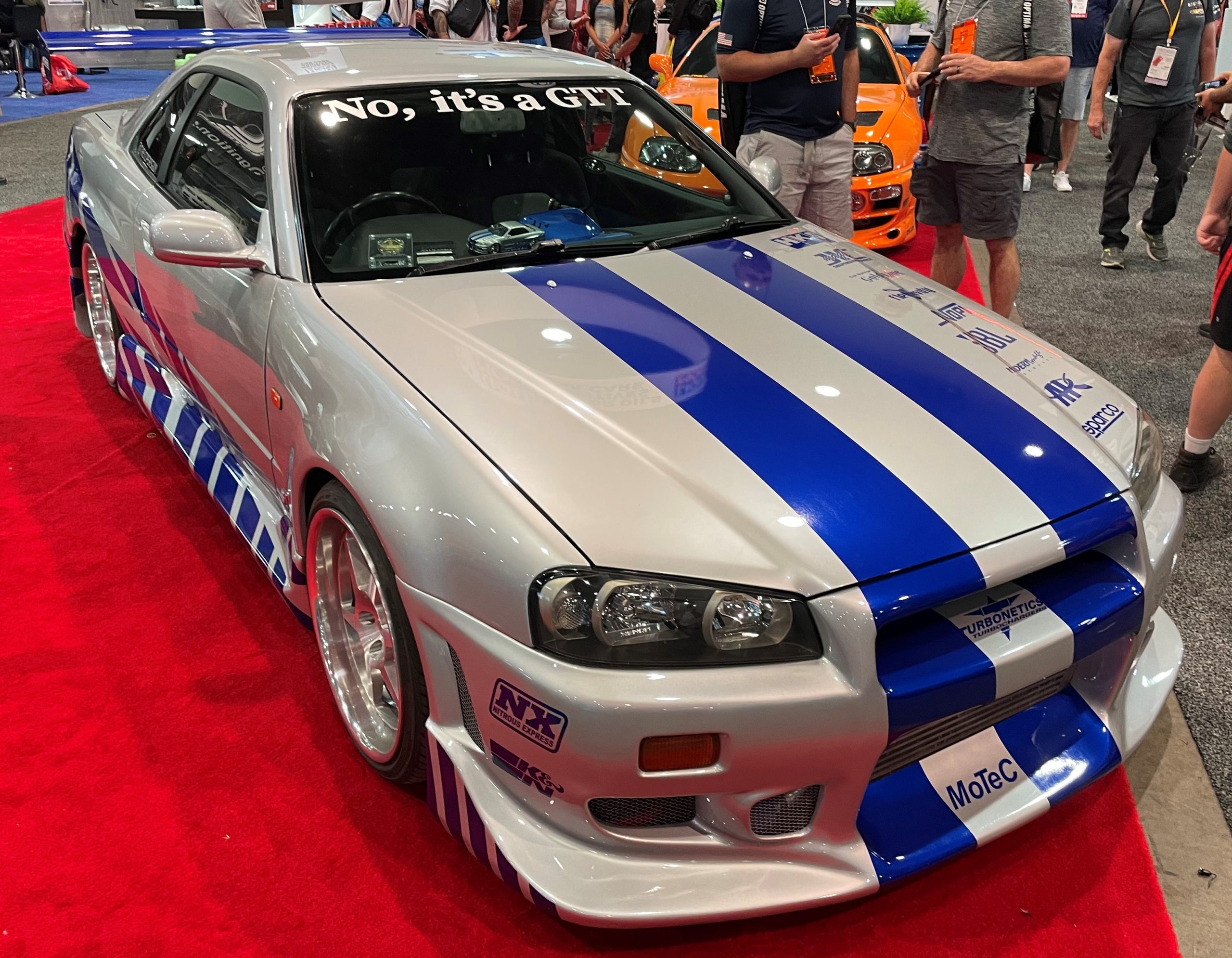
On the big screen, Paul Walker drives an R34 GT-R in the beginning of “2 Fast 2 Furious” before it’s disabled in a car chase. The car even made a comeback in “Fast and Furious 4”, which helped it become an unofficial icon of the movie series, next to the Mk. IV Supra and Vin Diesel’s Dodge Charger.
Rumor has it Paul Walker had the car personally customized before the filming of that movie. In 2023, it sold for $1.4 million—a record price for a Nissan Skyline.
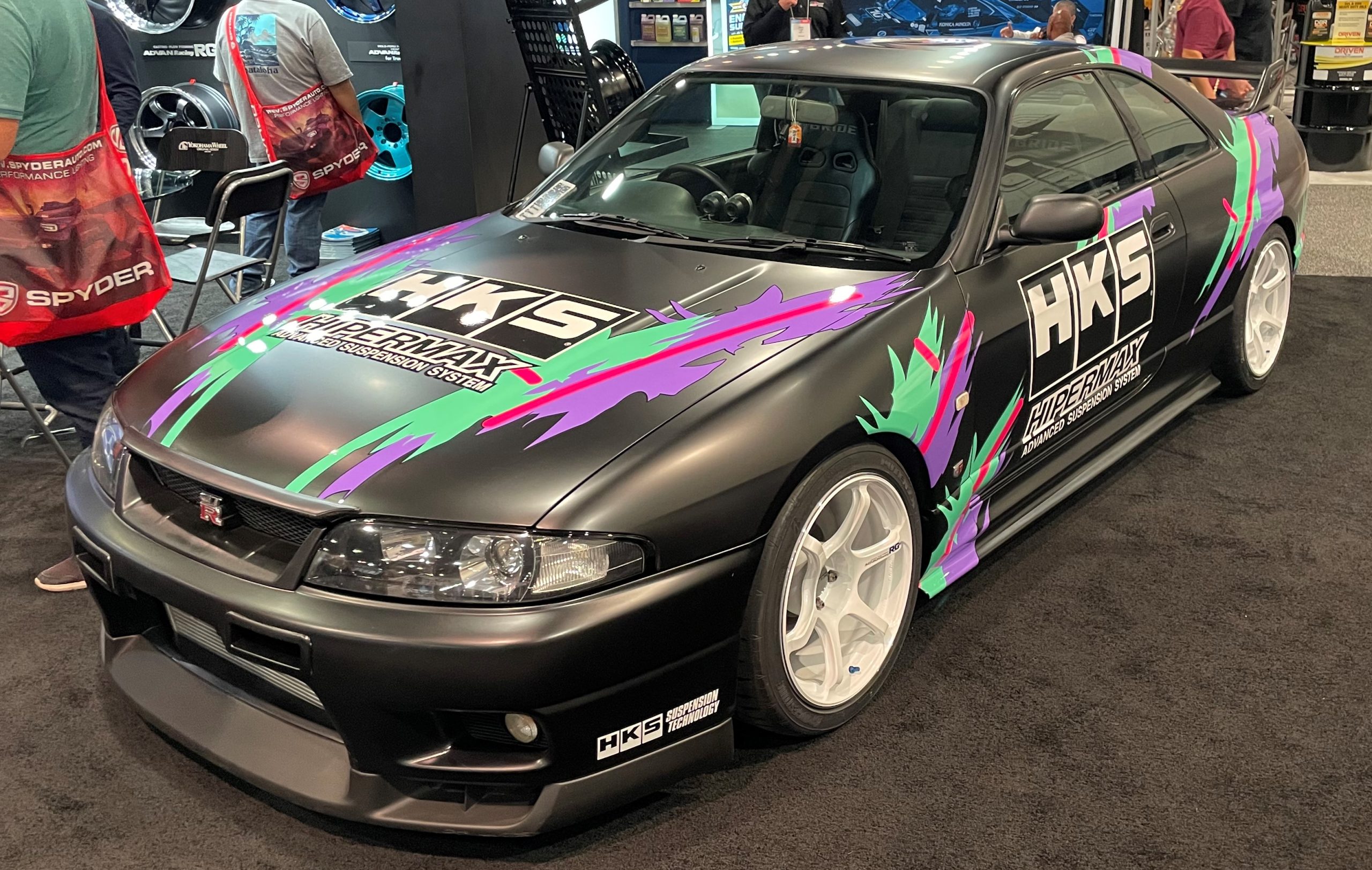
The Skyline was a staple in the video game racing world too. In fact, “Gran Turismo” is largely credited with introducing many American automotive enthusiasts to the Skyline GT-R.
Available on the Playstation console, the game offered an incredibly realistic driving experience for the era, and featured a wide range of cars that you couldn’t find anywhere else. In other words, it was an affordable way to get your hands on some rare, unobtanium imported and exotic cars.
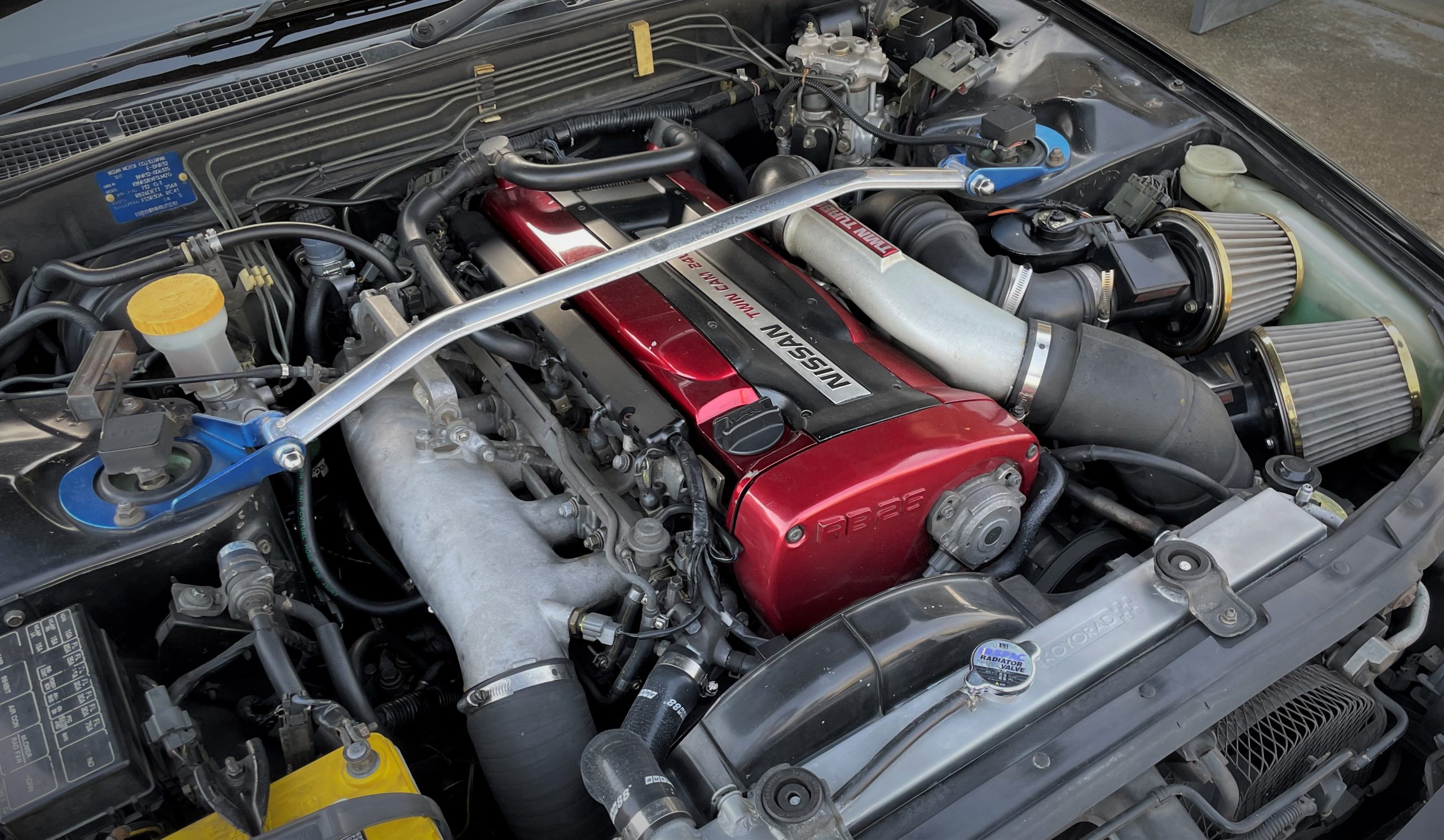
On a more personal note, growing up and seeing this thing rip up mountain passes in manga or leave cars in the dust on the movie screen, meant that the Nissan Skyline GT-R introduced me to performance cars outside of the United States.
Better still, it sparked the imagination of an entire generation of future automotive performance enthusiasts who would eventually discover other imported cars like the Toyota Supra, Mazda RX-7, and Subaru WRX, along with plenty of late-model American muscle too.


Comments