
I have a very basic small block Chevy 350 in my pickup. About three months ago, I noticed a ticking sound and pulled the left valve cover. One of the rocker arm adjustment nuts had come loose and allowed the rocker to flop around. This slightly bent the pushrod. I replaced the pushrod and tightened everything back up thinking it would be okay. I don’t drive this truck much and just a week later, the nut was loose again. I checked the other rockers and a couple are looser than when I last adjusted them. What am I doing wrong here?
P.T.
The only thing you are doing wrong is using those stock adjustment nuts. They work well when you first set them. But if you need to remove them or adjust the lash (checking the clearance with a solid camshaft, for example) the locking nuts tend to lose their tension and eventually their grip on the rocker stud. This changes the preload and eventually the rocker comes loose.
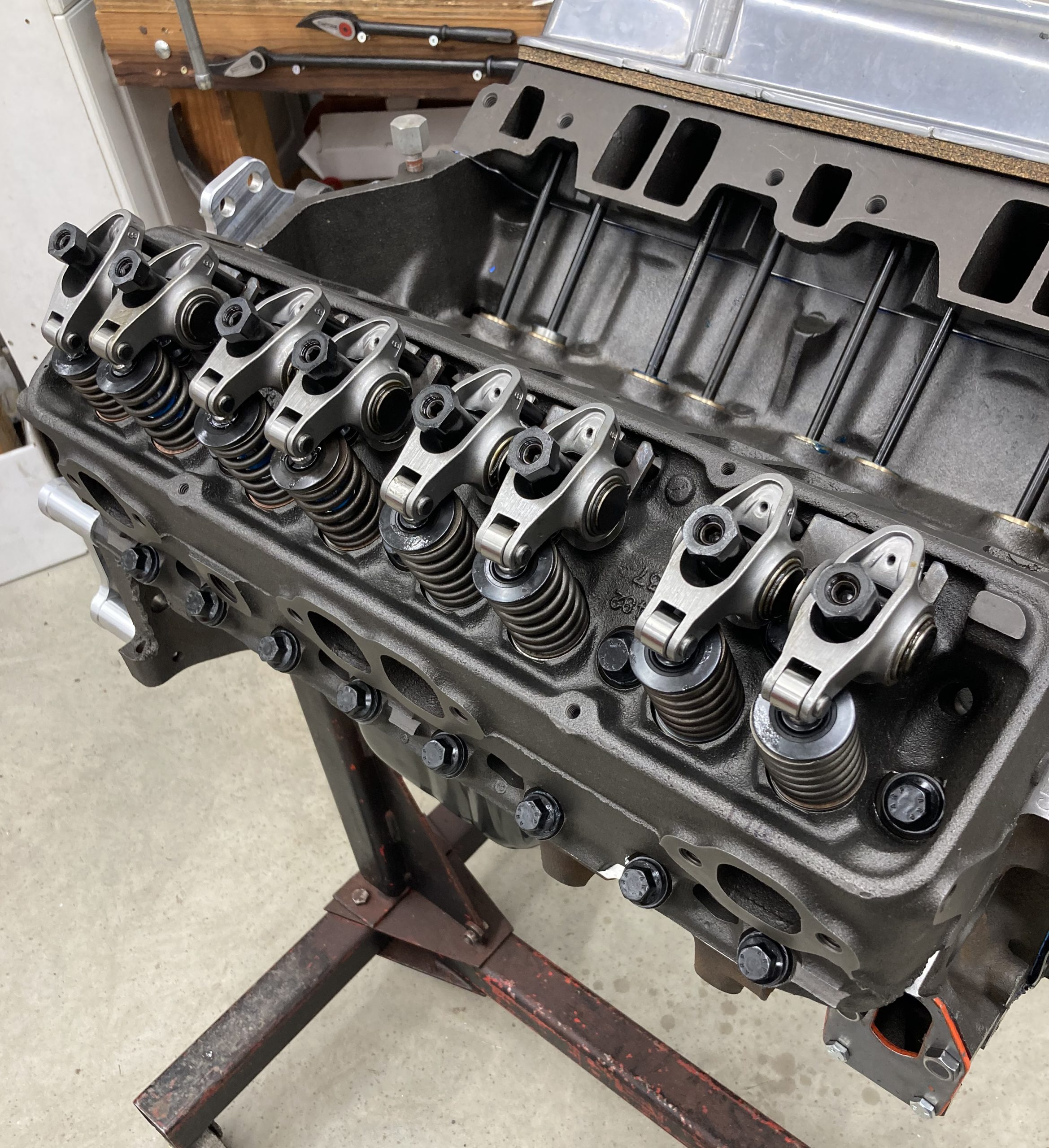
With any small or big-block Chevy engine that I work on, I always toss those nuts and replace them with a basic polylock. A polylock is a taller rocker adjustment nut that uses a small Allen lock screw in the center. Adjust the rocker to proper preload (assuming this is a hydraulic lifter engine) and use the locking nut to set tension to the top of the rocker stud. This will position the polylock and never allow it to move.
Polylocks come in various heights. You need to find ones that will clear the rocker body throughout the lift travel and still fit underneath the valve covers. With stock stamped steel rockers, you can choose a somewhat short polylock. If you are using aluminum roller rocker arms, keep in mind they have somewhat taller bodies and will need a taller polylock to clear the rocker throughout its lift curve. We’ve seen a too-short polylock hit the rocker and bind it, which is not good. This can also damage the rocker arm and allow it to fail.
Most polylocks for 3/8- or 7/16-inch rocker studs have a simple 5/8-inch wrench hex at the top of the adjuster. If you want to spend a little more money, ARP offers a slightly different polylock with a 9/16-inch, 12-point hex at the top. This lock also has a slight bulge just below the hex that won’t allow the box end wrench to fall over the adjuster. This is a very useful feature if you adjust lash all the time. ARP lists several different polylock heights based on the rocker arm requirements.
You should also check the condition of the rocker studs in your cylinder heads. We’ve seen worn studs in high-mileage engines affect rocker operation. We will assume your heads use screw-in rocker studs. Replacing the studs with higher quality ones is also a good idea.
While you are disassembling the rockers, inspect the condition of the balls and rocker bodies. With a high-mileage engine you may notice significant wear, especially on the exhaust rocker arms. It’s a good idea to replace all rockers that appear worn.
When installing new stamped steel rockers, we suggest using a small die grinder to remove the punch-through metal flashing around the pushrod oiling holes in the rockers. This will reduce the chance of causing a stress riser that will eventually crack and allow the pushrod to push through the cup. We’ve seen this happen on multiple occasions.
We have one final tip on adjusting rockers with a polylock. Once you have the adjustment preload nearly set, set the Allen lock screw lightly to the head of the rocker stud and tighten the polylock with the hex adjustment for the last 1/16 or so of a turn. This will set the Allen lock screw very tightly to the stud better than using the Allen wrench to tighten the lock screw. It’s a small thing, but it works very well. If the polylock needs to be readjusted, merely loosen the hex on the polylock rather than try to loosen the small Allen set screw.
While this is probably a lot more work than you anticipated, it will help keep those rocker arms from loosening up.
Parts List
Trick Flow Polylock Rocker Arm Adjusting Nuts, 3/8″ Stud, Roller Rocker TFS-70000903-8
COMP Cams Polylock Rocker Arm Adjusting Nuts, 7/16” Stud, Roller Rocker CCA-4606-16
ARP Perma-Loc Rocker Arm Adjusting Nuts, 3/8” Stud, Non-Roller RockerARP-300-8241
ARP Perma-Loc Rocker Arm Adjusting Nuts, 7/16” Stud, Non-Roller Rocker ARP-300-8242


Just hope it’s actually the adjusters actually backing off which is an easy fix, and not the more common cause of lash showing up, which would be a lobe going flat.